Edible
Set your location to see data for your region.
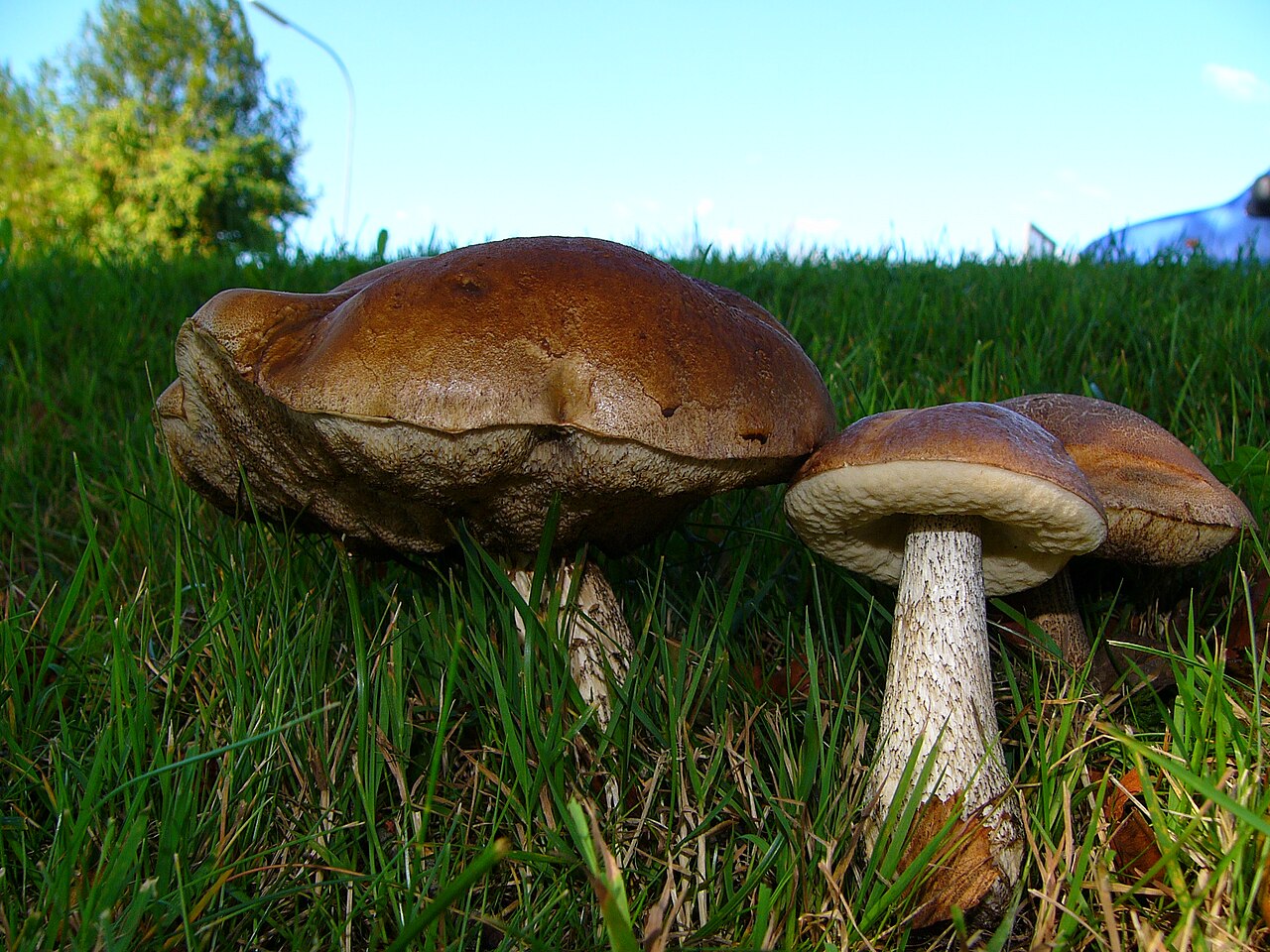
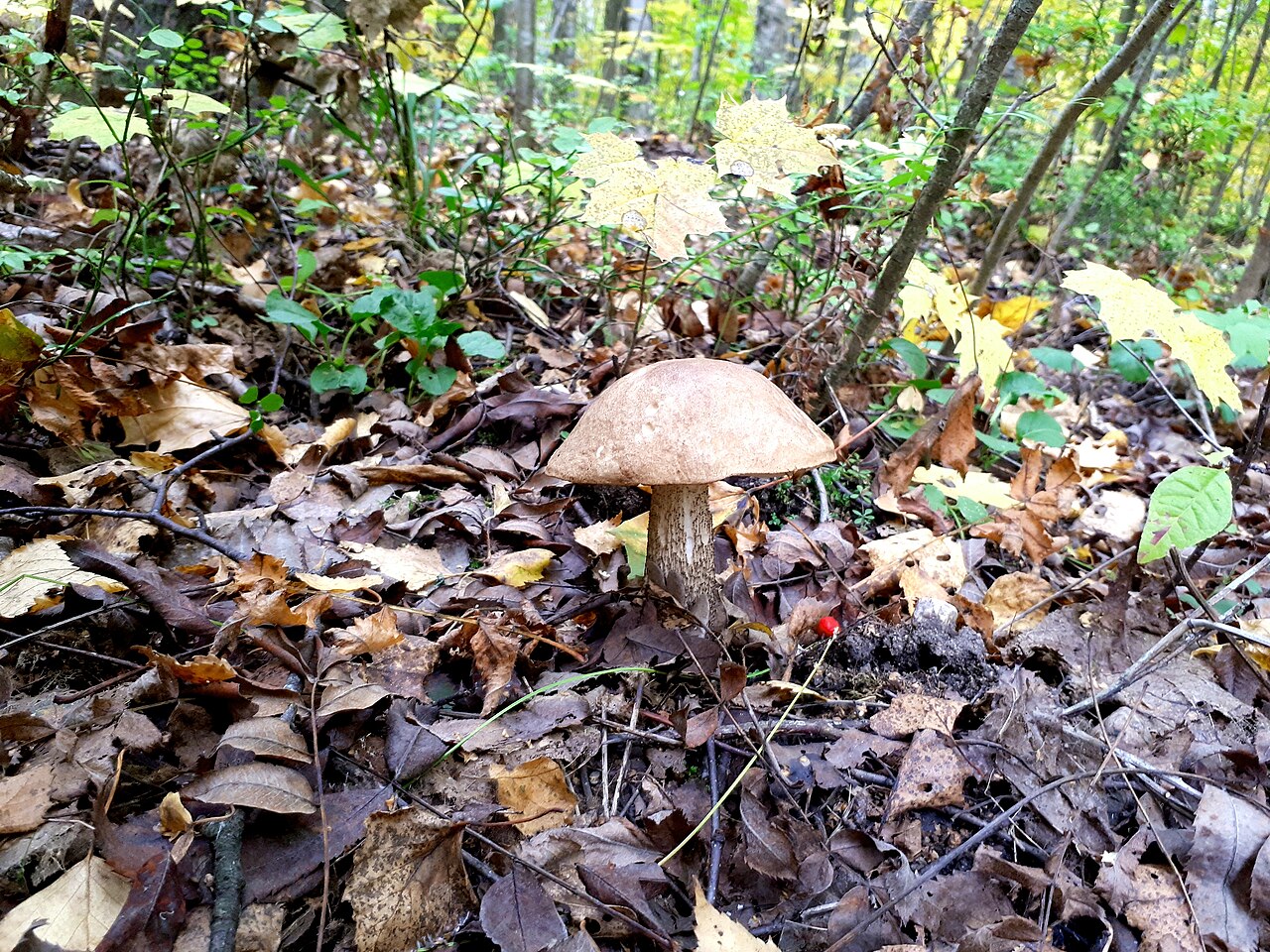
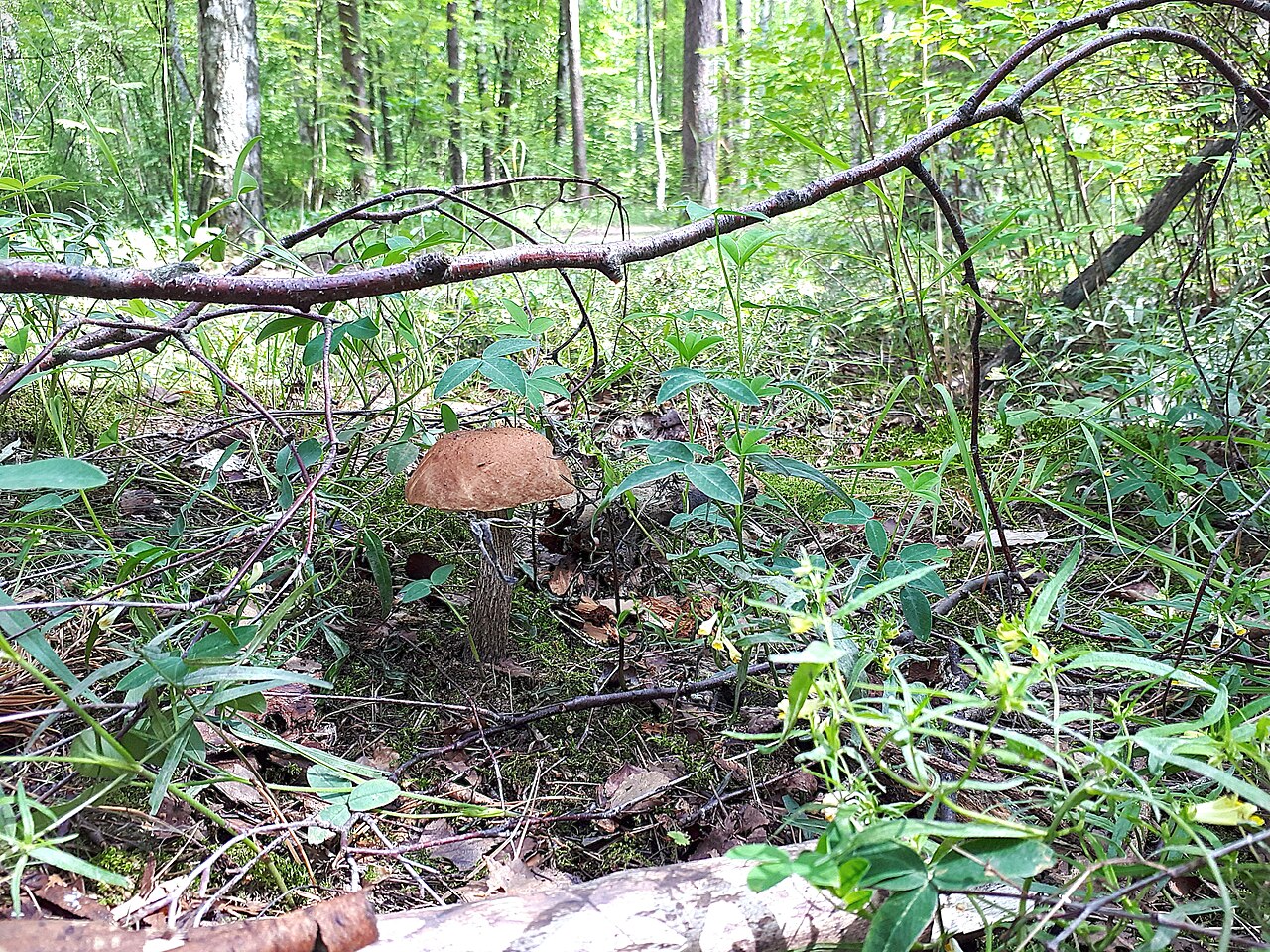
The brown birch bolete (Leccinum scabrum) is a common edible mushroom in Poland that forms mycorrhizae with birches. It occurs in deciduous and mixed forests from summer to autumn. Its cap is cushion-shaped, in shades of gray, brown, or ochre, with a dry, smooth surface. The hymenophore consists of small tubes with whitish pores that turn gray with age. The stem is slender, pale, and covered with dark scales. The flesh is whitish and essentially does not change color when sliced. It is valued for its mild, mushroom flavor.
Identification, habitat, and key differences.
Forager
Fruitbody structure
- Fruit body form
- Fruit body form: Cap, stipe.
Cap
- Cap shape
- in young fruit bodies: Cap shape: hemispherical.
in mature fruit bodies: Cap shape: convex.
in old fruit bodies: Cap shape: flat.
Cap shape: convex. - Cap covering
- Cap covering: suede-like.
in young fruit bodies: Cap covering: felty.
in mature fruit bodies: Cap covering: glabrous.
in mature fruit bodies: Cap covering: scaly. - Cap stickiness and sliminess
- when wet: Cap stickiness and sliminess: sticky.
when wet: Cap stickiness and sliminess: slimy. - Cap colour
- Cap colour: dark brown.
Cap colour: yellow-brown.
Cap colour: brown.
Cap colour: ochre brown.
Cap colour: black-brown.
Cap colour: grey-brown.
Cap colour: hazel brown.
Cap colour: reddish brown. - Margin orientation
- Margin orientation: curved downwards.
Margin orientation: curved inward. - Cap margin overhang beyond the hymenophore
- Cap margin overhang beyond the hymenophore: does not project beyond the hymenophore.
Cap margin overhang beyond the hymenophore: projecting past the hymenophore. - Cap diameter
- The cap measures 30–200 mm in diameter.
Underside of the cap
- Hymenophore type
- Hymenophore type: tubes.
Pores at stipe
- Hymenophore attachment to the stipe
- Hymenophore attachment to the stipe: attached to the stipe (tubes).
- Attachment width of the hymenophore
- Attachment width of the hymenophore: broadly attached (tubes).
- Pore colour after damage
- Pore colour after damage: brownish.
- Natural pore colour
- in mature fruit bodies: Natural pore colour: grey-brown.
in young fruit bodies: Natural pore colour: white. - Natural tube colour
- in mature fruit bodies: Natural tube colour: grey-brown.
in young fruit bodies: Natural tube colour: whitish.
Stem and base
- Stipe shape
- Stipe shape: cylindrical.
Stipe shape: club-shaped. - Stipe base
- Stipe base: club-shaped.
- Stipe colour
- Stipe colour: whitish.
Stipe colour: yellowish.
Stipe colour: light brown. - Stipe surface relief
- Stipe surface relief: grooved.
- Stipe surface covering
- Stipe surface covering: scaly.
- Colour of stipe ornamentation
- Colour of stipe ornamentation: blackish.
Colour of stipe ornamentation: grayish.
Colour of stipe ornamentation: pale brown.
Colour of stipe ornamentation: black.
Colour of stipe ornamentation: grey-brown. - Stipe interior
- Stipe interior: solid.
- Stipe consistency
- Stipe consistency: hard.
Stipe consistency: fibrous. - Stipe length
- Stipe length: 50–200 mm.
- Stipe diameter
- Stipe diameter: 10–55 mm.
Flesh
- Flesh colour
- Flesh colour: whitish.
Flesh colour: white.
Flesh colour: grayish. - Flesh firmness
- in young fruit bodies: Flesh firmness: firm.
in old fruit bodies: Flesh firmness: soft (cap flesh). - Flesh colour after damage
- Flesh colour after damage: no colour change.
Flesh colour after damage: no colour change.
Flesh colour after damage: pinkish.
Flesh colour after damage: reddish.
Where and when it grows
- Habitat
- Habitat: park.
Habitat: garden. - Substrate
- Substrate: soil.
- Fruit body growth pattern
- Fruit body growth pattern: solitary.
Fruit body growth pattern: in small groups.
Fruit body growth pattern: in groups. - Occurrence frequency
- Occurrence frequency: common.
- Fruiting season
- Fruit bodies appear from June to November.
- Distribution area
Edibility and culinary use
- Edibility
- Edible
Law
- Protection
- Leccinum scabrum is subject to neither strict nor partial species protection in Poland.
- Trade
- Leccinum scabrum (all varieties) is listed as item 15 in the Polish list of fungi permitted for trade and for the production of processed mushroom products.
What it can be confused with
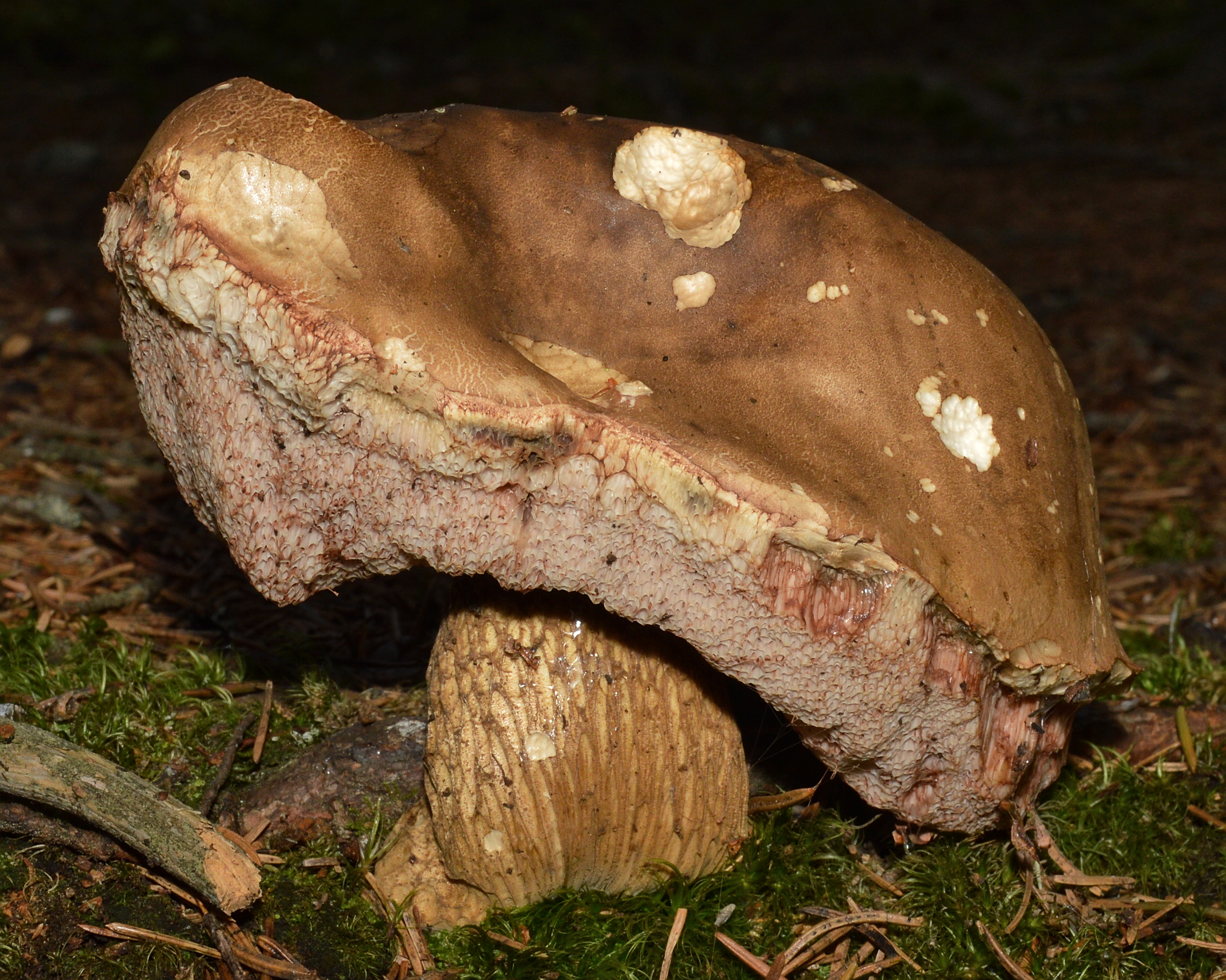
Tylopilus felleus
Key differences
The brown birch bolete (Leccinum scabrum) can resemble older, fully grown fruiting bodies of the bitter bolete. It is distinguished by white tubes without any pinkish cast and a stem covered with dark scales, lacking a yellowish background and lacking a mesh pattern.
Leccinum variicolor
Key differences
The mottled bolete (Leccinum variicolor) also grows under birches, typically in wetter locations. It is distinguished by distinct bluish-green discoloration of the flesh at the base of the stem, delayed reddening of the flesh, and an often mottled, dark gray to brown cap.
Leccinum cyaneobasileucum
Key differences
The white birch bolete (Leccinum cyaneobasileucum) is distinguished by a blue-green discoloration at the stem base, a generally paler cap, and pale or white scales on the stem.
Leccinum melaneum
Key differences
The dark birch bolete (Leccinum melaneum) is characterized by a very dark or nearly black cap, a stockier and heavier build, and more compact flesh. The status of this taxon remains under debate (it is treated variously as a variety or as a distinct species).
Leccinum duriusculum
Key differences
The slate bolete (Leccinum duriusculum) grows under poplars (chiefly under aspen). Its flesh turns red when damaged, then grays or blackens, and a greenish tint appears at the base of the stem.
Leccinum pseudoscabrum
Key differences
The hornbeam bolete (Leccinum pseudoscabrum) is distinguished by its mycorrhizal association with hornbeam and the darkening of bruised flesh.
Leccinum versipelle
Key differences
The orange birch bolete (Leccinum versipelle) in its brown color form is sometimes confused with the brown birch bolete, but its flesh distinctly grays and darkens in cross-section.
FAQ
What features distinguish the stem of the brown birch bolete?
The stem is slender, cylindrical, whitish, and densely covered with small scales ranging in color from gray through brownish to blackish. As the fruiting body matures, it becomes fibrous and woody.
Is the brown birch bolete an edible mushroom?
Yes, it is a widely collected and tasty edible mushroom. Young caps are especially prized. The stems of older specimens can be tough and fibrous, which is why they are often discarded.
Can the brown birch bolete be confused with a poisonous mushroom?
In Poland, there are no deadly poisonous boletes of this appearance. Inexperienced foragers might confuse it with the bitter bolete, which has a bitter taste and pores that turn pinkish with age.
In which months does the brown birch bolete occur?
Fruiting bodies generally appear from summer to late autumn, most commonly from June or July until the end of October, peaking in September following warm and moist days.
How does the brown birch bolete differ from the orange birch bolete?
The orange birch bolete has an orange cap, flesh that darkens to grayish-black, and a bluish base of the stem. In the brown birch bolete, the cap is grayish-brown, and the flesh may only faintly turn pink, brown, or gray.
Under which trees does the brown birch bolete grow?
This mushroom forms mycorrhizae exclusively with birches. It can be found in birch and mixed forests, at the edges of thickets, and in peat bogs wherever birch trees grow.
Which parts of the fruiting body are best suited for culinary processing?
The most prized are the caps of young fruiting bodies with a firm structure. The stems of older mushrooms become fibrous and tough, so they are usually dried and ground into seasoning or simply discarded.
Does the flesh of the brown birch bolete change color when cut?
The flesh of a typical brown birch bolete is white or cream and essentially does not change color when cut or bruised, nor does it turn blue, unlike certain other Leccinum species (e.g., the mottled bolete).
Enthusiast
Underside of the cap
- Tube length
- Tube length: 8–19 mm.
Names and history
- Obowiązująca nazwa krajowa
- koźlarz babka
- Obowiązująca nazwa taksonomiczna
- Leccinum scabrum
Home observations
Spore print
- Required materials
- fresh, mature cap, sheet of paper, glass or small bowl, water
- Time
- 2–24 h
- Procedure
- Place the cap underside down on the paper.
- Add a drop of water on top and cover.
- After 2–24 hours, lift the cap and examine the deposit.
What to look for
- Spore print colour
- Spore print colour: brown.
- Spore print shade
- Spore print shade: olive-brown. Spore print shade: Olive-brownish.
Under the microscope
- Required materials
- light microscope, microscope slide and cover slip, needle, water, spores from print
- Procedure
- Transfer a small amount of the spore print onto the slide using a needle.
- Add a drop of water, cover with a cover slip, and examine the spores.
What to look for
- Spore shape
- Spore shape: fusiform. Spore shape: fusiform. Spore shape: elongate ellipsoid. Spore shape: nearly spindle-shaped.
- Spore surface
- Spore surface: smooth. Spore surface: smooth.
- Spore dimensions
- Length 13–22 µm, width 4–6.5 µm.
Compare dimensions after calibrating the microscope scale.
Ecology and distribution
- Soil reaction
- Soil reaction: acidic.
- Soil texture
- Soil texture: sandy.
- Soil moisture
- Soil moisture: dry.
Soil moisture: Moist. - Mycorrhizal hosts
- General species association: Mycorrhizal hosts: Betula (general partner list).
History and culture
The species was scientifically described by Jean Baptiste Bulliard as Boletus scaber, and in 1821 Samuel Frederick Gray transferred it to the genus Leccinum, creating the current combination Leccinum scabrum. In Polish folk tradition and regional nomenclature, this mushroom acquired a number of common terms, such as babka, koźlak, brzeziak, or podbrzeźniak, which directly reference its symbiosis with birch.
Ethnomycological research highlights the strong position of scaber stalks (koźlarze) in the foraging culture of Central and Eastern Europe. However, these records remain a description of a broader group: in mushroom foragers' awareness, scaber stalks function as a collective folk taxon (Leccinum spp.), within which individual biological species with brown caps are not distinguished. Thus, in practice, all traditional beliefs, early harvesting customs, and names refer to the entire group of birch-associated boletes, and not exclusively to the narrowly conceived Leccinum scabrum in the sense of modern taxonomy.
Edibility and safety
The brown birch bolete (Leccinum scabrum) is a widely recognized edible mushroom with a mild flavor and a subtle, forest aroma. For culinary purposes, primarily young, compact, and firm fruit bodies are gathered. Mature and older specimens quickly become flaccid, turn spongy, and become prone to waterlogging, while the flesh in their stipes becomes woody, hard, and fibrous, which causes them to lose their culinary utility.
This species strictly requires heat treatment before consumption and cannot be eaten raw. Basic preparation methods include boiling, stewing, or frying. During boiling and heat processing, the flesh of the brown birch bolete naturally darkens, taking on a grayish to dark brown color, which is a typical feature of this mushroom. For culinary purposes, only healthy, fresh, and undamaged specimens should be used, discarding fruit bodies that are overripe, excessively softened, or showing traces of insect feeding.
Habitat and occurrence
The brown birch bolete is a mycorrhizal fungus strictly associated with birches (Betula spp.), particularly with silver birch and downy birch. It occurs in deciduous and mixed forests with the presence of this tree, in young stands, pure birch forests, as well as in peat bogs, heathlands, and damp forest clearings. It prefers acidic, sandy, and sandy-loam substrates.
The geographic range in a certain circumscription encompasses the temperate and cool zone of Europe, where this species is common. Mycological literature has also pointed to its occurrence in other regions of the Northern Hemisphere; however, modern molecular studies call for caution regarding generalizations about its range. In more recent publications, material originating from Asia is reported with reservation as Leccinum cf. scabrum due to taxonomic doubts and the necessity of revising identifications.
Under Central European conditions, including in Poland, the fruiting season lasts from early summer to late autumn. According to national phenological data, fruit bodies appear from June to November (VI–XI), depending on precipitation and substrate temperature.
Researcher
Edibility and culinary use
Ustalenia źródłowe: jadalność, spożycie i wykorzystanie
- Edibility
- Edible — źródło oznaczenia
Źródło bez opisu bibliograficznego · Snowarski, Leccinum scabrum: owocnik, zarodniki, występowanie; separate named-species account.
Źródło bez opisu bibliograficznego · Karel Tejkal, Leccinum scabrum; do not include separately discussed melaneum or roseofractum forms.
Scientific names and taxonomy
- Current scientific name
Leccinum scabrum
Leccinum scabrum (Bull.) Gray należy do rodziny Boletaceae w rzędzie Boletales (podklasa Agaricomycetidae, klasa Agaricomycetes, typ Basidiomycota, królestwo Fungi). Połączenie Graya zostało opublikowane w Natural Arrangement of British Plants 1:647 (1821). Bazionimem jest Boletus scaber Bull. z dzieła Herbier de la France 3, tablica 132. Rejestr Species Fungorum podaje datę 1783 [1782–83], natomiast rewizja taksonomiczna z 2005 r. wskazuje 1782 r.; rozbieżność ta pozostaje odnotowaną różnicą bibliograficzną.
Wśród historycznych ujęć i kombinacji taksonomicznych znajdują się m.in. Suillus scaber, Krombholzia scabra, Gyroporus scaber, Ceriomyces scaber, Tubiporus scaber, Krombholziella scabra oraz Trachypus scaber. W piśmiennictwie mykologicznym opisano również liczne odmiany i formy pod odrębnymi nazwiskami autorów i datami. Przynależność do dzisiejszej synonimii nie oznacza jednak tożsamego zakresu każdego dawnego ujęcia taksonomicznego.
Taxon scope and identification limitations
W literaturze odnotowano angielską nazwę zwyczajową Birch Bolete (bez przypisania do konkretnego obszaru anglojęzycznego). Niemiecka nazwa Gemeiner Birkenpilz nie ma bezpośredniego potwierdzenia w wykorzystanych źródłach.
Den Bakker i Noordeloos w rewizji z 2005 r. przyjęli szerokie ujęcie Leccinum scabrum, włączając do niego taksony opisywane pod nazwami roseofractum, avellaneum, rigidipes oraz subcinnamomeum. W tym ujęciu różowienie lub czerwienienie miąższu mieści się w naturalnej zmienności gatunku. Leccinum melaneum został w tej pracy potraktowany jako odrębny takson, a hipoteza o jego mieszańcowym pochodzeniu pozostaje nierozstrzygnięta (czeska literatura ujmuje go jako odmianę lub osobny gatunek). Z kolei Leccinum rotundifoliae w rewizji z 2005 r. uznano za odrębny takson, podczas gdy Species Fungorum włącza tę nazwę do synonimii L. scabrum.
Takson Leccinum oxydabile jest obecnie włączany do synonimii Leccinum scabrum w bazie Species Fungorum, choć inne bazy danych i rejestry mykologiczne (takie jak Checklist, GBIF czy MycoBank) bywają przywoływane w literaturze w kontekście odmiennych przypisań taksonomicznych. Cech dawnych ujęć tego taksonu nie należy bezkrytycznie przenosić na współcześnie definiowany gatunek.
Brak sinienia miąższu nie jest cechą wystarczającą do bezwzględnego oznaczenia gatunku, gdyż nietypowe owocniki innych gatunków (np. Leccinum snellii czy L. schistophilum) mogą nie wykazywać typowej dla siebie reakcji barwnej. Oznaczenie wymaga uwzględnienia budowy mikroskopowej skórki, zarodników i kaulocystyd. Reakcje chemiczne miąższu (brak reakcji lub słabe czerwienienie z formaliną oraz próby z FeSO4) mają zmienny przebieg zależny od wieku i wilgotności owocnika, przez co nie stanowią jednoznacznych kryteriów kluczowych.
- Zakres ujęcia taksonomicznego
Leccinum scabrum (Bull.) Gray; each literature report retains its own explicitly stated source concept. Den Bakker and Noordeloos2005 pp.547–550 are the wider concept including L.roseofractum, L.avellaneum and L.rigidipes. Gargano material is SAF545. No assignment of neighbouring species descriptions or subsection Scabra general characters.
[9] [10]
Ecology and distribution
- Occurrence frequency
- Poland: Occurrence frequency: common. [10]
Laboratory diagnostics
Dane ustrukturyzowane
Basidia
Caulocystidia
Hymenial cystidia
- Hymenial cystidium length
- Hymenial cystidium length: 30–50 µm. [4]
- Hymenial cystidium shape
- Hymenial cystidium shape: spindle- to flask-shaped. [4]
Hymenial cystidium shape: cylindrical. [4]
Hymenial cystidium shape: clavate. [4]
Hymenial cystidium shape: Flask-shaped. [4] - Hymenial cystidium width
- Hymenial cystidium width: 5.5–7.5 µm. [4]
Pileipellis
- Width of pileipellis elements
- Width of pileipellis elements: 3.5–8 µm. [4]
Width of pileipellis elements: 8–17 µm. [4]
Width of pileipellis elements: 7.5–16 µm. [4] - Incrustation of cuticle hyphae
- Incrustation of cuticle hyphae: present. [4]
- Color of cuticle pigment
- Color of cuticle pigment: brown. [4]
- Structure of the pileipellis
- Structure of the pileipellis: cutis. [4]
- Shape of the terminal cell of the pileipellis
- Shape of the terminal cell of the pileipellis: conical. [4]
Spores
- Spore contents
- Spore contents: with vacuoles. [8]
- Droplets inside the spore
- Droplets inside the spore: present. [8]
- Spore length
- Spore length: 13–20 µm. [10]
Spore length: 13.5–22 µm. [4]
Spore length: 13–21 µm. [8]
Spore length: 13–20 µm. [5] - Spore length-to-width ratio
- Spore length-to-width ratio: 2.5–3.5. [4]
- Spore shape
- Spore shape: fusiform. [4]
Spore shape: fusiform. [10]
Spore shape: elongate ellipsoid. [8]
Spore shape: nearly spindle-shaped. [8] - Basidiospore suprahilar depression
- Basidiospore suprahilar depression: present. [4]
- Spore wall thickness
- Spore wall thickness: thin-walled. [8]
Material and research methods
Metody i zapisy źródłowe — Den Bakker & Noordeloos2005 pp.547,549–550; exact L.scabrum account, wider concept including roseofractum, avellaneum and rigidipes; not subsection introduction or L.melaneum.
Liczba zarodników na jednej podstawce; Długość podstawki; Szerokość podstawki; Długość kaulocystyd; Szerokość kaulocystyd; Długość cystydy hymenialnej; Szerokość cystydy hymenialnej; Szerokość elementów skórki; Długość zarodnika; Iloraz długości i szerokości zarodnika; Szerokość zarodnika — zapis źródłowy: „Exact original boundaries and context are retained in original source and claims; three pileipellis element classes remain different targets. Q is source-reported, not calculated from independent interval bounds.” [4]
Kształt kaulocystyd; Kształt cystydy hymenialnej; Inkrustacja strzępek skórki; Barwa pigmentu skórki; Organizacja skórki kapelusza; Kształt komórki końcowej skórki kapelusza; Kształt zarodnika; Zagłębienie nad wnęką bazydiospory — zapis źródłowy: „Den Bakker & Noordeloos2005 pp.547,549–550; exact L.scabrum account, wider concept including roseofractum, avellaneum and rigidipes; not subsection introduction or L.melaneum.” [4]
Metody i zapisy źródłowe — Gargano et al., DOI10.1080/21501203.2024.2342519, §§2.1–2.2,3.1; material SAF545, distinct from a general species interval.
Identyfikacja kropli: nierozstrzygnięta.
Zawartość zarodnika; Krople wewnątrz zarodnika; Kształt zarodnika; Powierzchnia zarodnika; Grubość ściany zarodnika — zapis źródłowy: „Gargano et al., DOI10.1080/21501203.2024.2342519, §§2.1–2.2,3.1; material SAF545, distinct from a general species interval.” [8]
Długość zarodnika; Szerokość zarodnika — zapis źródłowy: „Exact original boundaries and context are retained in original source and claims; three pileipellis element classes remain different targets. Q is source-reported, not calculated from independent interval bounds.” [8]
Metody i zapisy źródłowe — Snowarski, Leccinum scabrum: owocnik, zarodniki, występowanie; separate named-species account.
Długość zarodnika; Szerokość zarodnika — zapis źródłowy: „Exact original boundaries and context are retained in original source and claims; three pileipellis element classes remain different targets. Q is source-reported, not calculated from independent interval bounds.” [10]
Kształt zarodnika; Powierzchnia zarodnika — zapis źródłowy: „Snowarski, Leccinum scabrum: owocnik, zarodniki, występowanie; separate named-species account.” [10]
Metody i zapisy źródłowe — Karel Tejkal, Leccinum scabrum; do not include separately discussed melaneum or roseofractum forms.
Długość zarodnika; Szerokość zarodnika — zapis źródłowy: „Exact original boundaries and context are retained in original source and claims; three pileipellis element classes remain different targets. Q is source-reported, not calculated from independent interval bounds.” [5]
Occurrence verification — scope and limitations
Materiał: Pierwotna kolekcja autora atlasu z Kotliny Kłodzkiej.
Zakres odczytu: Fragmenty źródeł.
Odczytano fragment źródła; pełny tekst i metody nie zostały zweryfikowane.
Data przeglądu: 21.10.2026.
Ograniczenia: Źródłowe oznaczenie i zakres pojęcia zachowano. Nie zadeklarowano nowego badania okazów ani odczytu wszystkich publikacji cytowanych przez źródło.
[10]Scope of the review
Before completion, the record requires completion or settlement.
- Search for occurrence regions requires reconciliation.
- Connections of earlier findings require re-examination.
- New sources require accounting for information encountered during the review.
Legal basis and scope of assessment
Regulations for location: Poland
Basis for the protection information
Koźlarz babka nie jest objęty w Polsce gatunkową ochroną ścisłą ani częściową.
[6]Basis of trade information
Koźlarz babka (wszystkie odmiany) figuruje w polskim wykazie grzybów dopuszczonych do obrotu i produkcji przetworów grzybowych, poz.15.
[7]Key substances and their effects
Analizę biochemiczną wysuszonej i zmielonej próby SAF545 przeprowadziło laboratorium EcamRicert (raport 20LA09820 z 28 lipca 2020 r.) w trzech powtórzeniach technicznych, metodami analitycznymi według Baldini i in. (1996), z przelicznikiem białka N × 6,25 i oszacowaniem niepewności według UNI ISO 3534-1:2000.
Skład podstawowy i wartość energetyczna suchej zmielonej próby (wartości na 100 g):
- Sucha masa: 91,29 ± 0,38 g
- Wilgotność: 8,71 ± 0,38 g
- Białko ogólne (N × 6,25): 31,7 ± 1,3 g
- Tłuszcz ogólny: 3,64 ± 0,22 g
- Węglowodany: 31,57 ± 2,44 g
- Błonnik pokarmowy (wysokocząsteczkowy): 18,9 ± 2,0 g
- Popiół: 5,48 ± 0,30 g
- Wartość energetyczna: 324 ± 5 kcal (1361 ± 21 kJ).
Zawartość cukrów w suchej zmielonej próbie (g/100 g):
- Glukoza: 2,63 ± 0,41
- Fruktoza: 0,334 ± 0,053
- Laktoza: < 0,010
- Sacharoza: < 0,010
- Maltoza: < 0,010
- Cukry ogółem: 2,964 ± 0,413.
Zawartość witamin (%) i składników mineralnych (mg/kg) w suchej zmielonej próbie:
- Witamina D3: < 0,00002%
- Witamina B1: < 0,00001%
- Witamina B2: 0,0016 ± 0,0002%
- Witamina B3: 0,0146 ± 0,0015%
- Witamina B5: 0,0019 ± 0,0002%
- Witamina B6: < 0,00003%
- Witamina B8: < 0,00003%
- Witamina B12: < 0,000005%
- Sód (Na): 0,028 ± 0,006 mg/kg
- Potas (K): 2,25 ± 0,53 mg/kg
- Żelazo (Fe): < 0,003 mg/kg
- Wapń (Ca): < 0,025 mg/kg
- Fosfor (P): 3710,0 ± 670,0 mg/kg
- Magnez (Mg): 590,0 ± 130,0 mg/kg
- Cynk (Zn): 71,0 ± 13,0 mg/kg
- Miedź (Cu): 16,8 ± 3,2 mg/kg
- Selen (Se): 7,4 ± 1,8 mg/kg
- Mangan (Mn): 6,6 ± 1,3 mg/kg
- Nikiel (Ni): 1,01 ± 0,18 mg/kg
- Chrom (Cr): 0,84 ± 0,16 mg/kg
- Siarka całkowita (S): 8200,0 ± 1,50 mg/kg.
Profil kwasów tłuszczowych w suchej zmielonej próbie (g/100 g):
- Kwas masłowy (4:0): < 0,010
- Kwas kapronowy (6:0): < 0,010
- Kwas enantowy (7:0): < 0,010
- Kwas kaprylowy (8:0): < 0,010
- Kwas kaprynowy (10:0): < 0,010
- Kwas kaproleinowy (10:1): < 0,010
- Kwas laurynowy (12:0): < 0,010
- Kwas lauroleinowy (12:1 n-3): < 0,010
- Kwas izomirystynowy (14:0 iso): 0,0010
- Kwas mirystynowy (14:0): 0,0073 ± 0,0017
- 14:1 (suma): < 0,0010
- Kwas pentadekanowy (15:0): 0,0094 ± 0,0021
- 15:1 (suma): 0,0093 ± 0,0021
- Kwas sarcinowy (15:0 ante-iso): < 0,0010
- Kwas izopalmitynowy (16:0 iso): < 0,0010
- Kwas anteizopalmitynowy (16:0 ante-iso): < 0,0010
- Kwas palmitynowy (16:0): 0,372 ± 0,056
- 17:0 ante-iso: 0,0088 ± 0,0020
- Kwas margarynowy (17:0): 0,00366 ± 0,00100
- Kwas margarynowy (17:0 iso): < 0,0010
- 17:1 (suma): 0,0098 ± 0,0020
- Kwas palmitooleinowy (16:1 suma): 0,0224 ± 0,0048
- Kwas izostearynowy (18:0 iso): 0,0348 ± 0,0074
- Kwas anteizostearynowy (c-18:0 ante-iso): < 0,0010
- Kwas stearynowy (18:0): 0,075 ± 0,016
- Kwas oleinowy (18:1 suma): 1,05 ± 0,13
- 19:0: < 0,0010
- 19:0 ante-iso: < 0,0010
- 19:1 (suma): < 0,0010
- Kwas arachidowy (20:0): 0,0055 ± 0,0013
- Kwas izoarachidowy (20:0 iso): < 0,0010
- Kwas α-linolenowy (18:3 suma): 0,0085 ± 0,0017
- Kwas gadoleinowy (20:1 suma): 0,0145 ± 0,0031
- Sprzężony kwas linolowy (suma 18:2 CLA): < 0,0010
- Kwas heneikozanowy (21:0): < 0,0010
- Kwas stearydonowy (18:4 n-3): 0,0146 ± 0,0031
- Kwas behenowy (22:0): 0,0042 ± 0,0011
- 22:1: 0,00206 ± 0,00077
- Kwas lignocerynowy (24:0): 0,00231 ± 0,00080
- Wielonienasycone kwasy tłuszczowe >C20: 0,00183 ± 0,00074
- Kwasy tłuszczowe nasycone (SFA): 0,523 ± 0,059
- Kwasy tłuszczowe jednonienasycone (MUFA): 1,11 ± 0,12
- Kwasy tłuszczowe wielonienasycone (PUFA): 1,98 ± 0,23
- Stosunek kwasów PUFA/MUFA: 1,78 ± 0,29
- Stosunek kwasów PUFA/SFA: 3,79 ± 0,62.
Zawartość wolnych aminokwasów i związków pokrewnych w suchej zmielonej próbie (g/100 g):
- Kwas asparaginowy: 0,1124 ± 0,0082
- Kwas glutaminowy: 0,4318 ± 0,0313
- Alanina: 1,0600 ± 0,0769
- Arginina: 0,4556 ± 0,0331
- Asparagina: 0,1575 ± 0,0114
- Cystyna: < 0,0100
- Prolina: 0,1005 ± 0,0073
- Fenyloalanina: 0,0311 ± 0,0024
- Glicyna: 0,2679 ± 0,0194
- Glutamina: 0,9199 ± 0,0667
- Izoleucyna: 0,0222 ± 0,0017
- Histydyna: 0,1353 ± 0,0098
- Leucyna: 0,0300 ± 0,0023
- Lizyna: 0,2170 ± 0,0158
- Metionina: < 0,0100
- Ornityna: 0,2085 ± 0,0151
- Seryna: 0,3202 ± 0,0232
- Tyrozyna: 0,0538 ± 0,0040
- Treonina: 0,2762 ± 0,0200
- Walina: 0,1220 ± 0,0089
- Kwas γ-aminomasłowy (GABA): 0,3900 ± 0,0283
- Kwas α-aminomasłowy: < 0,0010
- Wolne aminokwasy ogółem: 5,31 ± 0,13.
W profilu lipidowym zmielonej próby wielonienasycone kwasy tłuszczowe (PUFA) stanowią 1,98 ± 0,23 g/100 g, jednonienasycone (MUFA) 1,11 ± 0,12 g/100 g, a nasycone (SFA) 0,523 ± 0,059 g/100 g, przy proporcjach PUFA/MUFA wynoszącej 1,78 ± 0,29 oraz PUFA/SFA równej 3,79 ± 0,62. Pula wolnych aminokwasów wynosi 5,31 ± 0,13 g/100 g, z istotnym udziałem alaniny, glutaminy oraz kwasu γ-aminomasłowego (GABA, 0,3900 ± 0,0283 g/100 g).
Dane analityczne badanej próby wykazują następujące poziomy wybranych mikroskładników: witamina D3 poniżej 0,00002%, żelazo poniżej 0,003 mg/kg, wapń poniżej 0,025 mg/kg, sód 0,028 ± 0,006 mg/kg, a potas 2,25 ± 0,53 mg/kg suchej masy, przy wyższych poziomach fosforu (3710,0 ± 670,0 mg/kg) i siarki całkowitej (8200,0 ± 1,50 mg/kg).
Średnice stref zahamowania wzrostu w próbie krążkowej wyniosły:
- Listeria monocytogenes ATCC 19114: MAE: 13,5 ± 0,2 mm; UAE: 12,0 ± 0,1 mm (różnica istotna statystycznie, P < 0,01)
- Staphylococcus aureus subsp. aureus ATCC 33862: MAE: 12,5 ± 0,1 mm; UAE: 12,5 ± 0,1 mm
- Salmonella enterica subsp. enterica ATCC 13076: MAE: 11,5 ± 0,2 mm; UAE: 11,0 ± 0,1 mm
- Escherichia coli ATCC 25922: MAE: 10,5 ± 0,2 mm; UAE: 10,0 ± 0,2 mm.
Stopień zahamowania wzrostu bakterii w teście mikrorozcieńczeń (kategorie autorów: brak: −; niskie ≤35%: +; umiarkowane >35–70%: ++; wysokie >70%: +++):
100 mg/mL
- L. monocytogenes: MAE 99,80% (+++); UAE 94,90% (+++)
- S. aureus: MAE 99,75% (+++); UAE 95,38% (+++)
- S. enterica: MAE 99,76% (+++); UAE 99,79% (+++)
- E. coli: MAE 99,83% (+++); UAE 97,97% (+++)
50 mg/mL
- L. monocytogenes: MAE 92,92% (+++); UAE 79,58% (+++)
- S. aureus: MAE 61,93% (++); UAE 66,43% (++)
- S. enterica: MAE 81,77% (+++); UAE 89,94% (+++)
- E. coli: MAE 93,40% (+++); UAE 80,07% (+++)
25 mg/mL
- L. monocytogenes: MAE 74,11% (+++); UAE 57,60% (++)
- S. aureus: MAE 40,82% (++); UAE 46,76% (++)
- S. enterica: MAE 46,65% (++); UAE 67,62% (++)
- E. coli: MAE 75,51% (+++); UAE 66,67% (++)
12,5 mg/mL
- L. monocytogenes: MAE 39,15% (++); UAE 31,08% (+)
- S. aureus: MAE 25,04% (+); UAE 20,75% (+)
- S. enterica: MAE 55,39% (++); UAE 43,44% (++)
- E. coli: MAE 51,32% (++); UAE 51,94% (++)
6,25 mg/mL
- L. monocytogenes: MAE 30,12% (+); UAE 18,33% (+)
- S. aureus: MAE 24,32% (+); UAE 22,30% (+)
- S. enterica: MAE 43,22% (++); UAE 42,82% (++)
- E. coli: MAE 46,73% (++); UAE 39,26% (++)
3,125 mg/mL
- L. monocytogenes: MAE 23,97% (+); UAE 15,58% (+)
- S. aureus: MAE 19,03% (+); UAE 16,33% (+)
- S. enterica: MAE 37,26% (++); UAE 28,90% (+)
- E. coli: MAE 27,61% (+); UAE 19,13% (+)
1,5625 mg/mL
- L. monocytogenes: MAE 17,50% (+); UAE 12,13% (+)
- S. aureus: MAE 6,38% (+); UAE 10,63% (+)
- S. enterica: MAE 18,68% (+); UAE 20,70% (+)
- E. coli: MAE 23,18% (+); UAE 20,84% (+)
0,78125 mg/mL
- L. monocytogenes: MAE 14,19% (+); UAE 11,59% (+)
- S. aureus: MAE 4,13% (+); UAE 10,84% (+)
- S. enterica: MAE 5,07% (+); UAE 7,10% (+)
- E. coli: MAE 0,00% (−); UAE 10,52% (+).
W teście mikrorozcieńczeń oba ekstrakty w stężeniu 100 mg/mL silnie hamowały wzrost wszystkich czterech badanych szczepów (>70%). Przy stężeniu 50 mg/mL ekstrakt UAE hamował wzrost E. coli na wysokim poziomie 80,07%. Przy stężeniu 6,25 mg/mL ekstrakt UAE hamował wzrost S. enterica na poziomie umiarkowanym (42,82%). Przy najniższym testowanym stężeniu 0,78125 mg/mL ekstrakt MAE nie wykazywał hamowania wzrostu E. coli (0,00%), podczas gdy pozostałe warianty wykazywały niskie wartości hamowania.
Badania aktywności biologicznej ekstraktów wodnych opublikowano w czasopiśmie Mycology (online 2024, wydanie drukowane 16(1), 2025, s. 402–412; erratum z 2025 r. pod DOI 10.1080/21501203.2025.2461915). Przedstawione wyniki mają charakter wyłącznie laboratoryjnych testów in vitro.
Habitat and occurrence
Habitat, region and season
Koźlarz babka tworzy ektomikoryzę wyłącznie z brzozami (Betula). Wyrasta na ziemi, pojedynczo, w małych grupach lub gromadnie, w lasach, zaroślach, a także poza lasem – w parkach, ogrodach i na trawnikach pod brzozami. Preferuje gleby piaszczyste, suche do umiarkowanie wilgotnych, o odczynie słabo kwaśnym, pojawiając się m.in. w ubogich murawach z kostrzewą czerwoną (Festuca rubra) i śmiałkiem pogniecionym (Deschampsia flexuosa).
W Czechach koźlarz babka jest bardzo pospolity i występuje od nizin po tereny górskie w okresie od czerwca do listopada (udokumentowane znaleziska pochodzą m.in. z kraju środkowoczeskiego – 6 X 2024, pilzneńskiego – 18 VIII 2023, zlińskiego – 28 IX 2018 i Wysoczyzny – 14 IX 2017).
Gatunek jest szeroko rozprzestrzeniony w Europie (bardzo pospolity m.in. w Holandii) i wykazuje prawdopodobny zasięg okołobiegunowy; materiały zielnikowe pochodzą m.in. z Holandii, Finlandii oraz prowincji Ontario w Kanadzie.
Potwierdzony zasięg występowania
Wszystkie obszary potwierdzone w zapisanych danych źródłowych.
| Kraj | Regiony i stanowiska | Owocnikowanie | Sources |
|---|---|---|---|
| Poland | Kłodzko Valley | VI–XI |
|
Materials
Herbarium collections
- 44
Netherlands; Drenthe, Emmen; 1999-10-02; H.C. den Bakker
[2]- 50
Netherlands; Drenthe, Nieuw Amsterdam; 1999-10-04; H.C. den Bakker
[2]- 54
Netherlands; Drenthe, Borger, vicinity of cottage park Land van Bartje; 1999-10-05; H.C. den Bakker
[2]- 01-009
Netherlands; Drenthe, Gieten, Boekweitveentje; 2001; R. Enzlin
[2]- 48
Netherlands; Drenthe, Hoogeveen; leg.B.de Vries; 1999-10-03; H.C. den Bakker
[2]- 62
Netherlands; Noord-Holland, Amsterdamse Waterleiding Duinen, Eiland van Rolvers; 1999-10-23; H.C. den Bakker
[2]- 58
Netherlands; Zuid-Holland, Wassenaar, Meijendel; 1999-10-17; H.C. den Bakker
[2]- 42
Netherlands; Zuid-Holland, Voorschoten; C.Bas; 1999-09-30; H.C. den Bakker
[2]- 124
Netherlands; Utrecht, Zeist, Soesterberg; 2000-10-06; H.C. den Bakker
[2]- 1+2 (L), designated epitype
France; Guyancourt, along N12, vicinity of Versailles; 2001-09-27; J. van Brummelen
[2]- Collection
France; Orne, Foret de Belleme; 2001-09-28; Van Brummelen
[2]- 95
Norway; Sogn og Fjordane, Sogndalsfjøra; 2000-09-08; H.C. den Bakker
[2]- 91
Norway; Sogn og Fjordane, Sogndalsfjøra; 2000-09-08; H.C. den Bakker
[2]- 87
Norway; Sogn og Fjordane, Sogndalsfjøra; IX 2000; H.C. den Bakker
[2]- 239
United Kingdom; Scotland, Inverness-shire, Aberarder Forest; 2001-09-13; H.C. den Bakker
[2]- 231
United Kingdom; Scotland, Inverness-shire, Insh Marshes; 2001-09-12; H.C. den Bakker
[2]- 237
United Kingdom; Scotland, Inverness-shire, Insh Marshes; 2001-09-12; H.C. den Bakker
[2]- 4399 (E), holotype L.rigidipes
United Kingdom; Scotland, Inverness-shire, Abernethy Forest; 1972-08-31; P. Orton
[2]- 4944 (E), holotype L.roseofractum
United Kingdom; Scotland, Ross & Cromarty, Loch Maree; R. Watling
[2]- 22
Sweden; Jämtland, Borgsjö; 1999-08-24; H.C. den Bakker
[2]- 80
Sweden; Åre; 2000-09-04; H.C. den Bakker
[2]- 2003076
United Kingdom; Wales, South Glamorgan, Merthyr-mawr sand dunes; A. Hills
[2]- SAF545
Poland; Białowieża forest, Podlaskie; literal published location, not geocoded; summer; exact date/year unreported
[2]
Sources
- leccinum_scabrum.source-collections
- src-bakker 2005
- src-cms-scabrum
- src-eli-protection-2014
- src-eli-trade-2026
- src-gargano 2024
- src-gbif-leccinum_scabrum
- src-snowarski-scabrum