Edible
Requires preparation

Poisonous when raw
Set your location to see data for your region.
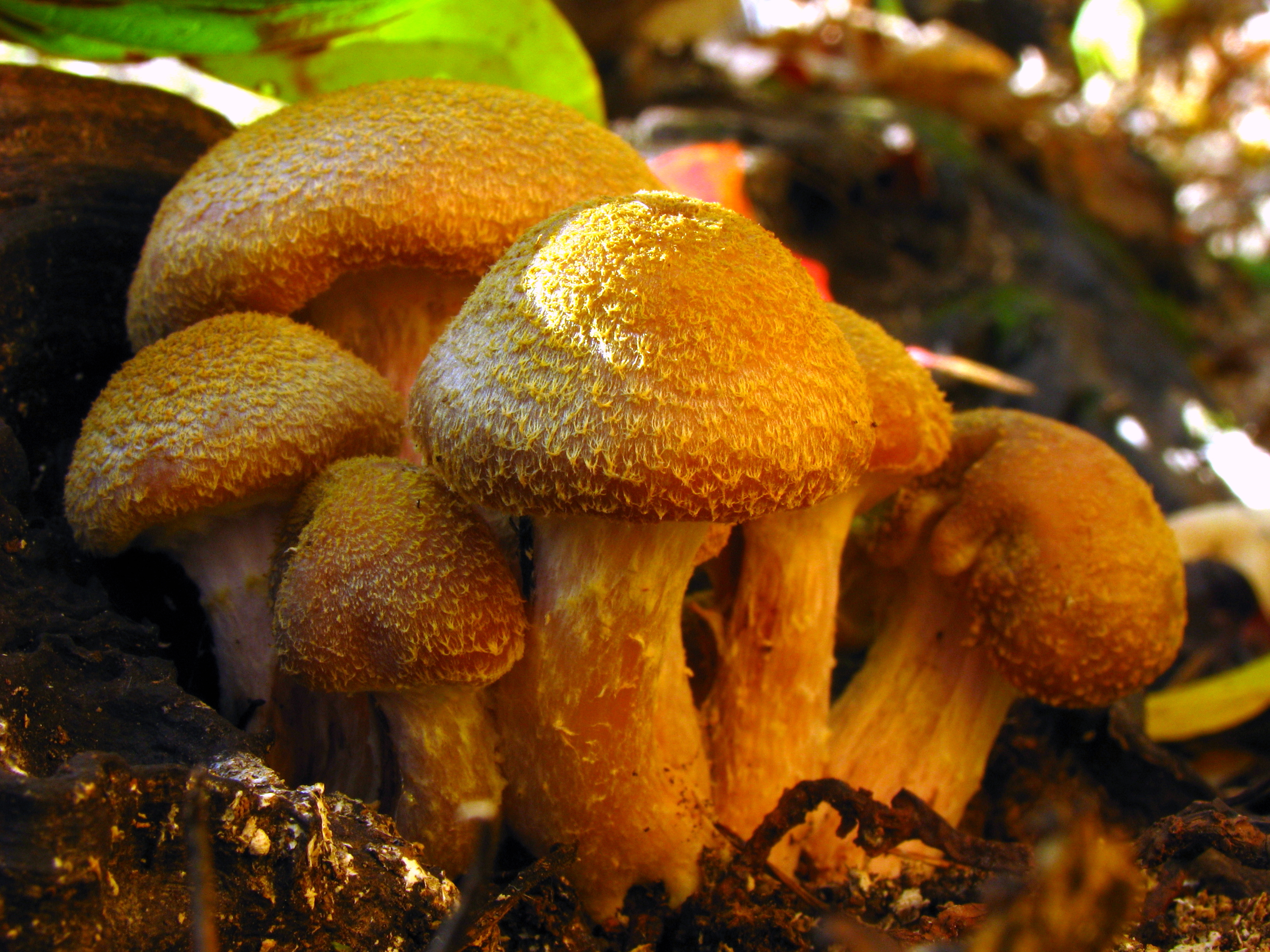


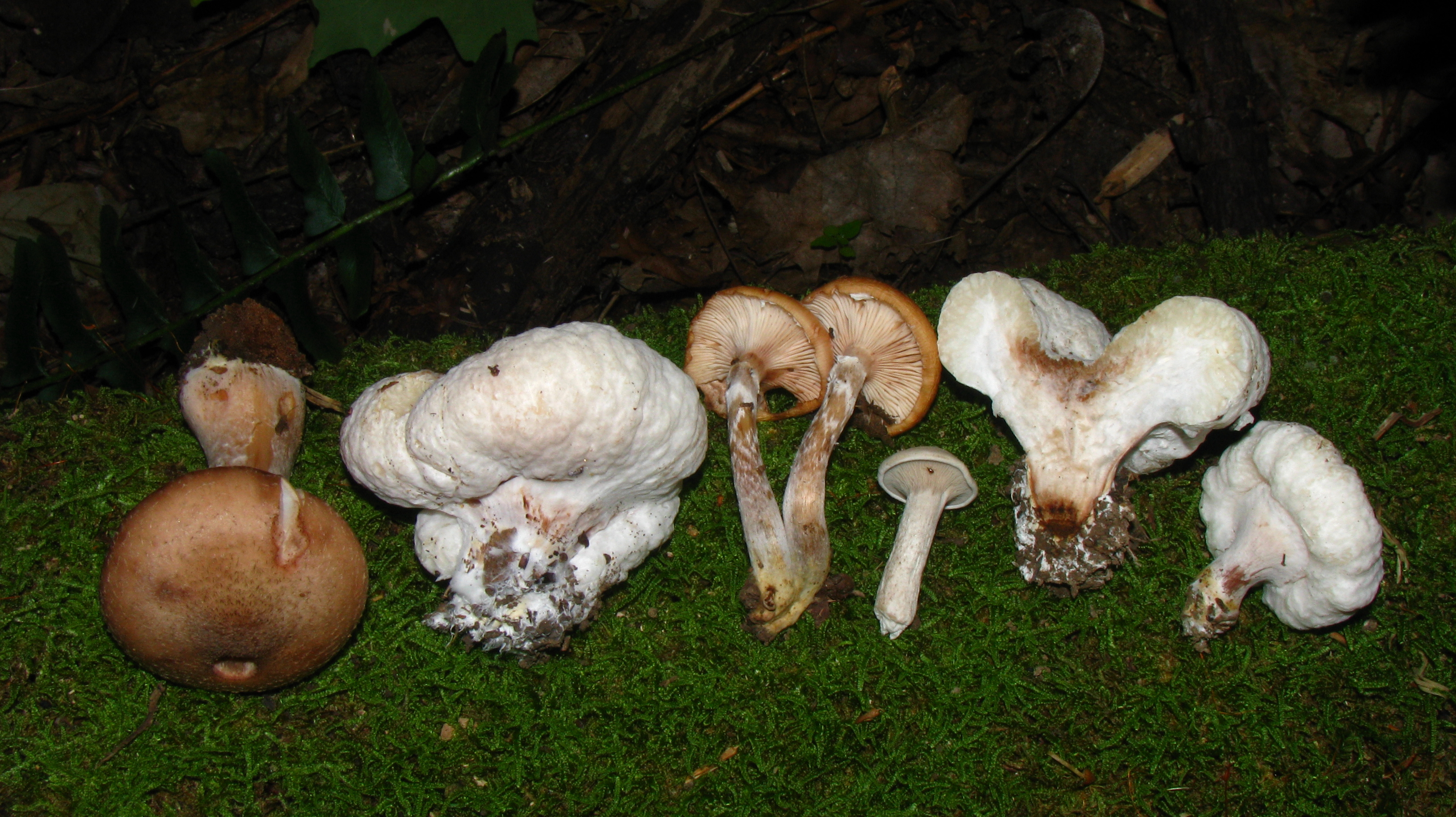

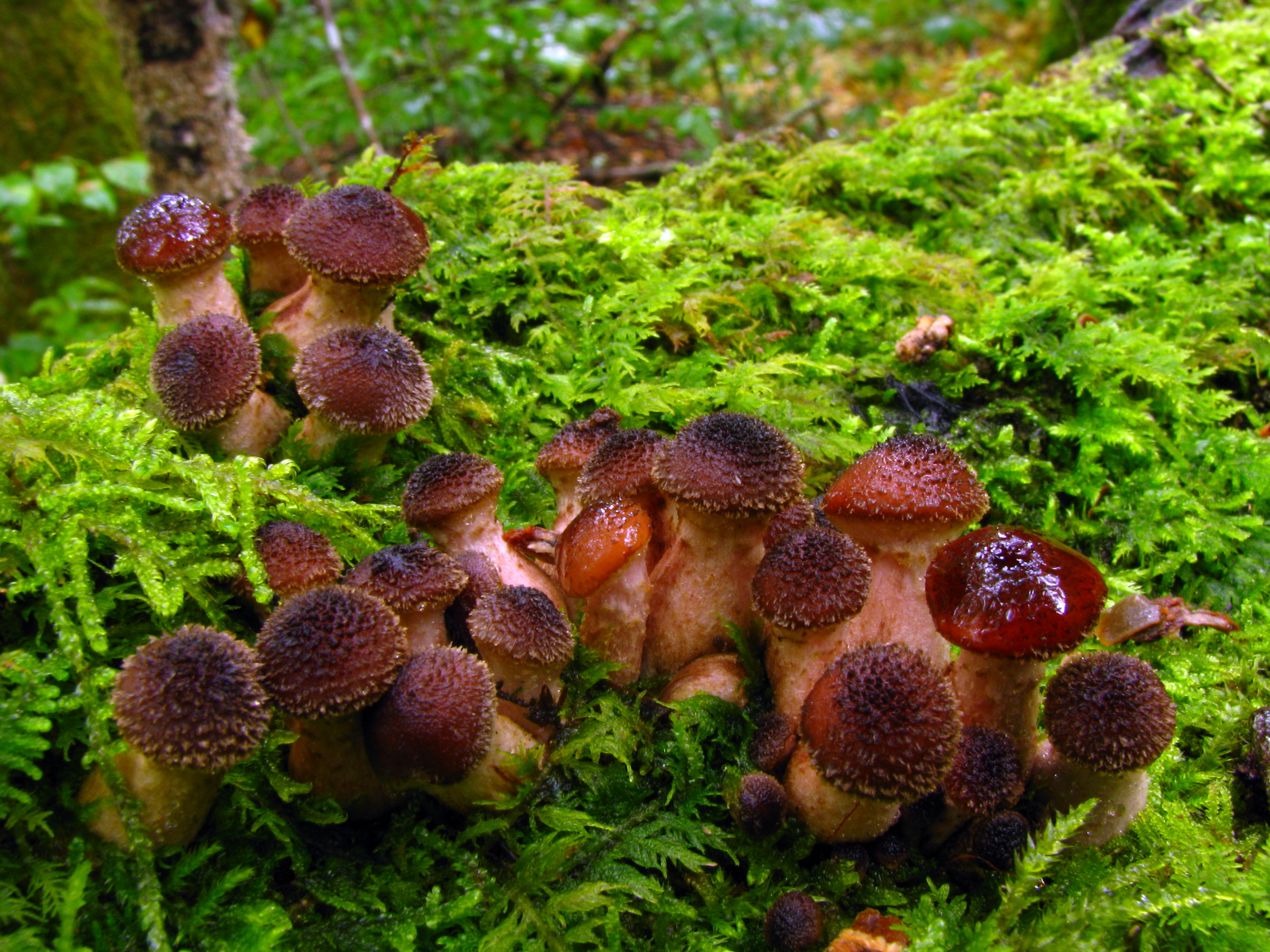


A common wood-dwelling fungus with a cap 3–10 cm (up to 12 cm), yellow-ochre, pinkish-brown, or brown in color, covered with fine, darker scales concentrated especially in the center around a low umbo. The cap margin in older specimens is striate. Gills whitish, flesh-brown with age, adnate with a tooth or slightly decurrent. The stipe is 4–12 cm long and 0.8–2 cm thick, towards the base distinctly clavate or bulbously thickened (up to 3 cm), with yellow remnants of the veil and black rhizomorphs at the base. The ring is fibrous-woolly, whitish with a yellow margin, often vanishing with age. Flesh whitish, firm, elastic, with an astringent taste. It grows in autumn on the wood and roots of deciduous trees, less often conifers. Poisonous when raw.
Identification, habitat, and key differences.
Forager
Fruitbody structure
- Fruit body form
- Fruit body form: Cap, stipe.
Cap
- Cap shape
- in young fruit bodies: Cap shape: conical.
Cap shape: flat. - Cap covering
- Cap covering: scaly.
Cap covering: scaly (dark-brown covering).
Cap covering: scaly (cap centre, greyish-brown covering).
Cap covering: scaly (at the cap margin, yellowish covering).
Cap covering: scaly (at the cap margin, whitish covering). - Cap stickiness and sliminess
- Cap stickiness and sliminess: sticky.
- Cap colour
- Cap colour: brown.
in young fruit bodies: Cap colour: brown.
in young fruit bodies: Cap colour: pinkish-brown. - Margin orientation
- in young fruit bodies: Margin orientation: inrolled.
- Cap diameter
- The cap measures 25–100 mm in diameter.
- Cap centre
- Cap centre: with a distinct umbo.
Underside of the cap
- Hymenophore type
- Hymenophore type: gills.
Gills at stipe
- Hymenophore attachment to the stipe
- Hymenophore attachment to the stipe: attached to the stipe (gills).
Hymenophore attachment to the stipe: attached to the stipe (gills).
Hymenophore attachment to the stipe: attached to the stipe (gills). - Hymenophore profile at the stipe
- Hymenophore profile at the stipe: notched at the stipe (gills).
- Attachment width of the hymenophore
- Attachment width of the hymenophore: broadly attached (gills).
- Decurrence of the hymenophore on the stem
- Decurrence of the hymenophore on the stem: decurrent with a tooth (gills).
Decurrence of the hymenophore on the stem: decurrent (gills).
Decurrence of the hymenophore on the stem: decurrent (gills). - Hymenophore colour
- Hymenophore colour: whitish.
- Relationship between the color of the edge and the face of the gill
- Relationship between the color of the edge and the face of the gill: same colour as the gill face.
- Gill spacing
- Gill spacing: closely spaced.
Gill spacing: closely spaced. - Presence of short gills
- Presence of short gills: present.
Stem and base
- Stipe shape
- Stipe shape: cylindrical.
- Stipe base
- Stipe base: club-shaped.
Stipe base: bulbous. - Stipe colour
- above the ring: Stipe colour: white.
below the ring: Stipe colour: brown.
at the stem base: Stipe colour: grayish. - Stipe surface relief
- above the ring: Stipe surface relief: grooved.
- Stipe surface covering
- Stipe surface covering: fibrillose (yellow covering).
- Stipe length
- Stipe length: up to 120 mm.
- Stipe diameter
- Stipe diameter: up to 30 mm.
Stipe diameter: up to 25 mm (at the stem base).
Ring
- Ring presence
- Ring presence: present.
Ring presence: present. - Structure of the ring material
- Structure of the ring material: fibrous.
Structure of the ring material: membranous. - Ring persistence
- Ring persistence: evanescent.
- Ring colour
- Ring colour: white (whole ring).
- Ring surface covering
- Ring surface covering: scaly (ring margin).
- Descriptive ring thickness
- Descriptive ring thickness: thin.
Flesh
- Flesh colour
- Flesh colour: whitish.
- Flesh firmness
- Flesh firmness: hard.
- Flesh taste
- Flesh taste: astringent.
Flesh taste: astringent, weak.
Flesh taste: bitter, weak. - Flesh elasticity
- Flesh elasticity: elastic.
- Flesh colour after damage
- Flesh colour after damage: no colour change.
Flesh colour after damage: no colour change.
Where and when it grows
- Habitat
- Habitat: deciduous woodland.
Habitat: park. - Substrate
- Substrate: buried wood.
- Fruit body growth pattern
- Fruit body growth pattern: solitary.
Fruit body growth pattern: in groups.
Fruit body growth pattern: in clusters. - Occurrence frequency
- Fruiting season
- Fruit bodies appear from August to November.
- Distribution area
- Distribution area: confirmed.
Edibility and culinary use
- Edibility
- Edible
- Required processing
- Requires preparation
- Raw consumption
- Poisonous when raw
Law
- Trade
- It is not on the Polish list of mushrooms approved for trade.
- Protection
- It is not on the Polish list of protected fungal species.
What it can be confused with
Armillaria cepistipes
Key differences
Armillaria gallica differs by a more persistent, often woolly or star-like splitting ring, more abundant yellow velar remnants on the stipe, slower disappearance of scales on the cap margin, and spores that are more frequently ellipsoidal-amygdaliform.
The very similar club-footed honey fungus (Armillaria cepistipes) loses the scales on the cap margin more quickly, has sparser velar remnants on the stipe, and more frequently forms broadly ellipsoid spores measuring 7–9(10) × 4.5–6.5(7) µm.
FAQ
Is the bulbous honey fungus edible?
Yes, it is a tasty edible mushroom, but it strictly requires boiling for a minimum of 15–20 minutes and pouring off the water. Raw or undercooked, it is poisonous.
Where and on what does the bulbous honey fungus grow?
It grows in deciduous and mixed forests, on dead wood, stumps, branches, or litter, often seemingly on the ground from buried wood.
How does it differ from the honey fungus?
It has a distinctly bulbously swollen stipe base with yellowish floccules and a more delicate, cobwebby or woolly ring, often with a yellow tint.
When is the season for this species?
Fruit bodies usually appear from late summer to late autumn, most often from September to November, singly or in small clusters.
Does the bulbous honey fungus grow in large clusters?
Unlike the dark honey fungus, it less frequently forms dense clusters. More often it grows singly, in small groups, or in loose tufts of a few specimens.
Does the mycelium of this species glow in the dark?
Yes, its mycelium and rhizomorphs exhibit the phenomenon of bioluminescence and can emit a faint, greenish light visible in complete darkness.
What are the culinary uses of this mushroom?
After parboiling, it is excellently suited for pickling in vinegar, frying, stewing, and as an ingredient in mushroom sauces and soups.
Which poisonous mushrooms can it be confused with?
It can be confused with the poisonous sulphur tuft, which has a bitter taste and sulphur-yellow flesh, and with the deadly poisonous funeral bell.
Enthusiast
Names and history
- Obowiązująca nazwa krajowa
- opieńka żółtawa
- Obowiązująca nazwa taksonomiczna
- Armillaria gallica Marxm. & Romagn.
- Inne nazwy krajowe
- Bulbous Honey Fungus
- Pozostałe nazwy
- opieńka żółta, opieńka żółtotrzonowa, opieńka bulwiasta
Home observations
Spore print
- Required materials
- fresh, mature cap, sheet of paper, glass or small bowl, water
- Time
- 2–24 h
- Procedure
- Place the cap underside down on the paper.
- Add a drop of water on top and cover.
- After 2–24 hours, lift the cap and examine the deposit.
What to look for
- Spore print colour
- Spore print colour: white.
Under the microscope
- Required materials
- light microscope, microscope slide and cover slip, needle, water, spores from print
- Procedure
- Transfer a small amount of the spore print onto the slide using a needle.
- Add a drop of water, cover with a cover slip, and examine the spores.
What to look for
- Spore shape
- Spore shape: broadly ellipsoid.
- Spore surface
- Spore surface: smooth. Spore surface: smooth.
- Spore dimensions
- Length 7–12 µm, width 4–6.5 µm.
- Spore dimensions
- Length 8.9 µm, width 5.5 µm.
Compare dimensions after calibrating the microscope scale.
Ecology and distribution
- Mode of nutrition
- Mode of nutrition: saprotrophic.
Mode of nutrition: parasitic.
Non-culinary uses
In Asia, the mycelium of A. gallica co-forms mycorrhizal associations essential for the growth and cultivation of tubers of the medicinal orchid Gastrodia elata.
History and culture
The separation of A. gallica from the former, broad concept of the honey fungus was a breakthrough in understanding the ecology and diversity of forest pathogens.
Edibility and safety
A conditionally edible mushroom – raw or undercooked, it is poisonous and causes acute gastrointestinal disorders. It strictly requires boiling for a minimum of 30 minutes and discarding the broth.
The mushroom is collected for culinary purposes, but due to the presence of substances irritating the digestive tract, it strictly requires prolonged cooking before consumption.
Habitat and occurrence
The bulbous honey fungus (Armillaria gallica) occurs primarily in deciduous and mixed forests, less frequently in coniferous forests, and occasionally also in old parks. As a saprotroph and weak secondary parasite, it develops on dead wood—fruit bodies grow singly or in small clusters on decaying stumps, roots, fallen branches, and very often seemingly directly from the litter from pieces of wood buried shallowly in the soil. In the domestic research material summarized by Żółciak (2003, Tables 2–3), the presence of the fungus was documented on 9 species of deciduous trees, including European beech and pedunculate oak, among others, whereas it is recorded much less frequently on coniferous trees. In Europe, the species has a wide range; however, in relation to Poland, scientific publications indicate confirmed localities in several different regions of the country, without grounds for generalizing an even commonness across the entire area. The fruiting season in tabular summaries for Poland covers the months from August to November (VIII–XI), while in analogous phenological tables for the Czech Republic, occurrence was documented from September to October (IX–X).
Researcher
Edibility and culinary use
Ustalenia źródłowe: jadalność, spożycie i wykorzystanie
- Edibility
- Edible — źródło oznaczenia
Materiał: po pełnej obróbce
Karel Tejkal, Vladimír Sojka, ČMS: Armillaria gallica · myko.cz/myko-atlas/Armillaria-gallica/: Popis and Kuchyňské využití; full page, atlas-level, Hagara2014 not read
- Required processing
- Requires preparation
Karel Tejkal, Vladimír Sojka, ČMS: Armillaria gallica · myko.cz/myko-atlas/Armillaria-gallica/: Popis and Kuchyňské využití; full page, atlas-level, Hagara2014 not read
- Raw consumption
- Poisonous
Materiał: surowy
Źródło bez opisu bibliograficznego · Artenliste Speisewert, Armillaria gallica etc. entry; W. Pätzold annotation on raw toxicity of Armillaria. Group-level author assessment explicitly covering listed Armillaria gallica, not a species-specific clinical trial.
Scientific names and taxonomy
- Current scientific name
Armillaria gallica Marxm. & Romagn.
Nazwa naukowa Armillaria gallica Marxm. & Romagn. należy do rodziny obrzękowcowatych (Physalacriaceae). Została opublikowana w 1987 roku i jest uznawana przez Index Fungorum za nazwę bieżącą.
W literaturze mykologicznej takson ten bywał opisywany pod nazwami Armillaria bulbosa, Armillariella bulbosa oraz Armillaria mellea var. bulbosa. W części baz i atlasów (m.in. w polskim rejestrze GRej) preferowana bywa nazwa Armillaria lutea, traktowana w innych ujęciach jako synonim heterotypowy.
Taxon scope and identification limitations
Nazwa Armillaria inflata uznawana jest za nazwę wątpliwą (nomen dubium) z powodu braku zachowanego materiału zielnikowego umożliwiającego jej jednoznaczną weryfikację molekularną w obrębie kompleksu A. cepistipes–A. gallica.
Rozpoznanie taksonomiczne opiera się na analizie mikrostruktury osłony, pomiarach zarodników oraz badaniach sekwencji genu tef1-α, gdyż sam region ITS nie zawsze w pełni rozdziela gatunki z tego kompleksu.
- Zakres ujęcia taksonomicznego
Przyjęto bieżące ujęcie Armillaria gallica (IF131162) oraz materiały oznaczone jako ten gatunek w pracy Antonína (2009, Czechy i Słowacja), atlasie czeskim i opracowaniu Kuo (USA). Doniesienia GRej jako A. lutea oraz powiązania nazw bulbosa/lutea zachowują własne zakresy taksonomiczne; nie przypisano ich automatycznie do wąsko rozumianej A. gallica. Ujęcie synonimii heterotypowej w NCBI nie oznacza scalenia taksonów w Index Fungorum. Dawny genet z Michigan, przekazy o grupie opieniek i materiały laboratoryjne rozpatruje się osobno.
[21] [25] [23] [22] [1]
Ecology and distribution
Laboratory diagnostics
Material and research methods
Composition and activity study — Su 2024 — the same result and three doses
Materiał: Frakcja polisacharydowa AgP z materiału opisanego przez autorów jako A. gallica z Heilongjiang; osobne komórki docelowe HepG2 (TCHu 72).
Zakres odczytu: Pełny tekst.
Ograniczenia: Doświadczenie dotyczyło wyłącznie wskazanej frakcji AgP i komórek HepG2 w modelu uszkodzenia oksydacyjnego. Nie przeprowadzono próby klinicznej. Wynik nie określa skuteczności leczniczej ani bezpieczeństwa spożywania owocników. Takson materiału podano według oznaczenia autorów; nie wykonano tutaj niezależnej identyfikacji.
[26]Archiwalny opis siedliska
Gatunek rozwija się jako saprotrof na martwym drewnie, pniakach i zagrzebanych korzeniach, a także jako słaby patogen nekrotroficzny na osłabionych drzewach liściastych (rzadziej iglastych), wywołując białą zgniliznę drewna.
Szerokie spektrum żywicieli obejmuje liczne rodzaje drzew liściastych (m.in. dąb, grab, buk, jesion, olsza, brzoza, lipa, klon) oraz iglastych (świerk, jodła, sosna, modrzew).
W Europie Środkowej owocnikowanie trwa zasadniczo od sierpnia do listopada, z największym nasileniem we wrześniu i październiku.
Archiwalny opis siedliska
W Ameryce Północnej grzyb występuje pospolicie w lasach liściastych i nadrzecznych na wschód od Gór Skalistych, owocnikując późnym latem i jesienią.
Archiwalny opis siedliska
W Azji Wschodniej owocniki notowano m.in. w październiku w sąsiedztwie upraw storczyka Gastrodia elata.
- Results as recorded in the sources — Spores per basidium
- Liczba zarodników na jednej podstawce wynosi 4. [24] [21]
- Results as recorded in the sources — Hymenial cystidium length
- na ostrzu blaszki: 15–40 µm [24]
na ostrzu blaszki: 15–25 µm [21] - Results as recorded in the sources — Hymenial cystidium width
- na ostrzu blaszki: 5–12 µm [21]
na ostrzu blaszki: 2,5–5 µm [24] - Results as recorded in the sources — Spore length
- 7,5–11 µm (skrajnie do 12 µm) [21]
7–9 µm [22]
7–10 µm [24]
Materiał badania: Europejski materiał A.gallica z pierwotnej pracy Antonína i współautorów2009. Nie jest to polska kolekcja ani próbka z galerii. Materiał suszony (przygotowanie opisano w Metodach): Średnia długość zarodnika w badanym materiale wynosi 8,9 mikrometra. [28] - Results as recorded in the sources — Spore width
- 5–6,5 µm [21]
4,5–6 µm [22]
4–6 µm [24]
Materiał badania: Europejski materiał A.gallica z pierwotnej pracy Antonína i współautorów2009. Nie jest to polska kolekcja ani próbka z galerii. Materiał suszony (przygotowanie opisano w Metodach): Średnia szerokość zarodnika w badanym materiale wynosi 5,5 mikrometra. [28]
Metody i zapisy źródłowe — Europejski materiał A.gallica z pierwotnej pracy Antonína i współautorów2009. Nie jest to polska kolekcja ani próbka z galerii.
Stan materiału: suszony.
Metoda źródłowa. Technika: mikroskopia świetlna (LM). Opis metody w źródle: Według ogólnych metod praca opiera się głównie na suszonym materiale. Źródło wymienia kilka mediów, nie przypisując jednego z nich do podanych średnich.
Układ strzępek skórki — zapis źródłowy: „Antonín et al.2009, A.gallica: Pileipellis a cutis of radially arranged hyphae. Radial is explicitly reported, not inferred from subradial or parallel.” [28]
Kształt podstawki — zapis źródłowy: „Antonín et al.2009, A.gallica: Basidia (narrowly) clavate. The clavate base shape is recorded; the optional narrow qualifier awaits its own approved attribute, not nearly.” [28]
Długość zarodnika; Szerokość zarodnika — zapis źródłowy: „Antonín et al.2009, A.gallica: basidiospores7.5–11(12)×5.0–6.5µm, explicitly reported mean=8.9×5.5µm. Mean retained separately from source range.” [28]
Metody i zapisy źródłowe — Antonín V., Tomšovský M., Sedlák P., Májek T., Jankovský L. 2009. Mycological Progress 8:259–271. DOI 10.1007/s11557-009-0597-1
Długość podstawki — zapis źródłowy: „Podstawki 32–45 × 7,5–9 µm; długość 32–45 µm.” [21]
Szerokość podstawki — zapis źródłowy: „Podstawki 32–45 × 7,5–9 µm; szerokość 7,5–9 µm.” [21]
Długość kaulocystyd; Kształt kaulocystyd; Szerokość kaulocystyd — zapis źródłowy: „20–55×11–23 µm, szerokomaczugowate/pęcherzykowate/wrzecionowato-maczugowate.” [21]
Organizacja skórki kapelusza — zapis źródłowy: „Cutis radialnych ±walcowatych strzępek z nieregularnymi/koraloidowymi końcami.” [21]
Długość zarodnika — zapis źródłowy: „Zarodniki 7,5–11(12) × 5–6,5 µm; średnia 8,9 × 5,5 µm. Długość typowo 7,5–11 µm, wyjątkowo 12 µm.” [21]
Kształt zarodnika — zapis źródłowy: „Często elipsoidalno-migdałowaty, rzadsze szerokoelipsoidalne.” [21]
Grubość ściany zarodnika — zapis źródłowy: „Cienko- i grubościenne warianty.” [21]
Szerokość zarodnika — zapis źródłowy: „Zarodniki 7,5–11(12) × 5–6,5 µm; szerokość 5–6,5 µm, średnio 5,5 µm.” [21]
Metody i zapisy źródłowe — Michael Kuo, January 2017: Armillaria gallica; kolekcje HMK 09210401, 11020401, 09150721, 11121102
Szerokość elementów skórki — zapis źródłowy: „Cutis/ixocutis ze strefami elementów wzniesionych; elementy5–15 µm szerokości, bezbarwne/brązowe w KOH.” [24]
Długość zarodnika — zapis źródłowy: „Zarodniki 7–10 × 4–6 µm w czterech amerykańskich kolekcjach; długość 7–10 µm.” [24]
Powierzchnia zarodnika — zapis źródłowy: „Gładka.” [24]
Szerokość zarodnika — zapis źródłowy: „Zarodniki 7–10 × 4–6 µm; szerokość 4–6 µm.” [24]
Metody i zapisy źródłowe — Owocniki opisane przez Antonína2009 jako A.gallica. Zestaw obejmuje kolekcje czeskie i słowackie oraz jedną austriacką; nie jest to nowy wynik polskiego materiału.
Obecność kaulocystyd — zapis źródłowy: „Źródło jawnie wymienia kaulocystydy i podaje ich wymiary oraz kształty.” [21]
Metody i zapisy źródłowe — Exact source material and scope: ["Exact source/material: Antonin2009 CZ/SK identified gallica;explicit cheilocystidia", {}, null, null]
Długość cystydy hymenialnej; Kształt cystydy hymenialnej; Szerokość cystydy hymenialnej — zapis źródłowy: „15–25×5–12 µm, przeważnie regularne maczugowate/subwalcowate/±wrzecionowate, czasem łańcuchy2(3)komórkowe.” [21]
Metody i zapisy źródłowe — Exact source material and scope: ["Exact source/material: Kuo US four collection description, not four spores or fruitbodies;explicit cheilocystidia", {}, null, null]
Długość cystydy hymenialnej; Kształt cystydy hymenialnej; Szerokość cystydy hymenialnej — zapis źródłowy: „15–40×2,5–5 µm, cylindryczne/faliste do nieregularnych, cienka ściana, bezbarwne w KOH.” [24]
Metody i zapisy źródłowe — Europejski materiał źródłowo oznaczony jako A.gallica, opisany przez Antonína i współautorów. Nie przypisano komórkom vouchera fotografii ani N całej pracy.
Stan materiału: suszony.
Metoda źródłowa. Technika: mikroskopia świetlna (LM). Opis metody w źródle: Ogólne metody morfologiczne: mikroskop Olympus BX, głównie suszony materiał; czerwień Kongo, KOH i odczynnik Melzera. Nie wskazano konkretnego medium przy każdym pomiarze komórek.
Długość; Szerokość — zapis źródłowy: „A.gallica description: pileus scale cells10–125(175)×5–25µm.” [28]
Długość; Szerokość — zapis źródłowy: „A.gallica description: terminal cells15–130×5–25µm.” [28]
Liczba przegród — zapis źródłowy: „A.gallica: pileus scale cells0–2-septate.” [28]
Kształt — zapis źródłowy: „A.gallica: scale cells ellipsoid, subfusoid to cylindrical; subfusoid is fusiform plus its own nearly qualifier.” [28]
Kształt — zapis źródłowy: „A.gallica: terminal cells subulate, ellipsoid to cylindrical.” [28]
Grubość ściany — ocena jakościowa — zapis źródłowy: „A.gallica: scale cells slightly thick-walled.” [28]
Budowa komórkowa — zapis źródłowy: „A.gallica: cheilocystidia2(3)-celled or in chains of cells in lower part. Multicellularity is recorded; exact count and anatomical chain scope are preserved separately.” [28]
Metody i zapisy źródłowe — Zarodniki gatunku opisanego w atlasie Česká mykologická společnost; bez numeru okazu, N i osobnej diagnozy DNA.
Barwa zarodnika w mikroskopie — zapis źródłowy: „Atlas CMS: výtrusy bezbarvé.” [22]
Metody i zapisy źródłowe — Karel Tejkal, Vladimír Sojka, ČMS: Armillaria gallica
Morphology in Antonín 2009
Materiał: Autorski opis europejskich okazów A. gallica w pracy porównawczej. Cała praca obejmuje 51 okazów kilku gatunków; tej liczby nie przypisano pomiarom pojedynczego gatunku ani komórek. Oznaczenia materiałów kontrolowano metodą PCR-RFLP; kolekcje zachowano w BRNM.
Metoda: Morfologia opiera się na obserwacjach pierwszego autora. Mikroskopia świetlna dotyczyła głównie suszonego materiału. W ogólnych metodach wymieniono czerwień Kongo, KOH i odczynnik Melzera; nie dopisano wybranego medium do każdego wyniku.
Zakres wyników: Oddzielono komórki budujące łuski kapelusza od ich komórek końcowych oraz cheilocystyd. Źródłowe wymiary, kształty, przegrody i grubość ścian zachowują własne cele anatomiczne. Podany w makroskopii wymiar do 25 mm dotyczy podstawy trzonu.
Odczyt i ograniczenia: Ponownie odczytano tekst metod morfologicznych i cały opis A. gallica w autorskiej kopii na ResearchGate. Nie odczytano wszystkich tabel i wykresów; nie przypisano numerów stron na podstawie numeracji tekstu HTML. Sama obecność odczynnika Melzera w metodach nie ustala wyniku amyloidalności. Nie przeniesiono pomiarów A. cepistipes ani treści polecanych obok publikacji.
[28]Occurrence verification — scope and limitations
Materiał: Polskie próby badania Żółciak 2003; lata 1988–1998. Liczba 1700 i 433 stanowiska dotyczy całego badania Armillaria, nie wyłącznie A. gallica.
Zakres odczytu: Pełny tekst.
Data przeglądu: 20.10.2026.
Ograniczenia: Wewnętrzna sprzeczność regionalna i błędnie wydrukowane 53°70′ pozostają nierozstrzygnięte. Brak danych o polskim sezonie miesięcznym w tym artykule.
[35]Scope of the review
Before completion, the record requires completion or settlement.
- Search for occurrence regions requires reconciliation.
- Connections of earlier findings require re-examination.
- New sources require checking the information encountered during review.
Legal basis and scope of assessment
Analytical results
Composition and laboratory activity
- Activity of the tested extract
- Activity of the tested extract: antioxidant activity (HepG2, extract, activity detected, polysaccharide fraction, su2024.AgP). [26]
- Exposure concentration of the tested material
- Exposure concentration of the tested material: 100 µg/ml (HepG2, extract, su2024.AgP, reported value). [26]
Exposure concentration of the tested material: 400 µg/ml (HepG2, extract, su2024.AgP, reported value). [26]
Exposure concentration of the tested material: 200 µg/ml (HepG2, extract, su2024.AgP, reported value). [26]
AgP polysaccharides — composition and cell model
Materiał: Su i wsp. (2024) badali frakcję AgP z chińskiego materiału oznaczonego jako A. gallica przez wskazaną firmę. Celem doświadczenia były komórki HepG2 (TCHu 72).
Metoda: Skład oznaczano HPLC po hydrolizie i derywatyzacji PMP. W modelu DMEM wcześniejsza ekspozycja na AgP trwała 24 godziny, a późniejsza faza uszkodzenia H2O2 — 4 godziny. Badano żywotność, ROS, MDA, enzymy antyoksydacyjne i apoptozę.
Wynik: W hydrolizacie wykazano osiem monosacharydów. Autorzy raportują ograniczenie uszkodzenia oksydacyjnego komórek przez AgP. Tabela 1 podaje mg/g; §2.9 definiuje średnią ± SD.
Ograniczenia i droga cytowania: Odczytano pełny tekst. To wynik frakcji i modelu komórkowego, bez próby klinicznej. Nie przypisano danych hydrolizatu całemu owocnikowi. Cytowania 2,5–8 dotyczą A. mellea; nie przeniesiono ich tez na A. gallica. Ich pełnych tekstów nie odczytano.
[26]Key substances and their effects
Z kultur hodowlanych wyizolowano seskwiterpenowe estry arylowe z grupy melleolidów, w tym armimelleolid C oraz melleolid F.
W testach laboratoryjnych in vitro wyizolowany armimelleolid C wykazywał aktywność cytotoksyczną wobec linii komórkowych nowotworów piersi (IC₅₀ = 7,54 µmol/L).
Edibility
Materiał: Atlas myko.cz, sekcja kuchenna strony A. gallica.
Metoda: Odczyt strony; książka Hagara 2014 nieotwarta.
Wynik: Status jadalny po dłuższej obróbce, poziom atlasowy. Dolegliwości przypisane substancjom termolabilnym, bez identyfikacji związku.
Ograniczenia: Zdanie obejmuje wszystkie opieńki. Nie jest opisem przypadku klinicznego gallica.
[22]Adverse effects after ingestion
Materiał: Abstrakt serii Wisconsin Poison Center oraz fragment tabeli NAMA 2018–2020.
Metoda: Oddzielenie nazwy rodzajowej i nazw innych gatunków od A. gallica.
Wynik: Są opisane samoograniczające się objawy żołądkowo-jelitowe po grzybach zgłaszanych jako Armillaria oraz po A. mellea, A. cf. solidipes i A. tabescens. Część identyfikacji była błędna.
Ograniczenia: Brak pełnego tekstu pracy z Wisconsin i brak sprawy oznaczonej jako A. gallica. Odczytany materiał nie pozwala przypisać tych przypadków wąsko rozumianemu gatunkowi A. gallica.
Droga cytowania: Abstrakt wydawcy; tabela NAMA tylko we fragmencie zwróconym przez wyszukiwanie.
[12]Mycelial bioluminescence — abstract
Materiał: Grzybnia czterech genetów A. gallica na agarze słodowym albo drewnie korzeni Cornus florida. Osobno grzybnia sześciu genetów każdego z trzech gatunków.
Wynik: Bez oświetlenia otoczenia grzybnia świeciła stale. U A. gallica światło otoczenia i mechaniczne zaburzenie grzybni zwiększały świecenie. Nie było dobowej okresowości.
Zakres odczytu: tylko abstrakt
Ograniczenia: Pełnego tekstu nie otwarto. To grzybnia, nie owocnik.
[13]AGP and exercise-induced fatigue — abstract
Materiał i model: Sun i wsp. (2023) opisują polisacharyd AGP z owocników A. gallica i doświadczenie ostrego zmęczenia wysiłkowego na myszach. Abstrakt podaje masę cząsteczkową 23,007 kDa.
Wynik i ograniczenia: Autorzy raportują poprawę wytrzymałości i zmiany wskaźników metabolicznych oraz stresu oksydacyjnego. Odczytano abstrakt; pełne metody, dawki, liczebność i dokumentacja oznaczenia są niezweryfikowane. To nie jest badanie ludzi ani dowód zastosowania klinicznego.
[27]Ecological studies
Poland
Materiał: Żółciak 2003, 1988–1998, Polska.
Metoda: Izolaty i owocniki oznaczane metodami z pracy 1999 a, której nie otwarto.
Wynik: Występowanie w Polsce potwierdzone. Żywiciele tabeli są roślinami, na których stwierdzono grzyba, nie żywym otoczeniem.
Ograniczenia: Sprzeczność Sudety/Karpaty pozostaje nierozstrzygnięta i niezapisana. 53°70′ bez korekty. Brak miesięcy polskich.
[35]Genome of strain M3 and Gastrodia
Materiał: Szczep Armillaria gallica M3 przekazany przez Yunnan Senhao Fungi Industry, Xiaocaoba, Yiliang, Zhaotong, Yunnan. Grzybnia na PDA, 28 °C, ciemność. Genom PRJNA1082085, BioSample SAMN40199449.
Metoda: Illumina NovaSeq 6000 i Oxford Nanopore PromethION; składanie NECAT, korekta Racon i Pilon; adnotacje BUSCO, CAZy, PHI, GO, KEGG, Pfam, NR.
Wynik: Genom około 83,3–86,2 Mpz, 38 kontigów, N50 6 065 498 pz, GC 47,43%, 12 557 genów, kompletność BUSCO 95,4%. CAZy: 452 enzymy, w tym 191 GH i 73 GT. W PHI 3412 genów; 51,91% w klasie reduced virulence. Autorzy interpretują to jako słabszą patogenność i przydatność do wspólnej uprawy z Gastrodia elata. To wniosek z adnotacji genomu, nie z próby zakażenia.
Zakres odczytu: pełny otwarty tekst BMC Genomics, 31 marca 2025, od tła przez metody, wyniki, dyskusję i literaturę
Ograniczenia: W odczytanych metodach nie ma testu kojarzenia ani sekwencji użytej do oznaczenia M3. Twierdzenia o polisacharydach w tej pracy odsyłają do Sun 2023 i prac o A. mellea; nie są własnym wynikiem genomowym. Nie przenoszę liczb CAZy na owocnik.
Uwaga weryfikacji: Różne wielkości genomu podane w częściach publikacji zachowano jako wewnętrzną rozbieżność raportowania, a nie potwierdzony biologiczny przedział min–max. Nie znormalizowano ich do cechy gatunku.
Dalszy odczyt: Podczas niniejszej naprawy odczytano abstrakt Sun i wsp. (2023). Jego wynik dla myszy i ograniczenia przedstawiono osobno; pełnego tekstu ani przywołanych prac o A. mellea tutaj nie odczytano.
[17] [27]Genome of strain Jzi34 and Gastrodia
Materiał: Haploidalny szczep A. gallica Jzi 34, izolat pojedynczego zarodnika z owocnika zebranego w 2021 r. na plantacji w Luquan, Kunming, Yunnan. Genom JANYMC000000000, BioProject PRJNA874901.
Metoda: PacBio Sequel i Illumina NovaSeq PE150; płynna hodowla 10 dni, 25 °C, 115 obr./min; DNA metodą SDS.
Wynik: Około 79,9 Mpz, 60 kontigów, N50 2 535 910 pz, GC 47,44%, 16 280 genów, BUSCO 95,9%, powtórzenia około 4,1%. 664 CAZy, najwięcej GT w porównaniu z zestawionymi genomami Armillaria, 349 genów P450, 885 genów PHI, z czego 407 reduced virulence. Autorzy wiążą to z symbiozą z G. elata.
Zakres odczytu: pełny otwarty tekst BMC Genomics, 23 maja 2023
Ograniczenia: Metody nie podają, jakim badaniem potwierdzono, że owocnik źródłowy był A. gallica. Brak wyniku chemicznego owocnika i braku skuteczności klinicznej.
[15]Overview of associations between Gastrodia and Armillaria
Wynik: Gastrodia elata kiełkuje z Mycena, a później korzysta z Armillaria przy wzroście bulw. A. gallica jest wymieniona wśród gatunków używanych w uprawie, obok A. mellea, A. sinapina, A. singula i A. nabsnona. Tabela 2, za Morrison 2004, przypisuje A. gallica monopodialny pokrój ryzomorf. Skutki farmakologiczne dotyczą bulw G. elata, nie owocników A. gallica.
Zakres odczytu: pełny otwarty przegląd Frontiers in Plant Science, 8 stycznia 2024
Ograniczenia: Przegląd. Guo i wsp. 2016 oraz Morrison 2004 nie zostały otwarte. Nie wyprowadzam z niego protokołu uprawy.
[16]Fruiting period in Poland — atlas source
Materiał: Grzegorz Chodacki, 20 maja 2026
Wynik: Sezon: sierpień – listopad, szczyt wrzesień–październik. W FAQ ta sama strona wiąże występowanie z całym terenem Polski i powtarza sezon od sierpnia do listopada.
Ograniczenia: Atlas amatorski, bez przedstawionej metody badawczej. Szczyt wrzesień–październik jest oceną autora tego źródła; nie odczytano niezależnego badania polskiej fenologii. Wzmianki strony o genecie z Michigan nie potwierdzają jego przynależności do wąskiego ujęcia A. gallica.
[20]Habitat and occurrence
Potwierdzony zasięg występowania
Wszystkie obszary potwierdzone w zapisanych danych źródłowych.
| Kraj | Regiony i stanowiska | Owocnikowanie | Sources |
|---|---|---|---|
| Czech Republic | Nie ustalono regionów w zapisanych danych | IX–X |
|
| Poland | Bukowa Forest; Łódź Voivodeship | VIII–XI |
|
Sources
- W2-GALLICA-NAMES
- Grok / Cursor CLI — propozycja badawcza, runda2
- Grok / Cursor CLI — propozycja badawcza, runda4
- cai 2023-jzi34 — rzeczywisty tekst źródłowy odczytany przez Groka i kontrolnie przez Codex.
- liu 2024-frontiers — rzeczywisty tekst źródłowy odczytany przez Groka i kontrolnie przez Codex.
- luo 2025-m3 — rzeczywisty tekst źródłowy odczytany przez Groka i kontrolnie przez Codex.
- Pierwotny zapis źródłowy — P0: armillaria_gallica
- polish-atlas-phenology — rzeczywisty tekst źródłowy odczytany przez Groka i kontrolnie przez Codex.
- Antonín V., Tomšovský M., Sedlák P., Májek T., Jankovský L. 2009. Mycological Progress 8:259–271. DOI 10.1007/s11557-009-0597-1 (także [28])
- Karel Tejkal, Vladimír Sojka, ČMS: Armillaria gallica
- Marek Snowarski, GRej: Armillaria lutea / A. gallica
- Michael Kuo, January 2017: Armillaria gallica; kolekcje HMK 09210401, 11020401, 09150721, 11121102
- NCBI Taxonomy 47427: Armillaria gallica
- Su et al. 2024. The antioxidant activity of polysaccharides from Armillaria gallica. Frontiers in Nutrition11:1277877.
- Sun et al. 2023, Int J Biol Macromol241:124611 — odczyt abstraktu.
- First Nature, Pat O’Reilly, Armillaria gallica, Bulbous Honey Fungus
- eli.gov.pl
- eli.gov.pl
- protection-2014-1408.pdf
- trade-2026-258.pdf
- Żółciak 2003 — występowanie i żywiciele opieniek w Polsce.