Edible
Set your location to see data for your region.


The reticulated bolete (Boletus reticulatus), also known as the summer bolete, is a prized edible mushroom of the family Boletaceae. Its velvety, light brown cap often characteristically cracks during drought. The tubes are initially white, then yellow and olive, and do not turn blue when bruised. The stipe is covered by a distinct, whitish reticulation that extends all the way to its base. It appears in deciduous forests under oaks and beeches as early as May. The white, unchanging flesh has a mild taste and a pleasant, mushroom aroma.
Identification, habitat, and key differences.
Forager
Fruitbody structure
- Fruit body form
- Fruit body form: Cap, stipe.
Cap
- Cap shape
- in young fruit bodies: Cap shape: hemispherical.
in mature fruit bodies: Cap shape: convex.
in old fruit bodies: Cap shape: flat. - Cap surface relief
- Cap surface relief: smooth.
Cap surface relief: wrinkled. - Cap covering
- Cap covering: suede-like.
Cap covering: felty.
Cap covering: fibrillose. - Cap surface sheen
- Cap surface sheen: matt.
- Cap stickiness and sliminess
- when wet: Cap stickiness and sliminess: sticky.
- Surface cracking pattern
- when dry: Surface cracking pattern: cracked into irregular patches.
- Cap colour
- Cap colour: cinnamon-coloured.
Cap colour: brown.
Cap colour: light brown.
Cap colour: ochre.
Cap colour: whitish.
Cap colour: reddish brown.
Cap colour: yellow-brown.
Cap colour: grey-brown.
Cap colour: ochre brown.
Cap colour: olive.
Cap colour: rust-coloured.
when dry: Cap colour: whitish.
in mature fruit bodies: Cap colour: grey-brown.
in mature fruit bodies: Cap colour: yellow-brown.
in young fruit bodies: Cap colour: ivory-colored.
in young fruit bodies: Cap colour: yellowish white. - Cap diameter
- in mature fruit bodies: The cap measures 100–200 mm in diameter.
The cap measures up to 300 mm in diameter.
Underside of the cap
- Hymenophore type
- Hymenophore type: tubes.
Pores at stipe
- Hymenophore attachment to the stipe
- Hymenophore attachment to the stipe: attached to the stipe (tubes).
- Hymenophore profile at the stipe
- Hymenophore profile at the stipe: notched at the stipe (tubes).
- Separability of the hymenophore from the cap
- Separability of the hymenophore from the cap: easily separable (tubes).
- Pore shape
- Pore shape: round.
- Pore colour after damage
- Pore colour after damage: no colour change.
Pore colour after damage: no colour change. - Tube color after damage
- Tube color after damage: no colour change.
Tube color after damage: no colour change. - Natural pore colour
- in young fruit bodies: Natural pore colour: white.
in mature fruit bodies: Natural pore colour: cream.
in mature fruit bodies: Natural pore colour: pale yellow.
in mature fruit bodies: Natural pore colour: yellow-olive.
in mature fruit bodies: Natural pore colour: yellow-green. - Natural tube colour
- in young fruit bodies: Natural tube colour: white.
in mature fruit bodies: Natural tube colour: cream.
in mature fruit bodies: Natural tube colour: pale yellow.
in mature fruit bodies: Natural tube colour: yellow-olive.
in mature fruit bodies: Natural tube colour: yellow-green.
Stem and base
- Stipe shape
- in young fruit bodies: Stipe shape: barrel-shaped.
in mature fruit bodies: Stipe shape: club-shaped.
in mature fruit bodies: Stipe shape: cylindrical.
Stipe shape: club-shaped.
Stipe shape: cylindrical. - Stipe colour
- Stipe colour: light brown.
Stipe colour: grey.
Stipe colour: brownish.
Stipe colour: brown. - Stipe surface relief
- Stipe surface relief: reticulate.
- Stipe length
- Stipe length: up to 250 mm.
- Stipe diameter
- Stipe diameter: up to 70 mm.
- Colour of the stipe reticulum
- in young fruit bodies: Colour of the stipe reticulum: white.
in mature fruit bodies: Colour of the stipe reticulum: brown.
Colour of the stipe reticulum: light brown.
Flesh
- Flesh colour
- Flesh colour: white.
Flesh colour: cream.
Flesh colour: brown (cap flesh, beneath the surface layer).
Flesh colour: reddish brown (cap flesh, beneath the surface layer).
Flesh colour: white (cap flesh, beneath the surface layer). - Flesh firmness
- in young fruit bodies: Flesh firmness: firm.
Flesh firmness: soft. - Flesh taste
- Flesh taste: weak.
Flesh taste: sweet. - Flesh structure
- in old fruit bodies: Flesh structure: spongy.
- Flesh colour after damage
- Flesh colour after damage: no colour change.
Flesh colour after damage: no colour change.
Flesh colour after damage: no colour change. - Flesh odour
- Flesh odour: mushroom-like.
Flesh odour: nutty.
Flesh odour: earthy.
Flesh odour: strong. - Flesh flavour note
- Flesh flavour note: nutty.
Where and when it grows
- Habitat
- Habitat: deciduous woodland.
Habitat: mixed woodland.
Habitat: park.
Habitat: roadside. - Substrate
- Substrate: soil.
- Fruit body growth pattern
- Fruit body growth pattern: solitary.
Fruit body growth pattern: in groups. - Fruiting season
- Fruit bodies appear from May to August.
- Distribution area
Edibility and culinary use
- Edibility
- Edible
What it can be confused with
Tylopilus felleus
Key differences
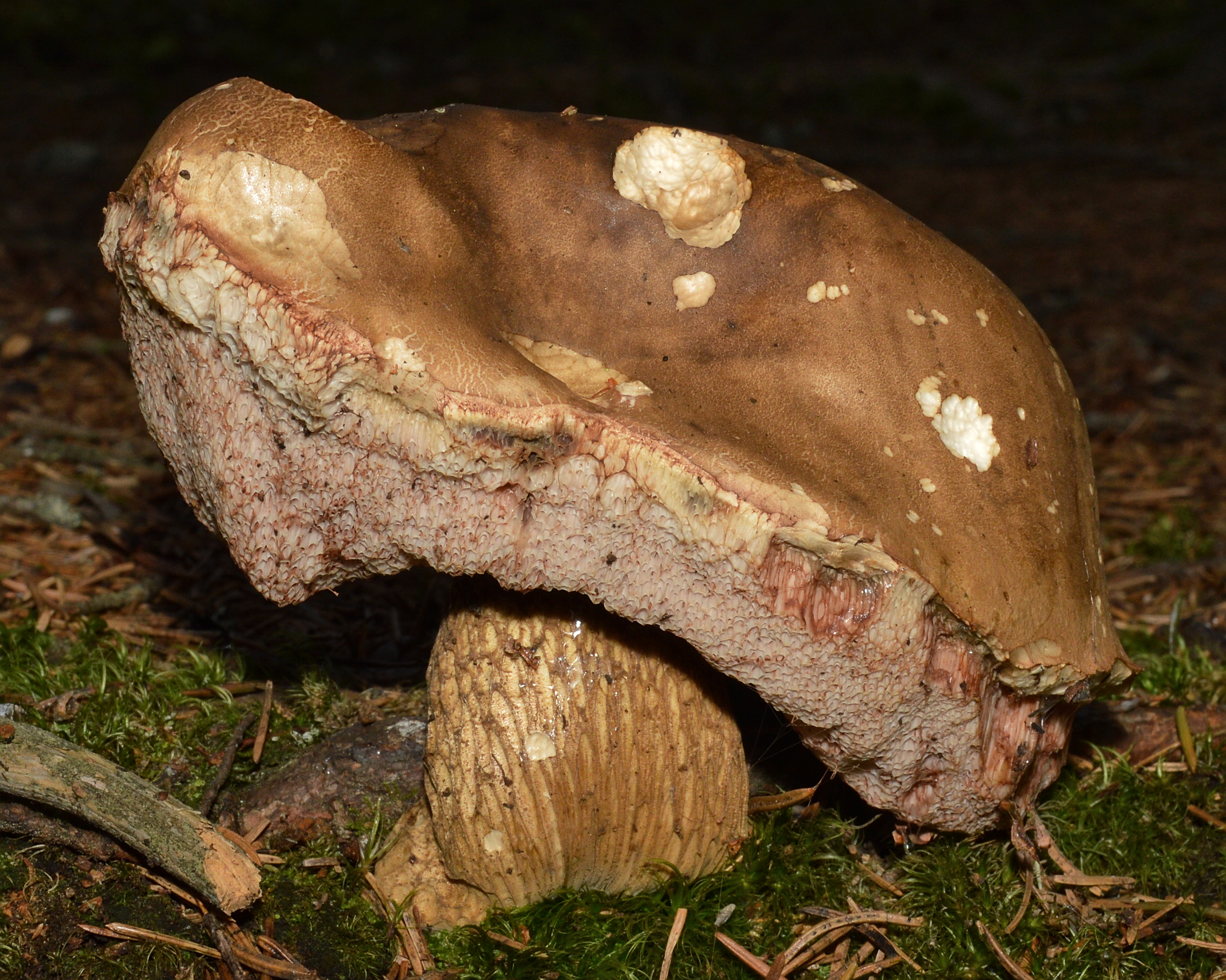
The bitter bolete (Tylopilus felleus) is an inedible mushroom due to the strongly bitter taste of its flesh. Its pores in young fruit bodies are whitish, becoming flesh-pink with age, and the stipe is covered with a raised, coarse mesh of a dark brown color. In the reticulated bolete, the mature hymenophore is yellow-green to olive-green, the taste is mild, and the reticulation on the stipe mostly remains distinctly paler than its background.
Boletus edulis
Key differences
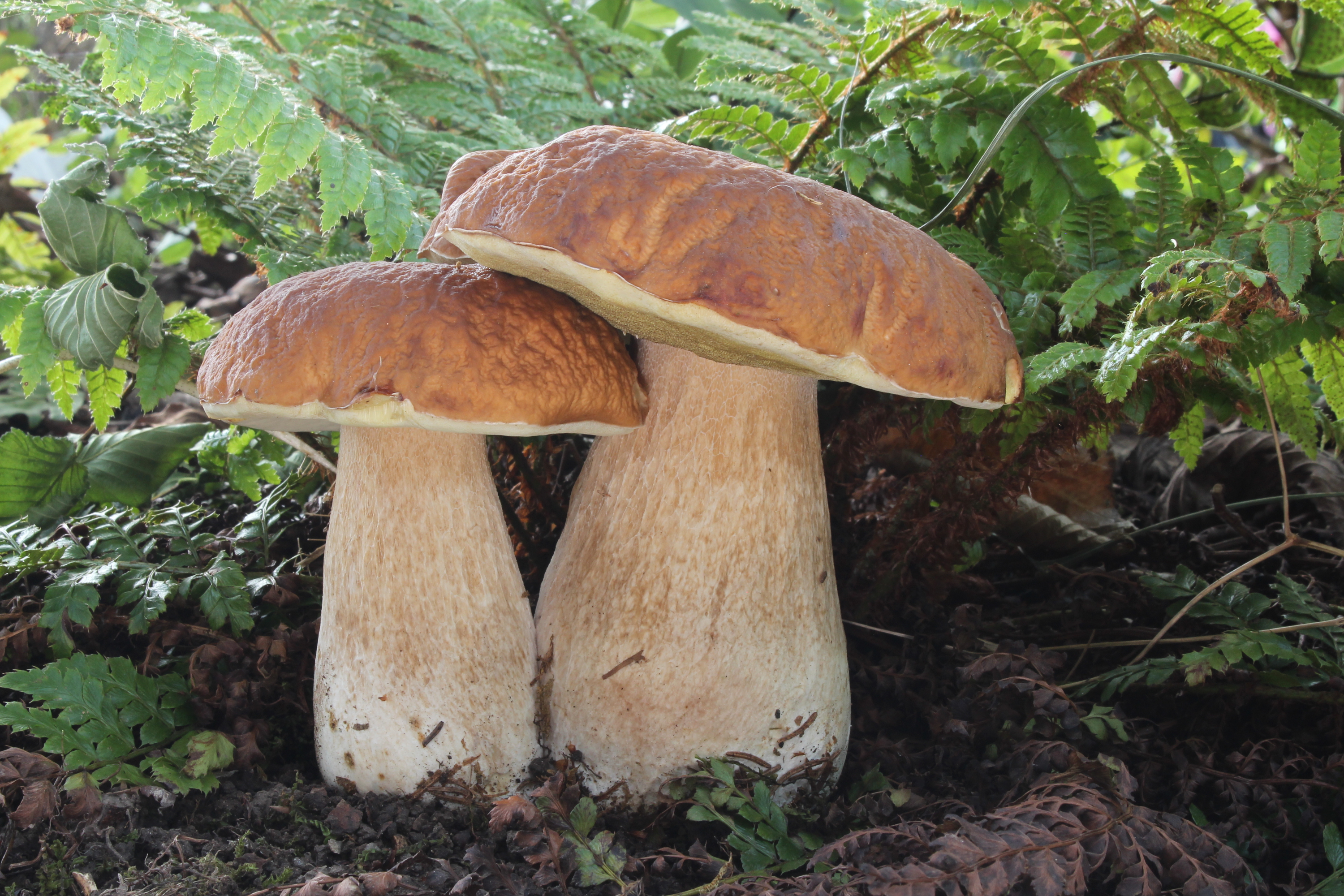
The reticulated bolete (Boletus reticulatus) is characterized by a cap with a matte, velvety, or persistently frosted surface that often cracks into small patches during drought, and a distinct reticulation often covering almost the entire stipe. It occurs mainly under beeches and oaks, usually appearing earlier in the season than the king bolete. Due to the variability of surface features and reticulation extent in both species, the extent of the mesh on the stipe alone does not always allow for their unambiguous distinction.
The king bolete (Boletus edulis) usually has a smoother cap surface that becomes sticky and slimy in wet weather, and a narrow, lighter margin is often visible on its edge. The reticulation on the stipe of the king bolete is generally more delicate and restricted mainly to its upper part. In the reticulated bolete, the cap is usually dry, velvety, and prone to cracking, and the reticulation on the stipe is lighter and more pronounced, although the extent of the network alone does not constitute a definitive distinguishing criterion.
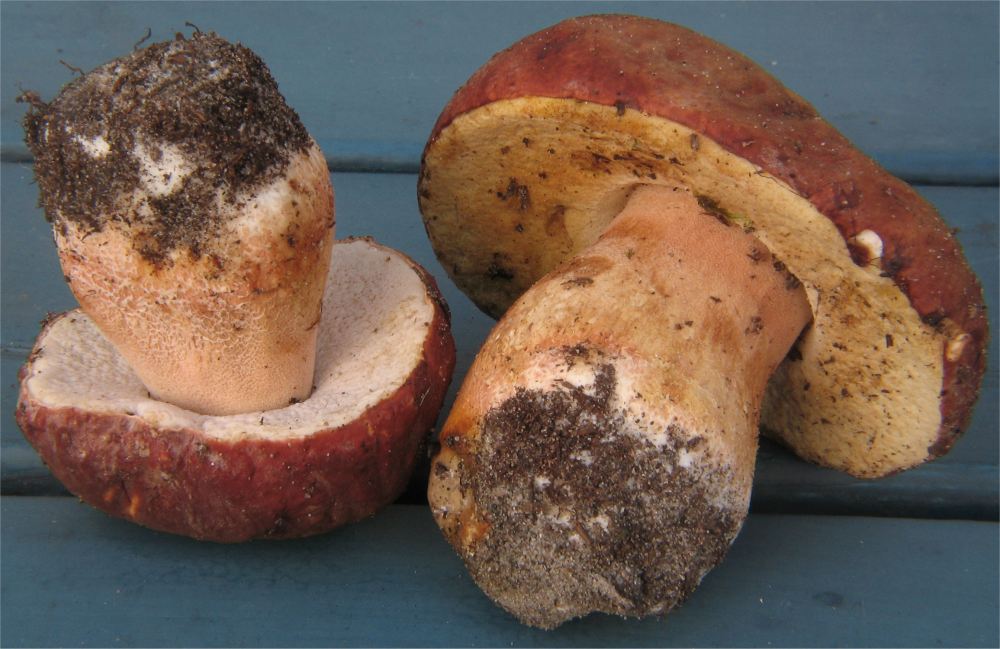
Boletus pinophilus
Key differences
The reticulated bolete (Boletus reticulatus) is distinguished by a dry, velvety cap of moderately yellowish-brown to reddish-brown color, which often characteristically cracks in older fruit bodies. Along the entire length of its stipe, a prominent, raised reticulation is visible. In the microscopic image, the terminal elements of the cuticle reach up to 20 µm in width and contain fine grains of intracellular pigment. This species grows mainly under oaks, on clay or sandy-clay soils, including in parks and along roadsides.
The pine bolete (Boletus pinophilus) differs from the reticulated bolete in having a much darker cap with a distinct, deep reddish-brown or mahogany tone.
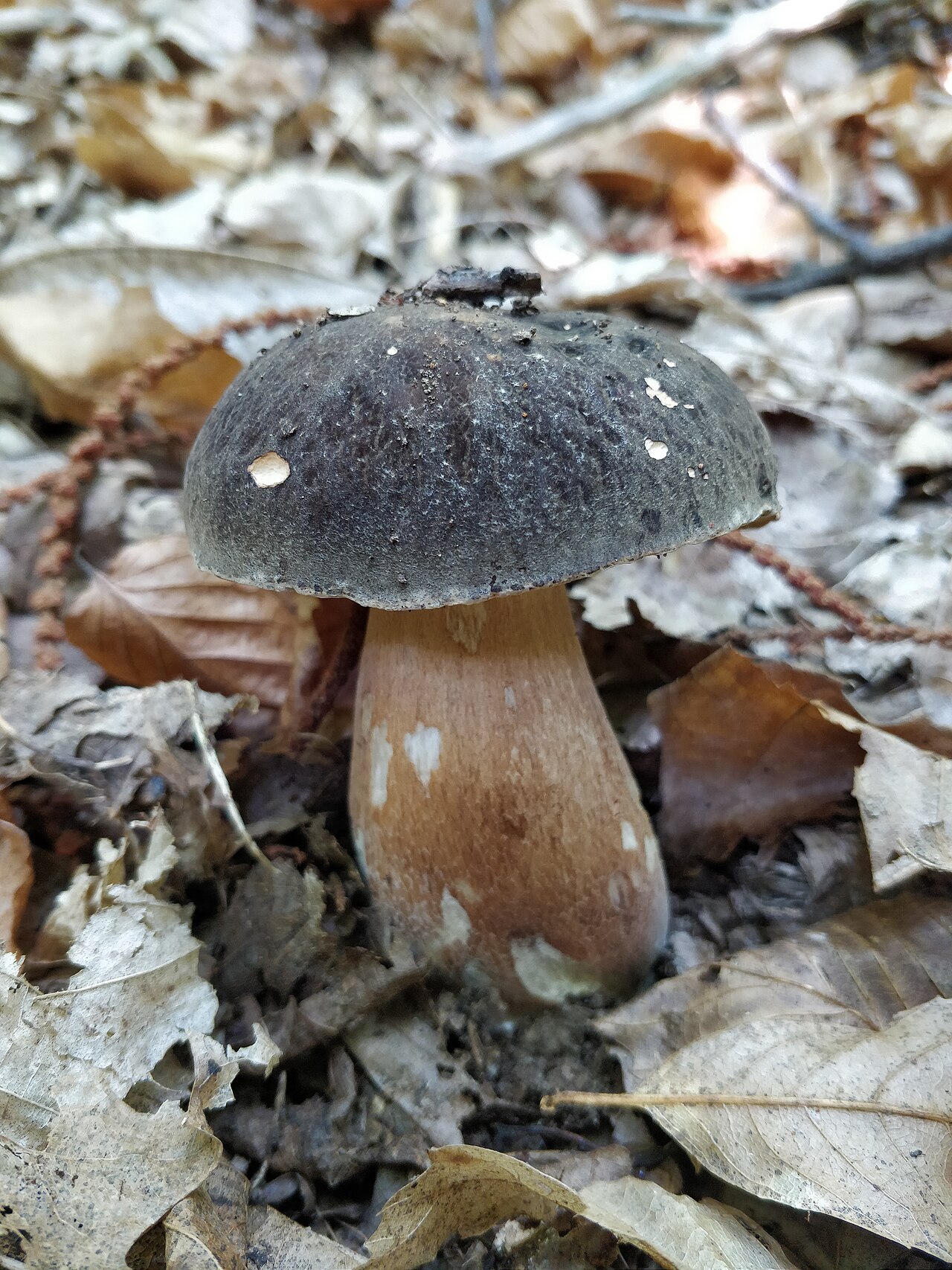
Boletus aereus
Key differences
The bronze bolete (Boletus aereus) differs from the reticulated bolete by the darker color of the cap and a stipe with a brown-copper tone.
FAQ
Why is the cap of the reticulated bolete sometimes cracked?
The cuticle of the cap has a dry, felted texture. During warm and dry summer weather, it loses elasticity, which leads to the formation of a characteristic network of cracks.
Do the flesh or tubes of the reticulated bolete turn blue when damaged?
No. The flesh of the reticulated bolete is white and does not change color when cut. The tubes and pores also do not turn blue or darken when bruised.
How does the reticulated bolete differ from the king bolete?
The reticulated bolete has a matte, velvety cap prone to cracking and reticulation over the entire stipe. The king bolete has a smooth cap and reticulation mainly in the upper part of the stipe.
How do you distinguish the reticulated bolete from the bitter bolete?
The bitter bolete has a stipe with a darker, thicker, brownish network, its pores become dirty pink with age, and its flesh is unbearably bitter in taste.
Is the reticulated bolete an edible mushroom?
Yes, it is an excellent edible mushroom with valued taste qualities. It is suitable for cooking, frying, drying, and pickling, and its aroma is very distinct.
In what forests and under what trees does the reticulated bolete grow?
It grows in thermophilic deciduous and mixed forests. It forms mycorrhizae with deciduous trees, primarily oaks and beeches, less frequently hornbeams or limes.
When does the reticulated bolete appear?
It is one of the earliest boletes in Poland. The first fruit bodies appear as early as May, and the season usually lasts until October, with pauses when moisture is lacking.
How do you recognize the reticulation on the stipe of the reticulated bolete?
The stipe is covered with a raised, whitish or light beige reticulation with fine meshes, which, unlike in the king bolete, often extends all the way to the base of the stipe.
Enthusiast
Underside of the cap
- Tube length
- Tube length: 10–35 mm.
Names and history
- Obowiązująca nazwa krajowa
- borowik usiatkowany
- Obowiązująca nazwa taksonomiczna
- Boletus reticulatus
- Inne nazwy krajowe
- usiatek, prawdziwek wiosenny
- Dawne nazwy krajowe
- borowik prawdziwy podgat. siateczkowany, borowik szlachetny odmiana usiatkowana
- Pozostałe nazwy
- grzyb, grzyb prawdziwy, grzyb prawdziwny, prawik, prawus, prawusek, prawiak, prawek, poprawny grzyb, sprawiedliwy grzyb, prawdziak, prawdzik, borowik, kamieniak, kamienny grzyb, biały grzyb, biały grzybek, Summer Cep, Summer Bolete
Home observations
Spore print
- Required materials
- fresh, mature cap, sheet of paper, glass or small bowl, water
- Time
- 2–24 h
- Procedure
- Place the cap underside down on the paper.
- Add a drop of water on top and cover.
- After 2–24 hours, lift the cap and examine the deposit.
What to look for
- Spore print colour
- Spore print colour: brown.
- Spore print shade
- Spore print shade: olive-brown. Spore print shade: dark olive-brown. Spore print shade: Olive tobacco-brown.
Under the microscope
- Required materials
- light microscope, microscope slide and cover slip, needle, water, spores from print
- Procedure
- Transfer a small amount of the spore print onto the slide using a needle.
- Add a drop of water, cover with a cover slip, and examine the spores.
What to look for
- Spore shape
- Spore shape: elongate ellipsoid. Spore shape: fusiform. Spore shape: fusiform. Spore shape: nearly spindle-shaped. Spore shape: fusiform.
- Spore surface
- Spore surface: smooth. Spore surface: smooth. Spore surface: smooth.
- Spore dimensions
- Length 11.5–20 µm, width 3.5–6 µm.
Compare dimensions after calibrating the microscope scale.
Ecology and distribution
- Broadleaf trees in the vicinity
- Broadleaf trees in the vicinity: oak.
Broadleaf trees in the vicinity: beech.
Broadleaf trees in the vicinity: lime tree.
Broadleaf trees in the vicinity: hornbeam.
Broadleaf trees in the vicinity: sweet chestnut. - Mycorrhizal hosts
- General species association: Mycorrhizal hosts: Quercus (general partner list).
General species association: Mycorrhizal hosts: Fagus (general partner list).
General species association: Mycorrhizal hosts: Castanea (general partner list).
General species association: Mycorrhizal hosts: Corylus (general partner list).
General species association: Mycorrhizal hosts: Carpinus (general partner list).
General species association: Mycorrhizal hosts: Tilia (general partner list).
History and culture
The history of this species' description reflects long-standing discussions in European mycological literature regarding its identity and proper nomenclature. The species was formally described in 1774 by Jacob Christian Schaeffer under the name Boletus reticulatus. Concurrently, the name Boletus aestivalis (attributed among others to Jean-Jacques Paulet) functioned in mycological publications for decades, establishing itself in the awareness of authors and foragers as a synonym or a distinct concept. The history of nomenclature also recorded the appearance of the homonym Boletus reticulatus Hoffm. (1789), which for years generated taxonomic disputes and complications, interpreted variously to this day depending on adopted nomenclatural conventions. In early natural history literature and the linguistic tradition of Central Europe, this species was designated by names referring to its phenology, such as summer bolete or May bolete, directly reflecting the early emergence of its fruit bodies.
Edibility and safety
The summer bolete is widely regarded as an exquisite edible mushroom. It is characterized by a pleasant, distinctly mushroom aroma and a mild, slightly nutty, sweetish flesh flavor. Before consumption, it strictly requires proper heat treatment, such as thorough boiling, stewing, or frying; consuming raw fruit bodies may lead to gastrointestinal disorders. A condition for safe consumption is using solely healthy, fresh, and firm specimens for culinary purposes, as well as avoiding old fruit bodies or those showing any signs of spoilage. In many countries of Central and Southern Europe, including Poland, the Czech Republic, Germany, and Italy, it is eagerly gathered for its taste qualities and early appearance in forests.
Habitat and occurrence
The summer bolete occurs primarily in deciduous and mixed forests of the temperate zone of Eurasia, with particular emphasis on the warmer regions of Central and Southern Europe. This species forms mycorrhizal relationships primarily with deciduous trees, in particular with oaks (Quercus), as confirmed by European ecological studies, and is also recorded under beeches and hornbeams, whereas it is much more rarely found in the vicinity of coniferous trees. It prefers warm sites with clay or sandy-loam soils, often neutral or slightly alkaline. In Central Europe, including in compilations for Poland, the documented fruiting period spans the months from May to August (V–VIII). Fruit bodies can emerge as early as late May, representing an early component of the mushroom season in deciduous forests.
Researcher
Edibility and culinary use
Ustalenia źródłowe: jadalność, spożycie i wykorzystanie
- Edibility
- Edible — źródło oznaczenia
Źródło bez opisu bibliograficznego · Kuchyňské využití / Ceniony grzyb jadalny
Scientific names and taxonomy
- Current scientific name
Boletus reticulatus
- Former scientific names
- 1783 — Boletus mutabilis Batsch
1805 — Boletus reticulatus var. minor Alb. & Schwein.
1808 — Tubiporus aestivalis Paulet
1838 [1836–1838] — Boletus aestivalis (Paulet) Fr.
1886 — Versipellis aestivalis (Paulet) Quél.
1888 — Dictyopus aestivalis (Paulet) Quél.
1898 — Suillus aestivalis (Paulet) Kuntze
1898 — Suillus reticulatus (Schaeff.) Kuntze
1926 — Boletus edulis subsp. reticulatus (Schaeff.) Konrad & Maubl.
1931 — Boletus reticulatus var. rubiginosus Pelt. ex E.-J. Gilbert
1940 [1939] — Boletus carpinaceus Velen.
1966 — Boletus edulis f. reticulatus (Schaeff.) Vassilkov
1994 — Boletus reticulatus subsp. carpinaceus (Velen.) Hlaváček[24]
Borowik usiatkowany należy do rodziny Boletaceae w rzędzie Boletales. Baza Species Fungorum jako nazwę zaakceptowaną wskazuje Boletus reticulatus Schaeff., opublikowaną w 1774 roku w dziele Fung. bavar. palat. nasc. (tom 4, s. 78). W tym samym ujęciu taksonomicznym Boletus aestivalis (Paulet) Fr. stanowi synonim tego gatunku.
[24] [23]W bazie Species Fungorum w synonimii Boletus reticulatus wymienione są następujące nazwy:
- Suillus reticulatus (Schaeff.) Kuntze, Revis. gen. pl. (Leipzig) 3(3): 535 (1898)
- Boletus edulis subsp. reticulatus (Schaeff.) Konrad & Maubl., Icon. Select. Fung. 4(2): pl. 398 (1926)
- Boletus edulis f. reticulatus (Schaeff.) Vassilkov, Bekyi Grib: 18 (1966)
- Boletus mutabilis Batsch, Elench. fung. (Halle): 99 (1783)
- Boletus reticulatus var. minor Alb. & Schwein., Consp. fung. (Leipzig): 240 (1805)
- Tubiporus aestivalis Paulet, Traité des champignons (Paris) 2: 371 (1808)
- Boletus aestivalis (Paulet) Fr., Epicrisis Systematis Mycologici: 422 (1838) [1836-1838]
- Versipellis aestivalis (Paulet) Quél., Enchiridion Fungorum in Europa media et praesertim in Gallia Vigentium: 158 (1886)
- Dictyopus aestivalis (Paulet) Quél., Fl. mycol. France (Paris): 421 (1888)
- Suillus aestivalis (Paulet) Kuntze, Revis. gen. pl. (Leipzig) 3(3): 535 (1898)
- Boletus reticulatus var. rubiginosus Pelt. ex E.-J. Gilbert, Les Livres du Mycologue Tome I-IV, Tom. III: Les Bolets: 117 (1931)
- Boletus carpinaceus Velen., Novitates Mycologicae Novissimae: 158 (1940) [1939]
- Boletus reticulatus subsp. carpinaceus (Velen.) Hlaváček, Mykologický Sborník 71(2): 54 (1994)
Łaciński epitet reticulatus nawiązuje do siatkowatego rysunku na trzonie, natomiast aestivalis odnosi się do letniej pory owocnikowania. W literaturze mykologicznej występują rozbieżności w datowaniu dawnych nazw: Species Fungorum podaje dla Tubiporus aestivalis rok 1808, podczas gdy część atlasów przypisuje tę nazwę Pauletowi z rokiem 1793. W czeskim atlasie przy nazwie reticulatus widnieje również data 1763, natomiast rejestr Kew łączy ważną diagnozę Schaeffera z rokiem 1774.
[18] [24] [16]W różnych językach europejskich funkcjonują zwyczajowe nazwy tego gatunku:
- czeski: hřib dubový
- angielski: Summer Cep, Summer Bolete
- niemiecki: Sommer-Steinpilz
- kataloński: Cep, Sureny
- hiszpański: Boleto reticulado, Boleto reticulado de verano, Boleto rubio, Hongo de primavera
- baskijski: Onddo zuri, Onto, Onto-zuri, Udako onddozuria
- francuski: Cèpe d'été, Cèpe d'été réticulé
- galisyjski: Madeirudo de verán
- włoski: Porcino d'estate
Badania filogenetyczne Beugelsdijka i współpracowników z 2008 roku, oparte na analizie sekwencji markerów ITS oraz GAPDH, potwierdziły odrębność europejskich linii genetycznych Boletus reticulatus, Boletus edulis, Boletus aereus i Boletus pinophilus. W pracy tej gatunek B. reticulatus reprezentowany był przez kolekcję SvdL79 z Holandii, zebraną pod Quercus, której przypisano numery sekwencji w GenBank: EU417871 oraz EU417878.
[21]Taxon scope and identification limitations
W zestawieniu taksonomicznym pracy Beugelsdijka i współpracowników z 2008 roku (opartym w tej części na analizie van der Lindego z 2004 r.) wykazano, że strzępki skórki kapelusza Boletus reticulatus osiągają do 20 µm szerokości i zawierają wewnątrzkomórkowy, drobnoziarnisty pigment.
[21]Laboratory diagnostics
Dane ustrukturyzowane
Basidia
Caulocystidia
Pileipellis
Spores
- Spore colour under the microscope
- Spore colour under the microscope: yellow-brown. [19]
- Droplets inside the spore
- Droplets inside the spore: present. [12]
- Spore length
- Spore length: 13–20 µm. [25]
Spore length: 12–17 µm. [12]
Spore length: 11.5–19.5 µm. [15]
Spore length: 13.5–16 µm. [19]
Spore length: 12–20 µm. [16]
Spore length: 13–15 µm. [18] - Spore length-to-width ratio
- Spore length-to-width ratio: 2.7–3.6. [19]
Spore length-to-width ratio: 2.6–4.2. [15] - Spore shape
- Spore shape: elongate ellipsoid. [16]
Spore shape: fusiform. [16]
Spore shape: fusiform. [25]
Spore shape: nearly spindle-shaped. [18]
Spore shape: fusiform. [19]
Spore shape: fusiform. [12] - Spore surface
- Spore surface: smooth. [25]
Spore surface: smooth. [18]
Spore surface: smooth. [19]
Spore surface: smooth. [12] - Spore wall thickness
- Spore wall thickness: thick-walled. [19]
Material and research methods
- Results as recorded in the sources — Pileipellis terminal cell width
- Materiał badania: Named Boletus reticulatus account; original source material remains separate. Materiał suszony (przygotowanie opisano w Metodach): 3,5–5 µm [19]
Materiał badania: Named Boletus reticulatus account; original source material remains separate. do 20 µm [21] - Results as recorded in the sources — Spore length
- Materiał badania: Named Boletus reticulatus account; original source material remains separate. 12–17 µm (skrajnie do 20 µm) [16]
Materiał badania: Named Boletus reticulatus account; original source material remains separate. 12–17 µm [12]
Materiał badania: Named Boletus reticulatus account; original source material remains separate. 11,5–19,5 µm [15]
Materiał badania: Named Boletus reticulatus account; original source material remains separate. 13–20 µm [25]
Materiał badania: Named Boletus reticulatus account; original source material remains separate. Materiał suszony (przygotowanie opisano w Metodach): 13,5–16 µm [19]
Materiał badania: Named Boletus reticulatus account; original source material remains separate. 13–15 µm [18] - Results as recorded in the sources — Spore width
- Materiał badania: Named Boletus reticulatus account; original source material remains separate. Materiał suszony (przygotowanie opisano w Metodach): 4,5–5,5 µm [19]
Materiał badania: Named Boletus reticulatus account; original source material remains separate. 4–5,5 µm [16]
Materiał badania: Named Boletus reticulatus account; original source material remains separate. 3,5–6 µm [25]
Materiał badania: Named Boletus reticulatus account; original source material remains separate. 4,5–5,5 µm [18]
Materiał badania: Named Boletus reticulatus account; original source material remains separate. 3,5–5,5 µm [15]
Materiał badania: Named Boletus reticulatus account; original source material remains separate. 4–6 µm [12]
Metody i zapisy źródłowe — Named Boletus reticulatus account; original source material remains separate.
Stan materiału: suszony.
Pochodzenie materiału: Six B.reticulatus collections in the Fennoscandian study; B.aff.reticulatus excluded..
Metoda źródłowa. Technika: mikroskopia świetlna (LM). Medium: pure water without softening or colouring media. Opis metody w źródle: Leitz Dialux, Pl Apo Oel100/1.32 oil objective, drawing tube2000×, measurements corrected to1/2µm. Mature spores from pore hymenium, stipe spores excluded. Mature caulocystidia from stem net. Pileipellis scalps at1/3radius from cap edge.
Liczba zarodników na jednej podstawce; Długość podstawki; Kształt podstawki; Szerokość podstawki; Długość kaulocystyd; Kształt kaulocystyd; Szerokość kaulocystyd; Długość komórki końcowej skórki kapelusza; Kształt komórki końcowej skórki kapelusza; Szerokość komórki końcowej skórki kapelusza; Barwa zarodnika w mikroskopie; Długość zarodnika; Iloraz długości i szerokości zarodnika; Kształt zarodnika; Powierzchnia zarodnika; Grubość ściany zarodnika; Szerokość zarodnika — zapis źródłowy: „Karstenia49:49 species5 Boletus reticulatus; methods p42, own rows Tables1–3 pp54–55. B.aff.reticulatus excluded.” [19]
Metody i zapisy źródłowe — Named Boletus reticulatus account; original source material remains separate.
Inkrustacja strzępek skórki; Organizacja skórki kapelusza; Długość zarodnika; Iloraz długości i szerokości zarodnika; Szerokość zarodnika — zapis źródłowy: „Species Description after the generic Boletus introduction; generic ring/solid-stem claims excluded.” [15]
Metody i zapisy źródłowe — Named Boletus reticulatus account; original source material remains separate.
Szerokość komórki końcowej skórki kapelusza — zapis źródłowy: „Beugelsdijk2008 Table2, B.reticulatus terminal elements, citing Van der Linde2004; not another Boletus row.” [21]
Metody i zapisy źródłowe — Named Boletus reticulatus account; original source material remains separate.
Identyfikacja kropli: nierozstrzygnięta.
Krople wewnątrz zarodnika; Długość zarodnika; Kształt zarodnika; Powierzchnia zarodnika; Szerokość zarodnika — zapis źródłowy: „Exact Aranzadi species account; method, N and individual material unreported. Guttules chemically unidentified.” [12]
Metody i zapisy źródłowe — Named Boletus reticulatus account; original source material remains separate.
Długość zarodnika; Kształt zarodnika; Szerokość zarodnika — zapis źródłowy: „Named Boletus reticulatus: Popis and Výskyt; compared species excluded.” [16]
Metody i zapisy źródłowe — Named Boletus reticulatus account; original source material remains separate.
Długość zarodnika; Kształt zarodnika; Powierzchnia zarodnika; Szerokość zarodnika — zapis źródłowy: „Named species account: Kapelusz / Cap, Rurki, Trzon, Miąższ, Wysyp, Zarodniki; PL and EN wording kept separate.” [25]
Metody i zapisy źródłowe — Named Boletus reticulatus account; original source material remains separate.
Długość zarodnika; Kształt zarodnika; Powierzchnia zarodnika; Szerokość zarodnika — zapis źródłowy: „Identification guide, named Summer Bolete, excluding compared taxa.” [18]
Occurrence verification — scope and limitations
Materiał: Pierwotne kolekcje autora atlasu na Dolnym Śląsku.
Zakres odczytu: Fragmenty źródeł.
Odczytano fragment źródła; pełny tekst i metody nie zostały zweryfikowane.
Data przeglądu: 21.10.2026.
Ograniczenia: Źródłowe oznaczenie i zakres pojęcia zachowano. Nie zadeklarowano nowego badania okazów ani odczytu wszystkich publikacji cytowanych przez źródło.
[25]- Sample preparation for microscopy
- Materiał suszony. Mikroskop Leitz Dialux, obiektyw olejowy Pl Apo Oel 100/1,32 i tubus rysunkowy przy 2000×; pomiary korygowano do 0,5 µm. Dojrzałe zarodniki pobierano z hymenium porów, z wyłączeniem zarodników z trzonu. Dojrzałe kaulocystydy pobierano z siateczki trzonu, a skórkę kapelusza w odległości 1/3 promienia od brzegu. [19]
Scope of the review
Before completion, the record requires completion or settlement.
- Search for occurrence regions requires reconciliation.
- Connections of earlier findings require re-examination.
- New sources require accounting for information encountered during the review.
Key substances and their effects
Ergönül i współpracownicy w 2013 roku zbadali profil kwasów tłuszczowych owocników Boletus reticulatus pochodzących z pasma Ilgaz w Turcji (stanowisko N41°03′ E33°41′, okaz zielnikowy fungarium nr 1091). Badanie przeprowadzono na wysuszonych owocnikach metodą chromatografii gazowej z detektorem płomieniowo-jonizacyjnym (GC-FID). Uzyskane wartości reprezentują udział procentowy poszczególnych kwasów w oznaczonym profilu kwasów tłuszczowych, a nie zawartość w świeżej masie grzyba.
[17]Analiza chromatograficzna profilu kwasów tłuszczowych suszonych owocników Boletus reticulatus (okaz 1091) wykazała następujący skład (ND – nie oznaczono):
- kwas masłowy (C4:0): 0,06%
- kwas kapronowy (C6:0): 0,17%
- kwas kaprylowy (C8:0): 0,18%
- kwas kaprynowy (C10:0): 0,20%
- kwas undekanowy (C11:0): 0,87%
- kwas laurynowy (C12:0): 0,06%
- kwas tridekanowy (C13:0): 0,02%
- kwas mirystynowy (C14:0): 0,37%
- kwas mirystoleinowy (C14:1): 0,11%
- kwas pentadekanowy (C15:0): 0,37%
- kwas pentadecenowy (C15:1): ND
- kwas palmitynowy (C16:0): 11,26%
- kwas palmitoleinowy (C16:1): 0,75%
- kwas margarynowy (C17:0): 0,28%
- kwas heptadecenowy (C17:1): 0,99%
- kwas stearynowy (C18:0): 5,84%
- kwas oleinowy trans (C18:1): 0,12%
- kwas oleinowy cis (C18:1): 37,61%
- kwas linolowy trans (C18:2): 0,02%
- kwas linolowy cis (C18:2): 36,60%
- kwas linolenowy (C18:3): ND
- kwas gamma-linolenowy (C18:3): 0,31%
- kwas arachidowy (C20:0): 0,58%
- kwas eikozenowy (C20:1): 0,50%
- kwas eikozadienowy (C20:2): 0,34%
- kwas heneikozanowy (C21:0): 0,30%
- kwas cis-11,14,17-eikozatrienowy n-3 (C20:3): 0,04%
- kwas arachidonowy (C20:4): 0,11%
- kwas cis-8,11,14-eikozatrienowy n-6 (C20:3): ND
- kwas behenowy (C22:0): 0,08%
- kwas eikozapentaenowy (C20:5): 0,45%
- kwas erukowy (C22:1): 0,27%
- kwas dokozadienowy (C22:2): 0,23%
- kwas trikozanowy (C23:0): 0,03%
- kwas lignocerynowy (C24:0): 0,51%
- kwas nerwonowy (C24:1): ND
- kwas dokozaheksaenowy (C22:6): 0,32%
W badanym materiale dominował kwas oleinowy w konfiguracji cis (37,61%), a kolejnym pod względem ilości był kwas linolowy cis (36,60%). Udział kwasu palmitynowego wyniósł 11,26%, a kwasu stearynowego 5,84%. Łączne udziały frakcji wynosiły: nasycone kwasy tłuszczowe 21,14%, jednonienasycone 40,34% oraz wielonienasycone 38,40%. W próbie Boletus reticulatus odnotowano zatem przewagę kwasu oleinowego nad linolowym, co stanowi wyjątek od ogólnego wniosku abstraktu, w którym autorzy przypisali dominację kwasu linolowego wszystkim sześciu badanym gatunkom.
[17]Pomiary chromatograficzne wykonano w trzech powtórzeniach analitycznych, uzyskując błąd standardowy (SE) poniżej 5%. W publikacji nie podano liczby niezależnych prób biologicznych ani daty zebrania okazu 1091. Wyniki te obrazują skład chemiczny badanej partii suszu i nie były przedmiotem badań klinicznych pod kątem wpływu na organizm człowieka.
[17]Habitat and occurrence
Habitat, area and season
Borowik usiatkowany rośnie na ziemi, pojedynczo lub w grupach. Występuje przede wszystkim w ciepłych lasach liściastych i mieszanych. W Czechach spotykany jest również w zadrzewieniach przydrożnych oraz na groblach stawów rybnych, natomiast Beugelsdijk i współpracownicy odnotowali występowanie na dość suchych poboczach dróg i w parkach z dębami.
[16] [25] [20] [21] [18]Gatunek tworzy ektomikoryzę z drzewami. W atlasach grzybów jako partnerów wymienia się dęby i buki, a także lipy, graby oraz kasztany z rodzaju Castanea. First Nature wspomina ponadto o sporadycznym notowaniu pod świerkami. W Puszczy Knyszyńskiej Gryc obserwował owocniki głównie w dojrzałych drzewostanach dębowo-grabowych, a także w płatach świerkowych z domieszką drzew liściastych. Obecność owocnika w sąsiedztwie danego drzewa opisuje warunki stanowiska, nie stanowi jednak bezpośredniego dowodu laboratoryjnego potwierdzającego strukturę mikoryzy na korzeniach.
[18] [16] [25] [12] [22] [20]Zakres drzew mikoryzowych bywa różnie ujmowany: w publikacji filogenetycznej z 2008 roku autorzy ograniczyli gospodarzy Boletus reticulatus wyłącznie do dębów (Quercus), wiążąc holenderski okaz SvdL79 z dębem. Inne publikacje wskazują również buka (Fagus). Stanowiska udokumentowane w zbiorach Aranzadi obejmują: okaz ARAN08027 zebrany 5 sierpnia 2017 roku w Leitza-Leitzalarrea-Insusu w Nawarze pod Quercus rubra na kwaśnym podłożu (UTM 30TWN8874, 43.1144409° N, 1.9097333° W) oraz okaz A3043040 z 3 lipca 2004 roku w Ataun-Intxusburu w prowincji Gipuzkoa, zebrany na glebie pod Fagus sylvatica (UTM 30TWN6854).
[21] [13] [14]Wymagania glebowe borowika usiatkowanego różnią się w doniesieniach z poszczególnych regionów: Snowarski podaje gleby o odczynie zbliżonym do obojętnego, Aranzadi notuje suche podłoża krzemionkowe, a publikacja z 2008 roku wskazuje glinę lub piasek z domieszką gliny. Gryc przytacza obiegową opinię atlasową o unikaniu podłoży wapiennych. Dane te pochodzą z różnych stanowisk i nie pozwalają na wyznaczenie jednej uniwersalnej wartości pH dla całego gatunku.
[25] [12] [21] [22]Według atlasu Lasów Państwowych borowik usiatkowany występuje na obszarze Europy oraz w Japonii.
[20]W Wielkiej Brytanii i Irlandii First Nature określa borowika usiatkowanego jako grzyb rzadki, wskazując jednocześnie na jego częstsze pojawianie się na południu Europy, zwłaszcza w południowo-zachodniej Francji oraz w rejonach Portugalii. Czeski atlas odnotowuje wyższą liczebność stanowisk w cieplejszych rejonach Czech.
[18] [16]W ujęciu europejskim ramy sezonu owocnikowania są zróżnicowane: czeski atlas notuje zbiory od maja do listopada. Na Wyspach Brytyjskich First Nature wskazuje okres od czerwca do października, wspominając zarazem, że w południowej Europie owocniki mogą pojawiać się aż do lutego. Z kolei hiszpańskie opracowania Aranzadi określają porę występowania ogólnie jako wiosnę i lato.
[16] [18] [12]Potwierdzony zasięg występowania
Wszystkie obszary potwierdzone w zapisanych danych źródłowych.
| Kraj | Regiony i stanowiska | Owocnikowanie | Sources |
|---|---|---|---|
| Poland | Lower Silesia — scope named by the source | V–VIII |
|