Edible
Set your location to see data for your region.
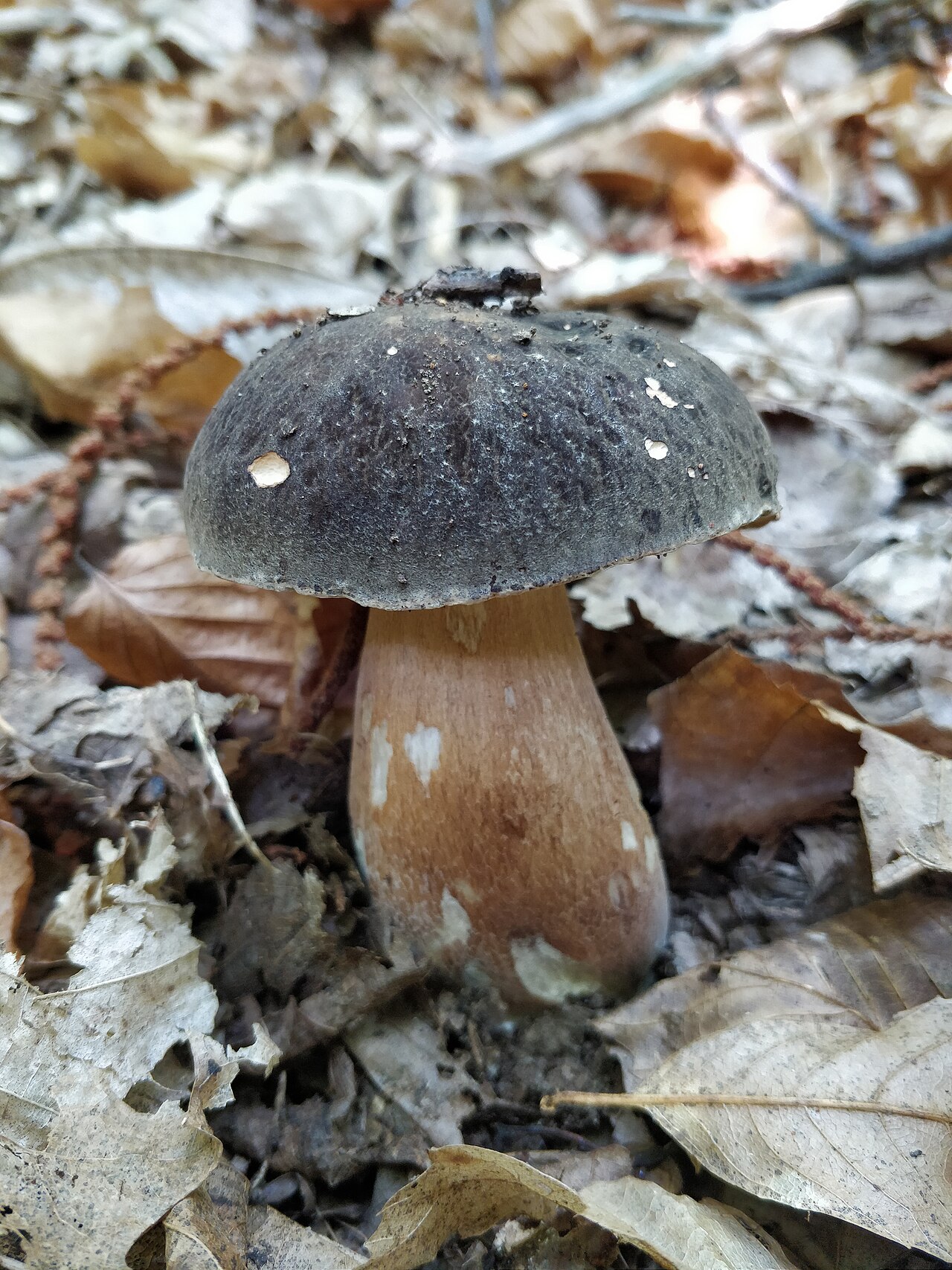
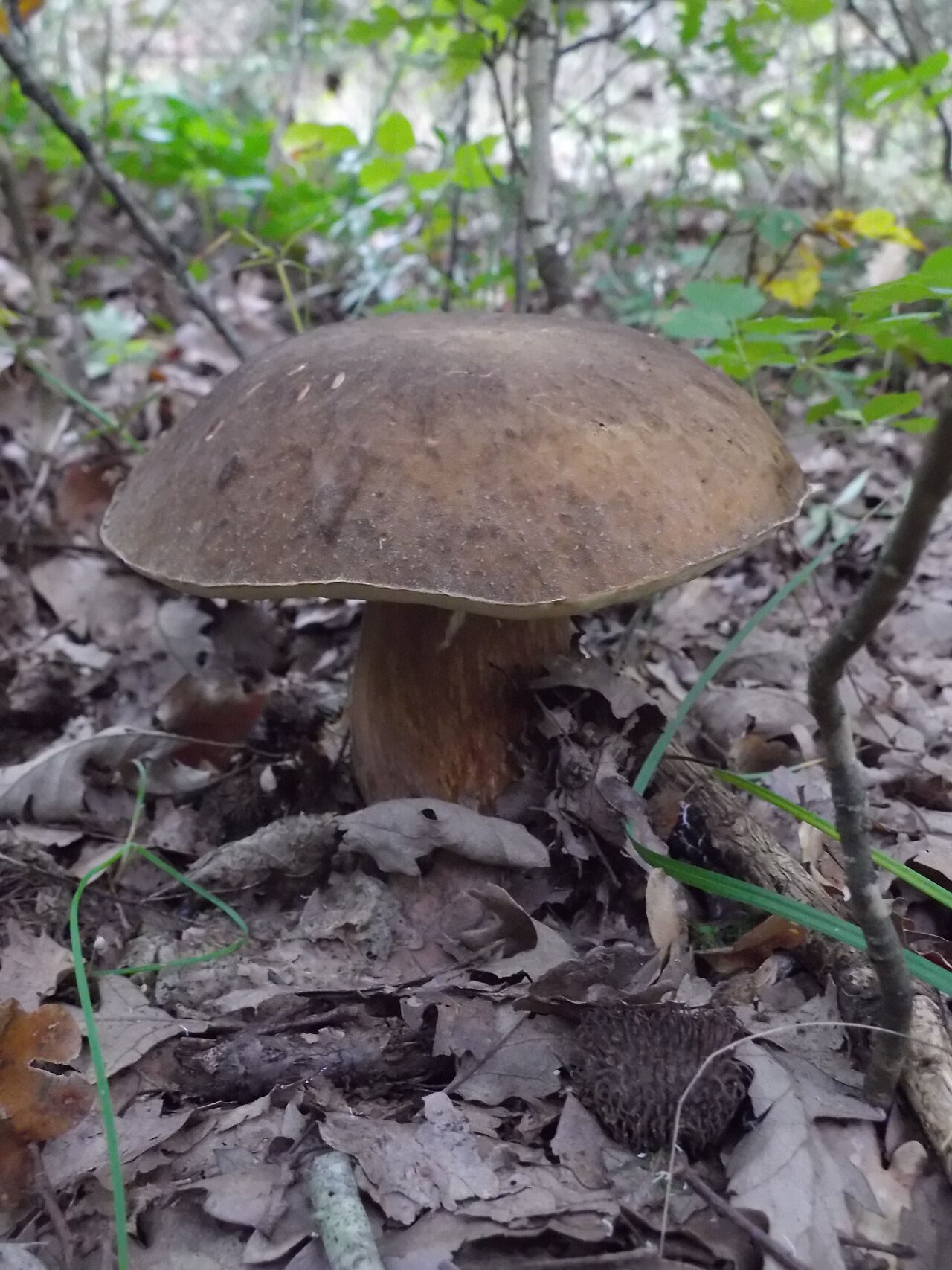
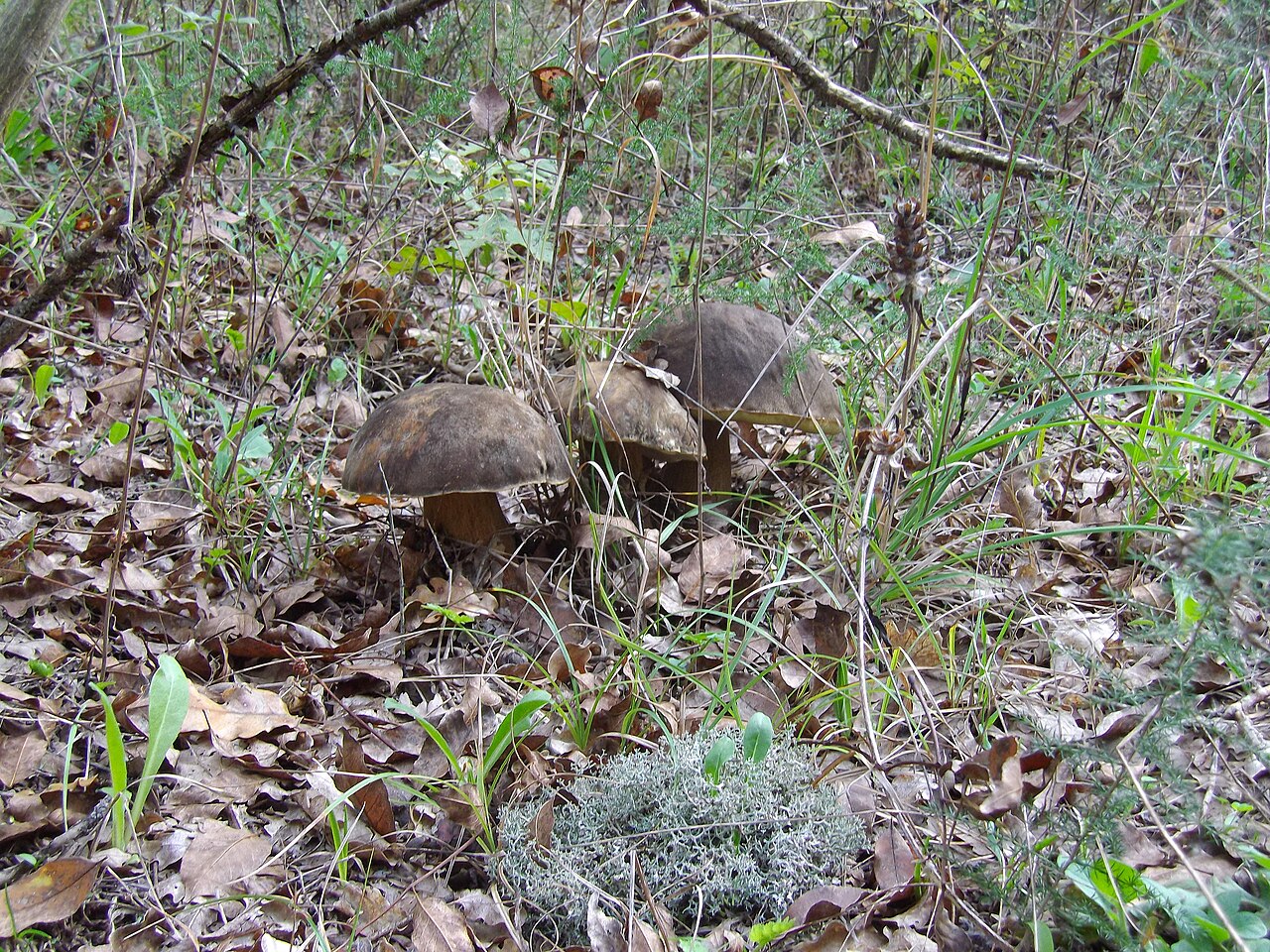
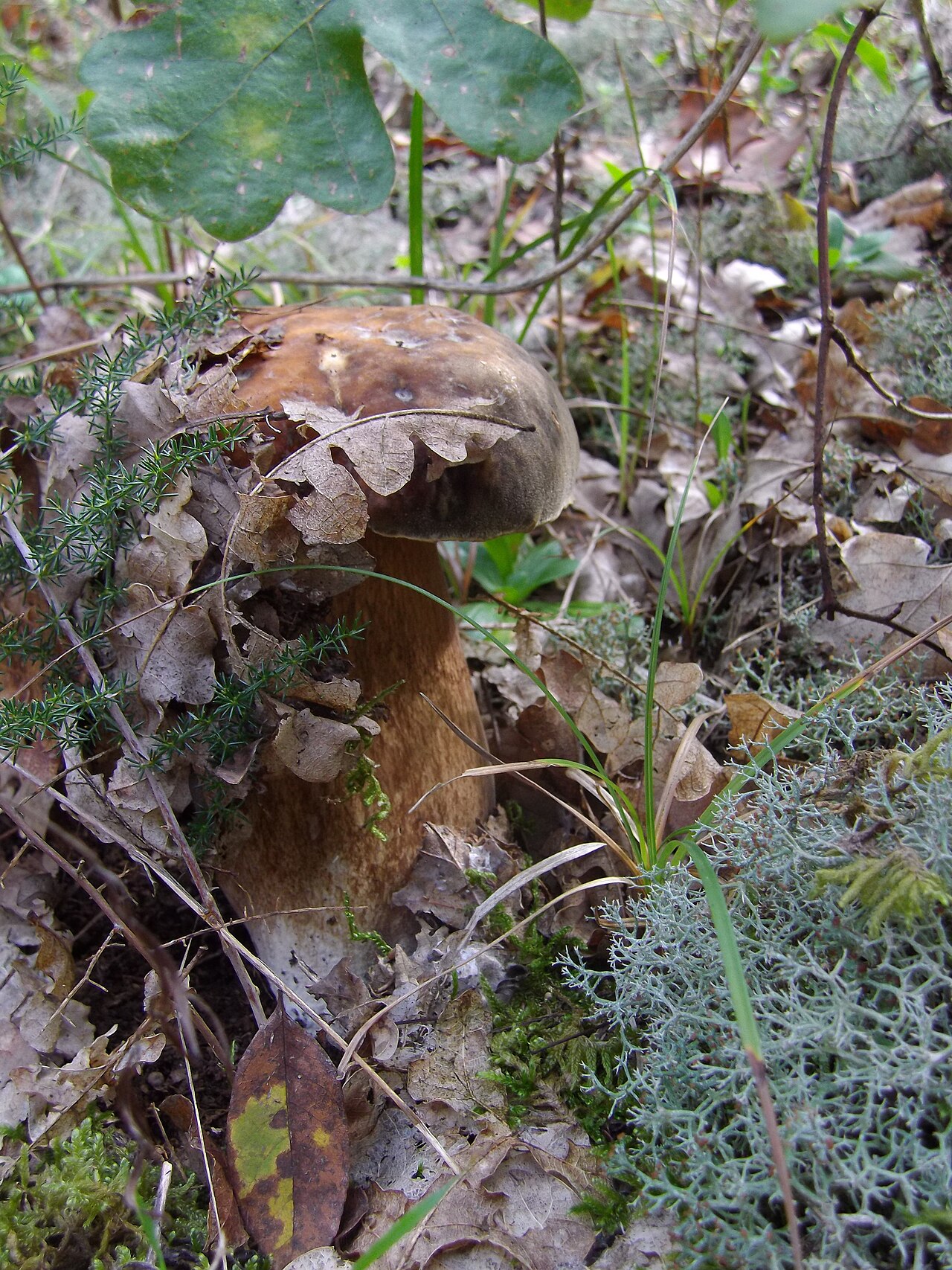
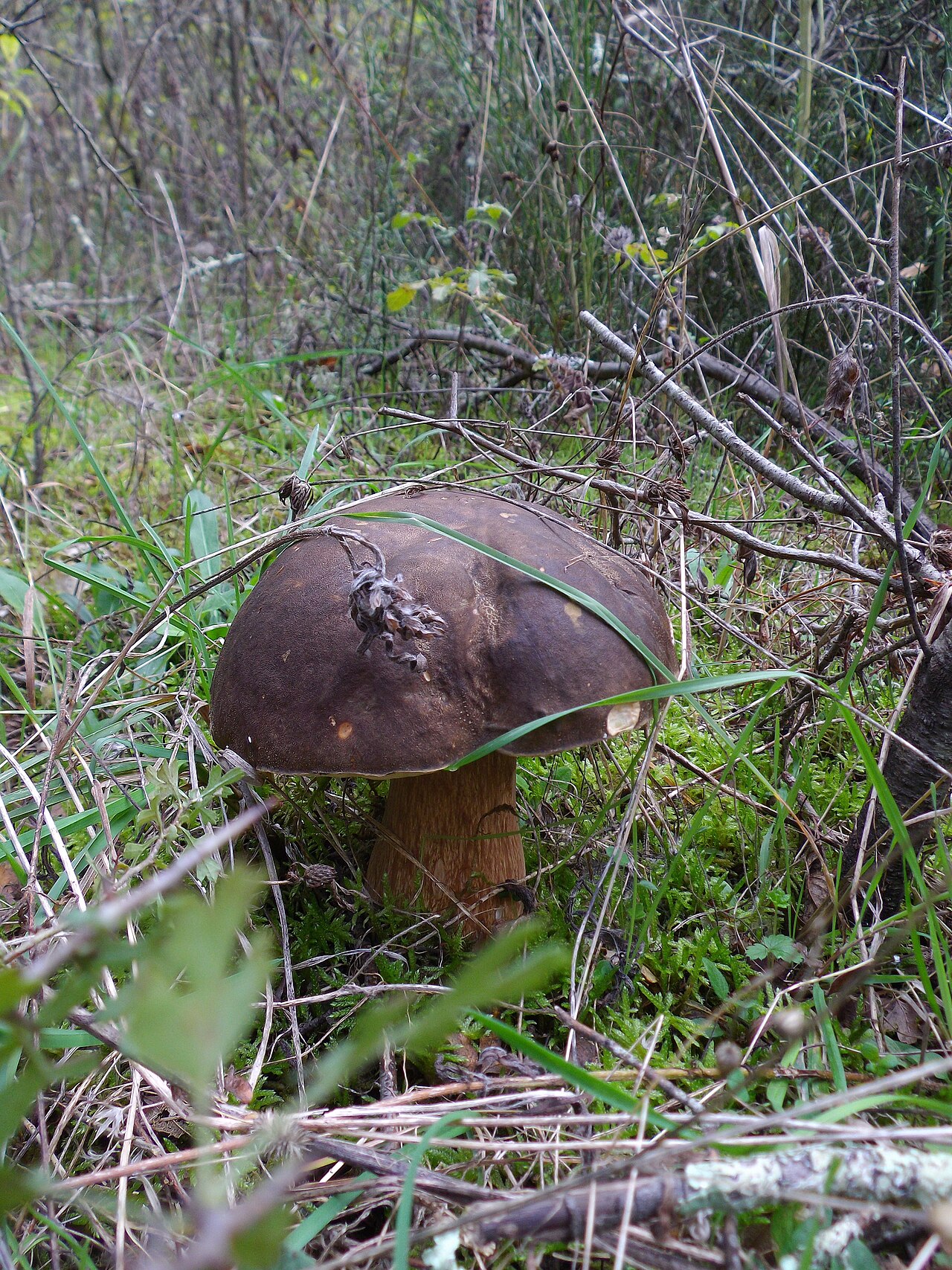
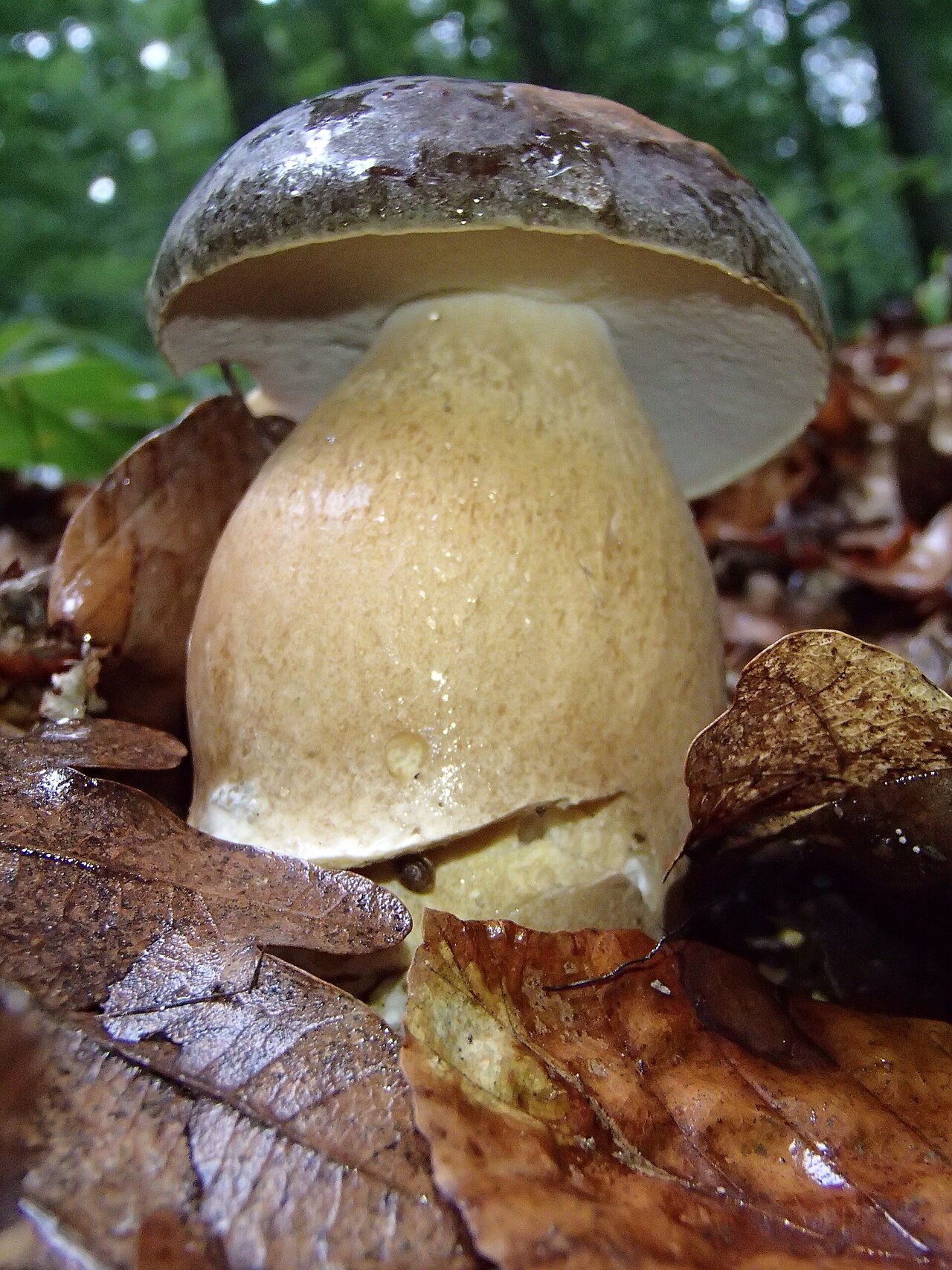
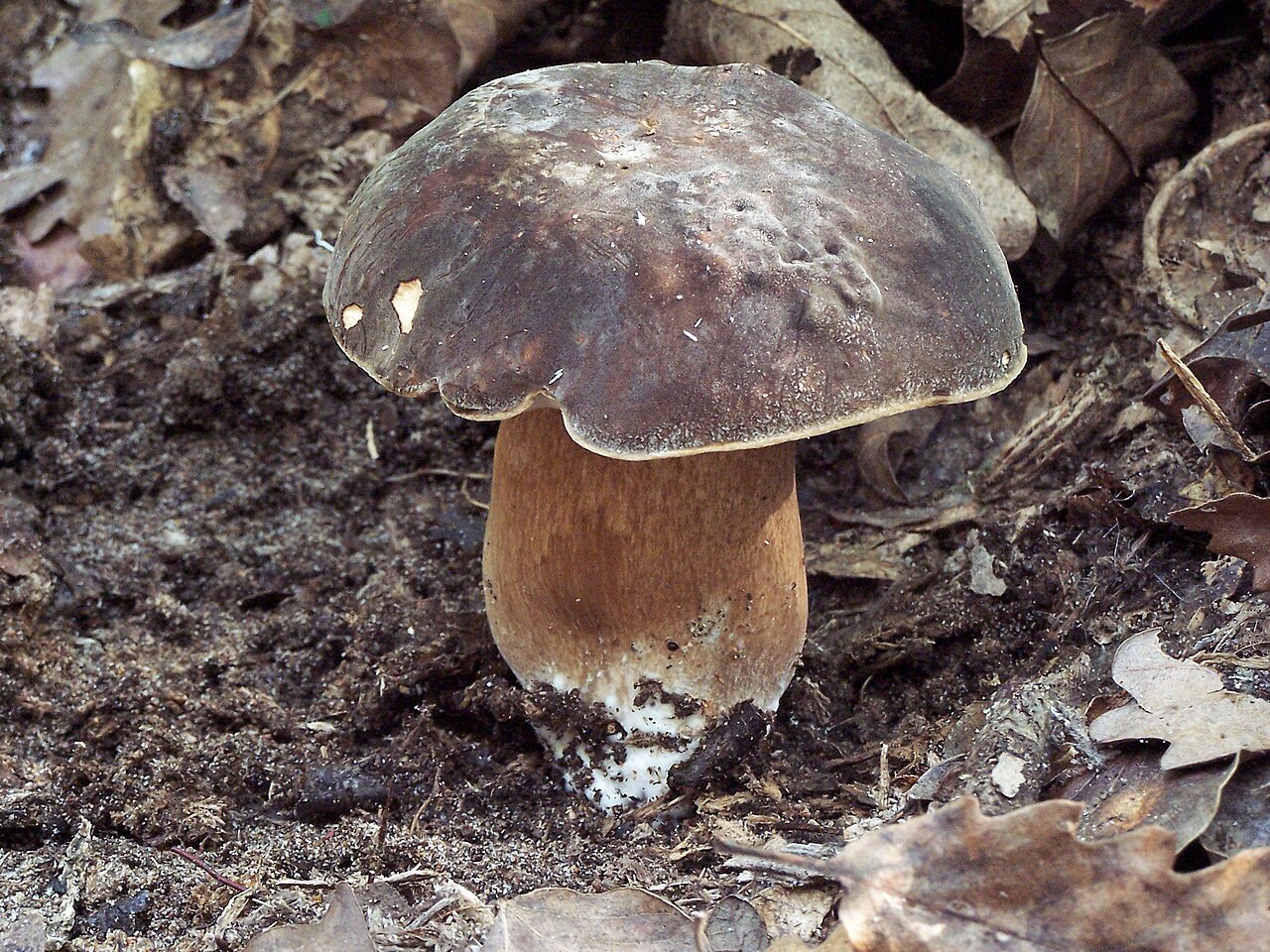
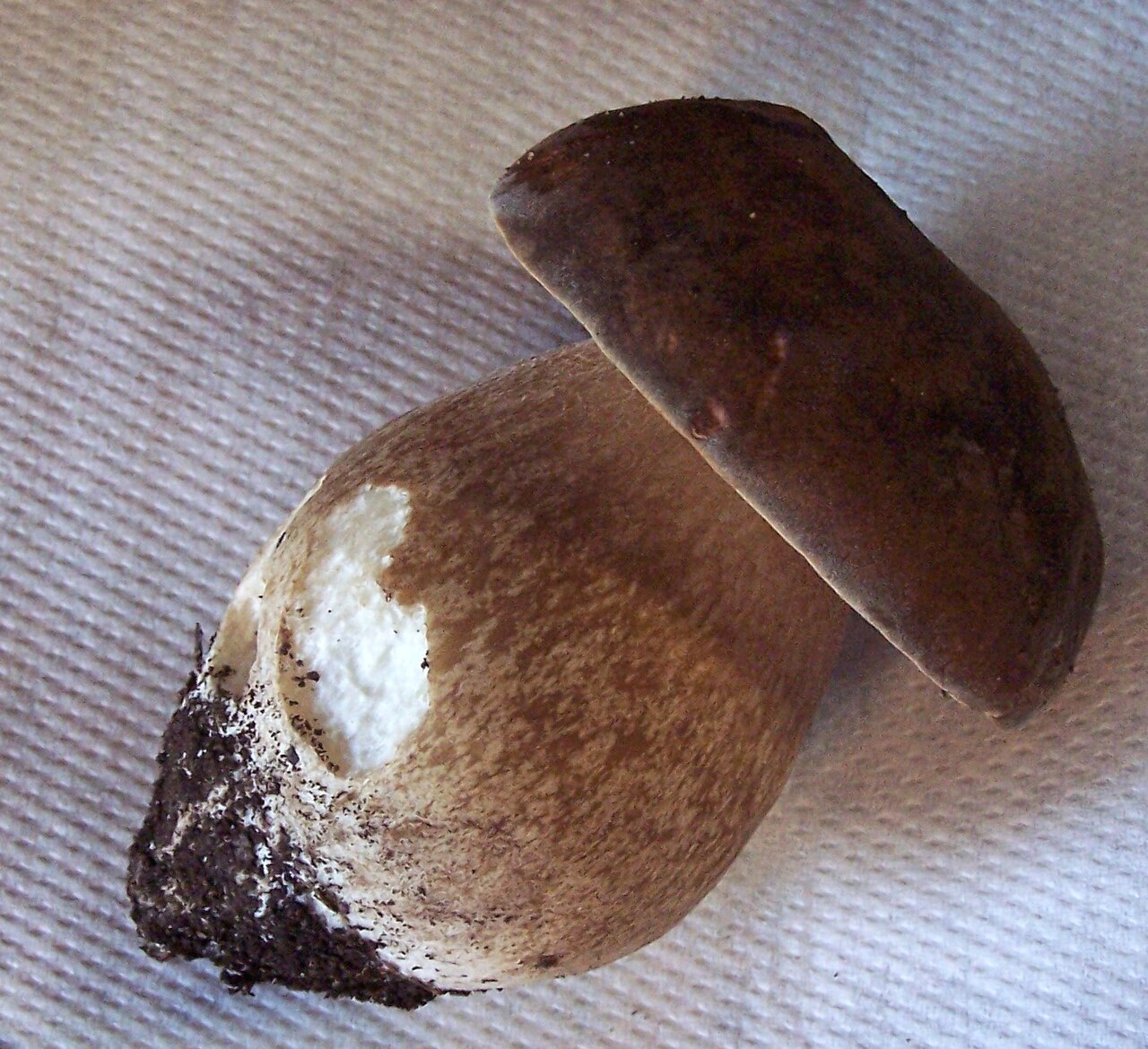
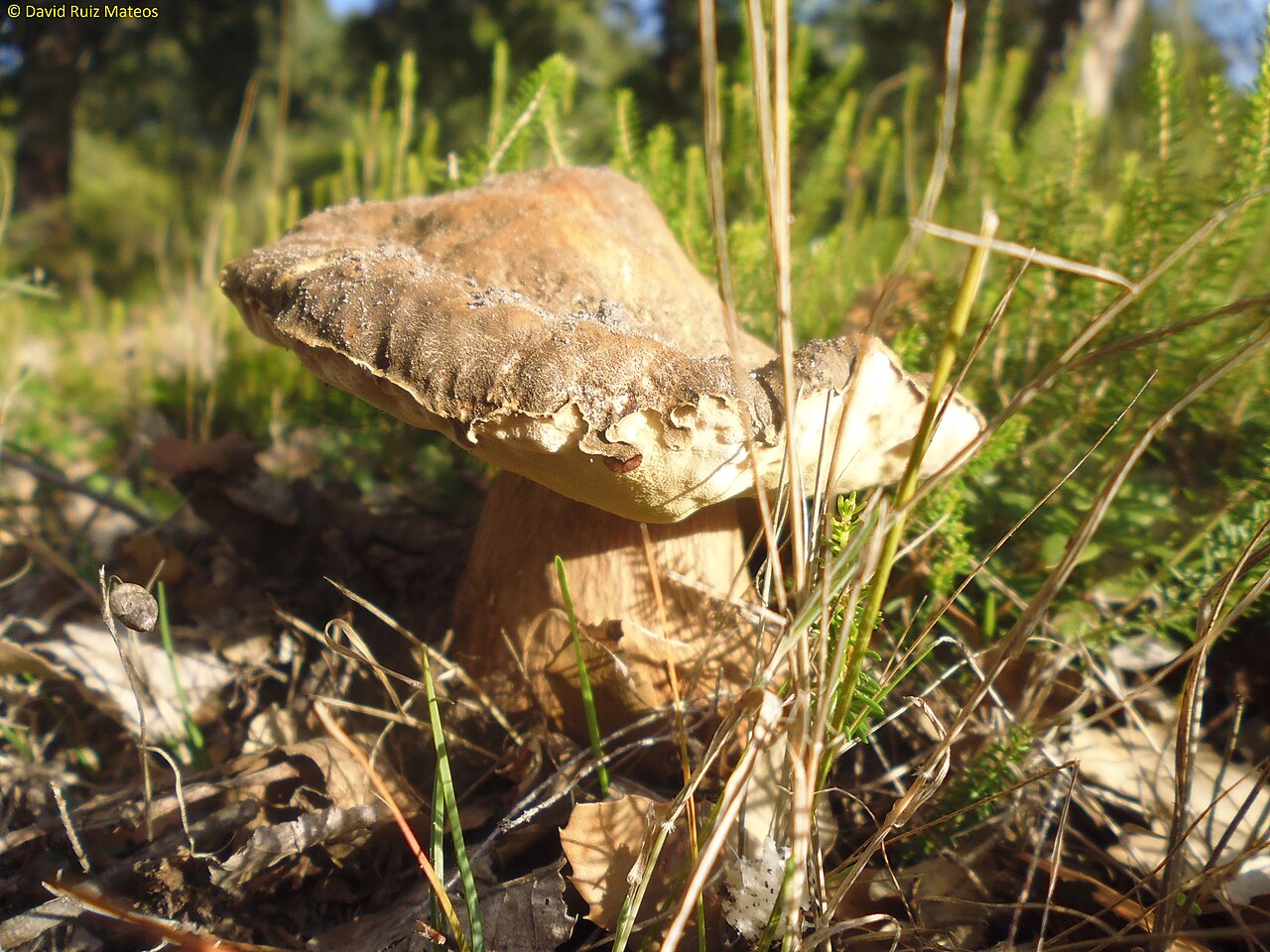
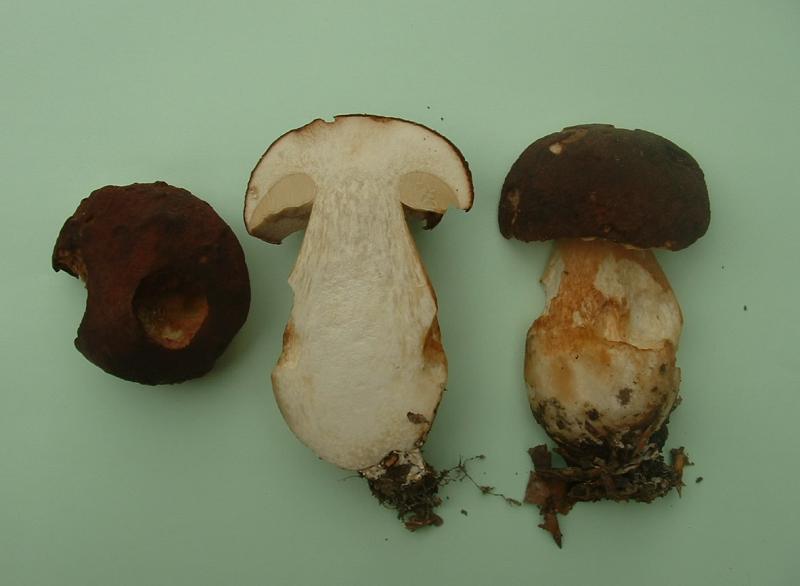
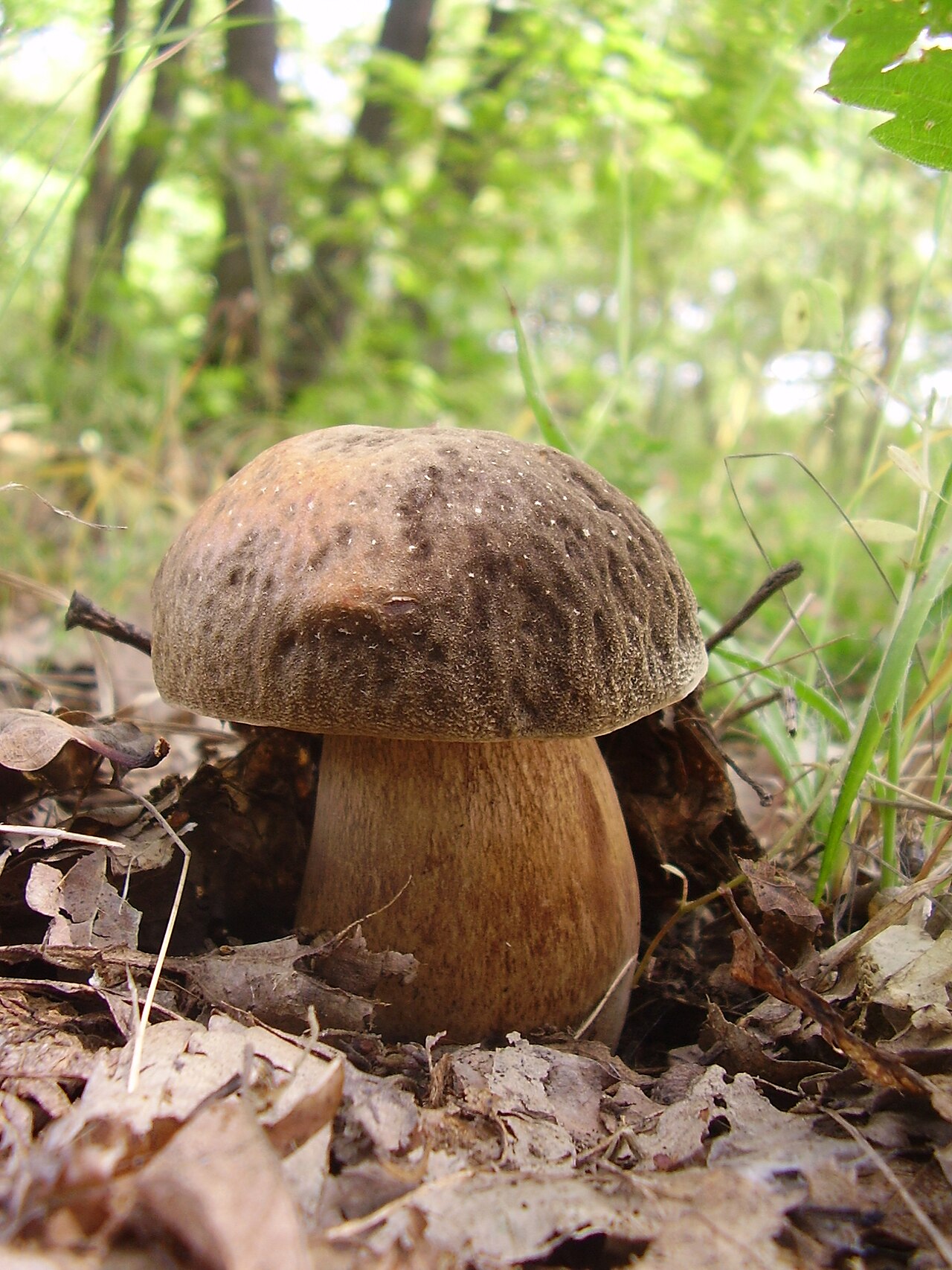
The fruit body consists of a fleshy cap and a stipe, and the underside of the cap forms a tubular hymenophore ending in pores. In the Czech atlas, the cap is 50–200 mm in diameter, the stipe 50–100 mm long and 20–40 mm thick. The Italian manual gives a cap of 5–25 cm and a stipe of 7–15 × 3–6 cm. DGfM lists a cap up to 25 cm and a stipe up to 15 cm in height and up to 5 cm thick. The cap is initially hemispherical, then convex or pulvinate, and according to the Italian description finally applanate. It may have irregularities in the form of humps and depressions. It is compact and firm. In young fruit bodies, the cuticle is sometimes almost black and velvety; with age it may become smoother and shiny. The surface is dry, finely tomentose, with an often frosted or pruinose zone near the margin. The color of the cap ranges in shades of brown and black-brown, sometimes almost black. The Czech atlas also mentions olive and copper-brown tones; ISPRA describes hazel, fawn, copper, sepia, and olive-brown shades; the Polish atlas gives dark reddish-brown to blackish-brown. According to the Czech atlas, the tubes under the cap are 5–30 mm long. Initially they are white, and the pores turn yellow with age and take on an olive tint. DGfM describes a transition from white through cream to greenish-yellow, while the regional Catalan study mentions white or grayish tubes with small white pores. The Italian manual links the browning of the hymenophore to age or decomposition of the fruit body. The ISPRA manual describes the tubes as densely arranged, free, and unchanging in color, and their layer as easily separating from the white flesh of the cap. The pores are small, cylindrical, and match the color of the tubes. In young fruit bodies, the stipe is barrel-shaped or ventricose, with age becoming clavate, cylindrical, or more slender. The lower half of the stipe is often distinctly thickened and, according to the Catalan account, in young fruit bodies can be wider than the cap. Its color is usually brown and lighter than the cap; ISPRA describes a transition from light ochre to brown during maturation and aging. The stipe is firm and compact. On its surface there is a delicate reticulum, in the German description light on a brownish background. The extent of the reticulum shows variability: ISPRA places it near the apex of the stipe, sometimes up to half its length, while a table in the work by Beugelsdijk and co-authors describes the reticulum over the entire stipe. The flesh is white, firm, and compact; in the regional Catalan description it is characterized as hard. ISPRA emphasizes the whiteness directly beneath the cap cuticle. When cut, the flesh does not change color. The fresh fruit body has a mild mushroom odor, which according to the Czech atlas distinctly intensifies after drying. ISPRA describes the odor as pleasant, and the taste as pleasant and sweetish. The spore print is olive. Spores in the Czech atlas are 12–18 × 4–6 µm, smooth and elongated ellipsoidal to fusiform. ISPRA gives 12–16 × 4–5 µm and a fusiform shape in KOH observation. In the microscopic comparison by Beugelsdijk and co-authors, elements of the cap cuticle reach up to 11 µm in width and contain fine intracellular granules.
Identification, habitat, and key differences.
Forager
Fruitbody structure
- Fruit body form
- Fruit body form: Cap, stipe.
Cap
- Cap shape
- in young fruit bodies: Cap shape: hemispherical.
in mature fruit bodies: Cap shape: convex.
Cap shape: hemispherical.
Cap shape: convex.
Cap shape: flat.
Cap shape: depressed. - Cap surface relief
- Cap surface relief: tuberculate.
in mature fruit bodies: Cap surface relief: smooth. - Cap covering
- in young fruit bodies: Cap covering: suede-like.
Cap covering: powdery (at the cap margin).
Cap covering: glabrous. - Cap surface sheen
- in mature fruit bodies: Cap surface sheen: shiny.
- Cap colour
- Cap colour: black-brown.
Cap colour: brown.
Cap colour: dark brown.
Cap colour: copper-coloured.
Cap colour: hazel brown.
Cap colour: olive-brown.
Cap colour: sepia brown.
Cap colour: buff.
Cap colour: blackish.
Cap colour: dark reddish brown.
Cap colour: bronze-coloured.
Cap colour: chestnut.
Cap colour: orange-brown.
in young fruit bodies: Cap colour: blackish. - Cap diameter
- The cap measures 50–250 mm in diameter.
Underside of the cap
- Hymenophore type
- Hymenophore type: tubes.
Pores at stipe
- Hymenophore attachment to the stipe
- Hymenophore attachment to the stipe: free from the stipe (tubes).
Hymenophore attachment to the stipe: attached to the stipe (tubes).
- Separability of the hymenophore from the cap
- Separability of the hymenophore from the cap: easily separable (tubes).
- Hymenophore colour
- in old fruit bodies: Hymenophore colour: brown.
in mature fruit bodies: Hymenophore colour: olive.
in young fruit bodies: Hymenophore colour: whitish. - Pore shape
- Pore shape: round.
- Natural pore colour
- Natural pore colour: white.
in mature fruit bodies: Natural pore colour: olive.
in young fruit bodies: Natural pore colour: white.
in mature fruit bodies: Natural pore colour: yellow. - Pore size
- Pore size: small.
- Natural tube colour
- Natural tube colour: grayish.
Natural tube colour: white.
Natural tube colour: cream.
Natural tube colour: greenish yellow.
in mature fruit bodies: Natural tube colour: sulphur yellow. - Spacing density of the tubes
- Spacing density of the tubes: dense.
Stem and base
- Stipe shape
- in young fruit bodies: Stipe shape: barrel-shaped.
in mature fruit bodies: Stipe shape: club-shaped.
in mature fruit bodies: Stipe shape: cylindrical.
in young fruit bodies: Stipe shape: ventricose. - Stipe base
- Stipe base: swollen.
- Stipe colour
- Stipe colour: brown.
Stipe colour: beige.
Stipe colour: orange-brown.
Stipe colour: chestnut brown.
Stipe colour: white.
Stipe colour: whitish.
in young fruit bodies: Stipe colour: light ochre.
in mature fruit bodies: Stipe colour: brown.
in old fruit bodies: Stipe colour: brown. - Stipe surface relief
- Stipe surface relief: reticulate (at the stem apex only).
Stipe surface relief: reticulate (upper half of the stem).
Stipe surface relief: reticulate (upper two thirds of the stem). - Stipe interior
- Stipe interior: solid.
- Stipe consistency
- Stipe consistency: firm.
- Stipe length
- Stipe length: 50–150 mm.
- Stipe diameter
- Stipe diameter: 20–100 mm.
Ring
- Ring presence
- Ring presence: no ring.
Flesh
- Flesh colour
- Flesh colour: white.
Flesh colour: white (cap flesh, beneath the surface layer).
Flesh colour: dirty pink (cap flesh, beneath the surface layer).
Flesh colour: pale brown (cap flesh, beneath the surface layer). - Flesh firmness
- Flesh firmness: firm.
Flesh firmness: hard.
Flesh firmness: firm (cap flesh). - Flesh taste
- Flesh taste: sweet.
Flesh taste: weak. - Flesh consistency type
- Flesh consistency type: fleshy (cap flesh).
- Flesh colour after damage
- Flesh colour after damage: no colour change.
Flesh colour after damage: no colour change. - Flesh odour
- Flesh odour: mushroom-like, weak.
Flesh odour: earthy.
Where and when it grows
- Habitat
- Habitat: deciduous woodland.
Habitat: mixed woodland.
Habitat: coniferous woodland. - Substrate
- Substrate: soil.
- Fruit body growth pattern
- Fruit body growth pattern: solitary.
- Fruiting season
- Fruit bodies appear from July to October.
- Distribution area
Edibility and culinary use
- Edibility
- Edible
What it can be confused with
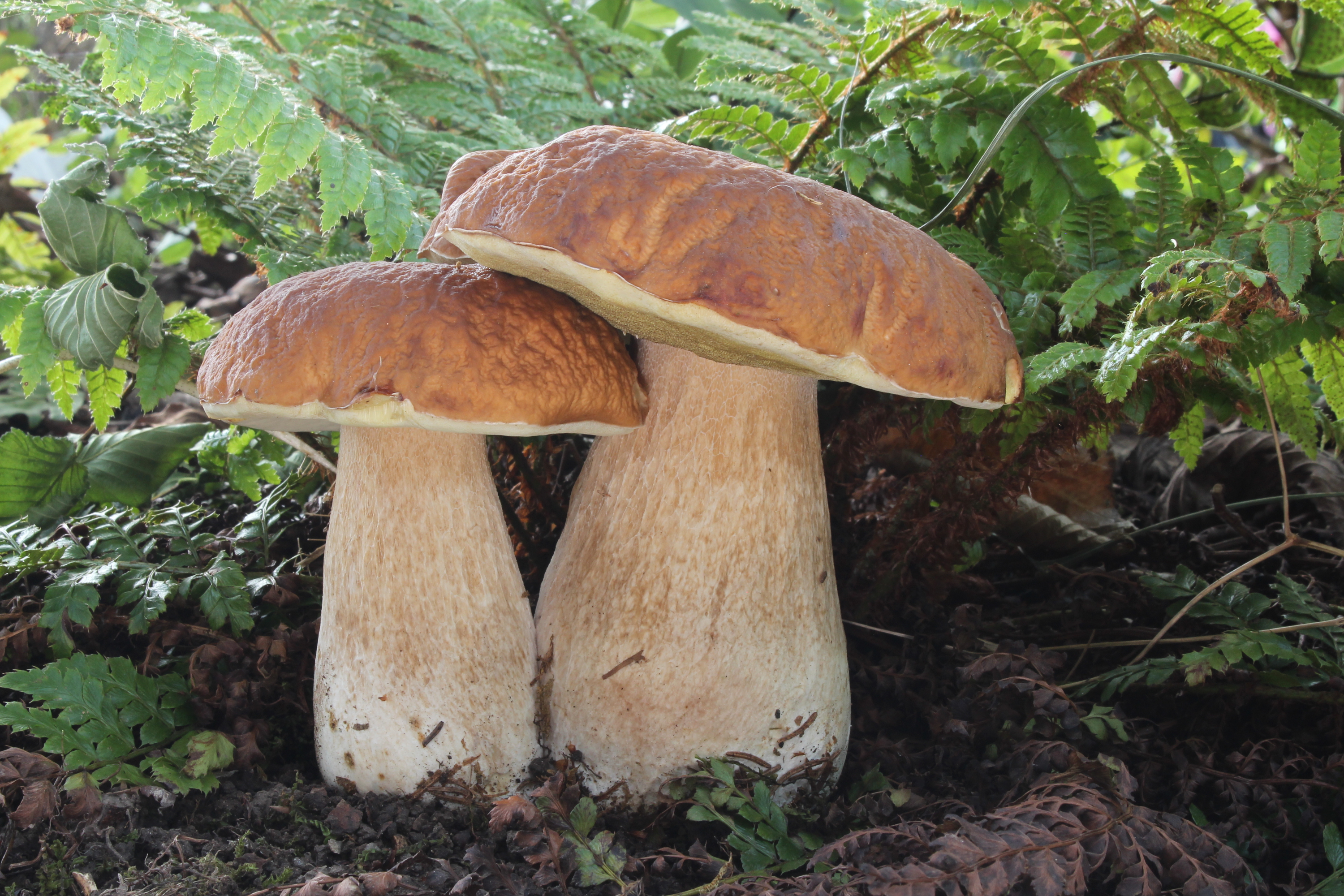
Boletus edulis
Key differences
The king bolete (Boletus edulis) is distinguished by a smooth cap cuticle that feels greasy to the touch in damp conditions, a broader palette of lighter and darker shades of brown, and a whitish reticulum typically present in the upper half of the stipe (less frequently extending lower). Microscopically, the terminal elements of the cap cuticle in B. edulis are 4–19 µm wide, whereas in B. aereus the cap is dry, finely tomentose, and very dark, although individual coloration characteristics may overlap.
The bronze bolete (Boletus aereus) occurs in warm deciduous forests, mainly oak, also on calcareous soils, less frequently under chestnut trees. It has a very dark, dry, delicately downy cap. Under the microscope, the terminal elements of its cuticle reach up to 11 µm in width and contain fine-grained intracellular pigment.
George Chernilevsky · Public domain
Bez zmian względem zachowanego oryginału.
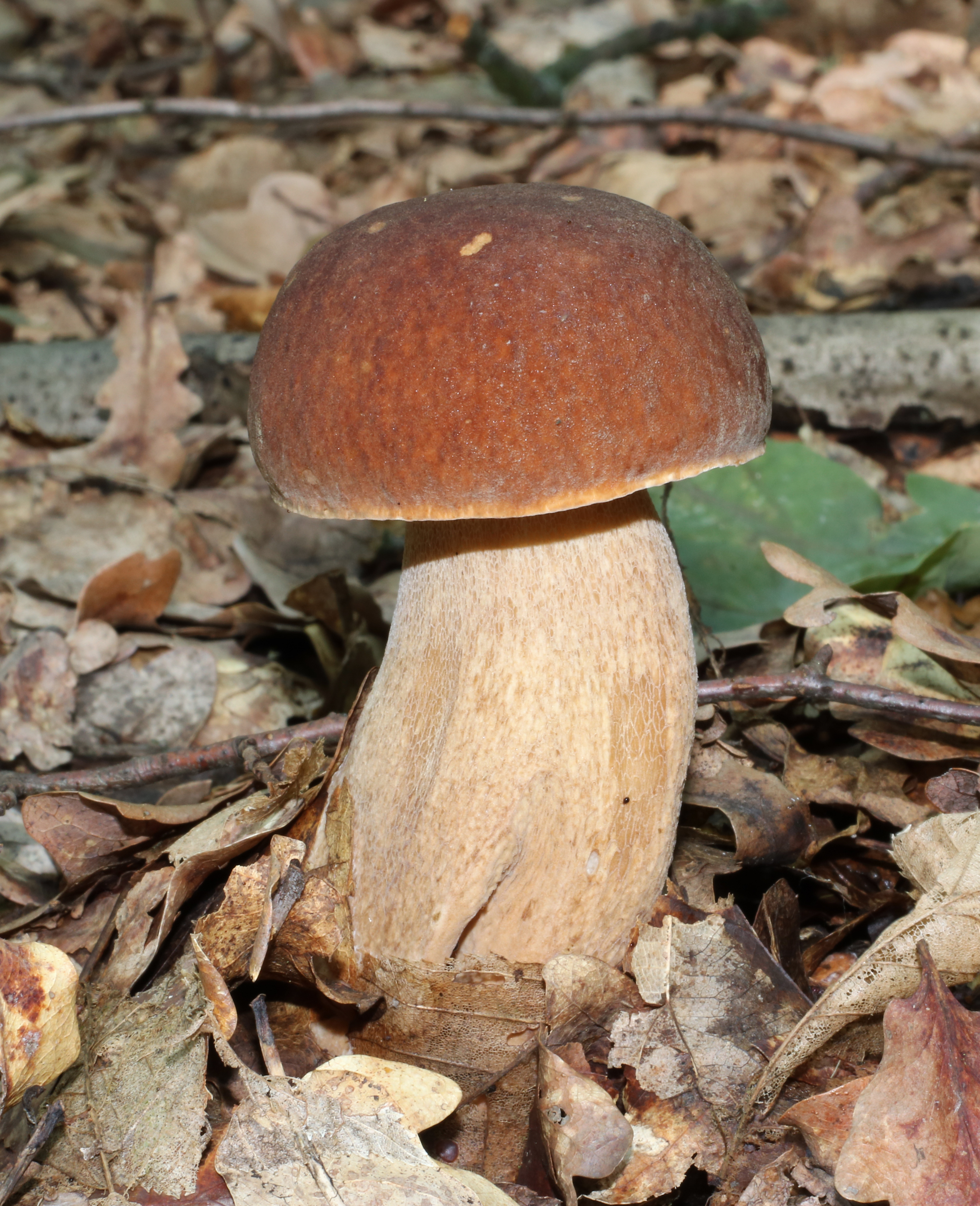
Photo source · Public domainBoletus reticulatus
Key differences
The bronze bolete (Boletus aereus) differs from the reticulated bolete by the darker color of the cap and a stipe with a brown-copper tone.
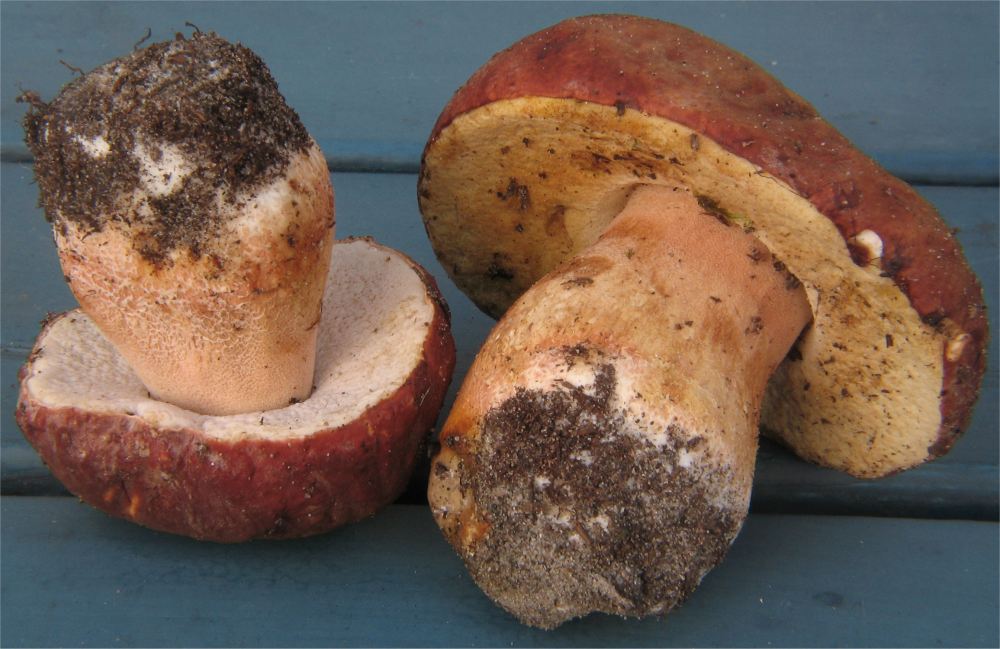
Boletus pinophilus
Key differences
The pine bolete (Boletus pinophilus) is characterized by a reddish-brown, chestnut to mahogany cap color with a surface that is often wrinkled and gelatinized, a thicker reticulum at the stipe apex, and broader elements of the cap cuticle (up to 27 µm wide) whose brown pigment dissolves in potassium hydroxide (KOH).
The bronze bolete (Boletus aereus) is distinguished by a cap devoid of reddish shades, very dark brown to almost blackish-brown in color, with a dry, finely hairy surface and a frosted margin. A dark brown reticulum occurs on the stipe, covering almost its entire length. The terminal elements of the cuticle hyphae are narrower (up to 11 µm wide) and contain fine intracellular pigment granules.
FAQ
Is the dark cep edible in Poland?
It is an edible mushroom, but very rare in Poland and considered dying out on the national red list, which is why it should not be collected from natural sites.
Why is the dark cep on the red list?
It is a very rare and dying out mushroom in Poland. The red list documents the degree of threat to the species, but it is not synonymous with legal species protection.
Under which trees does Boletus aereus most commonly grow?
It grows in mycorrhiza with deciduous trees, primarily with oaks and beeches, and in southern Europe its typical partner is also sweet chestnut.
In which months can fruiting bodies of this species be found?
In the State Forests atlas for Poland, the months from May to September are indicated. In other regions of Europe, the occurrence time depends on the local climate.
How do you distinguish the dark cep from the penny bun?
It is distinguished by a distinctly darker, almost brownish-black cap and a preference for warm oak forests; the penny bun has a lighter cap and a broader range.
Does the dark cep change flesh color when cut?
No, its flesh is white, firm, and does not turn blue or darken after bruising or cutting, which distinguishes it from many larch boletes or red-pored boletes.
Can this species be confused with a poisonous mushroom?
It is sometimes confused with the inedible bitter bolete and other boletes. Proper distinction requires a careful evaluation of the entire set of fruit body features.
Where in Europe is Boletus aereus most eagerly collected?
It is traditionally collected in the Mediterranean basin – among others in Italy, Spain, and southern France, where it is a valued edible mushroom.
What texture does the cap surface of the dark cep have?
The cap surface is matte, dry, velvety or finely wrinkled, in shades of dark brown, bronze brown, and sometimes with rusty patches.
What significance does Boletus aereus have in genetic research?
Specimens of this species serve in DNA research for precisely distinguishing evolutionary lineages and relationships among European boletes.
Enthusiast
Underside of the cap
- Tube length
- Tube length: 5–30 mm.
Names and history
- Obowiązująca nazwa taksonomiczna
- Boletus aereus
- Pozostałe nazwy
- borowik ciemnobrązowy, bronze bolete
Home observations
Spore print
- Required materials
- fresh, mature cap, sheet of paper, glass or small bowl, water
- Time
- 2–24 h
- Procedure
- Place the cap underside down on the paper.
- Add a drop of water on top and cover.
- After 2–24 hours, lift the cap and examine the deposit.
What to look for
- Spore print colour
- Spore print colour: green. Spore print colour: brown.
- Spore print shade
- Spore print shade: olive. Spore print shade: olive-brown.
Under the microscope
- Required materials
- light microscope, microscope slide and cover slip, needle, water, spores from print
- Procedure
- Transfer a small amount of the spore print onto the slide using a needle.
- Add a drop of water, cover with a cover slip, and examine the spores.
What to look for
- Spore shape
- Spore shape: elongate ellipsoid. Spore shape: fusiform. Spore shape: fusiform. Spore shape: nearly spindle-shaped.
- Spore surface
- Spore surface: smooth. Spore surface: smooth.
- Spore dimensions
- Length 10.5–19 µm, width 3.5–7 µm.
Compare dimensions after calibrating the microscope scale.
Ecology and distribution
- Broadleaf trees in the vicinity
- Broadleaf trees in the vicinity: oak.
Broadleaf trees in the vicinity: beech.
Broadleaf trees in the vicinity: sweet chestnut. - Coniferous trees in the vicinity
- Coniferous trees in the vicinity: fir.
- Mycorrhizal hosts
- General species association: Mycorrhizal hosts: Quercus (general partner list).
General species association: Mycorrhizal hosts: Fagus (general partner list). - Fungi in the vicinity
- Fungi in the vicinity: Boletus reticulatus.
History and culture
The dark cep was scientifically described for the first time in 1789 by the French botanist and mycologist Pierre Bulliard in the work "Herbier de la France" (plate 385). The species name was subsequently sanctioned in 1821 by Elias Fries. In taxonomic history, the status of this mushroom was interpreted in various ways – in earlier mycological listings, it was sometimes treated as a variety of the penny bun (Boletus edulis), as indicated by, among others, Władysław Wojewoda (2003).
The Latin specific epithet "aereus" is derived from the word meaning "bronze" or "of bronze", which is a direct reference to the characteristic dark coloration of the cap. From this term originates the traditional, historical Polish name "borowik spiżowy", as well as the French common name "cèpe bronzé". In the countries of the Mediterranean basin, and particularly in Italy, this mushroom has long functioned in local tradition under the widely used name "porcino nero" (black bolete), distinguishing it from forms with lighter coloration.
Edibility and safety
The dark cep is an edible mushroom, valued for its compact, firm flesh and pleasant aroma and taste. Like other boletes, it requires appropriate heat treatment before consumption, such as boiling, stewing, or frying. Old, overripe, or moldy specimens should also be avoided.
This species enjoys great popularity in Southern Europe, especially in Italy (where it is traditionally known as "porcino nero") and in Spain. In Poland, however, the situation is completely different – this mushroom is extremely rare and traditionally listed in category E (endangered) on the red list of macrofungi. A common mistake should be explicitly corrected: Boletus aereus does not appear in national lists of fungi subject to legal species protection – neither strict nor partial (Regulation of the Minister of the Environment, Journal of Laws 2014 item 1408, annexes 1 and 2). Despite the lack of a formal ban resulting from this regulation, the extreme rarity of this species and its high threat category fully justify the explicit recommendation to leave any found fruit bodies at their natural site, without harvesting them for culinary purposes.
Habitat and occurrence
The dark cep is a thermophilic species, growing primarily in deciduous forests of the temperate and Mediterranean zones. It enters mycorrhizal relationships mainly with broadleaved trees, in particular with oaks (Quercus), more rarely with beeches or sweet chestnuts. As shown by research by Beugelsdijk et al. (Table 2), heavy, clayey, and often slightly calcareous soil is characteristic of the habitats of this species. Although typically associated with warm oak forests, the Polish regional catalog also documents two example August records of fruit bodies in mixed coniferous forests.
The timing of fruit body appearance is presented in varied ways in the literature depending on the source. The table on the card gives a range from July to October (VII–X), while the atlas of the State Forests indicates the months from May to September (V–IX). In warmer regions of Southern Europe, favorable thermal conditions may allow for an early start of fruiting and its continuation into late autumn, whereas in Poland any documented occurrence is a rarity.
Researcher
Edibility and culinary use
Ustalenia źródłowe: jadalność, spożycie i wykorzystanie
- Edibility
- Edible — źródło oznaczenia
Źródło bez opisu bibliograficznego · jadalne czy trujące? / Jadalny
Scientific names and taxonomy
- Current scientific name
Boletus aereus
- Former scientific names
- Boletus aereus f. citrinus Camello & De la Peña
Boletus aereus var. cepa (Thore) DC.
Boletus aereus var. cravetta (Bellardi) DC.
Boletus aereus var. leucoporus Pers.
Boletus cepa Thore
Boletus cravetta Bellardi
Boletus edulis f. aereus (Bull.) Vassilkov
Dictyopus aereus (Bull.) Quél.
Suillus aereus (Bull.) Kuntze
Tubiporus aereus (Bull.) P. Karst.
Tubiporus edulis subsp. aereus (Bull.) Maire[10]
Borowik ciemnobrązowy nosi ważną nazwę naukową Boletus aereus Bull. Według Species Fungorum bazuje ona na rycinie 385 w 9. tomie Herbier de la France, opublikowanej w 1789 r. Pod względem pozycji systematycznej rodzaj Boletus należy do rodziny borowikowatych (Boletaceae), rzędu borowikowców (Boletales), podklasy pieczarkopodobnych (Agaricomycetidae), klasy pieczarniaków (Agaricomycetes), gromady podstawczaków (Basidiomycota) i królestwa grzybów (Fungi).
[10] [2]W literaturze mykologicznej odnotowano następujące historyczne kombinacje oraz synonimy taksonomiczne (dwa identycznie brzmiące zapisy Boletus edulis f. aereus odnoszą się do odrębnych pozycji bibliograficznych):
| Zapis nazwy | Publikacja |
|---|---|
| Tubiporus aereus (Bull.) P. Karst. | Bidr. Känn. Finl. Nat. Folk 37:5 (1882) |
| Dictyopus aereus (Bull.) Quél. | Enchiridion Fungorum:159 (1886) |
| Suillus aereus (Bull.) Kuntze | Revis. gen. pl. 3(3):535 (1898) |
| Tubiporus edulis subsp. aereus (Bull.) Maire | Mém. Soc. Sci. Nat. Maroc 45:87 (1937) |
| Boletus edulis f. aereus (Bull.) Vassilkov | Compl. Fl. Champ. Supér. Maroc:32 (1955) |
| Boletus edulis f. aereus (Bull.) Vassilkov | Belyi Grib:19 (1966) |
| Boletus cravetta Bellardi | Append. Flor. Pedemont.:73 (1792) |
| Boletus aereus var. cravetta (Bellardi) DC. | Fl. franç. 5/6:42 (1815) |
| Boletus cepa Thore | Essai Chloris Dép. Landes:482 (1803) |
| Boletus aereus var. cepa (Thore) DC. | Fl. franç. 5/6:42 (1815) |
| Boletus aereus var. leucoporus Pers. | Mycologia Europaea 2:138 (1825) |
| Boletus aereus f. citrinus Camello & De la Peña | Tarrelos 19:35 (2017) |
Taxon scope and identification limitations
Badania molekularne Beugelsdijka i współpracowników z 2008 r. wykazały odrębność czterech europejskich linii ewolucyjnych odpowiadających gatunkom Boletus aereus, Boletus edulis, Boletus pinophilus oraz Boletus reticulatus na podstawie sekwencji regionu ITS1–5.8S–ITS2 oraz genu dehydrogenazy aldehydu 3-fosfoglicerynowego (GAPDH). Dwie próby Boletus aereus z Holandii oznaczono symbolami SvdL49 i SvdL94; zarejestrowano dla nich sekwencje ITS (odpowiednio EU417844 i EU417845) oraz GAPDH (EU417876 i EU417877), przy czym domniemanym partnerem mikoryzowym w obu stanowiskach był dąb (Quercus). Analiza filogenetyczna objęła 31 taksonów, 1356 pozycji sekwencji i 96 pozycji informatywnych dla parsymonii. Wyniki te potwierdzają status europejskiego materiału badawczego, nie rozstrzygają jednak granic zmienności taksonu w skali globalnej ani relacji z Boletus mamorensis.
[4]Laboratory diagnostics
Dane ustrukturyzowane
Pileipellis
- Width of pileipellis elements
- Width of pileipellis elements: up to 11 µm. [4]
- Incrustation of cuticle hyphae
- Incrustation of cuticle hyphae: absent. [13]
- Intracellular granules in the pileipellis
- Intracellular granules in the pileipellis: present. [4]
- Structure of the pileipellis
- Structure of the pileipellis: trichoderm. [13]
Spores
Material and research methods
- Results as recorded in the sources — Spore length
- Materiał badania: Source-described Boletus aereus spores. 13–16 µm [15]
Materiał badania: Source-described Boletus aereus spores. 14–17 µm [17]
Materiał badania: Source-described Boletus aereus spores. 12–18 µm [1]
Materiał badania: Source-described Boletus aereus spores. 10,5–19 µm [13]
Materiał badania: Source-described Boletus aereus spores. 12–16 µm [3] - Results as recorded in the sources — Spore width
- Materiał badania: Source-described Boletus aereus spores. 4–5,5 µm [15]
Materiał badania: Source-described Boletus aereus spores. 4–6 µm [1]
Materiał badania: Source-described Boletus aereus spores. 4–5 µm [3]
Materiał badania: Source-described Boletus aereus spores. 3,5–7 µm [13]
Materiał badania: Source-described Boletus aereus spores. 4,5–6 µm [17]
Metody i zapisy źródłowe — Boletus aereus pileipellis elements in Beugelsdijk2008 Table2
Szerokość elementów skórki; Ziarnistości wewnątrz elementów skórki — zapis źródłowy: „Pileipellis elements up to11µm wide, with fine intracellular grains; exact aereus Table2 row.” [4]
Metody i zapisy źródłowe — Source-described Boletus aereus cap cuticle
Metody i zapisy źródłowe — Source-described Boletus aereus spores
Długość zarodnika; Kształt zarodnika; Powierzchnia zarodnika; Szerokość zarodnika — zapis źródłowy: „S01 describes dimensions, elongate-ellipsoid to fusiform shape and smooth surface; technique, preparation, N and measurement extent unreported.” [1]
Metody i zapisy źródłowe — Source-described Boletus aereus spores
Długość zarodnika; Kształt zarodnika; Szerokość zarodnika — zapis źródłowy: „S03 PDF69 recommends observation in KOH (da osservare con KOH); it does not document an actually performed preparation or measurement protocol.” [3]
Metody i zapisy źródłowe — Source-described Boletus aereus spores
Długość zarodnika; Iloraz długości i szerokości zarodnika; Szerokość zarodnika — zapis źródłowy: „Source species description, collection, preparation, technique, N and measurement extent unreported.” [13]
Metody i zapisy źródłowe — Source-described Boletus aereus spores
Długość zarodnika; Kształt zarodnika; Powierzchnia zarodnika; Szerokość zarodnika — zapis źródłowy: „Source identification guide; photographed spores do not establish specimen linkage, full method or N.” [15]
Metody i zapisy źródłowe — Source-described Boletus aereus spores
Długość zarodnika; Szerokość zarodnika — zapis źródłowy: „Species key result; method, preparation, specimen linkage, N and measurement extent unreported.” [17]
Occurrence verification — scope and limitations
Materiał: Udokumentowany polski zbiór z województwa lubelskiego.
Zakres odczytu: Fragmenty źródeł.
Odczytano fragment źródła; pełny tekst i metody nie zostały zweryfikowane.
Data przeglądu: 21.10.2026.
Ograniczenia: Źródłowe oznaczenie i zakres pojęcia zachowano. Nie zadeklarowano nowego badania okazów ani odczytu wszystkich publikacji cytowanych przez źródło.
[2]Scope of the review
Before completion, the record requires completion or settlement.
- Search for occurrence regions requires reconciliation.
- Connections of earlier findings require re-examination.
- New sources require accounting for information encountered during the review.
Key substances and their effects
W badaniach składu chemicznego prowadzonych w 2020 r. przez Zhanga i współpracowników wykorzystano owocniki pozyskane od Teng Hui Agriculture w Kunming (prowincja Junnan, Chiny), oznaczone taksonomicznie przez prof. Li Yu z Rolniczego Uniwersytetu w Jilin. Próbki wysuszono w temperaturze 60 ± 2 °C i rozdrobniono do frakcji przechodzącej przez sito o gęstości 60 mesh.
[6]W analizach biochemicznych zawartość cukrów ogółem wyznaczono metodą fenolowo-siarkową, cukry redukujące oznaczono odczynnikiem kwasu 3,5-dinitrosalicylowego (DNS), białko ogólne metodą Kjeldahla, a tłuszcz surowy ekstrakcją Soxhleta. Profil aminokwasowy zbadano na analizatorze L8900 po 22-godzinnej hydrolizie w 6 M HCl w 110 ± 1 °C. Pierwiastki mineralne analizowano metodą optycznej spektrometrii emisyjnej ze wzbudzeniem w plazmie indukcyjnie sprzężonej (ICP-OES), a profil kwasów tłuszczowych techniką chromatografii gazowej sprzężonej ze spektrometrią mas (GC-MS QP2010). Flawonoidy i triterpeny oznaczano kolorymetrycznie, mannitol jodometrycznie, witaminy i nukleotydy metodą HPLC, sterole spektrofotometrycznie w UV, a polifenole metodą Folina–Ciocalteu.
[6]Główne składniki odżywcze i witaminy w wysuszonych owocnikach (Main components, %):
| Składnik | Zawartość (%) |
|---|---|
| Cukry ogółem (Total sugar) | 30,60 |
| Mannitol | 17,90 |
| Popiół ogólny (Total ash) | 5,60 |
| Białko (Protein) | 24,30 |
| Triterpeny ogółem (Total triterpenes) | 1,44 |
| Flawonoidy ogółem (Total flavonoids) | 0,23 |
| Cukry redukujące (Reducing sugar) | 4,80 |
| Nukleotydy (Nucleotide) | nie wykryto (ND) |
| Tłuszcz surowy (Crude fat) | 12,20 |
| Sterole (Sterols) | 1,40 |
| Polifenole (Polyphenols) | 2,03 |
| Witamina A | nie wykryto (ND) |
| Witamina B1 | nie wykryto (ND) |
| Witamina B2 (×10⁻³) | 1,71 |
| Witamina B3 (×10⁻²) | 4,16 |
| Witamina B6 | nie wykryto (ND) |
| Witamina C | nie wykryto (ND) |
| Witamina D2 | nie wykryto (ND) |
| Witamina D3 | nie wykryto (ND) |
| Witamina E | nie wykryto (ND) |
Profil aminokwasowy suszu (Amino acid, %):
| Aminokwas | Zawartość (%) |
|---|---|
| Kwas asparaginowy (Asp) | 0,32 |
| Izoleucyna (Iso) | 0,18 |
| L-Treonina (Thr) | 0,21 |
| Leucyna (Leu) | 0,30 |
| Seryna (Ser) | 0,19 |
| Tyrozyna (Tyr) | 0,16 |
| Kwas glutaminowy (Glu) | 0,39 |
| Fenyloalanina (Phe) | 0,18 |
| Glicyna (Gly) | 0,30 |
| Lizyna (Lys) | 0,16 |
| Alanina (Ala) | 0,26 |
| Histydyna (His) | 0,16 |
| Cystyna (Cys) | 0,03 |
| Arginina (Arg) | 0,17 |
| Walina (Val) | 0,15 |
| Prolina (Pro) | 0,15 |
| Metionina (Met) | 0,60 |
Zawartość pierwiastków mineralnych w badanym materiale (Minerals, %):
| Pierwiastek | Zawartość (%) |
|---|---|
| Rtęć (Hg) (×10⁻⁵) | 8,76 |
| Mangan (Mn) (×10⁻³) | 2,38 |
| Ołów (Pb) (×10⁻⁵) | 2,32 |
| Chrom (Cr) (×10⁻⁴) | 2,27 |
| Selen (Se) (×10⁻⁴) | 6,81 |
| Wapń (Ca) (×10⁻²) | 1,83 |
| Arsen (As) (×10⁻⁵) | 6,58 |
| Miedź (Cu) (×10⁻³) | 2,70 |
| Kadm (Cd) (×10⁻⁵) | 8,32 |
| Sód (Na) (×10⁻²) | 2,56 |
| Cynk (Zn) (×10⁻²) | 1,02 |
| Potas (K) | 1,74 |
| Żelazo (Fe) (×10⁻²) | 3,78 |
Profil kwasów tłuszczowych w badanym suszu (Fatty acid, %):
| Kwas tłuszczowy | Zawartość (%) |
|---|---|
| Kwas kaprynowy (C10:0) | nie wykryto (ND) |
| Kwas γ-linolenowy (C18:3n6) | nie wykryto (ND) |
| Kwas undekanowy (C11:0) | nie wykryto (ND) |
| Kwas arachidowy (C20:0) (×10⁻³) | 5,44 |
| Kwas laurynowy (C12:0) (×10⁻⁴) | 3,60 |
| Kwas paullinowy (C20:1) (×10⁻³) | 7,34 |
| Kwas tridekanowy (C13:0) | nie wykryto (ND) |
| Kwas eikozadienowy (C20:2) (×10⁻³) | 3,62 |
| Kwas mirystynowy (C14:0) (×10⁻³) | 6,63 |
| Kwas eikozatrienowy (C20:3n3) (×10⁻⁴) | 9,78 |
| Kwas mirystoleinowy (C14:1n5) | nie wykryto (ND) |
| Kwas dihomo-γ-linolenowy (C20:3n6) | nie wykryto (ND) |
| Kwas pentadekanowy (C15:0) (×10⁻²) | 1,73 |
| Kwas arachidonowy (C20:4n6) (×10⁻³) | 2,71 |
| Kwas cis-10-pentadecenowy (C15:1n5) | nie wykryto (ND) |
| Kwas eikozapentaenowy (C20:5n3) | nie wykryto (ND) |
| Kwas heksadekanowy / palmitynowy (C16:0) | 0,96 |
| Kwas heneikozanowy (C21:0) (×10⁻³) | 1,58 |
| Kwas palmitooleinowy (C16:1n7) | 0,03 |
| Kwas dokozanowy / behenowy (C22:0) (×10⁻²) | 1,53 |
| Kwas heptadekanowy (C17:0) | 0,01 |
| Kwas erukowy (C22:1n9) (×10⁻³) | 1,87 |
| Kwas heptadecenowy (C17:1n7) | 0,01 |
| Ester metylowy kwasu cis-13,16-dokozadienowego (C22:2) | nie wykryto (ND) |
| Kwas stearynowy (C18:0) | 0,18 |
| Kwas dokozaheksaenowy (C22:6n3) | nie wykryto (ND) |
| Kwas oleinowy (C18:1n9) | 1,23 |
| Kwas trikozanowy (C23:0) (×10⁻³) | 1,72 |
| Kwas elaidynowy (C18:1n9t) | nie wykryto (ND) |
| Kwas lignocerynowy / tetrakozanowy (C24:0) (×10⁻²) | 1,85 |
| Kwas linolowy (C18:2n6c) | 2,66 |
| Kwas nerwonowy (C24:1n9) (×10⁻³) | 6,74 |
| Kwas translinolowy (C18:2n6t) | nie wykryto (ND) |
| Kwas kaprylowy / oktanowy (C8:0) | nie wykryto (ND) |
| Kwas α-linolenowy (C18:3n3) | nie wykryto (ND) |
W publikacji Zhanga i współpracowników odnotowano rozbieżność w podawanych stężeniach witamin B2 i B3: tabela 1 wymienia witaminę B2 z wartością 1,71 przy mnożniku ×10⁻³ w kategorii procentowej oraz witaminę B3 z wartością 4,16 przy mnożniku ×10⁻², podczas gdy w tekście wyników podano odpowiednio 0,02% i 0,42%.
[6]W badaniach Alaimo i współpracowników z 2018 r. przeanalizowano zawartość 28 pierwiastków w owocnikach Boletus aereus i Clitopilus prunulus zebranych na 11 niezanieczyszczonych stanowiskach na Sycylii. U borowika ciemnobrązowego mediany stężeń wynosiły: dla potasu 31 290 µg/g w kapeluszach i 24 009 µg/g w trzonach, a dla cynku odpowiednio 107 µg/g i 57 µg/g. Szereg malejący najobficiej występujących pierwiastków określono jako K > Na > Ca > Mg > Fe > Al > Rb > Zn.
[12]W materiale z Sycylii większość analizowanych pierwiastków kumulowała się silniej w kapeluszach niż w trzonach. Skład mineralny grzybów rosnących na podłożu wulkanicznym różnił się od próbek zebranych na podłożu osadowym, natomiast odczyn gleby (pH) nie wykazał istotnego statystycznie wpływu w badanym zbiorze. W porównaniu międzygatunkowym rosnący na tych samych stanowiskach Clitopilus prunulus akumulował 2–4 razy więcej Co, Cr, Fe, Mg, Mo, Pb, U i V, podczas gdy Boletus aereus zawierał wyższe stężenia Cu, Se i Tl.
[12]Habitat and occurrence
Habitat, region and season
Borowik ciemnobrązowy jest gatunkiem ciepłolubnym. W Czechach rośnie w ciepłych lasach liściastych oraz na groblach stawów, najczęściej pod dębami, rzadziej pod bukami, wykazując preferencję do podłoży o charakterze wapiennym. W Polsce opisywany jest w ciepłych lasach liściastych, mieszanych, a także w świerczynach, na glebach gliniastych i wapiennych; tworzy związki mikoryzowe przede wszystkim z dębami oraz jodłami, a w cieplejszych rejonach południowej Europy także z kasztanem jadalnym.
[1] [2]We Włoszech podręcznik ISPRA wiąże występowanie gatunku wyłącznie z lasami liściastymi: przede wszystkim dąbrowami, w dalszej kolejności drzewostanami z kasztanem jadalnym (Castanea sativa), a znacznie rzadziej buczynami. W strefie śródziemnomorskiej mikoryzę tworzy także z dębem ostrolistnym (Quercus ilex), dębem korkowym (Quercus suber) oraz krzewami z rodzaju Cistus i gatunkami Erica arborea oraz Arbutus unedo. Stanowiska koncentrują się głównie w piętrze podgórskim.
[3]W materiale europejskim analizowanym przez Beugelsdijka i współpracowników owocniki zbierano w sąsiedztwie dębów, na ciężkich, gliniastych i często umiarkowanie wapiennych glebach, m.in. na przydrożach i w parkach. W Niemczech DGfM podaje występowanie w suchych do świeżych lasach liściastych, parkach i na cmentarzach, na podłożu gliniastym, marglistym lub wapiennym. Gatunek uznawany jest tam za rzadki, spotykany częściej w południowej części kraju.
[4] [11]W Katalonii borowik ciemnobrązowy notowany jest w odmiennym typie siedliska – pod dębami korkowymi na podłożach krzemianowych, a także pod dębami ostrolistnymi i innymi gatunkami dębów. Regionalne opracowanie wskazuje występowanie przede wszystkim w nadmorskiej części prowincji Girona, natomiast w środkowej Katalonii gatunek należy do rzadkości.
[7]Pora owocnikowania różni się w zależności od szerokości geograficznej i strefy klimatycznej. W Polsce owocniki pojawiają się od lipca do października, w Czechach od maja do października, a w Niemczech od lipca do września. W cieplejszym klimacie śródziemnomorskim (ISPRA) sezon trwa od maja do grudnia, a na Sycylii tradycyjny zbiór dokumentowano od wiosny do jesieni.
[2] [1] [3] [11] [5]W Czechach odnotowano trzy datowane stanowiska w kraju środkowoczeskim (Středočeský kraj): 8 lipca 2022 r. (nr wpisu 0087-2022-0102), 14 lipca 2022 r. (0087-2022-0096) oraz 13 września 2022 r. (0066-2022-0167).
[1]Potwierdzony zasięg występowania
Wszystkie obszary potwierdzone w zapisanych danych źródłowych.
| Kraj | Regiony i stanowiska | Owocnikowanie | Sources |
|---|---|---|---|
| Czech Republic | Nie ustalono regionów w zapisanych danych | V–X | |
| Germany | Nie ustalono regionów w zapisanych danych | VII–IX | |
| United Kingdom | Nie ustalono regionów w zapisanych danych | VIII–X |
|
| Ireland | Nie ustalono regionów w zapisanych danych | VIII–X |
|
| Italy | Nie ustalono regionów w zapisanych danych | V–XII |
|
| Poland | Lublin Voivodeship | VII–X |
|