Edible
Requires preparation

Set your location to see data for your region.
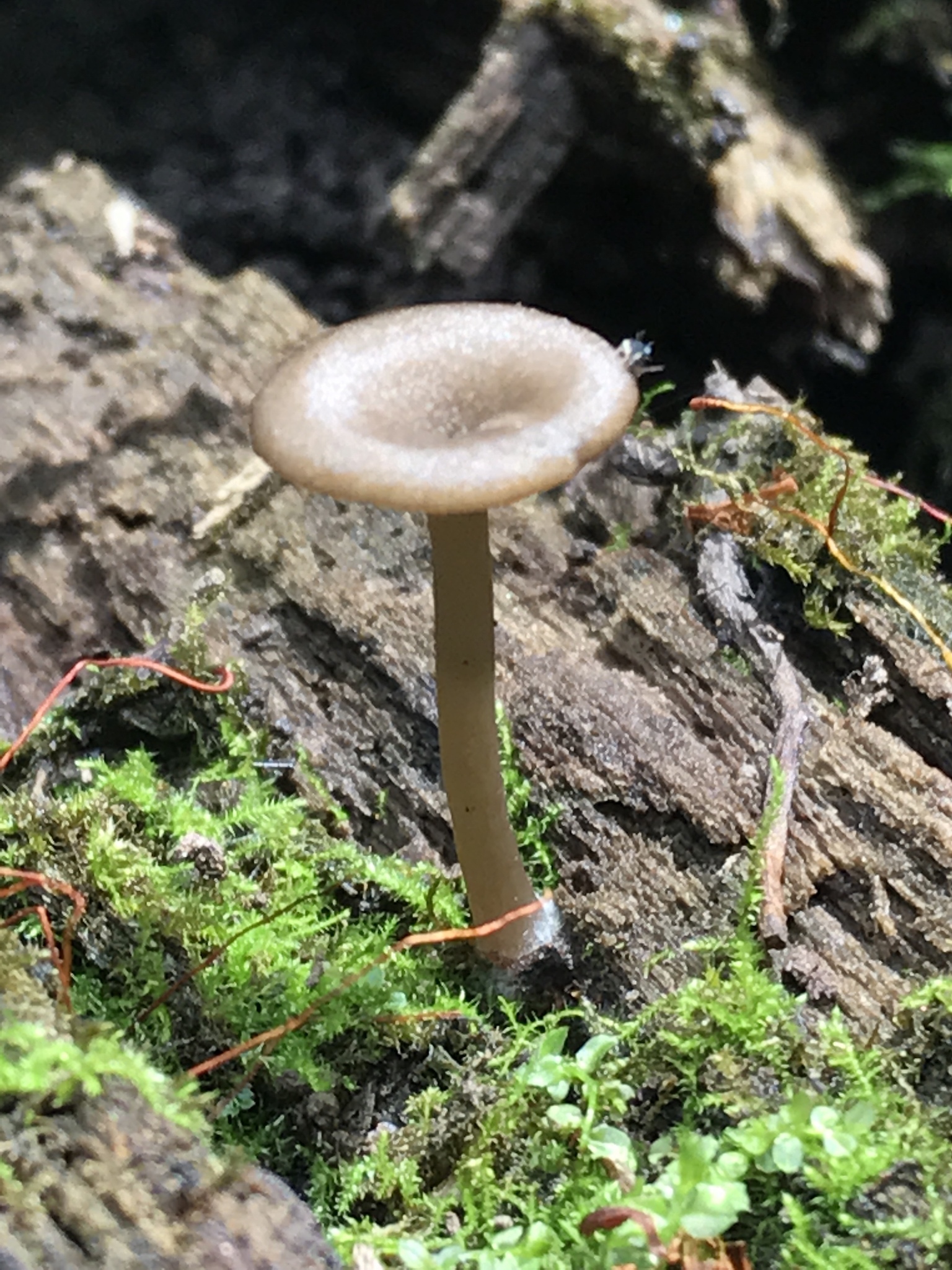
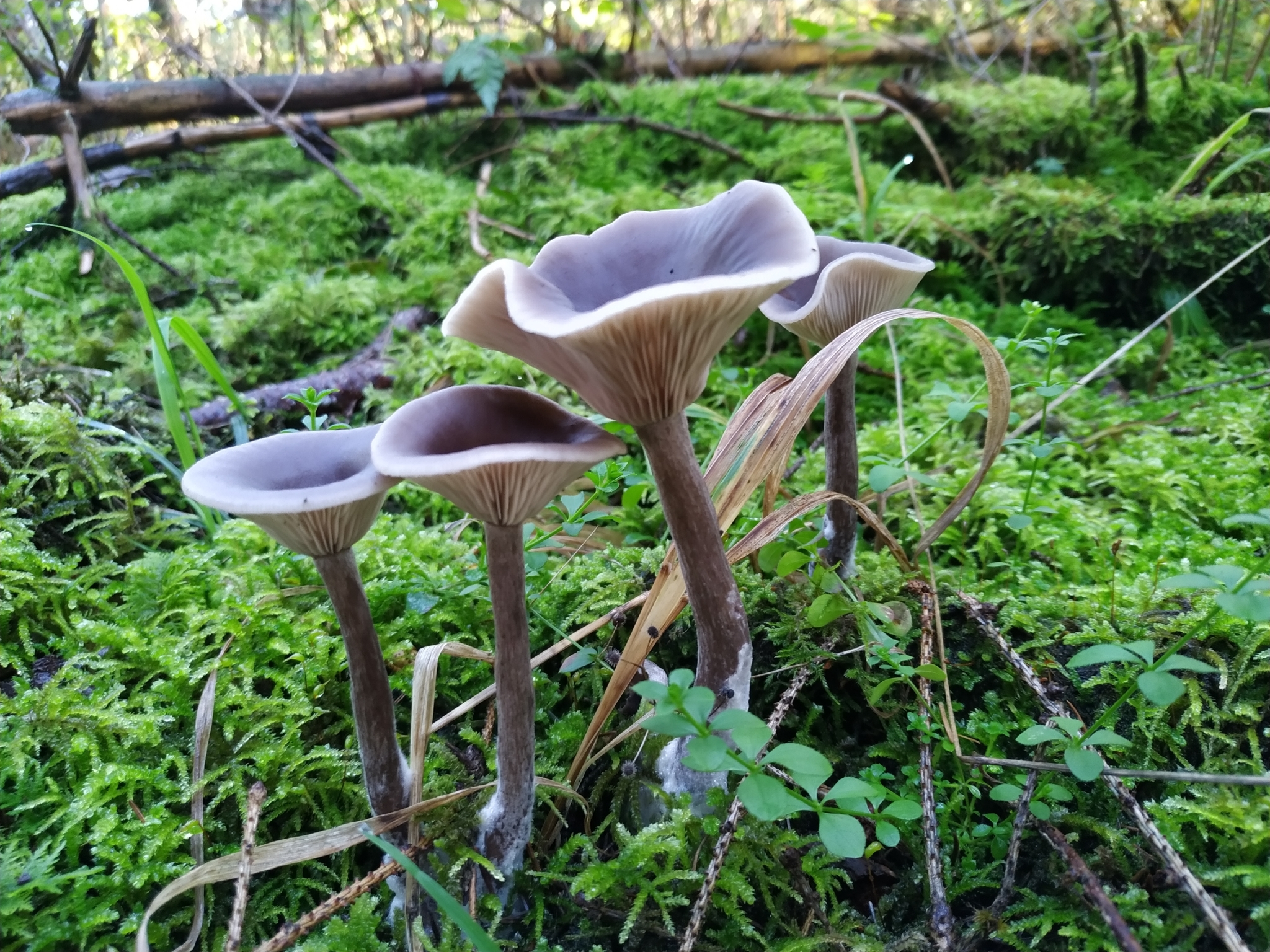
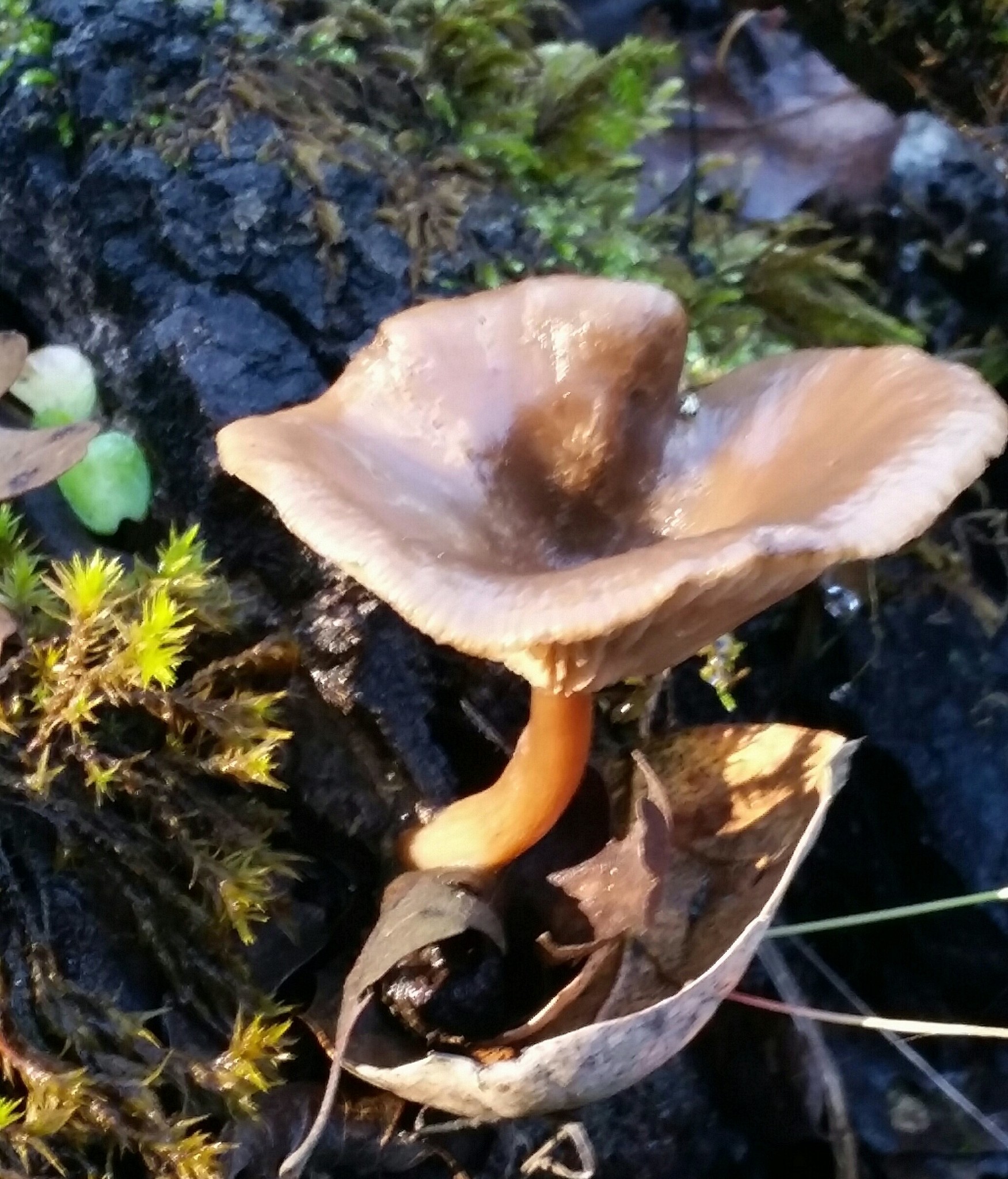
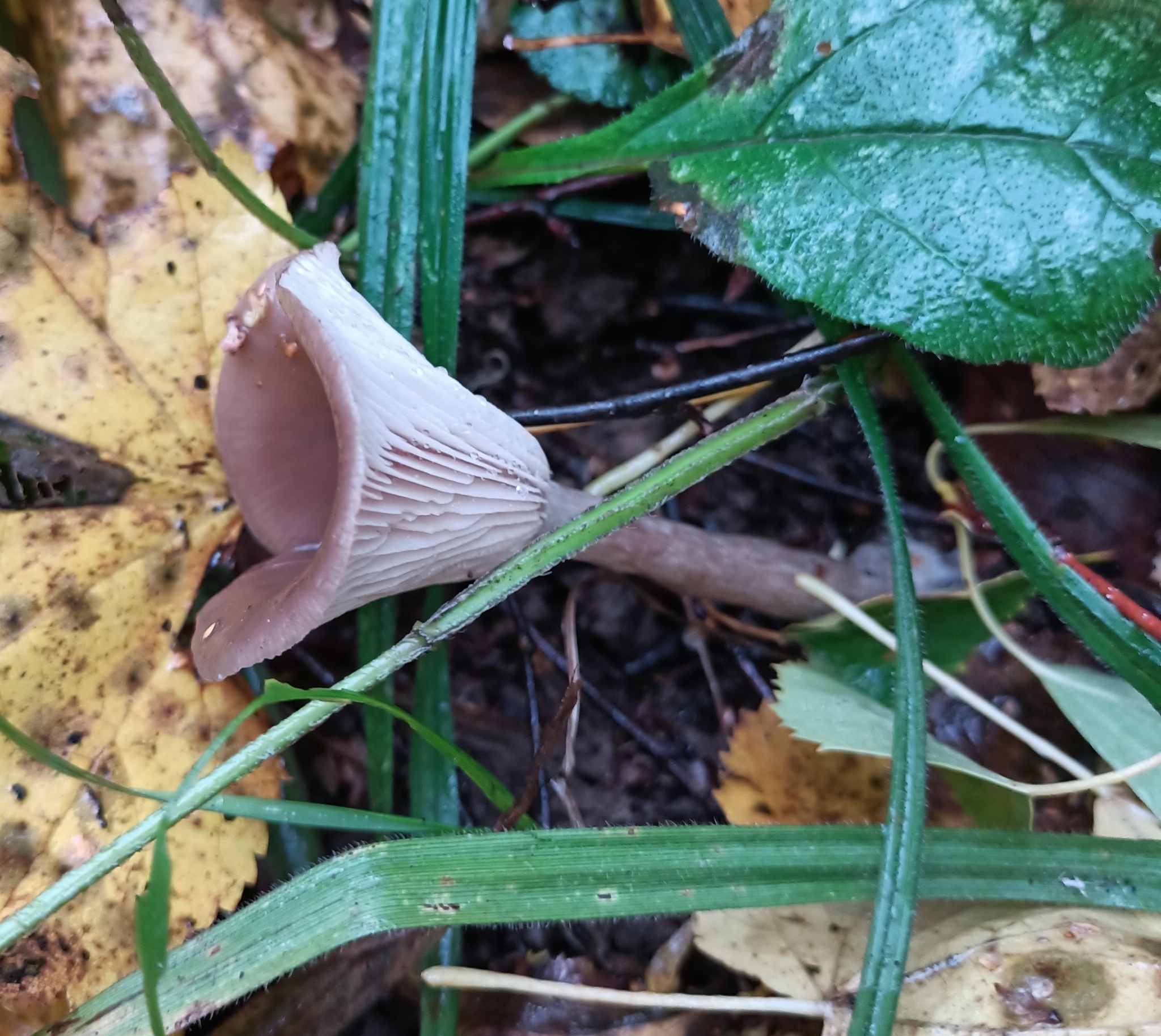
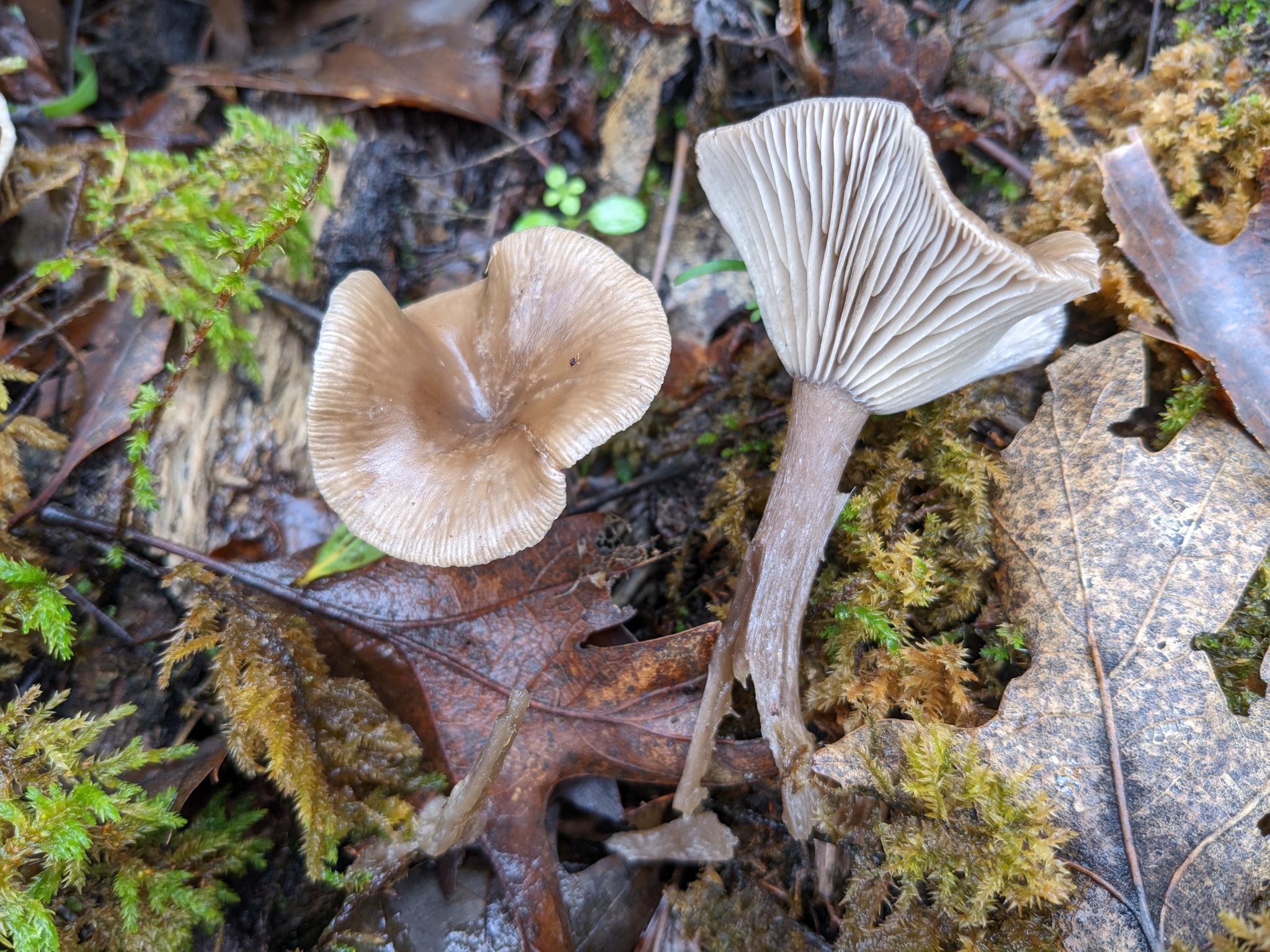
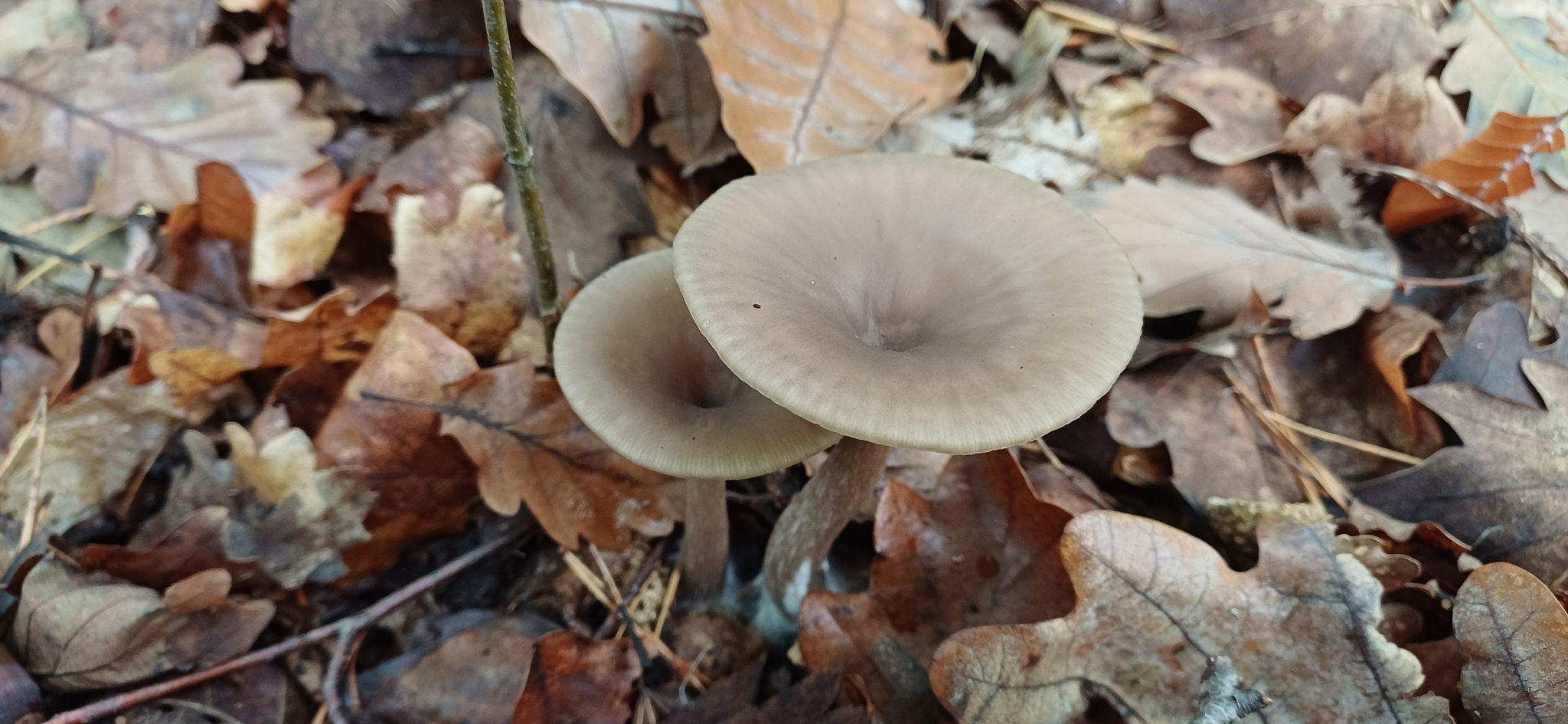
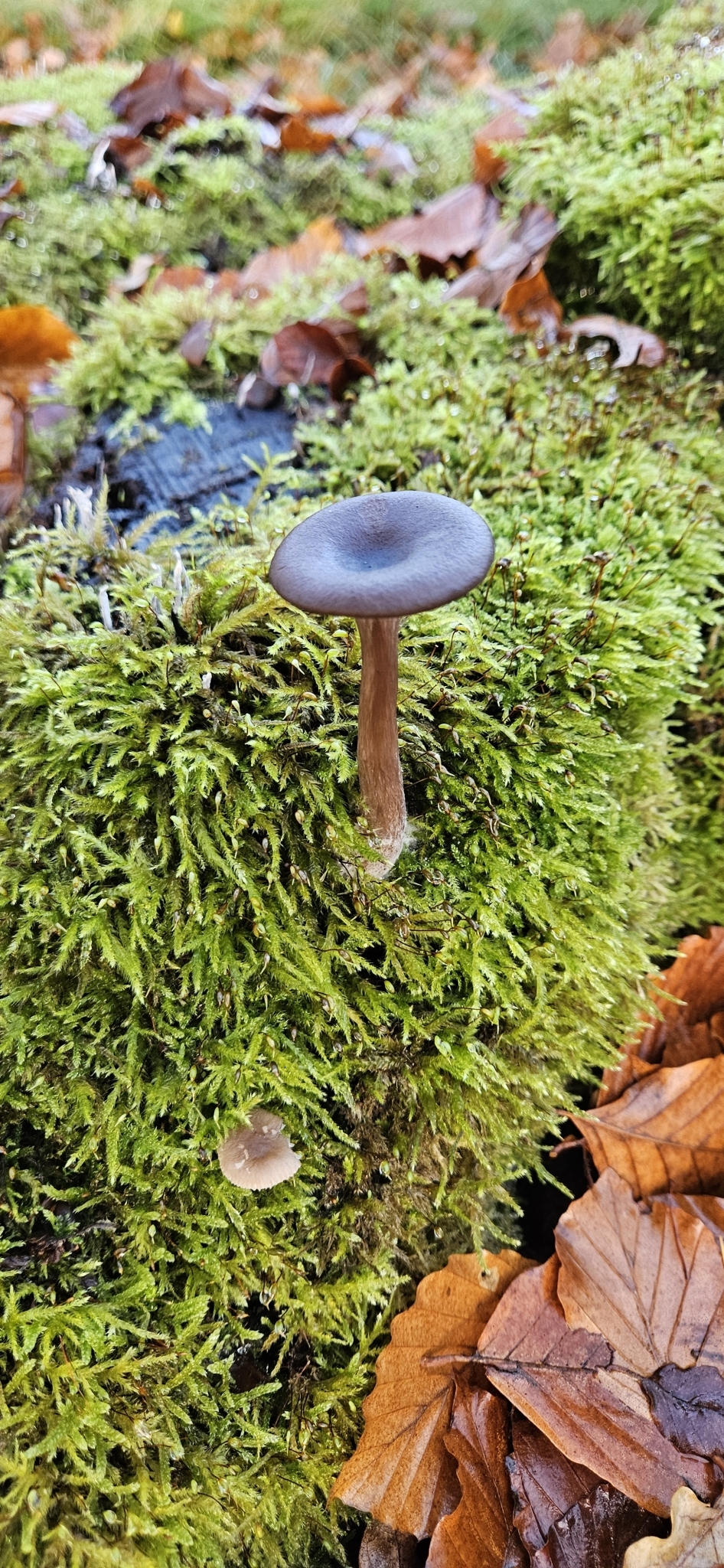
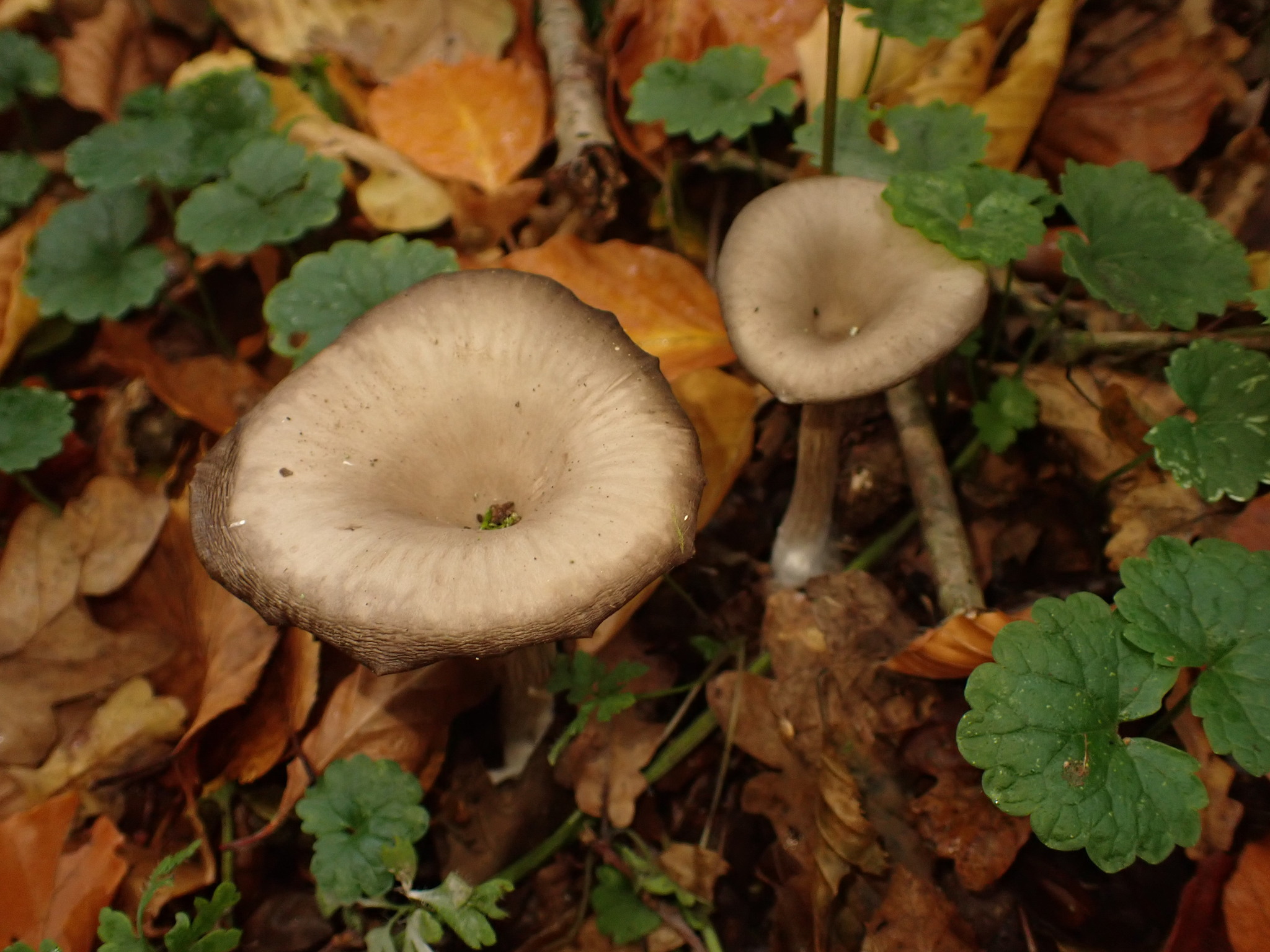
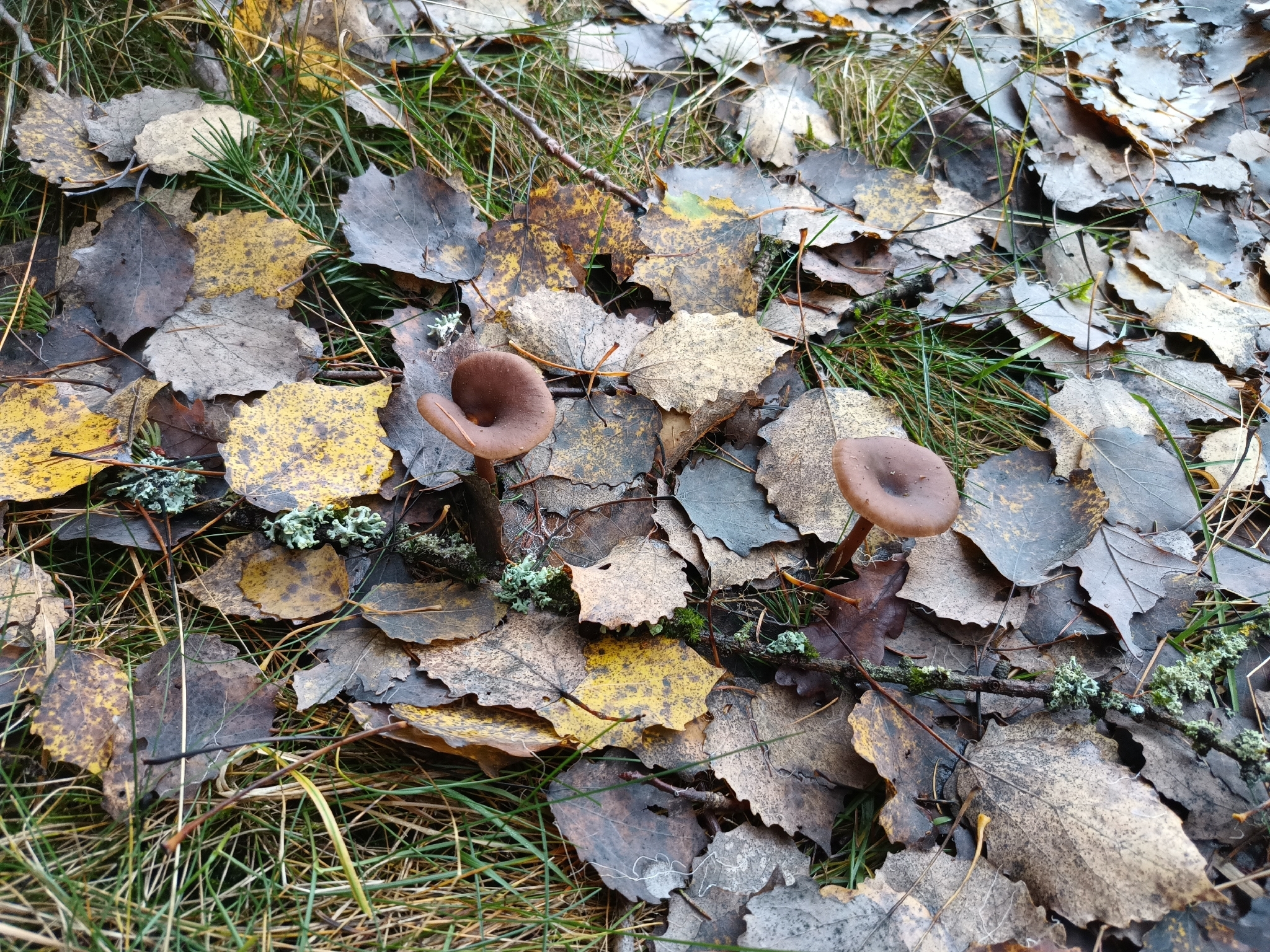

Pseudoclitocybe cyathiformis, commonly known as the goblet, is a late-autumn and winter saprotrophic mushroom belonging to the family Pseudoclitocybaceae. It features a deeply funnel-shaped, dark grey-brown hygrophanous cap and decurrent gills. Growing on decaying wood and rich forest litter in temperate broadleaf and conifer woods, it is generally listed in literature as inedible, though some authors regard it as edible in mixtures. It is valued primarily for its distinctive winter fruiting.
Identification, habitat, and key differences.
Forager
Fruitbody structure
- Fruit body form
- Fruit body form: Cap, stipe.
Cap
- Cap shape
- in young fruit bodies: Cap shape: convex.
Cap shape: funnel-shaped. - Cap surface relief
- Cap surface relief: smooth.
- Cap covering
- Cap covering: fibrillose.
- Cap surface sheen
- Cap surface sheen: shiny.
when wet: Cap surface sheen: shiny. - Cap colour
- when wet: Cap colour: black-brown.
when wet: Cap colour: chocolate brown.
when wet: Cap colour: dark brown.
when wet: Cap colour: grey-brown.
when dry: Cap colour: grey-brown.
when dry: Cap colour: light brown. - Margin orientation
- Margin orientation: inrolled.
- Cap margin outline
- Cap margin outline: wavy.
- Cap margin profile
- Cap margin profile: acute.
- Cap diameter
- The cap measures 20–160 mm in diameter.
- Cap centre
- in young fruit bodies: Cap centre: Depressed and with a distinct umbo.
- Cap hygrophaneity
- Cap hygrophaneity: hygrophanous.
Underside of the cap
- Hymenophore type
- Hymenophore type: gills.
Gills at stipe
- Hymenophore attachment to the stipe
- Hymenophore attachment to the stipe: attached to the stipe (gills).
Hymenophore attachment to the stipe: attached to the stipe (gills).
Hymenophore attachment to the stipe: attached to the stipe (gills).
- Decurrence of the hymenophore on the stem
- Decurrence of the hymenophore on the stem: decurrent (gills).
- Degree of gill anastomosis
- Degree of gill anastomosis: present.
- Gill branching
- Gill branching: forked (often).
- Macroscopic structure of the free gill edge
- Macroscopic structure of the free gill edge: toothed or serrate.
- Natural color of the gill surface
- Natural color of the gill surface: light brown.
in young fruit bodies: Natural color of the gill surface: cream.
Natural color of the gill surface: grey.
Natural color of the gill surface: grey-brown. - Gill spacing
- Gill spacing: moderately crowded.
Gill spacing: closely spaced.
Gill spacing: widely spaced.
Stem and base
- Stipe shape
- Stipe shape: cylindrical.
- Stipe base
- Stipe base: swollen.
Stipe base: club-shaped. - Stipe colour
- Stipe colour: brown.
- Stipe surface relief
- Stipe surface relief: reticulate.
- Stipe surface covering
- Stipe surface covering: fibrillose (whitish covering).
- Stipe interior
- Stipe interior: solid.
Stipe interior: hollow. - Stipe length
- Stipe length: 40–100 mm.
- Stipe diameter
- Stipe diameter: 5–10 mm.
Flesh
- Flesh colour
- Flesh colour: whitish.
when wet: Flesh colour: grayish.
when dry: Flesh colour: white. - Flesh odour
- Flesh odour: mealy, weak (whole fruit body).
Flesh odour: not distinctive (flesh).
Flesh odour: absent. - Distinctiveness of flesh taste
- Distinctiveness of flesh taste: indistinctive.
- Flesh thickness class
- Flesh thickness class: thin.
Where and when it grows
- Habitat
- Habitat: forest of unspecified type, ruderal or urban habitat or roadside.
Habitat: forest of unspecified type, park or roadside. - Substrate
- Substrate: soil or dead wood.
Substrate: litter or dead wood. - Fruit body growth pattern
- Fruit body growth pattern: in groups or in clusters.
Fruit body growth pattern: in groups. - Occurrence frequency
- Occurrence frequency: common.
- Fruiting season
- Fruit bodies appear from September to December.
- Distribution area
- Distribution area: confirmed.
- Substrate wood group
- Substrate wood group: broadleaf wood.
Edibility and culinary use
- Edibility
- Edible
- Required preparation
- Requires preparation
Law
- Protection
- It is not on the Polish list of protected fungal species.
- Trade
- It is not on the Polish list of mushrooms approved for trade.
FAQ
On what substrates does Pseudoclitocybe cyathiformis typically grow?
It grows on decaying logs, rotted tree stumps, buried wood fragments, and deep, humus-rich forest litter in mixed and deciduous woods.
What is the geographic distribution of the goblet mushroom?
It is widespread across temperate and boreal regions of the Northern Hemisphere, including Europe, North America, North Africa, and Northern Asia.
When does Pseudoclitocybe cyathiformis fruit during the year?
Fruiting occurs primarily in late autumn and winter, typically between October and December, persisting into January during mild winters.
What tree species are commonly found near this mushroom?
It grows near broadleaf trees like beech, oak, and birch, as well as conifers such as pine and spruce in shaded forest environments.
Is Pseudoclitocybe cyathiformis safe to eat raw?
No, it must not be eaten raw. Thorough heat treatment is necessary to avoid indigestion and break down fibrous mushroom cell walls.
What is the culinary profile of the goblet mushroom?
It has a mild, earthy taste and tender cap, but its thin flesh and modest flavor make it of only secondary culinary importance.
Which part of the fruiting body is preferred for cooking?
The funnel-shaped cap is preferred; the fibrous stem is typically discarded because it remains tough after cooking.
What does the scientific name 'cyathiformis' mean?
The epithet comes from the Latin word 'cyathus', meaning cup- or goblet-shaped, describing the mushroom's deeply depressed cap.
How is Pseudoclitocybe cyathiformis used in educational settings?
It is used in university mycology classes to demonstrate deeply decurrent gill attachment and funnel-shaped pileus morphology.
What non-culinary waste management role does this species serve?
Its mycelium is utilized in composting systems to accelerate the breakdown of wood chips, sawdust, and agricultural forestry waste.
Enthusiast
Names and history
- Current national name
- Lejkownik kubkowatokapeluszowy
- Current taxonomic name
- Pseudoclitocybe cyathiformis
- Remaining names
- lejóweczka miskowata
Home observations
Spore print
- Required materials
- fresh, mature cap, sheet of paper, glass or small bowl, water
- Time
- 2–24 h
- Procedure
- Place the cap underside down on the paper.
- Add a drop of water on top and cover.
- After 2–24 hours, lift the cap and examine the deposit.
What to look for
- Spore print colour
- Spore print colour: white.
Under the microscope
- Required materials
- light microscope, microscope slide and cover slip, needle, water, spores from print
- Procedure
- Transfer a small amount of the spore print onto the slide using a needle.
- Add a drop of water, cover with a cover slip, and examine the spores.
What to look for
- Spore shape
- Spore shape: ellipsoid.
- Spore surface
- Spore surface: smooth. Spore surface: smooth.
- Spore dimensions
- Length 8–12 µm, width 5–6.5 µm.
Compare dimensions after calibrating the microscope scale.
Ecology and distribution
- Soil reaction
- Soil reaction: non-acidic.
- General soil heaviness
- General soil heaviness: heavy.
- Mode of nutrition
- Mode of nutrition: saprotrophic.
Non-culinary uses
Pseudoclitocybe cyathiformis has limited traditional utility, but it has developed concrete contemporary applications in non-culinary environmental technologies. In municipal and agricultural waste management, the fungus is cultivated in solid-state composting systems, where its vegetative mycelium is deployed to accelerate the bioconversion and structural breakdown of dense lignocellulosic agricultural residues, wood shavings, and forestry by-products into stabilized organic soil amendments. In mycological education and botanical training programs, the mushroom is routinely collected and preserved as an exemplary specimen in university herbaria to teach students the morphological concepts of deeply decurrent gill attachments, hygrophanous cap changes, and funnel-shaped pileus architecture. In craft and natural artisan traditions, dried specimens and spore prints of the goblet are occasionally utilized in botanical printing and natural pigment craft workshops, where white spore prints and sepia-toned cap pigments provide subtle botanical impressions on handmade paper.
History and culture
Pseudoclitocybe cyathiformis lacks an extensive body of folkloric mythology or ancient agrarian ritual, but it occupies an intriguing niche in European botanical and natural history illustration. Described scientifically by the French mycologist Jean Baptiste François Pierre Bulliard in the late eighteenth century as Agaricus cyathiformis, its species name derives directly from the Greek and Latin words for 'cup' or 'goblet' (cyathus), reflecting its pronounced chalice-like morphology. In Victorian and continental botanical publications, detailed hand-colored lithographs frequently depicted the species due to its graceful, symmetrical architecture, making it a favorite subject among nineteenth-century natural history illustrators seeking to capture the somber beauty of winter woodlands. In regional European natural history circles, particularly in Britain, France, and Germany, the species gained cultural appreciation among nature-writing naturalists as an emblem of late-season renewal, symbolizing the enduring vitality of woodland life when autumn canopies had shed their foliage and the forest had entered winter dormancy.
Edibility and safety
The culinary status of Pseudoclitocybe cyathiformis is subject to differing opinions in mycological literature: while most field guides and references list it as inedible, Ladislav Hagara considers it edible when used in mixed mushroom dishes. This disagreement among authors should not be conflated with proof of toxicity, as the species is not known to be poisonous. However, because the flesh is thin, watery, and mild, it offers negligible gastronomic value on its own. If consumed, thorough cooking is necessary, as raw or undercooked specimens contain poorly digestible substances that can cause gastrointestinal upset. No specific safe cooking time is established in scientific literature. The tough, fibrous stipe is routinely discarded in favor of the funnel-shaped cap. In parts of Central and Eastern Europe, experienced foragers occasionally collect fresh specimens in late autumn as a supplemental component for soups or stews. Only young, firm caps should ever be considered, as older fruiting bodies, especially those subjected to repeated freezing and thawing, rapidly spoil and risk secondary bacterial decomposition.
Habitat and occurrence
Pseudoclitocybe cyathiformis is widely distributed across the temperate and boreal zones of the Northern Hemisphere, occurring throughout Europe, North America, Northern Asia, and North Africa. It inhabits a broad variety of forest ecosystems, including deciduous woodlands, mixed forests, coniferous plantations, and damp woodland edges, as well as overgrown parks and clearings. The fungus is primarily saprotrophic, decomposing heavily rotted logs, decayed tree stumps, woody debris, buried branches, and rich forest humus or deep leaf litter. It associates with both broadleaved trees—such as beech (Fagus), oak (Quercus), birch (Betula), and alder (Alnus)—and conifers like spruce (Picea) and pine (Pinus). The fruiting season is distinctly cold-tolerant, falling in late autumn and extending well into winter. In Central, Western, and Northern Europe, fruiting bodies typically appear in October and persist through December, occasionally enduring into January during mild winter conditions. In warmer Mediterranean and oceanic zones, the season regularly extends into February, whereas in continental and high-latitude areas, fruiting is concentrated in late autumn prior to permanent snow cover.
Researcher
Edibility and culinary use
Source findings: edibility, consumption, and use
- Edibility
- Edible — identification source
Odczyt pełnej karty Snowarskiego przez Terra w zalogowanym Chrome; zachowany wyciąg, nie surowy HTML. · #TRESC-9096: Edible.
- Edibility
- Inedible
Odczytano opis, występowanie, oceny kulinarne i skróty znalezisk; nie deklaruje się lektury całej cytowanej literatury. · Badge Inedible mushroom; Culinary use: usually listed as inedible, at the same time cites edibility according to Hagar (2014).
- Required processing
- Requires preparation
Wild Food UK — odczytane wymaganie obróbki · The Goblet:intro; Taste/Smell:must be well cooked before consumption.
Scientific names and taxonomy
- Current scientific name
Pseudoclitocybe cyathiformis
- Zakres ujęcia taksonomicznego
Pseudoclitocybe cyathiformis (Bull.) Singer,1956; bazionim Agaricus cyathiformis Bull.,1792. Rodzina Pseudoclitocybaceae. Zapis obejmuje gatunek w zakresie oznaczeń źródłowych; materiałom atlasowym i fotografiom nie przypisano konkretnej linii kryptycznej ani niezależnego oznaczenia molekularnego.
[20] [21]
Ecology and distribution
Laboratory diagnostics
Structured data
Remaining laboratory characters
- Presence of rhizomorphs
- Presence of rhizomorphs: present. [21]
Spores
Material and research methods
Microscopic data — source and limitations
Material: Source Qav range of spores in the atlas; without specified sample size, number of collections, or calculation method.
Reading scope: Source excerpts.
A source excerpt was read; the full text and methods have not been verified.
Limitations: The author's specified Qav statistic range has been retained. Lack of n and raw data; individual Q values were not generated from this range.
Metody i zapisy źródłowe — Snowarski — odrębne atlasowe opisy zarodników i ryzomorf Pseudoclitocybe cyathiformis, bez podanej próby ani medium.
Identyfikacja kropli: nierozstrzygnięta.
Obecność ryzomorf — zapis źródłowy: „#TRESC-9094: często z ryzomorfami; nie dopisano mikoryzy.” [21]
Barwa zarodnika w mikroskopie — zapis źródłowy: „#TRESC-9095: hialinowe.” [21]
Krople wewnątrz zarodnika — zapis źródłowy: „#TRESC-9095: z kroplami; bez dopisania liczby/wielkości.” [21]
Długość zarodnika; Szerokość zarodnika — zapis źródłowy: „#TRESC-9095: zarodniki8–10×5–6,5µm.” [21]
Kształt zarodnika — zapis źródłowy: „#TRESC-9095: elipsoidalne.” [21]
Powierzchnia zarodnika — zapis źródłowy: „#TRESC-9095: gładkie.” [21]
Metody i zapisy źródłowe — ČMS — atlasowy opis bazydiospor Pseudoclitocybe cyathiformis, bez podanego medium i n; nie własne pomiary.
Scope of sources and assessments
Culinary ratings: Snowarski's Polish atlas and the Naturalis guide designate the species as edible. ČMS designates it as inedible, and in the text also cites Hagar's assessment (2014) permitting consumption. These are divergent author assessments, not results of own toxicological testing.
Season: Wojewoda (2003) gives September–December for Poland, and ČMS gives August–November for the Czech Republic. Snowarski refers to late autumn without month boundaries. Months from the checklist were not assigned to it, nor was the season calculated from the dates of individual collections.
Microscopy: Snowarski gives spores 8–10 × 5–6,5 µm and Qav 1,5–1,6, and ČMS gives 8–12 × 5–6,5 µm. The sources do not provide n or the complete preparation method. Both describe amyloid reaction; ČMS describes it as weak to strong. The atlas record of the absence of cystidia and clamp connections does not specify the examined tissue or collection and does not substitute for the results of precise anatomical targets.
Read localities
Binowo: Domian and Kujawa (2022) record a single fruitbody from Binowo, Stare Czarnowo municipality, Gryfino County, West Pomeranian Voivodeship, on 11 October 2017. Source coordinates: N 53,3290, E 14,6421; fertile beech forest, soil, leg. and det. GD, specimen WA134787. The planned Dolina Ponikwy reserve in the Wzgórza Bukowe area was indicated. The data describe a specific historical collection, without replacing the single observation with an assessment of the species' frequency.
Atlas observations: Snowarski shows a photograph from the vicinity of Twardogóra from 26 October 2002. The ČMS atlas lists the Central Bohemian Region: 11 November 2025 and 5 November 2020, and the South Bohemian Region: 28 October 2023. The find summaries do not provide exact localities or specimen numbers; these data were not added.
Studies of extracts and metabolites
Fruitbody extracts: Güler et al. (2012) studied extracts from dried fruitbodies identified in Turkey as Pseudoclitocybe cyathiformis. The methods specify 50 g of powder per 300 ml of solvent, separately acetone and chloroform, and seven days of extraction; the abstract states 12 hours. The diffusion test used 6 mm discs, PDA medium, and a temperature of 28°C. The result pertains to in vitro extracts, not medicinal use of the fruitbodies.
Inhibition zones: Table 1 gives the inhibition zone diameters for Fusarium culmorum: 38 mm for acetone and 30 mm for chloroform; for Fusarium moniliforme, 34 and 36 mm, respectively. The water control is 0 mm. The results description reports pairs of values with the same means, without clearly explaining their relationship to the declared three replicates. These results were not converted to MIC, MBC, or IC50, and were not accepted as a clinical outcome.
Cyathiformins: The abstract of Arnone et al. (1993), DOI 10.1016/S 0040-4020(01)87202-1, describes the isolation of cyathiformins A–D from a strain designated under the former name Clitocybe cyathiformis. The structure was determined based on NMR and chemical data. The abstract does not resolve whether the material consisted of fruitbodies or mycelium, and does not provide concentrations or an activity assay. The full article was not read; no cryptic lineage or industrial application was attributed to the study.
Accuracy of the source shape specification
Czech description: The ČMS atlas describes the spores as “oválné” (oval). This word alone does not determine whether one end is wider than the other. Snowarski’s independent atlas gives an ellipsoidal shape. Both descriptions have been retained without giving the Czech term a more specific meaning.
Occurrence verification — scope and limitations
Material: Źródłowy przegląd występowania — Polska — dane ogólne.
Reading scope: Source excerpts.
A source excerpt was read; the full text and methods were not verified.
Review date: 08.11.2026.
Limitations: Scope named in the source; historical observation does not prove current occupation of the locality or full range. Collection dates do not replace the atlas season.
Occurrence verification — scope and limitations
Material: Źródłowy przegląd występowania — Czechy — dane ogólne.
Reading scope: Source excerpts.
A source excerpt was read; the full text and methods were not verified.
Review date: 08.11.2026.
Limitations: Scope named in the source; historical observation does not prove current occupation of the locality or full range. Collection dates do not replace the atlas season.
Occurrence verification — scope and limitations
Material: Źródłowy przegląd występowania — województwo zachodniopomorskie.
Reading scope: Source excerpts.
A source excerpt was read; the full text and methods were not verified.
Review date: 08.11.2026.
Limitations: Scope named in the source; historical observation does not prove current occupation of the locality or full range. Collection dates do not replace the atlas season.
Occurrence verification — scope and limitations
Material: Źródłowy przegląd występowania — kraj środkowoczeski.
Reading scope: Source excerpts.
A source excerpt was read; the full text and methods were not verified.
Review date: 08.11.2026.
Limitations: Scope named in the source; historical observation does not prove current occupation of the locality or full range. Collection dates do not replace the atlas season.
Occurrence verification — scope and limitations
Material: Źródłowy przegląd występowania — kraj południowoczeski.
Reading scope: Source excerpts.
A source excerpt was read; the full text and methods were not verified.
Review date: 08.11.2026.
Limitations: Scope named in the source; historical observation does not prove current occupation of the locality or full range. Collection dates do not replace the atlas season.
Scope of study
Before completion, the record requires completion or settlement.
- New sources require accounting for information encountered during the review.
Legal basis and scope of assessment
Regulations for location: Poland
Basis of protection information
The species is not listed in Annexes 1–4 of the regulation on mushroom species protection (Dz.U.2014/1408).
Basis of trade information
The species is not listed in the register of mushrooms permitted for trade and the production of mushroom products (Dz.U.2026/258,załącznik1). This is a separate issue from edibility.
Habitat and occurrence
Confirmed distribution range
All areas confirmed in recorded source data.
| Country | Regions and localities | Fruiting | Sources |
|---|---|---|---|
| Czech Republic | Central Bohemian Region; South Bohemian Region | VIII–XI |
|
| Poland | West Pomeranian Voivodeship | IX–XII |
|
Sources
- Dz.U. 2014/1408
- Dz.U. 2026/258
- Odczytano opis, występowanie, oceny kulinarne i skróty znalezisk; nie deklaruje się lektury całej cytowanej literatury.
- Domian i Kujawa 2022 — wpis druk 74 i metody druk 59
- GBIF — dokładne zaakceptowane dopasowanie
- Odczyt pełnej karty Snowarskiego przez Terra w zalogowanym Chrome; zachowany wyciąg, nie surowy HTML.
- Odczyt gatunkowego opisu Naturalis, nie całej bazy.
- Arnone i in. 1993 — abstrakt wydawcy, bez pełnego artykułu
- Güler i in. 2012 — pełny tekst odczytany przez indeksowany PDF; receipt nie jest surowym PDF
- Źródłowy zakres Qav zarodników
- Wojewoda (2003) — przeczytano wpis gatunku druk562/PDF564, nie całą książkę