Poisonous
Set your location to see data for your region.


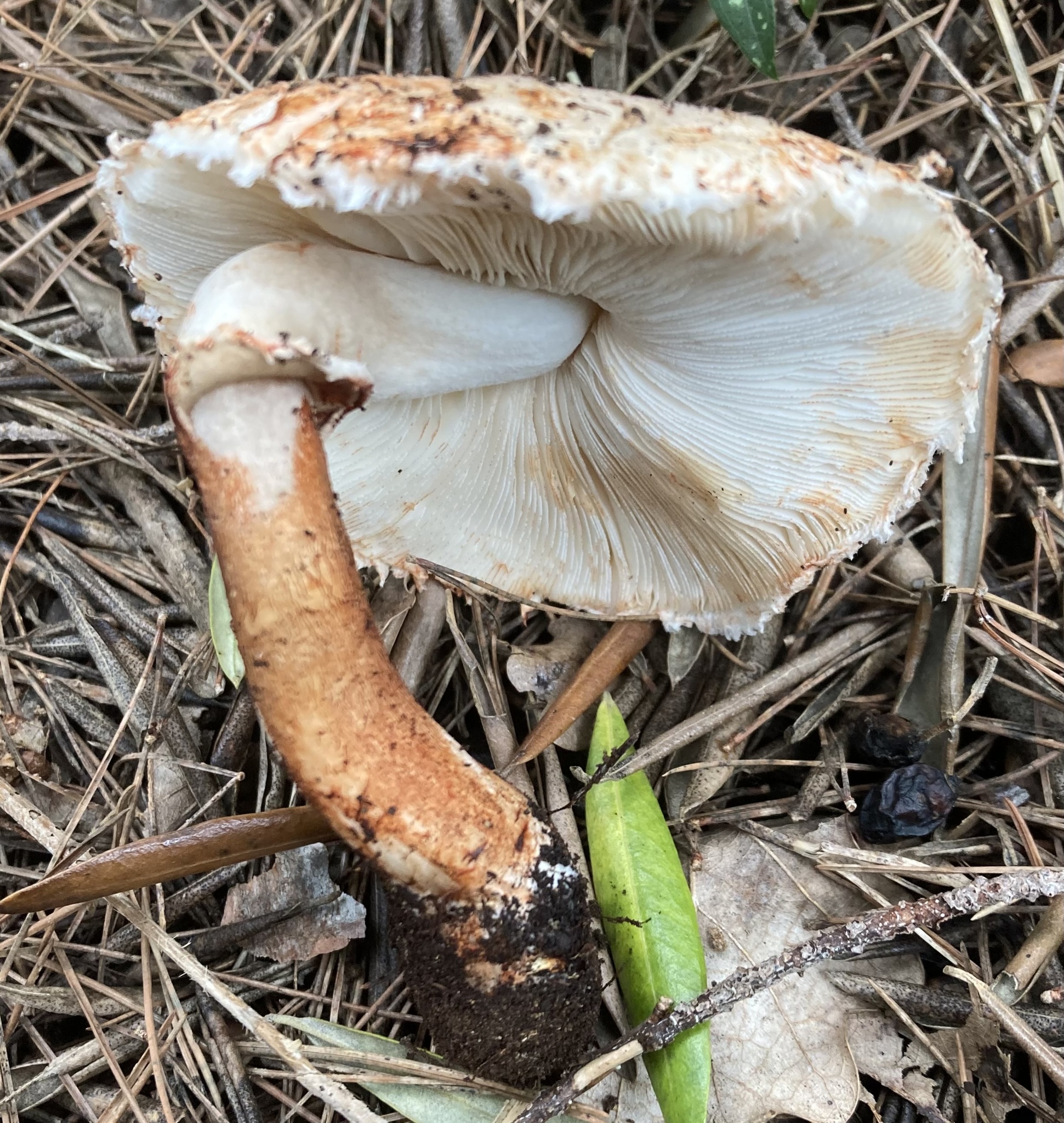
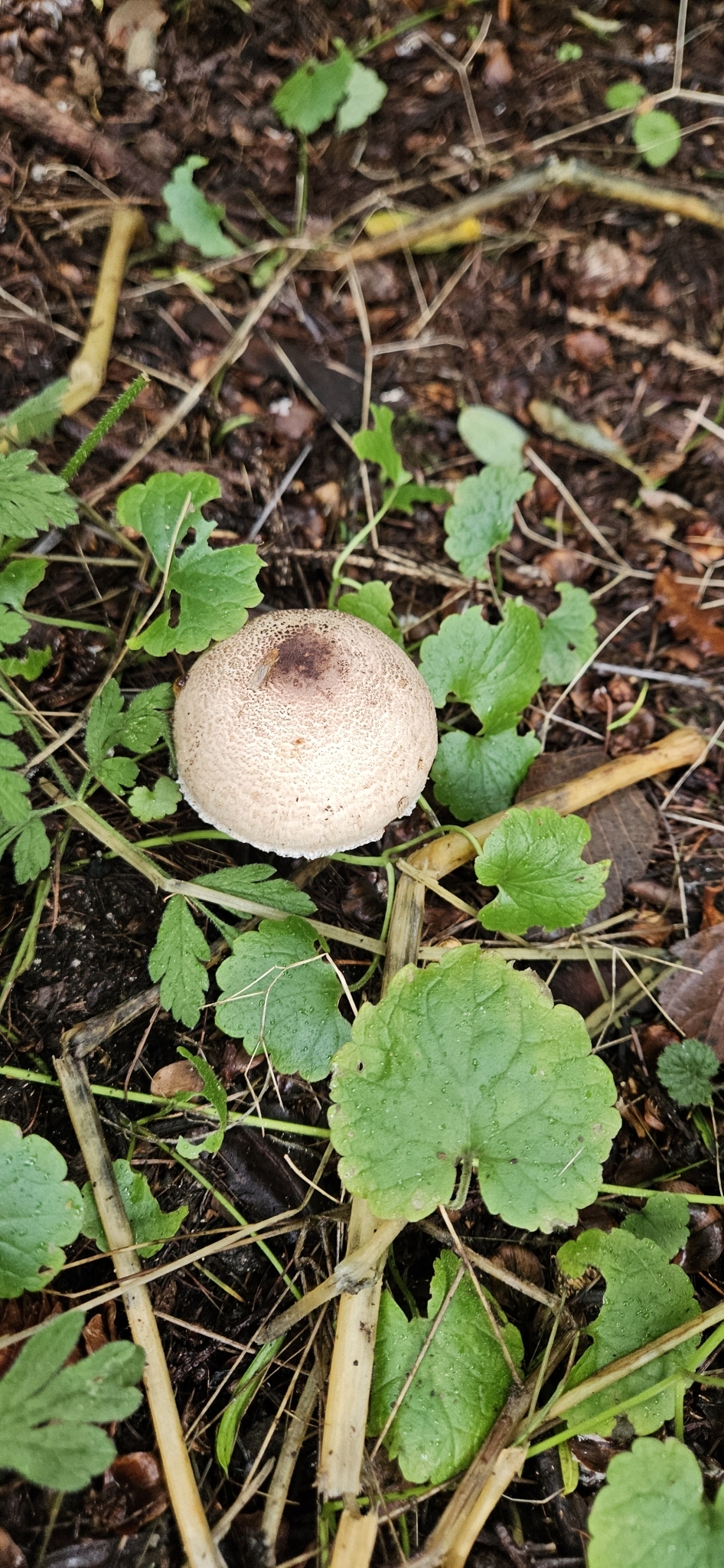
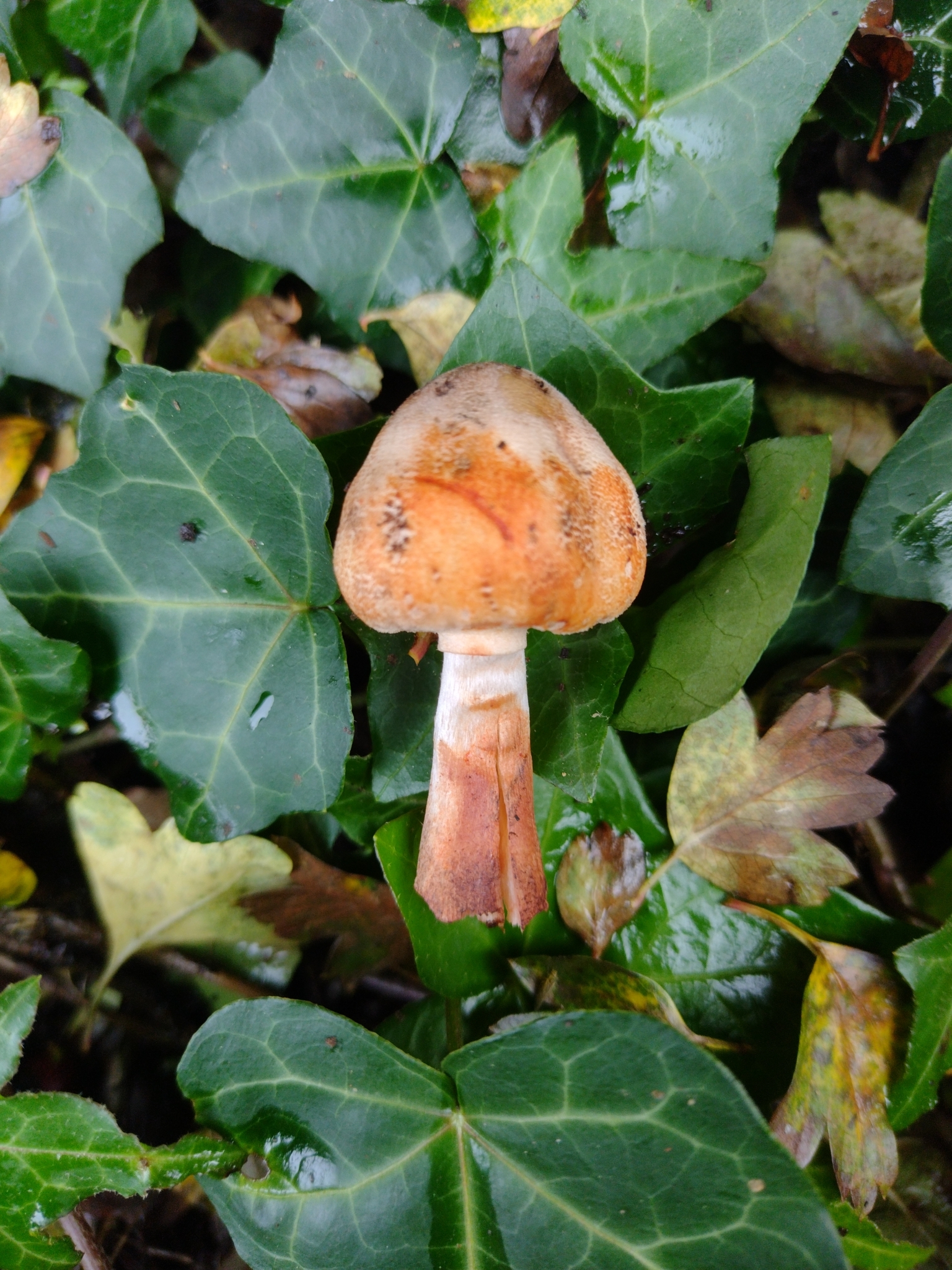
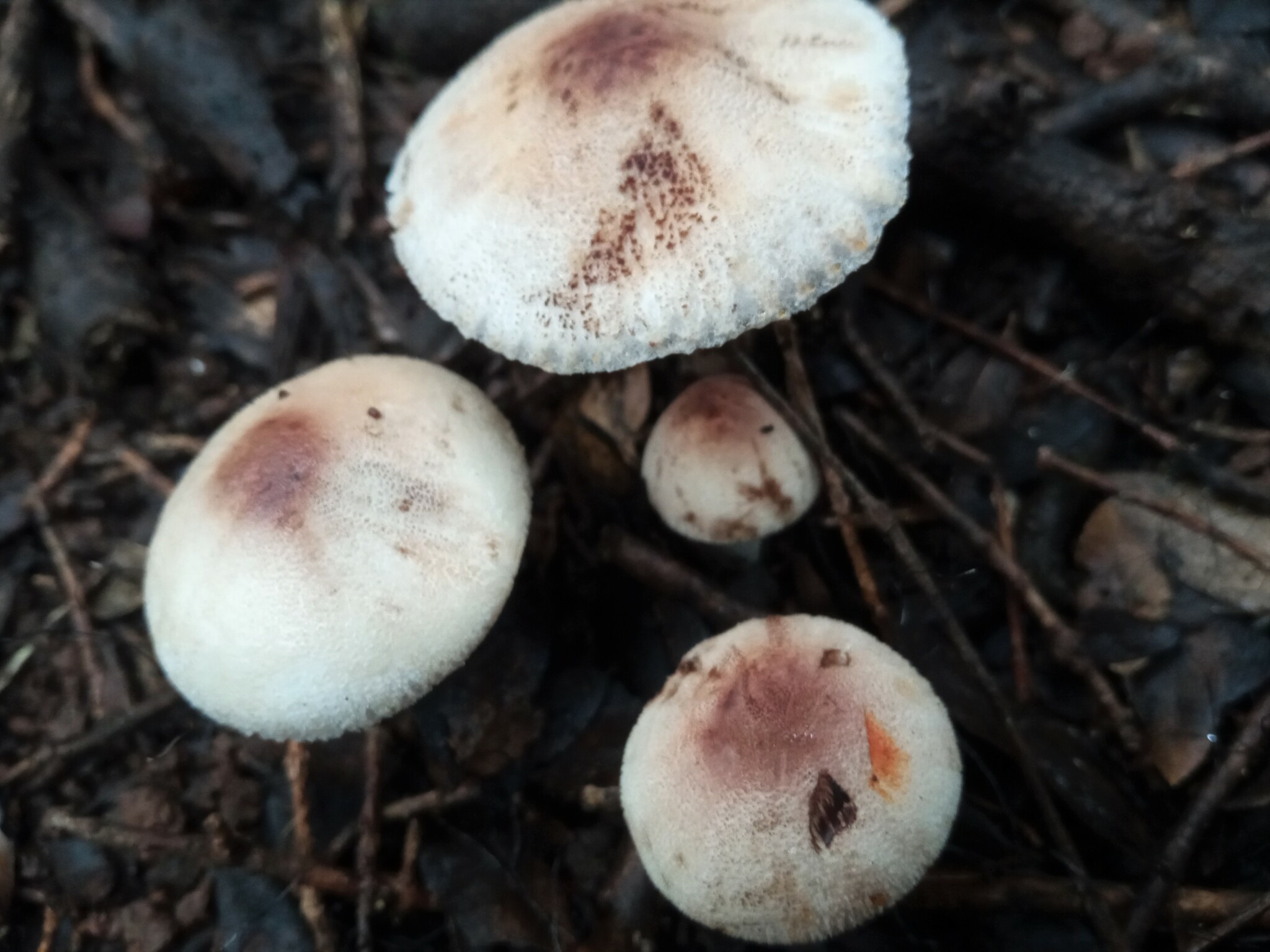
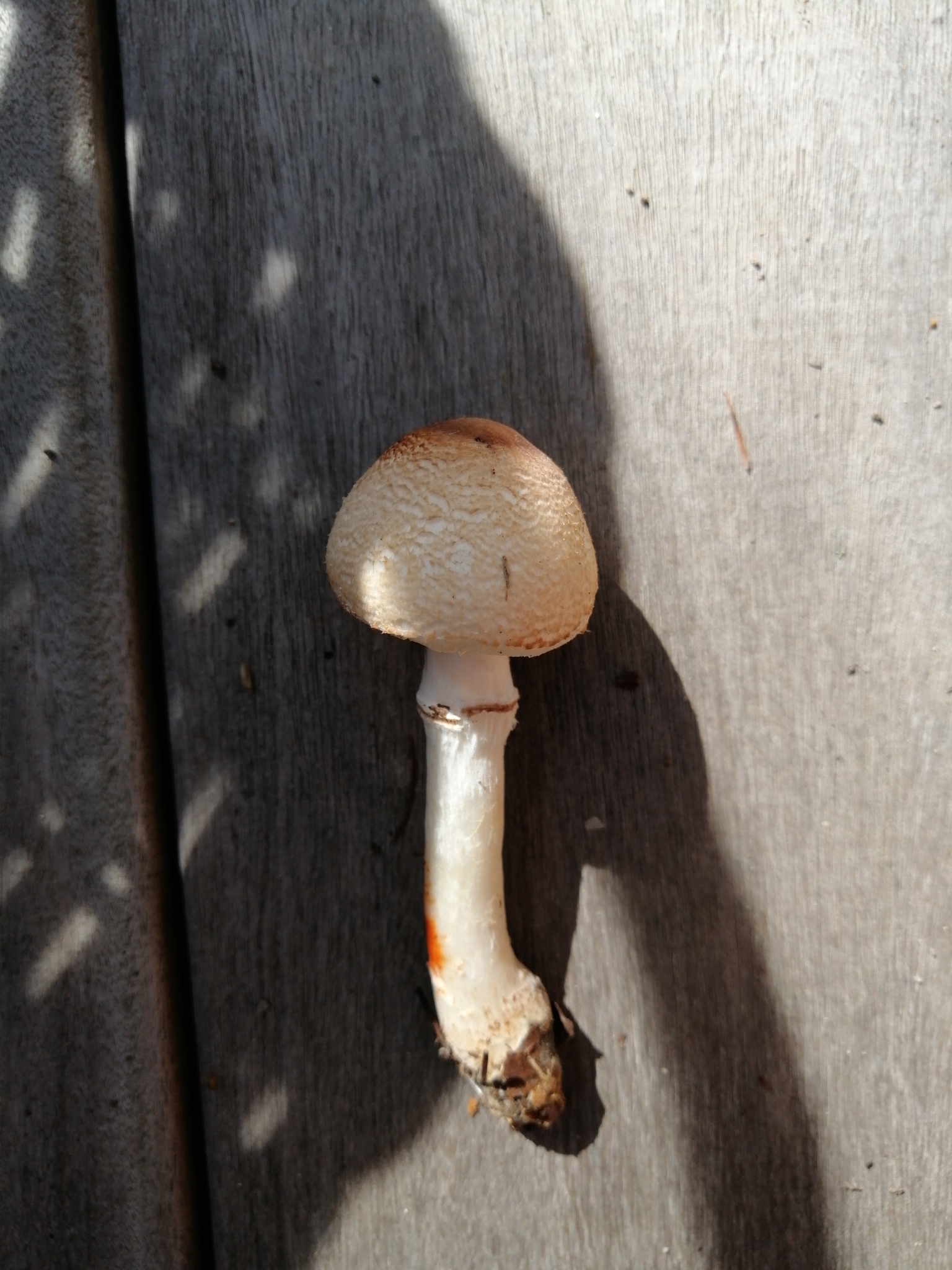
Leucoagaricus badhamii, commonly called the blushing dapperling, is a medium-sized saprotrophic agaric characterized by a scaly whitish-buff cap and white flesh that rapidly bruises bright saffron-red or blood-red when damaged, eventually darkening to brownish-black. Found primarily in temperate woodland litter, compost piles, and rich soils, it possesses a prominent membranous stem ring and pale gills. It is toxic and inedible, causing acute gastrointestinal distress if consumed.
Identification, habitat, and key differences.
Forager
Fruitbody structure
- Fruit body form
- Fruit body form: Cap, stipe.
- Consistency of the entire fruitbody
- Consistency of the entire fruitbody: brittle.
Cap
- Cap shape
- in young fruit bodies: Cap shape: globose (nearly).
- Cap covering
- Cap covering: scaly.
- Cap colour
- Cap colour: whitish.
- Margin orientation
- Margin orientation: straight.
Margin orientation: inrolled. - Cap margin profile
- Cap margin profile: acute.
- Margin covering
- Margin covering: fibrous.
- Veil remnants on the margin
- Veil remnants on the margin: with veil remnants.
- Cap margin overhang beyond the hymenophore
- Cap margin overhang beyond the hymenophore: projecting past the hymenophore.
- Cap colour reaction
- Cap colour reaction: red.
Cap colour reaction: dark brown.
Cap colour reaction: orange.
Cap colour reaction: reddish brown.
Cap colour reaction: brown. - Cap diameter
- The cap measures up to 120 mm in diameter.
- Cap centre
- Cap centre: with a distinct umbo (small umbo).
Cap underside
- Hymenophore type
- Hymenophore type: gills.
Gills at stipe
- Hymenophore attachment to the stipe
- Hymenophore attachment to the stipe: free from the stipe (gills).
Hymenophore attachment to the stipe: free from the stipe (gills).
- General gill profile
- General gill profile: ventricose (gills).
- Macroscopic structure of the free gill edge
- Macroscopic structure of the free gill edge: entire, with a smooth outline.
- Relationship between the color of the edge and the face of the gill
- Relationship between the color of the edge and the face of the gill: same colour as the gill face.
- Natural color of the gill surface
- Natural color of the gill surface: whitish.
Natural color of the gill surface: cream-yellow.
Natural color of the gill surface: creamy white. - Gill spacing
- Gill spacing: crowded.
Gill spacing: not very crowded. - Presence of short gills
- Presence of short gills: present.
Presence of short gills: present.
Stem and base
- Stipe position
- Stipe position: central.
- Stipe shape
- Stipe shape: cylindrical.
Stipe shape: tapering upwards. - Stipe base
- Stipe base: bulbous.
- Stipe colour
- Stipe colour: whitish.
Stipe colour: white. - Stipe surface covering
- Stipe surface covering: fibrillose.
below the ring: Stipe surface covering: floccose. - Stipe length
- Stipe length: up to 120 mm.
- Stipe diameter
- Stipe diameter: up to 10 mm.
Ring
- Ring presence
- Ring presence: present.
Ring presence: present.
Ring presence: present. - Structure of the ring material
- Structure of the ring material: membranous.
- Ring position
- Ring position: in the upper part of the stem.
- Ring persistence
- in mature fruit bodies: Ring persistence: evanescent.
- Ring colour
- Ring colour: white.
- Stem robustness
- Stem robustness: slender.
Flesh
- Flesh colour
- Flesh colour: whitish.
- Flesh taste
- Flesh taste: bitter, weak.
- Flesh colour after damage
- Flesh colour after damage: reddish.
- Flesh odour
- Flesh odour: mushroom-like.
Flesh odour: not distinctive (flesh).
Flesh odour: not distinctive (flesh).
Flesh odour: weak. - Taste character of the flesh
- Taste character of the flesh: mild.
- Distinctiveness of flesh taste
- Distinctiveness of flesh taste: indistinctive.
Where and when it grows
- Habitat
- Habitat: roadside.
Habitat: park, garden, ruderal or urban habitat or deciduous woodland.
Habitat: roadside and shrubland. - Substrate
- Substrate: litter.
Substrate: soil. - Fruit body growth pattern
- Fruit body growth pattern: in groups.
- Fruiting season
- Fruit bodies appear in October.
- Distribution area
- Distribution area: confirmed.
Edibility and culinary use
- Edibility
- Poisonous
Law
- Protection
- It is not on the Polish list of protected fungal species.
- Trade
- It is not on the Polish list of mushrooms approved for trade.
FAQ
Is Leucoagaricus badhamii edible?
No, it is toxic and causes severe gastrointestinal poisoning if consumed.
Why is it called the blushing dapperling?
It gets this name because its white flesh rapidly turns bright red when cut or bruised.
Who was this species named after?
It was named in 1854 by Miles Berkeley and Christopher Edmund Broome in honor of English physician Charles David Badham.
Can thorough cooking make Leucoagaricus badhamii safe to eat?
No, cooking, boiling, or drying does not eliminate the toxins causing stomach distress.
Where does Leucoagaricus badhamii typically grow?
It grows in rich leaf litter, mulch, compost, and humus in deciduous woods and gardens.
What is the fruiting season of Leucoagaricus badhamii?
Fruit bodies appear primarily from late summer through autumn, typically August to November.
Does the reddish bruised flesh stay red permanently?
No, the bruised flesh changes from blood-red to dark brown and eventually blackish over time.
In what regions is Leucoagaricus badhamii found?
It is found across Europe, parts of western Asia, North Africa, and coastal Australasia.
Does Leucoagaricus badhamii have any craft uses?
Artisans have used it with mordants to create earthy brown, sepia, and tan textile dyes.
What symptoms follow accidental ingestion of Leucoagaricus badhamii?
Symptoms include painful stomach cramps, severe nausea, vomiting, and acute diarrhea.
Enthusiast
Names and history
- Obowiązująca nazwa krajowa
- pieczareczka czerwieniejąca
- Obowiązująca nazwa taksonomiczna
- Leucocoprinus badhamii (Berk. & Broome) Locq.
- Dawne nazwy krajowe
- czubnik czerwieniejący
Home observations
Under the microscope
- Required materials
- light microscope, microscope slide and cover slip, needle, water, spores from print
- Procedure
- Transfer a small amount of the spore print onto the slide using a needle.
- Add a drop of water, cover with a cover slip, and examine the spores.
What to look for
- Spore shape
- Spore shape: ovoid. Spore shape: almond-shaped (nearly). Spore shape: almond-shaped. Spore shape: ovoid. Spore shape: almond-shaped (nearly). Spore shape: ovoid. Spore shape: ellipsoid. Spore shape: almond-shaped.
- Spore surface
- Spore surface: smooth.
- Spore dimensions
- Length 6.5–9 µm, width 3.5–6.5 µm.
Compare dimensions after calibrating the microscope scale.
Ecology and distribution
- Humus content
- Humus content: humus-rich.
- Qualitative soil nitrogen richness
- Qualitative soil nitrogen richness: nitrogen-rich.
- Broadleaf trees in the vicinity
- Broadleaf trees in the vicinity: Acer negundo, Betula pendula and Fraxinus.
Broadleaf trees in the vicinity: poplars, including aspen and Salix. - Coniferous trees in the vicinity
- Coniferous trees in the vicinity: Picea abies.
- Mode of nutrition
- Mode of nutrition: saprotrophic.
Non-culinary uses
Due to its toxicity and fragile flesh, Leucoagaricus badhamii lacks traditional culinary or medical applications. However, its notable biochemical property of turning intense reddish-orange and dark brownish-black upon exposure to air has attracted the attention of fiber artists and natural dye practitioners. When processed with suitable mineral mordants, the pigment-rich flesh yields earthy brown, sepia, and greyish-tan shades on wool and natural fibers, providing an organic source for textile tinting.
In educational contexts, the dramatic chromogenic reaction of the fungus has historically served as a classic live demonstration tool in university mycology courses and museum exhibitions. Instructors use the mushroom to illustrate oxidization and rapid chromogenic responses in botanical tissues to students. Additionally, preserved herbarium exsiccata and watercolor study sheets of the species have been utilized by botanical artists and biological archives to study pigment changes and document visual variability in saprotrophic agarics.
History and culture
Leucoagaricus badhamii was first scientifically described in 1854 by the distinguished British mycologists Miles Joseph Berkeley and Christopher Edmund Broome, who originally named it Agaricus badhamii. The species was dedicated in honor of the Reverend Charles David Badham, a nineteenth-century English classical scholar, physician, and avid naturalist who wrote the influential 1847 treatise 'A Treatise on the Esculent Funguses of England'. Berkeley and Broome named the mushroom to commemorate Badham's efforts in promoting mycology and popularizing fungal natural history in Victorian Great Britain.
The fungus subsequently underwent multiple taxonomic reclassifications, moving through the genera Lepiota and Leucocoprinus before its modern placement in Leucoagaricus. In Victorian botanical literature, its spectacular and rapid color change—reddening instantly upon bruising before turning dark brown or blackish—captured the imagination of naturalists and illustrators. Victorian nature journals frequently noted this dramatic 'blushing' phenomenon as a striking curiosity of the vegetable and fungal kingdoms, making it a favorite showcase specimen for nineteenth-century natural history societies and public botanical lectures.
Edibility and safety
Leucoagaricus badhamii is toxic and categorized as completely inedible. Ingesting this fungus provokes acute gastrointestinal illness, with symptoms manifesting within a few hours. Affected individuals commonly experience persistent nausea, severe stomach cramps, repeated vomiting, and watery diarrhea, which can quickly lead to painful dehydration and weakness.
No degree of cooking, frying, boiling, or drying eliminates the toxic constituents of this species, and heating does not convert it into an edible product. There are no culinary treatments or preparations that render it safe to consume. The taste of the flesh is generally reported as unpleasant or mildly acidic, but taste is not a reliable indicator of safety. Mycological health agencies across European countries strongly advise against ingesting it, and it has no accepted culinary status or historical consumption anywhere in the world. National poison centers classify it among gastrointestinal irritants that require medical monitoring when accidentally consumed.
Habitat and occurrence
Leucoagaricus badhamii occurs predominantly across temperate and Mediterranean Europe, with scattered records from parts of western Asia, North Africa, and coastal Australasia. It is a strictly saprotrophic fungus that thrives on rich, deep organic litter, compost-rich soils, decaying woodchip mulch, and decomposed humus. Typical habitats include deciduous and mixed woodlands, with strong occurrences beneath broadleaf trees such as oaks (Quercus species), beech (Fagus sylvatica), hornbeam (Carpinus betulus), and sweet chestnut (Castanea sativa), as well as in hedgerows, old parks, botanical gardens, and sheltered horticultural grounds.
The fruiting period typically begins in late summer and continues throughout the autumn months, generally spanning from August through November in temperate northern and western Europe. Fruiting reaches its highest frequency in early to mid-autumn, following heavy autumn rains when soil moisture and temperature conditions are favorable. In warmer Mediterranean regions, the season can extend into December and January, where mild winter moisture promotes prolonged emergence. In cooler continental regions with early autumn frosts, fruiting ends significantly sooner, rarely extending beyond October.
Sources
- AMINT (2019). Leucoagaricus badhamii, zbiór MI20181209-01: opis, mikroskopia i podpisy fotografii.
- Belarra 19 (2021). Opis Leucoagaricus badhamii, zbiór BAR2016100101; PDF s. 63–65.
- GREJ375188: Warszawa,22.11.2023, Daria Wieliczko, oznaczenie Błażej Gierczyk, voucher BGF0011546.
- Lacheva (2014). New data for Leucoagaricus and Leucocoprinus in Bulgaria. Agricultural Science and Technology 6 (1): 76–79.
- MycoDB. Karta Leucoagaricus badhamii, aktualizacja 17.02.2022; źródło atlasowe.
Researcher
Cap
Edibility and culinary use
Ustalenia źródłowe: jadalność, spożycie i wykorzystanie
- Edibility
- Inedible
AMINT (2019). Leucoagaricus badhamii, zbiór MI20181209-01: opis, mikroskopia i podpisy fotografii. · Species account, microscopic notes and captioned photographs; collection MI20181209-01
Lacheva (2014). New data for Leucoagaricus and Leucocoprinus in Bulgaria. Agricultural Science and Technology 6 (1):76–79. · PDF pp.5–8 = printed pp.76–79; species account printed p.78
- Edibility
- Poisonous
Źródło oznaczenia.
MycoDB. Karta Leucoagaricus badhamii, aktualizacja 17.02.2022; źródło atlasowe. · Fiche4787, description, microscopy and ecology; modified 2022-02-17
Ghobad-Nejhad i in. (2022). Frontiers in Microbiology 13:1015440. DOI10.3389/fmicb.2022.1015440; tabela 1 i metody. · Table1 exact species row and symbol legend; methods and antioxidant discussion
Scientific names and taxonomy
- Current scientific name
Leucocoprinus badhamii (Berk. & Broome) Locq.
- Former scientific names
- Leucoagaricus badhamii (Berk. & Broome) Singer[20]
Identity and names
Species Fungorum indicates Leucocoprinus badhamii (Berk. & Broome) Locq. and links Agaricus badhamii, Lepiota badhamii, Leucoagaricus badhamii, and Pulchrolepiota badhamii to it. The latter combination was given in the work of Yang, Lin, and Li from March 2026. A later review from August 2026 reincorporates this group into Leucocoprinus.
Recommendation KPNG3/2024, PDF p. 8, indicates the name pieczareczka czerwieniejąca for Leucoagaricus badhamii. Alongside it, the older name czubnik czerwieniejący was provided. The etymology of the epithet associated with Charles David Badham is reported by MycoDB, among others.
Law and trade in Poland
Status checked 20 October 2026: ELI indicates as in force the mushroom protection regulation of 9 October 2014 (Dz.U.poz. 1408) and the consolidated text of regulations on marketing authorization promulgated in 2026 (Dz.U.poz. 258). Neither badhamii nor related read names were found in the preserved complete lists. This is a finding of non-inclusion in a specific national list, not a global status, edibility evaluation, or authorization to forage in every area. The entire Annex 1 of the trade regulations (PDF pp. 5–7) and Annexes 1–4 of the protection regulations were checked, along with Agaricaceae entries. Exact documents and abbreviations were recorded in the source register.
Laboratory diagnostics
Dane ustrukturyzowane
Basidia
Caulocystidia
- Presence of caulocystidia
- Presence of caulocystidia: present. [1]
Hymenial cystidia
- Hymenial cystidium length
- Hymenial cystidium length: 30.5–60 µm. [12]
Hymenial cystidium length: up to 60 µm. [2] - Hymenial cystidium shape
- Hymenial cystidium shape: clavate. [2]
Hymenial cystidium shape: ventricose. [2]
Hymenial cystidium shape: globose (nearly). [2]
Hymenial cystidium shape: clavate. [1]
Hymenial cystidium shape: Flask-shaped. [1]
Hymenial cystidium shape: fusiform. [1]
Hymenial cystidium shape: clavate. [12] - Hymenial cystidium width
- Hymenial cystidium width: up to 20 µm. [2]
Hymenial cystidium width: 10–18 µm. [12] - Presence of pleurocystidia
- Presence of pleurocystidia: absent. [12]
Other laboratory characteristics
- Gill edge fertility
- Gill edge fertility: sterile. [12]
Pileipellis
- Arrangement of pileipellis hyphae
- Arrangement of pileipellis hyphae: interwoven. [1]
- Length of pileipellis elements
- Length of pileipellis elements: up to 350 µm. [2]
- Shape of pileipellis elements
- Shape of pileipellis elements: cylindrical. [2]
- Width of pileipellis elements
- Width of pileipellis elements: up to 24 µm. [2]
- Septation of cuticle hyphae
- Septation of cuticle hyphae: septate. [2]
- Structure of the pileipellis
- Structure of the pileipellis: trichoderm. [1]
- Shape of pileipellis terminal cell apex
- Shape of pileipellis terminal cell apex: rounded. [1]
- Shape of the terminal cell of the pileipellis
- Shape of the terminal cell of the pileipellis: fusiform. [1]
Shape of the terminal cell of the pileipellis: clavate. [12] - Pileipellis terminal cell width
- Pileipellis terminal cell width: 8–15 µm. [12]
Spores
- Mean spore length-to-width ratio
- Mean spore length-to-width ratio: 1.6 (mean). [19]
- Presence of germ pore
- Presence of germ pore: absent. [2]
Presence of germ pore: absent. [1]
Presence of germ pore: present. [12] - Spore length
- Spore length: 7–8.5 µm. [15]
Spore length: 7.5–9 µm. [12]
Spore length: 6.6–8.6 µm. [1]
Spore length: 6.5–9 µm. [2] - Spore metachromasia
- Spore metachromasia: positive. [2]
- Spore length-to-width ratio
- Spore length-to-width ratio: 1.4–1.8. [1]
Spore length-to-width ratio: 1.4–2. [2] - Dextrinoid reaction of spores
- Dextrinoid reaction of spores: dextrinoid. [2]
Dextrinoid reaction of spores: dextrinoid. [1] - Spore shape
- Spore shape: ovoid. [2]
Spore shape: almond-shaped (nearly). [2]
Spore shape: almond-shaped. [1]
Spore shape: ovoid. [1]
Spore shape: almond-shaped (nearly). [1]
Spore shape: ovoid. [12]
Spore shape: ellipsoid. [12]
Spore shape: almond-shaped. [15] - Spore surface
- Spore surface: smooth. [12]
Hymenophoral trama
Material and research methods
Description of characteristics — source and scope
Material: Obserwacja Darii Wieliczko z 22 listopada 2023, Warszawa, dolina Wisły. Oznaczenie: Błażej Gierczyk; numer zbioru BGF0011546, wpis GREJ375188. Odczytano opis stanowiska, cech owocników i zachowaną historię wpisu.
Reading scope: Source excerpts.
A source excerpt was read; the full text and methods have not been verified.
Description of characteristics — source and scope
Material: Secondary MycoDB atlas description of the species Leucoagaricus badhamii, updated 17 February 2022. Exact collections serving as the basis of the synthesis were not provided. The card, its microscopic and ecological description were read; cited books were not directly read.
Reading scope: Source excerpts.
A source excerpt was read; the full text and methods have not been verified.
Microscopic data — source and limitations
Material: Fruitbodies of collection MI20181209-01 from Umbria, Italy, December 2018. The AMINT study includes macroscopy, microscopy, and captioned photographs. Spores were observed in Melzer's reagent at 1000× magnification, and caulocystidia in Congo red at 400×. Data pertain to this collection.
Reading scope: Source excerpts.
A source excerpt was read; the full text and methods have not been verified.
Description of characteristics — source and scope
Material: Jeden owocnik zebrany i oznaczony przez Błażeja Gierczyka 12 września 2017 w Białowieskim Parku Narodowym, oddział 399G, Tryb Poprzeczny. Numer zbioru BGF0001834. Odczytano gatunkowy wpis na stronie 45 publikacji (strona 37 pliku PDF).
Reading scope: Source excerpts.
A source excerpt was read; the full text and methods have not been verified.
- Results as recorded in the sources — Spores per basidium
- Liczba zarodników na jednej podstawce wynosi 4. [2] [12]
- Results as recorded in the sources — Hymenial cystidium length
- na ostrzu blaszki: do 60 µm [2]
na ostrzu blaszki: 30,5–60 µm [12] - Results as recorded in the sources — Hymenial cystidium width
- na ostrzu blaszki: 10–18 µm [12]
na ostrzu blaszki: do 20 µm [2] - Results as recorded in the sources — Spore length
- Materiał badania: Owocniki zbioru MI20181209-01 z Umbrii we Włoszech, grudzień 2018. Opracowanie AMINT obejmuje makroskopię, mikroskopię i podpisane fotografie. Zarodniki obserwowano w odczynniku Melzera przy powiększeniu 1000×, a kaulocystydy w czerwieni Kongo przy 400×. Dane dotyczą tego zbioru. 6,6–8,6 µm [1]
6,5–9 µm [2]
7–8,5 µm [15]
7,5–9 µm [12] - Results as recorded in the sources — Spore width
- 4,5–5,5 µm [15]
3,5–5,5 µm [2]
Materiał badania: Owocniki zbioru MI20181209-01 z Umbrii we Włoszech, grudzień 2018. Opracowanie AMINT obejmuje makroskopię, mikroskopię i podpisane fotografie. Zarodniki obserwowano w odczynniku Melzera przy powiększeniu 1000×, a kaulocystydy w czerwieni Kongo przy 400×. Dane dotyczą tego zbioru. 3,6–5,3 µm [1]
4,5–6,5 µm [12]
Metody i zapisy źródłowe — Owocniki zbioru MI20181209-01 z Umbrii we Włoszech, grudzień 2018. Opracowanie AMINT obejmuje makroskopię, mikroskopię i podpisane fotografie. Zarodniki obserwowano w odczynniku Melzera przy powiększeniu 1000×, a kaulocystydy w czerwieni Kongo przy 400×. Dane dotyczą tego zbioru.
Metoda źródłowa. Technika: mikroskopia świetlna (LM). Medium: Melzer. Opis metody w źródle: Źródłowo podpisany preparat: {"preparation": "Melzer", "magnification": "1000×"}.[1]
Metody i zapisy źródłowe — Dwa zbiory z parku w okolicy Banya w Bułgarii: SOA60 00294 z 6 czerwca 2005 oraz SOA60 00295 z 13 września 2011. Wysuszone okazy zachowano w zielniku SOA. Odczytano artykuł Lachevy (2014), w tym opis gatunku na stronie 78. Praca nie deklaruje potwierdzenia DNA.
Metody i zapisy źródłowe — Zbiór BAR2016100101 z 1 października 2016, Zeanuri w Hiszpanii, wysokość 710 m, przy świerku pospolitym. Odczytano opis makroskopii i mikroskopii oraz informacje o materiale w Belarra19 (2021), strony 63–65 pliku PDF. Nie dopowiedziano metod niepodanych przy wyniku.
Metody i zapisy źródłowe — Wtórny opis atlasowy MycoDB gatunku Leucoagaricus badhamii, zaktualizowany 17 lutego 2022. Nie podano dokładnych zbiorów będących podstawą syntezy. Odczytano kartę, jej opis mikroskopowy i ekologiczny; cytowanych książek nie odczytano bezpośrednio.
Material and descriptive study results
Muñoz-Sanchez and Cadiñanos Aguirre described collection BAR2016100101 from Zeanuri, Spain, from 1 October 2016, near Picea abies, by a road, on plant and woody debris. In Belarra 19 (2021), PDF pp. 63–65, macroscopy and microscopy were provided. Spores were 6,5–9,0 × 3,5–5,5 µm, Q 1,4–2,0; the absence of a germ pore, dextrinoidity, and metachromasia were reported. Basidia were four-spored. The description of the presence of clamp connections at the bases of basidia and the absence of clamp connections in pileipellis hyphal septa serves different anatomical purposes. These results must not be conflated into a single unconditional statement about the entire fruitbody. Dimensions given solely as "up to" retain an unknown lower limit; zero was not added.
The AMINT study pertains to the Italian collection MI20181209-01 from Umbria, from December 2018. Spores of 6,6–8,6 × 3,6–5,3 µm, Q 1,4–1,8, and Qm 1,6, lacking a germ pore and dextrinoid, were reported. Microscopic photographs were described, among others, as preparations in Melzer's reagent at 1000 × and caulocystidia in Congo red at 400 × . The authors did not observe pleurocystidia or clamp connections. "Not observed" is a finding of the given study, not proof of absence across the entire species. The exact anatomical scope of the general remark on clamps was not further specified.
Lacheva, Agricultural Science and Technology 6 (1):76–79 (2014), described two Bulgarian collections SOA 60 00294 and SOA 60 00295, from 6 June 2005 and 13 September 2011, from a park near Banya. Material was preserved in the SOA herbarium; the work includes a description and photographs, with no declaration of DNA confirmation. In this study, spores are 7,5–9 × 4,5–6,5 µm and have an apical germ pore. This is a clear discrepancy compared to the Spanish and Italian studies. The description of the cap margin also differs: radially striate in the Bulgarian work, non-striate in the Spanish work. The results remain separate, alongside their material and sources. It has not been resolved without evidence whether the cause is variation, a different taxon concept, method, or misidentification.
The assembled studies confirm that reddening alone is insufficient to separate the species from all similar dapperlings. Comparative descriptions included, among others, L. americanus, L. meleagris, L. croceovelutinus, and L. pilatianus. Characters of another species were not transferred to this record. Colors upon bruising, cutting, aging, and reagent exposure maintain distinct conditions; they do not form a single combined sequence.
Occurrence verification — scope and limitations
Material: Jeden owocnik zebrany i oznaczony przez Błażeja Gierczyka 12 września 2017 w Białowieskim Parku Narodowym, oddział 399G, Tryb Poprzeczny. Numer zbioru BGF0001834. Odczytano gatunkowy wpis na stronie 45 publikacji (strona 37 pliku PDF).
Reading scope: Source excerpts.
A source excerpt was read; the full text and methods have not been verified.
Review date: 20.10.2026.
Occurrence verification — scope and limitations
Material: Obserwacja Darii Wieliczko z 22 listopada 2023, Warszawa, dolina Wisły. Oznaczenie: Błażej Gierczyk; numer zbioru BGF0011546, wpis GREJ375188. Odczytano opis stanowiska, cech owocników i zachowaną historię wpisu.
Reading scope: Source excerpts.
A source excerpt was read; the full text and methods have not been verified.
Review date: 20.10.2026.
Occurrence verification — scope and limitations
Material: Zachowano dokładny zakres stanowiska w Warszawie i historię weryfikacji źródłowej.
Reading scope: Source fragments.
A source fragment was read; full text and methods were not verified.
Review date: 21.10.2026.
Limitations: Source identification and conceptual scope retained. No new examination of specimens or reading of all publications cited by the source was declared.
Scope of the study
Required checks are settled.
Legal basis and scope of assessment
Key substances and their effects
Edibility: assessments and basis
AMINT and Lacheva classify the species as inedible; MycoDB and the review table of Ghobad-Nejhad et al. (2022) list it as poisonous. These are assessments with different bases, not four independent controlled toxicological experiments. In Locquin's work (1943), available text p. 15, the author described intestinal discomfort after two ingestions of raw fruitbodies. This is a historical experiment on one person, without a control group or analytical determination of the substance responsible for the symptoms. The author's conclusions from further trials are not modern evidence of safe preparation. They are not converted into culinary instructions. The excerpt read does not justify attributing amatoxins or the deadly effects of other Lepiota species to this species.
Locquin cited an earlier assessment by Pouchet (1924, p. 132), his own morphological description (1942, p. 46), and Josserand's work on poisoning by another taxon. The first two bases were not directly read; the work on the helveola group does not constitute a toxicological finding for badhamii. The chain of references and where it breaks off remain recorded separately.
Uses and knowledge gaps
Queries regarding traditional, herbal, technical, spice uses, patents, and biological activities under the names Leucoagaricus/Leucocoprinus badhamii were checked. In the reviewed survey by Ghobad-Nejhad and co-authors, Frontiers in Microbiology 13:1015440 (2022), Table 1 lists ND — undetermined antioxidant potential for this species. The row also contains an earlier sequence number GQ329056. The analysis results of the neighboring L. leucothites or the 24 other studied species were not attributed to badhamii. The sequence number in the review does not mean that its raw record and specimen were independently verified here.
Within the verified scope, no confirmed use was found that could be added as an established fact. This is not a claim of the nonexistence of such data across the entire literature.
Analytical results
- Number of fruit bodies in field study
- Number of fruit bodies in field study: 1 (reported value). [19]
Ecological studies
Poland and fruiting
Gierczyk et al., Przegląd Przyrodniczy XXIX (2):9–57 (2018), PDF p. 37/print p. 45, document BGF0001834: one fruitbody from 12 September 2017 from the Białowieża National Park, compartment 399G, Tryb Poprzeczny, in roadside nitrophilous thickets of moist oak-hornbeam forest. The specimen was collected and identified by Błażej Gierczyk. The assessment "very rare" is the authors' evaluation; the publication does not present a full contemporary population census. Older reports from Poznań, Niemodlin, and Bory Tucholskie appear in citation chains, without direct reading of all primary works.
Verified entry GREJ375188 documents BGF0011546, collected 22 November 2023 by Daria Wieliczko along the Vistula River in Warsaw and identified by Błażej Gierczyk. Recorded were litter remnants between trees, poplar, willow, and shrubs, several fruitbodies side by side, and strong red, later orange discoloration upon bruising. This is a description of a single collection. The two Polish dates do not define a continuous season from September to November. Neither the foreign timing June–October nor the general "summer–autumn" was substituted into the Polish month range. Surrounding plants are not automatically mycorrhizal partners.
Poland: fruiting period and collection dates
Wojewoda (2003, p. 408) reports October (Oct.) in the Polish checklist for Leucocoprinus badhamii. This literature record was entered into the Polish fruiting period field as 10–10. The entry is preceded by a question mark; it is not based on an independent, multi-year phenological study. Older citations of Zaleski et al. (1948) and Schröter (1889) were retained as references; these two earlier works were not directly read here.
Documented Polish collections also include 12 September 2017 (BGF0001834, Białowieża National Park, Błażej Gierczyk) and 22 November 2023 (BGF0011546, Warsaw, Daria Wieliczko, identified by Błażej Gierczyk; verified GRej entry). These are specific observation dates, not the delimitation of an annual season's boundaries.
GRej entry 375022 reports a collection from 28 October 2023 in Szczecin Wielgowo, leg./det. Marcin Lożek. It has the status accepted, meaning formally correct, rather than an identification verified by a curator. Data from this entry was not used to extend the season. Forum photographs referenced therein were marked as not pertaining to the entry and were not used in the gallery.
Habitat and occurrence
Potwierdzony zasięg występowania
Wszystkie obszary potwierdzone w zapisanych danych źródłowych.
| Kraj | Regiony i stanowiska | Fruiting | Sources |
|---|---|---|---|
| Poland | Warsaw | X |
|
Sources
- AMINT (2019). Leucoagaricus badhamii, zbiór MI20181209-01: opis, mikroskopia i podpisy fotografii.
- Belarra 19 (2021). Opis Leucoagaricus badhamii, zbiór BAR2016100101; PDF s. 63–65.
- Gierczyk i in. (2018). Przegląd Przyrodniczy XXIX (2): 9–57; Leucoagaricus badhamii, PDF s. 37 / druk s. 45.
- GREJ375188: Warszawa,22.11.2023, Daria Wieliczko, oznaczenie Błażej Gierczyk, voucher BGF0011546. (także [26])
- GRej375022, Marcin Lożek, Szczecin Wielgowo, collection 28 October 2023.
- Ghobad-Nejhad i in. (2022). Frontiers in Microbiology 13:1015440. DOI 10.3389/fmicb.2022.1015440; tabela 1 i metody.
- Lacheva (2014). New data for Leucoagaricus and Leucocoprinus in Bulgaria. Agricultural Science and Technology 6 (1): 76–79.
- Locquin (1943). DOI 10.3406/linly.1943.9711; odczytany tekst s. 15, bez s. 16.
- MycoDB. Karta Leucoagaricus badhamii, aktualizacja 17.02.2022; źródło atlasowe.
- ELI: status obowiązywania rozporządzenia o ochronie gatunkowej grzybów, Dz.U. 2014 poz. 1408;20.10.2026.
- Dz.U. 2014 poz. 1408. Rozporządzenie w sprawie ochrony gatunkowej grzybów: pełne załączniki 1–4.
- PTMyk, Komisja ds. Polskiego Nazewnictwa Grzybów. Rekomendacja 3/2024, PDF s. 8.
- nr273.source-results
- Species Fungorum. Rekord 115843: nazwa preferowana i synonimy; stan odczytany 20.10.2026.
- Mycosphere 17:e 013 (2026). Odczytane fragmenty przeglądu taksonomicznego dotyczące Leucocoprinus i badhamii.
- ELI: status obowiązywania przepisów dotyczących obrotu grzybami, Dz.U. 2026 poz. 258;20.10.2026.
- Dz.U. 2026 poz. 258. Tekst jednolity przepisów dotyczących grzybów dopuszczonych do obrotu: pełny załącznik 1.
- Wojewoda W. 2003. Checklist of Polish larger Basidiomycetes. Biodiversity of Poland 7: 1–812, p.408.
- Yang i in. (2026). Stray studies on mushrooms from China. Phytotaxa 746 (1): 1–119. DOI 10.11646/phytotaxa.746.1.1; abstrakt i metadane.