November marks the transition from peak autumn fruiting into the quieter pre-winter period across the United Kingdom. Canopy trees shed their remaining leaves, woodland soils cool rapidly, and daylight hours diminish, signalling a marked shift in the fungal community from soft fleshy mushrooms to more resilient species.
While early frosts curtail the growth of many mycorrhizal species such as boletes and brittlegills, damp and mild oceanic air can prolong fruiting in sheltered valleys. Moisture remains abundant in decomposing leaf litter and mossy needle carpets, providing an ideal microclimate for specialised late-season agarics, tooth fungi, and lignicolous decomposers.
Historical occurrence records from 2016 to 2025 demonstrate that fungal appearances are highly patchy and dependent on microhabitat rather than uniform across the country. An observation indicates local presence under suitable conditions rather than widespread abundance, making careful local habitat assessment essential for every field excursion.
Conifer Woodland
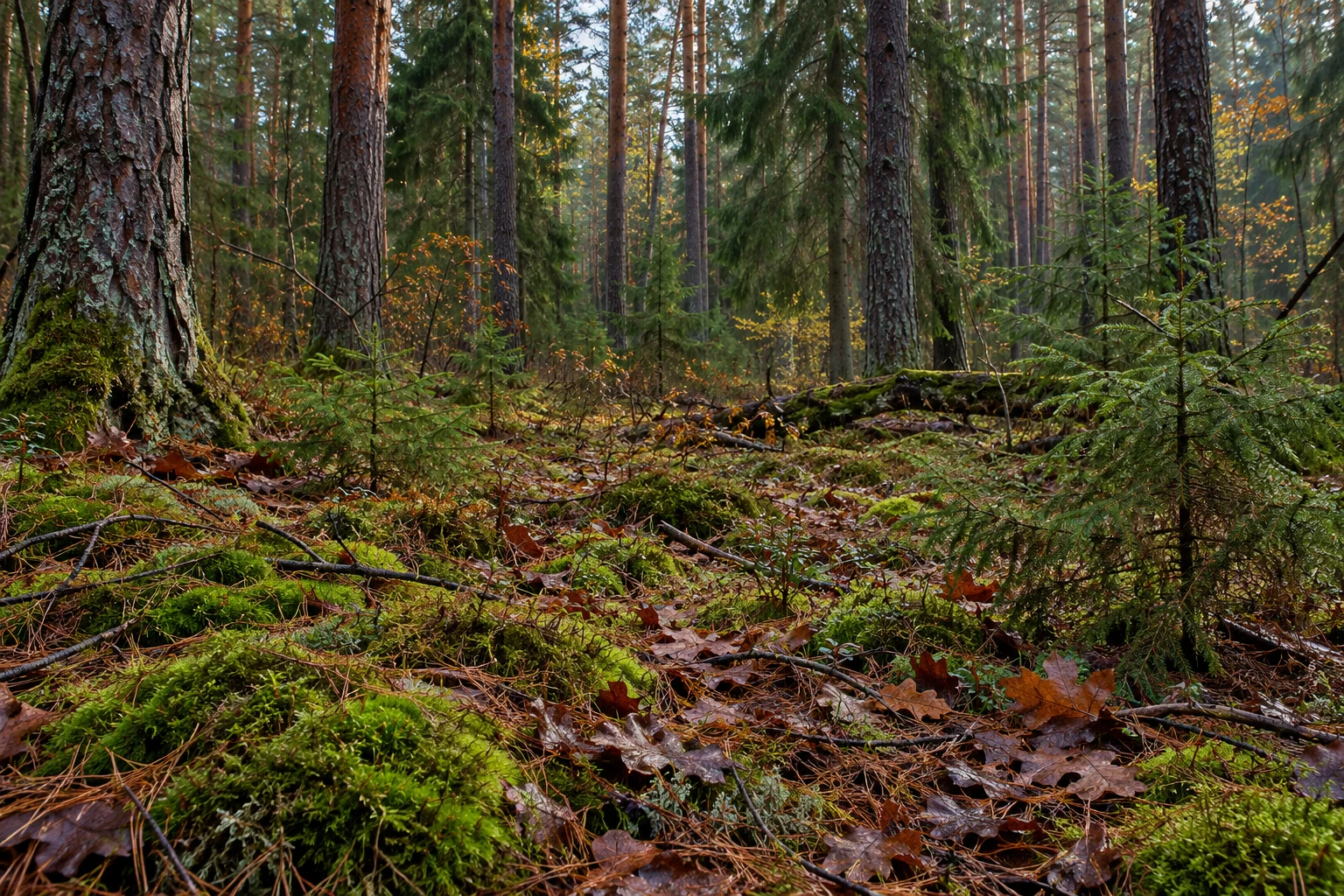
Needle carpets and mossy understories in conifer plantations offer shelter against early frost, fostering late mycorrhizal boletes and cold-tolerant agarics.
Boletes and Pine Associates
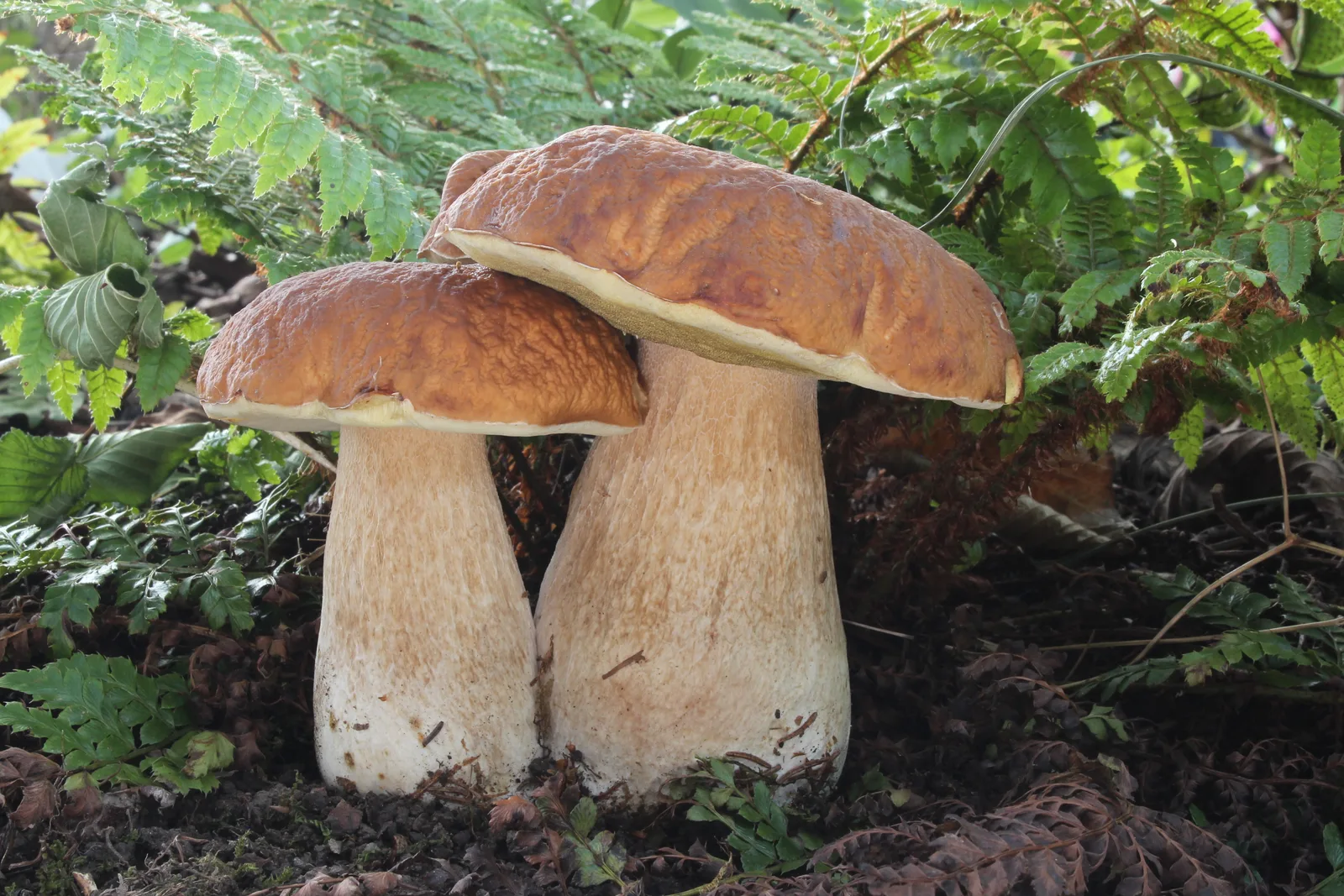
- Penny bun (Boletus edulis) — Forms mycorrhizal partnerships with pines and spruces in needle litter, with lingering fruiting bodies persisting until severe frosts halt autumn development.
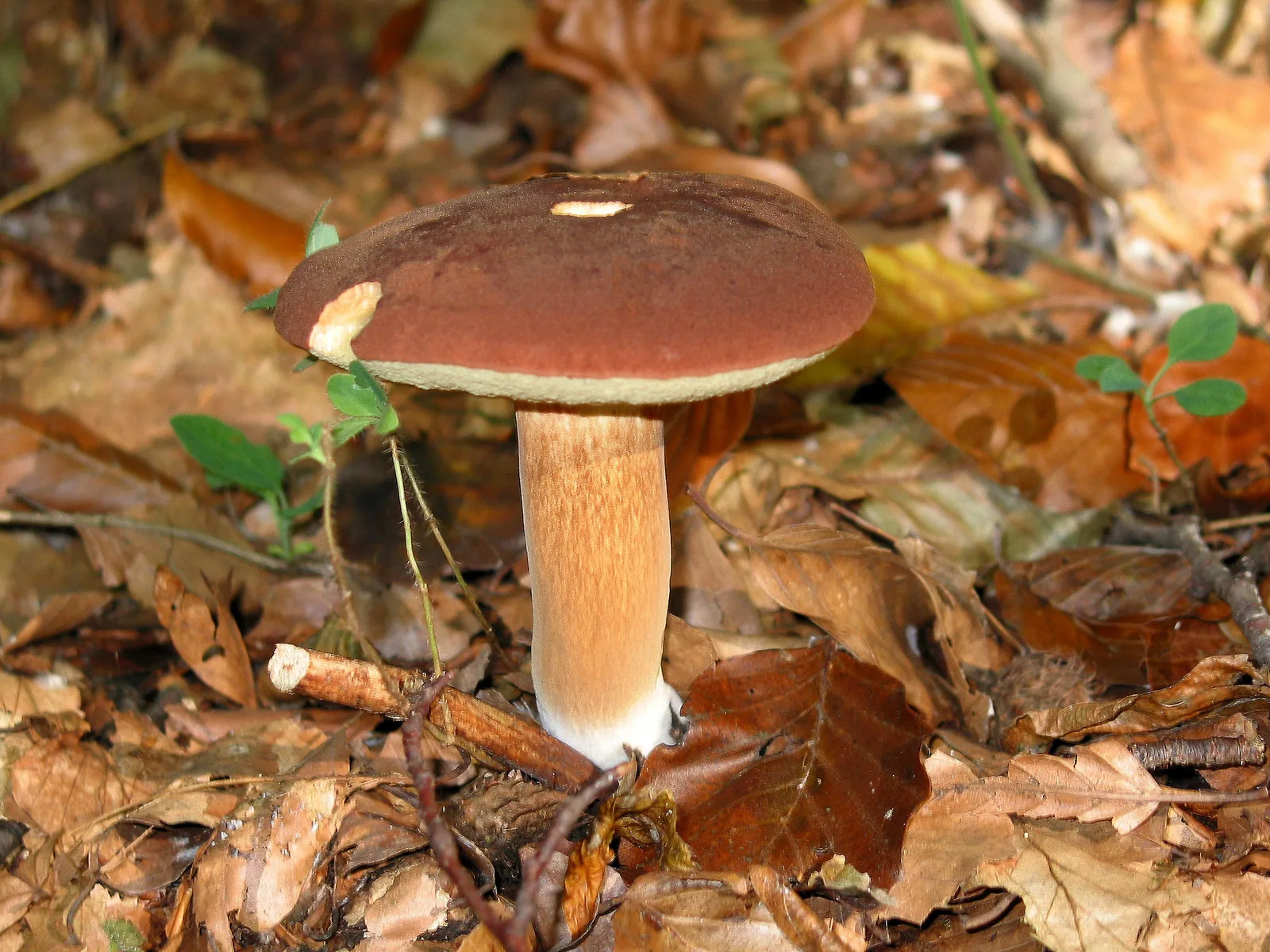
- Bay bolete (Imleria badia) — Occurs on acidic soil beneath Scots pine and spruce stands, continuing to produce caps into late autumn when conditions stay damp.
- Bovine bolete (Suillus bovinus) — Associates strictly with two-needle pines across sandy heathland plantations, where lingering autumn fruitbodies rapidly collapse following hard sub-zero temperature drops.
- Larch bolete (Suillus grevillei) — Grows exclusively near larch trees on needles and damp ground, rapidly decaying once freezing spells arrive in late autumn months.
- Slippery Jack (Suillus luteus) — Partners with pine trees in open plantations, producing slimy caps that persist conditionally through mild autumn spells before frost terminates growth.
Gilled Conifer Associates
- Blushing wood mushroom (Agaricus sylvaticus) — Develops among deep conifer needle carpets, sending up scaly caps that survive well into late autumn under sheltered evergreen canopies.
- Herald of winter (Hygrophorus hypothejus) — Fruits characteristically following early frosts in pine woods, flourishing amongst moss and fallen needles during cold, damp late autumn weeks.
- Saffron milkcap (Lactarius deliciosus) — Grows on well-drained soils beneath pines, with late fruitings dependent upon sufficient autumnal moisture before sustained ground freezes set in.
- Crab brittlegill (Russula xerampelina) — Grows in mossy conifer plantations beside pines, lingering conditionally into November until severe cold terminates fragile brittlegill fruiting.
Chanterelles and Tooth Fungi
- Trumpet chanterelle (Craterellus tubaeformis) — Thrives among moss and damp needle litter in moist conifer woods, enduring early frosts and often fruiting abundantly into chilly weather.
- Wood hedgehog (Hydnum repandum) — Inhabits mossy conifer floors, producing robust, cold-tolerant fruitbodies that continue to appear throughout damp weeks until deep winter freezes arrive.
- Terracotta hedgehog (Hydnum rufescens) — Frequents acidic leaf litter under conifers, persisting well into late autumn provided heavy frost does not freeze the damp soil.
Broadleaf and Mixed Woodland
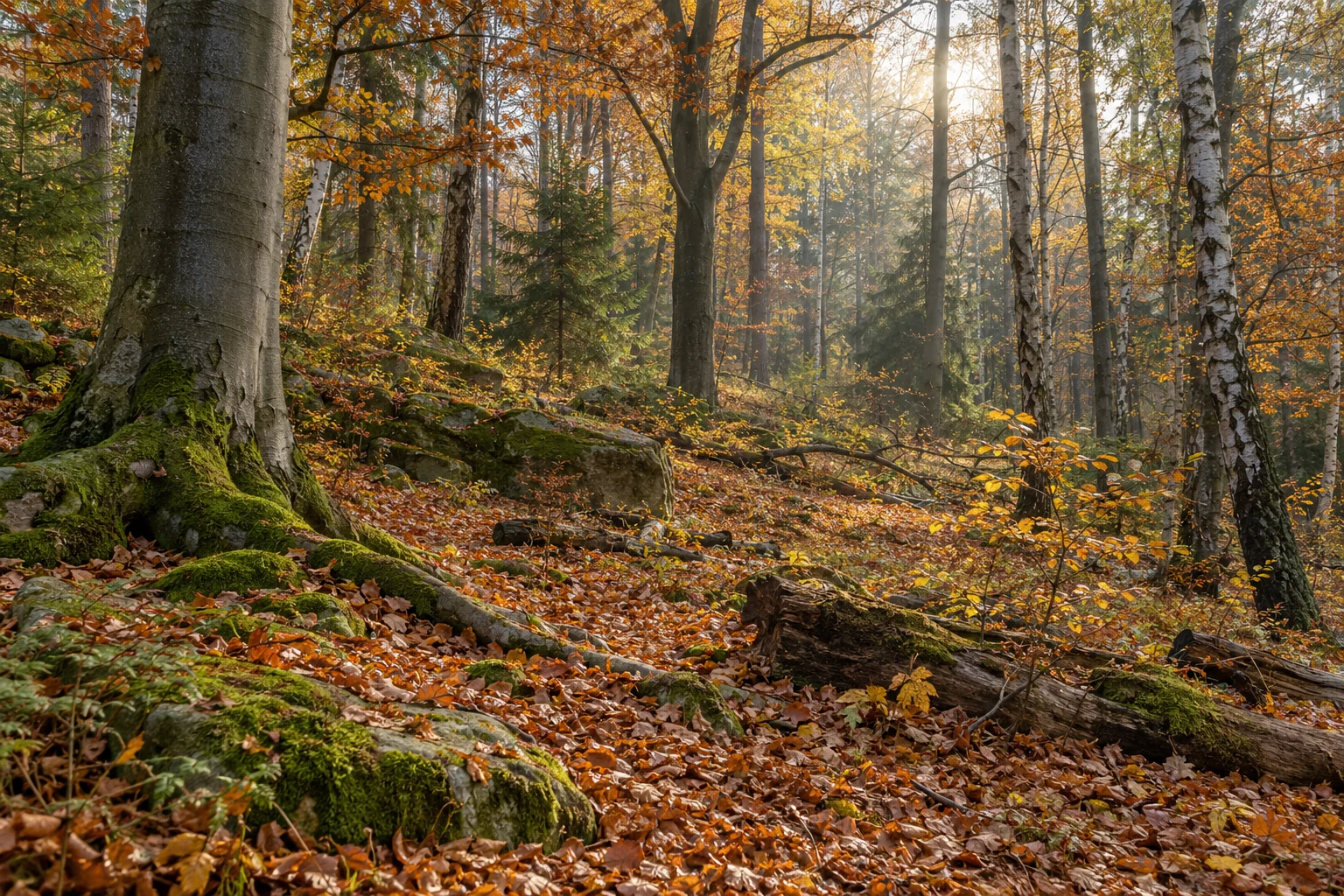
Fallen leaves form a thick protective layer across broadleaf floors, sustaining diverse litter-decomposing species and late mycorrhizal fungi until severe cold arrives.
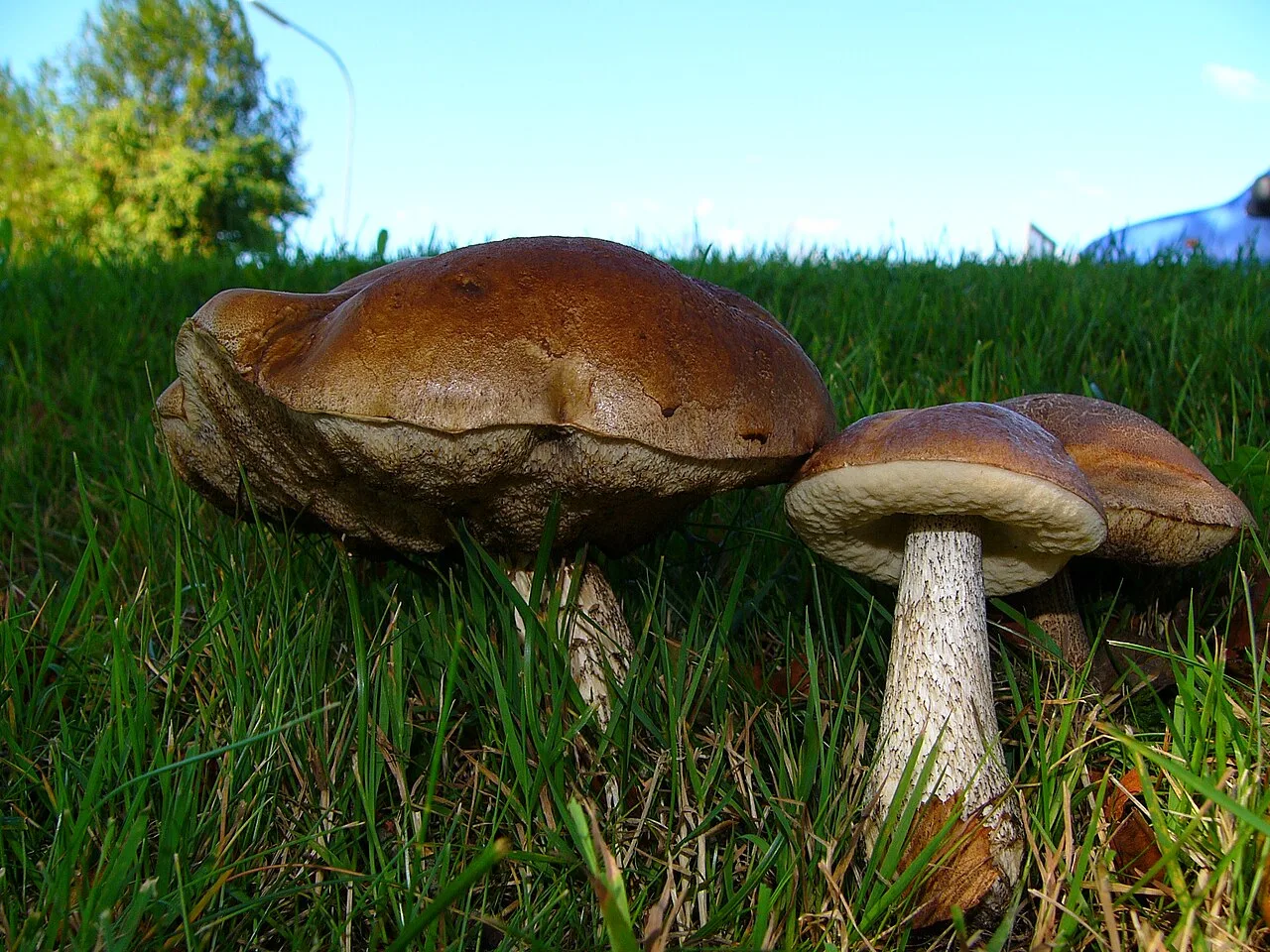
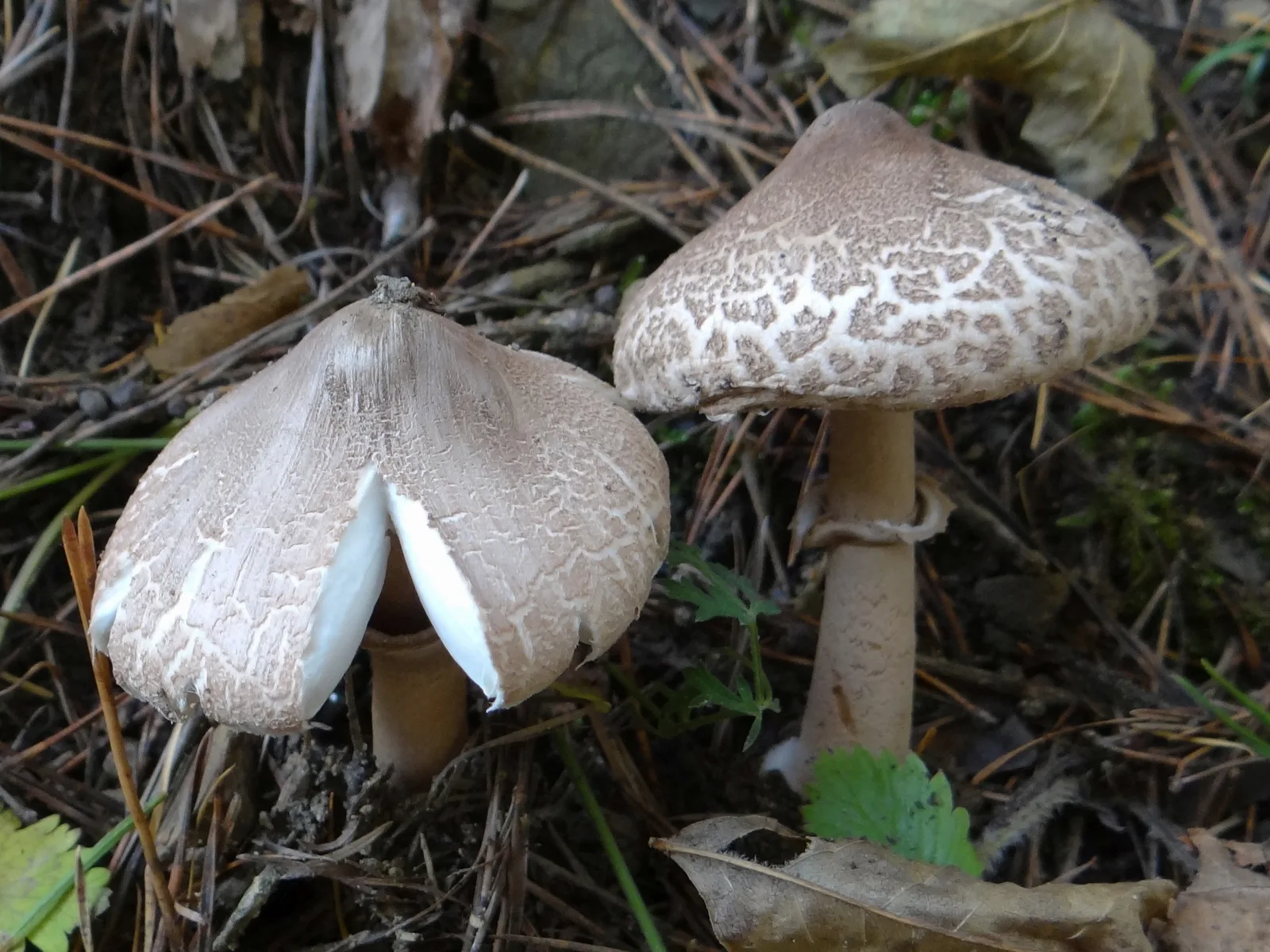
Boletes of Broadleaf Woods
- Brown birch bolete (Leccinum scabrum) — Partners with birch trees on damp soils, where occasional late specimens linger until autumn frosts accelerate their watery decay.
- Blue-staining red-cracking bolete (Xerocomellus cisalpinus) — Grows under oak and beech in woodland leaf mould, occasionally producing late caps during sheltered and mild periods of late autumn.
- Red-cracking bolete (Xerocomus chrysenteron) — Occurs in deciduous leaf litter beside beech and oak, persisting conditionally until heavy frosts cause caps to soften and decay.
Gilled Floor and Litter Dwellers
- Wood mushroom (Agaricus sylvicola) — Inhabits rich humus in broadleaf woods, appearing conditionally in late autumn when temperatures remain moderate and the ground remains moist.
- Grey spotted amanita (Amanita excelsa) — Found in mixed woodland litter near mature deciduous trees, where late stragglers may linger before frost halts all seasonal development.
- Blusher (Amanita rubescens) — Occurs across deciduous woodland floors, producing scattered late fruitbodies that rapidly soften and succumb after sharp autumnal frosts.
- Shaggy parasol (Chlorophyllum olivieri) — Grows in deep deciduous leaf litter and compost, producing large caps during mild autumn stretches before cold snaps stop emergence.
- Aniseed funnel (Clitocybe odora) — Inhabits decaying broadleaf leaf litter, where its distinctive aniseed-scented caps occasionally persist through damp, mild weeks of late autumn.
- The miller (Clitopilus prunulus) — Grows in mossy clearings and grassy margins of broadleaf woodland, with lingering appearances conditional upon mild and damp ground conditions.
- Trooping funnel (Infundibulicybe geotropa) — Forms large rings in deciduous woodland clearings and edges, fruiting resiliently through late autumn chill until heavy frosts intervene.
- Common funnel (Infundibulicybe gibba) — Grows amongst fallen leaf litter in broadleaf woods, continuing to fruit during moist autumn spells until hard frosts cause collapse.
- Amethyst deceiver (Laccaria amethystina) — Flourishes amongst beech leaf litter and damp humus, persisting in cool shaded woods until sustained frosty weather causes shrivelling.
- Deceiver (Laccaria laccata) — Commonly observed across moist woodland tracks and woodland floors, enduring low temperatures during late autumn provided ground frost remains absent.
- Wood blewit (Lepista nuda) — Thrives in thick leaf mould and compost heaps, flourishing notably during cooler late autumn days and enduring light frosts.
- Slender parasol (Macrolepiota mastoidea) — Inhabits grassy open broadleaf woodland clearings, producing occasional late fruitbodies when autumn conditions remain exceptionally sheltered and warm.
- The goblet (Pseudoclitocybe cyathiformis) — Develops in moist, rotting leaf litter and woody debris, emerging steadily during cold, damp late autumn conditions.
- Green brittlegill (Russula aeruginea) — Associates with birch trees on light soils, where final autumn fruitings depend on lingering ground warmth before winter cold arrives.
- Charcoal burner (Russula cyanoxantha) — Found in beech and oak woodland litter, with late specimens persisting conditionally until ground frost causes caps to deteriorate rapidly.
- The flirt (Russula vesca) — Inhabits deciduous woods under oak, producing scattered late caps that quickly break down once frosty nights become established.
- Girdled knight (Tricholoma cingulatum) — Partners with willows along damp woodland edges and stream sides, fruiting conditionally in late autumn before hard frosts halt mycelial activity.
Chanterelles, Boletes and Woodland Specialists
- Chanterelle (Cantharellus cibarius) — Grows among moss and leaf litter in mature beech and oak woods, where sheltered late specimens endure until hard freezes strike.
- Horn of plenty (Craterellus cornucopioides) — Fruits in dense clusters among decaying beech litter on damp soils, persisting into November when temperatures stay above freezing.
- Hare's ear (Otidea onotica) — Appears in leaf litter beneath oak and beech, with late autumn occurrences remaining strictly dependent upon continuous moisture and mild weather.
- Common stinkhorn (Phallus impudicus) — Arises from rich woodland humus and buried wood, occasionally emerging late in the season during warm, wet autumnal spells.
- Matt bolete (Xerocomellus pruinatus) — Frequents broadleaf litter beneath oaks, enduring cold conditions better than most boletes and persisting into chilly late autumn weeks.
Dead Wood
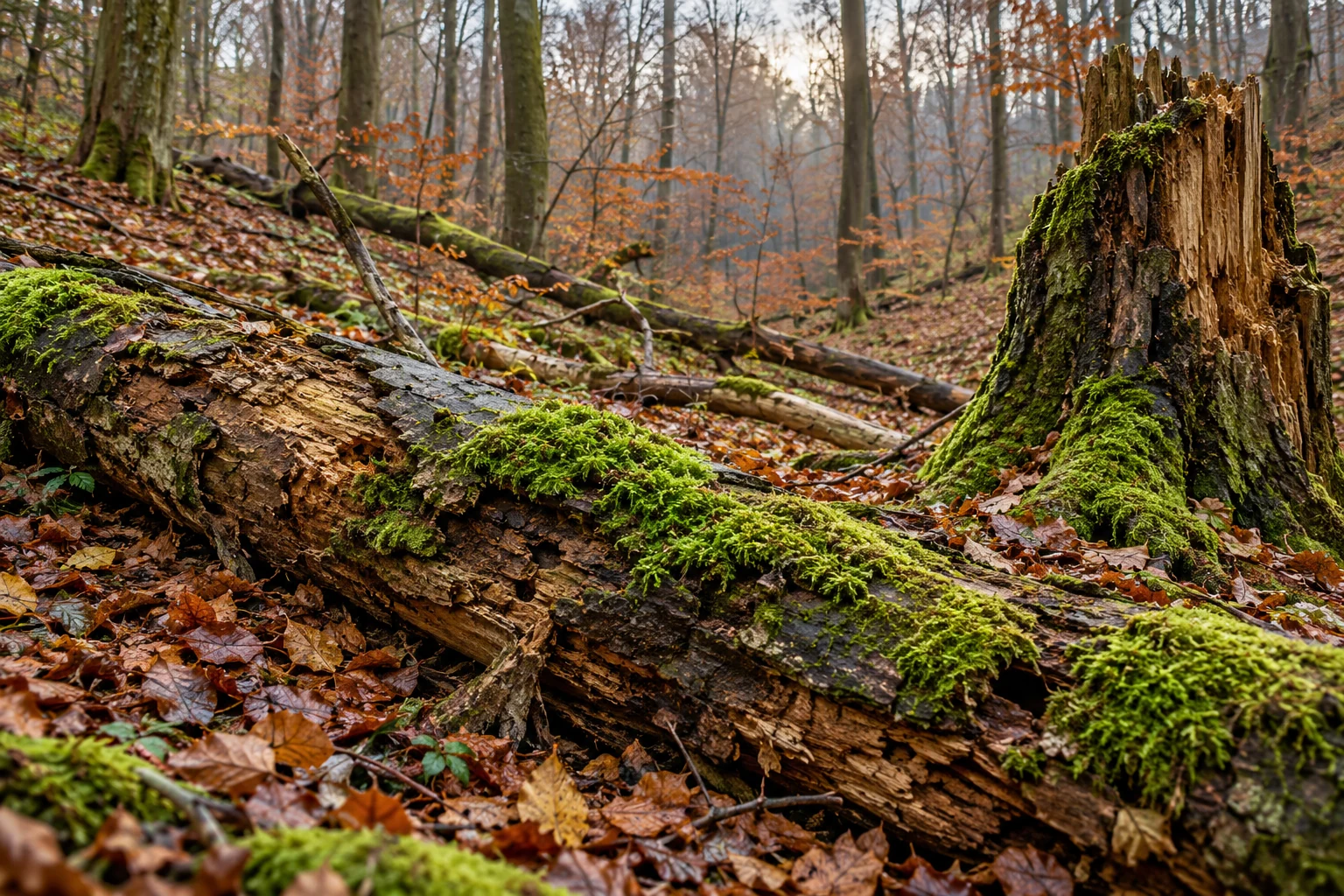
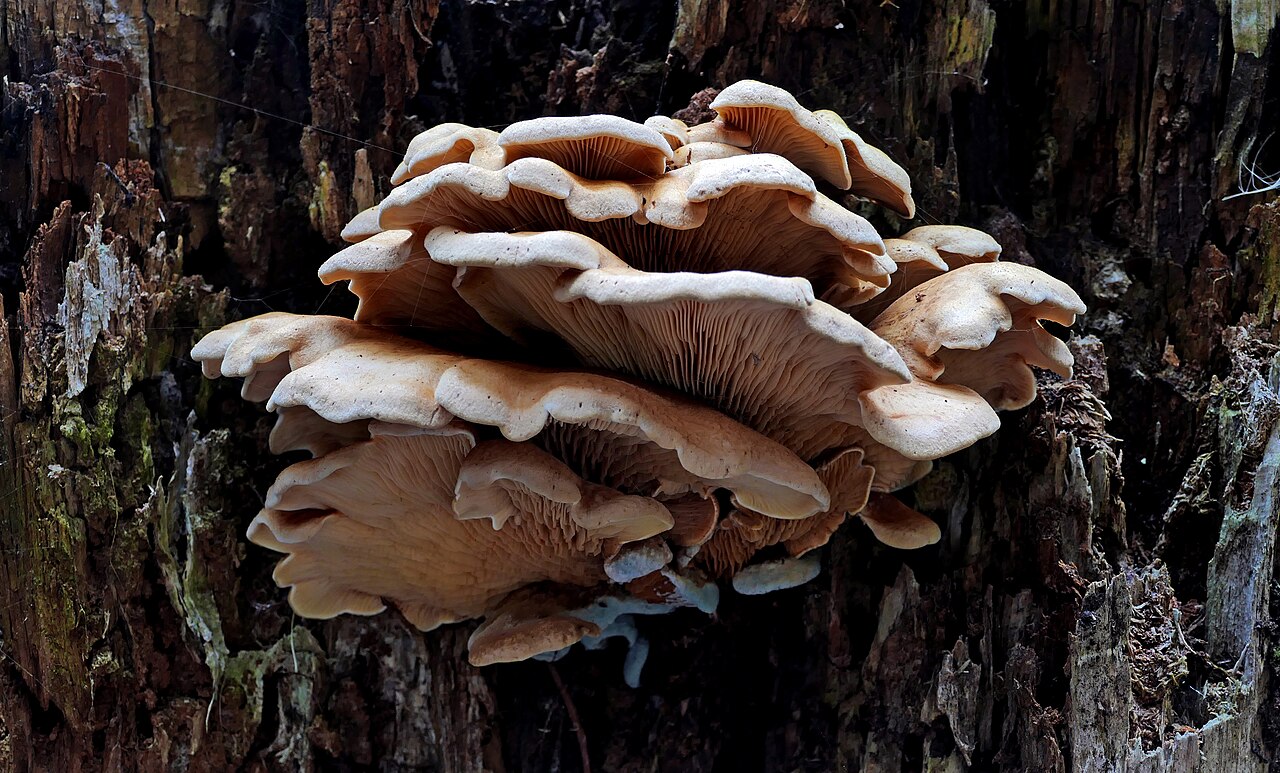
Decaying fallen logs, standing trunks and buried cones retain moisture and heat, enabling lignicolous species to fruit well into late autumn.
Wood-Decay Gilled Fungi and Cone Dwellers
- Honey fungus (Armillaria mellea) — Forms dense tufts on dead deciduous stumps and roots, with late clusters persisting until hard autumnal frosts trigger blackening and decay.
- Velvet shank (Flammulina velutipes) — Grows in tufts on decaying broadleaf wood, flourishing after cold snaps and continuing to produce fresh caps right through frosty spells.
- Sheathed woodtuft (Kuehneromyces mutabilis) — Occurs in clusters on rotting hardwood logs, appearing conditionally during mild, damp autumn weather before severe cold prevents further fruiting.
- Oyster mushroom (Pleurotus ostreatus) — Fruits in overlapping brackets on fallen deciduous trunks, capable of withstanding early cold snaps and persisting through late autumn damp.
- Deer shield (Pluteus cervinus) — Inhabits rotting logs and sawdust heaps, producing solitary caps that linger conditionally until biting frosts halt wood decay activity.
- Sprucecone cap (Strobilurus esculentus) — Grows directly from buried spruce cones in damp litter, producing tiny caps that emerge intermittently during cool, moist late autumn days.
Bracket, Crust and Cluster Fungi
- Jelly ear (Auricularia auricula-judae) — Thrives on decaying elder branches, expanding in damp weather and enduring cold spells with remarkable resilience throughout late autumn.
- Conifer tuft (Hypholoma capnoides) — Forms dense groups on decaying conifer stumps, withstanding cool autumn temperatures and persisting until freezing weather sets in.
- Giant polypore (Meripilus giganteus) — Forms massive tiered brackets at the base of broadleaf trees, where old autumnal specimens slowly blacken and persist into late November.
Grassland and Edges
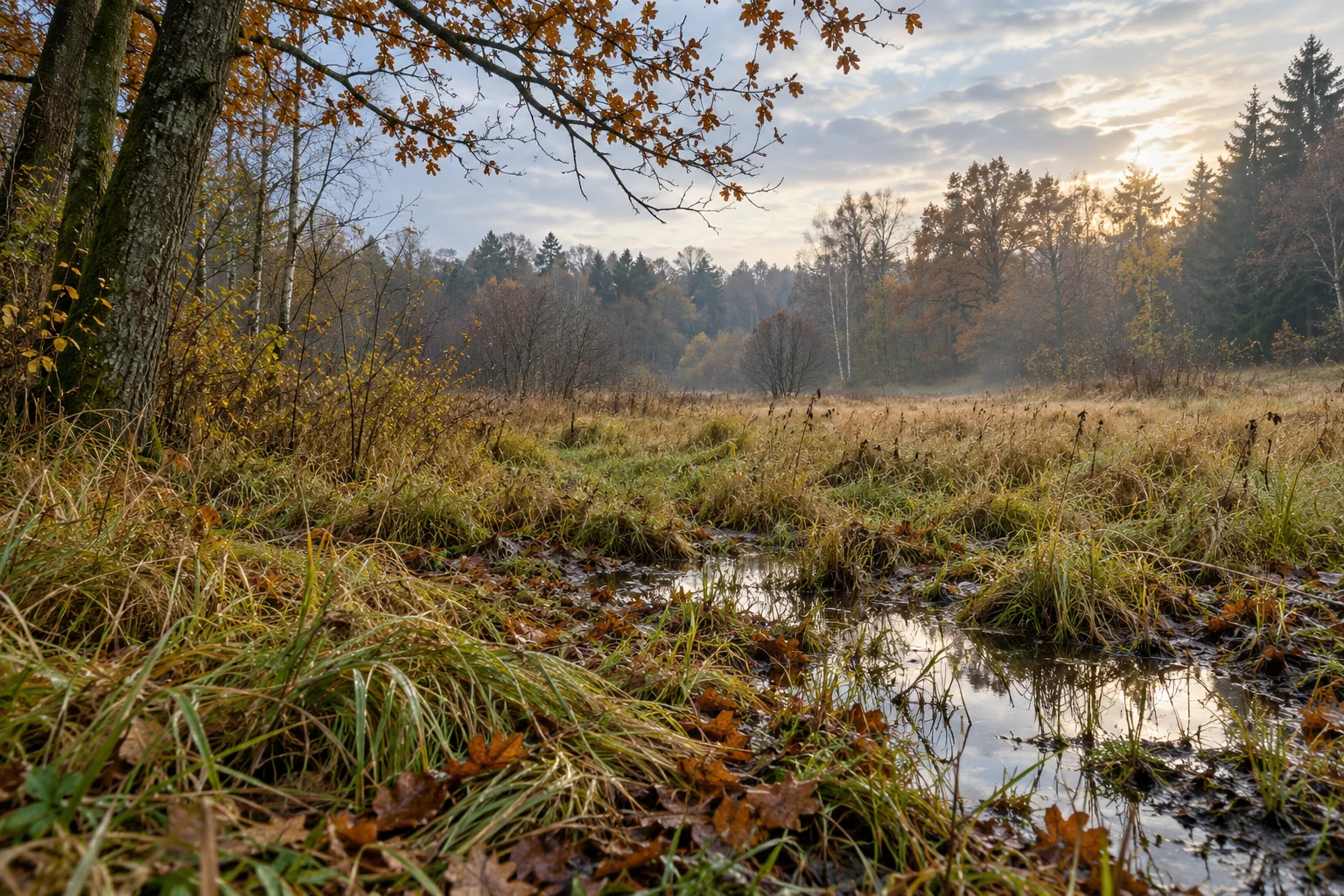
Pastures, parklands and grassy edges experience sharp temperature drops, where hardy waxcaps, blewits and puffballs fruit conditionally between autumnal frosts.
Pasture, Field and Border Agarics
- Horse mushroom (Agaricus arvensis) — Frequents unimproved pastures and grassy field edges, producing sporadic late rings while mild conditions prevail ahead of seasonal frosts.
- Field mushroom (Agaricus campestris) — Occurs in grazed pastures and lawns, where late autumn fruiting ceases rapidly once early ground frosts cool the topsoil.
- Giant funnel (Aspropaxillus giganteus) — Forms expansive fairy rings in open grassland, persisting conditionally into late autumn until frosty weather causes the large funnels to decay.
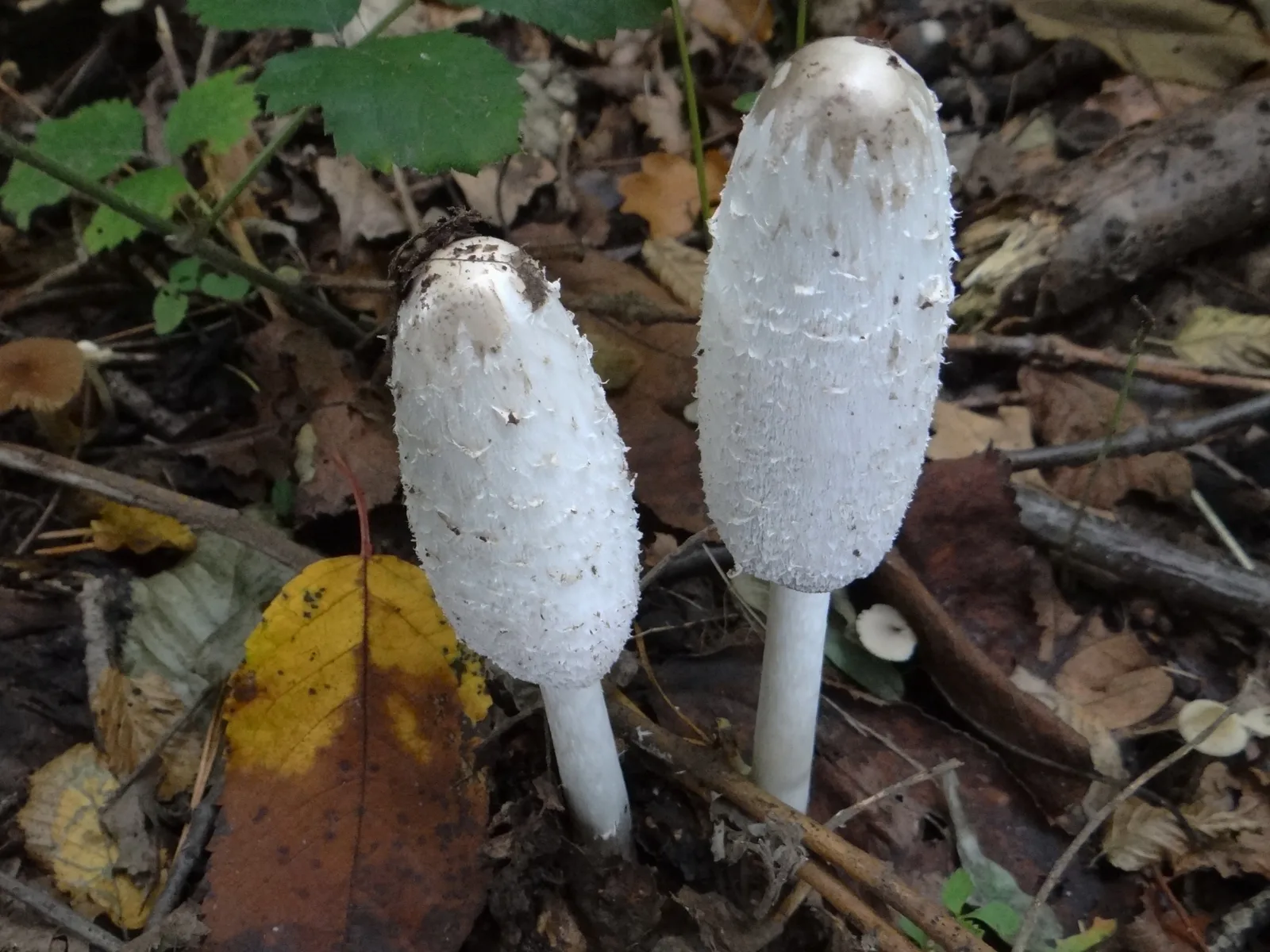
- Shaggy inkcap (Coprinus comatus) — Inhabits disturbed verges and fertile pastures, emerging after autumn rain but quickly autodigesting or collapsing during chilly nights.
- Field blewit (Lepista personata) — Fruits in open pastures and grassy downland, excelling in cold autumn weather and tolerating moderate frosts across damp grassland.
- Sordid blewit (Lepista sordida) — Grows on compost-rich grassland, parks and garden edges, persisting into late autumn when temperatures remain relatively mild.
- Clustered domecap (Lyophyllum decastes) — Forms dense clumps along grassy roadside verges and wood edges, surviving late into autumn provided severe freezes remain absent.
- Parasol (Macrolepiota procera) — Stands tall in meadows and pasture margins, where late fruitbodies quickly become tattered and collapse under cold autumn winds and frosts.
- Fairy ring champignon (Marasmius oreades) — Forms persistent rings in short grassland and turf, reviving with rain but gradually ceasing fruiting as ground frost hardens the turf.
- Stubble rosegill (Volvopluteus gloiocephalus) — Develops on agricultural stubble and compost-rich soil, appearing conditionally during mild, wet late autumn stretches before cold shuts down growth.
Puffballs of Grassland and Open Ground
- Giant puffball (Langermannia gigantea) — Inhabits nutrient-rich pastures and hedgerows, where mature papery spheres linger into late autumn, gradually releasing spores before disintegrating.
- Common puffball (Lycoperdon perlatum) — Occurs on grassy woodland verges and clearings, producing warted globes that persist into chilly weather while discharging dusty spore clouds.
- Mosaic puffball (Lycoperdon utriforme) — Frequents exposed pastures and hill turf, where persistent fruiting bodies dry out in autumn winds and withstand moderate ground frost.
Observing Late Autumn Fungi
Field encounters in late autumn require careful observation and respect for delicate habitats preparing for the winter freeze.
- Leave decaying and over-mature fruiting bodies intact on the forest floor so their spores can disperse fully into surrounding soil.
- Tread carefully across moss carpets, leaf mulch, and wet verge turf to protect sensitive underground mycelial structures from compaction.
- Use a notebook or camera to record morphological details and microhabitat associations instead of uprooting unfamiliar fungi from the wild.
November reveals the quiet endurance of late-season fungi across British woods and pastures, highlighting how moisture and microclimate sustain delicate networks as winter approaches.