Freezing wild mushrooms at home: how to match the method to the species and preserve the best flavour
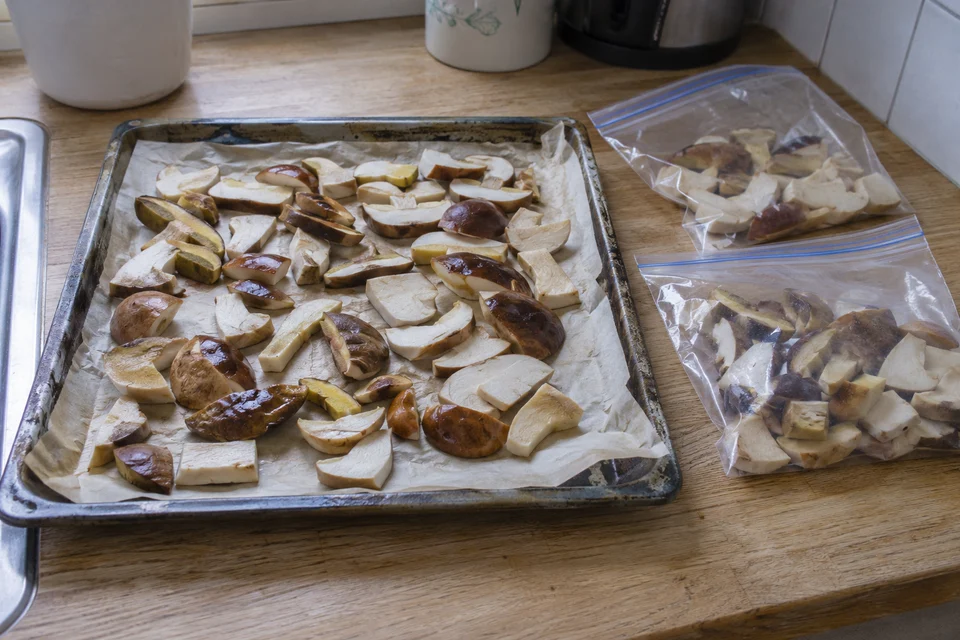
Table of contents
Freezing is one of the most convenient ways to make the most of foraged wild mushrooms. Unlike drying, which completely alters the character of mushrooms and imparts an intense, concentrated dried-mushroom aroma, freezing preserves qualities close to fresh fruiting bodies – their moisture, meaty texture, and juiciness in soups, sauces, or scrambled eggs. Success depends, however, on the condition of the raw harvest before it enters the cold store and on matching the preparation technique to the particular species.
Preparation before freezing: moisture and sorting
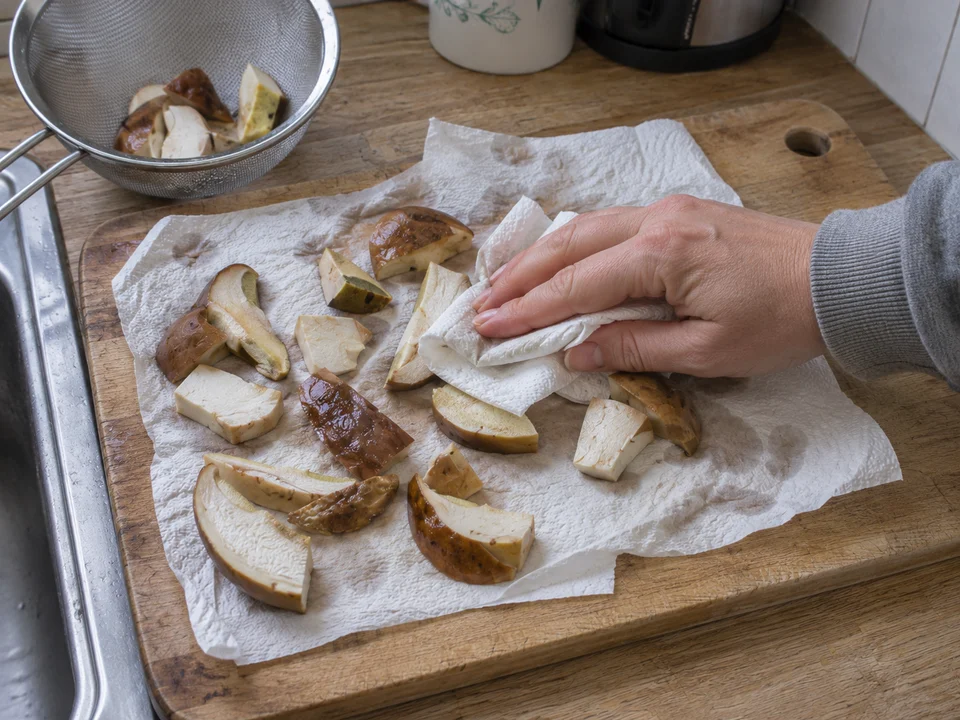
Only fresh, healthy, and firm mushrooms should go into the freezer. Before freezing, they must be carefully sorted and cleaned of forest litter, sand, and pine needles. Contact with water should be kept to the absolute minimum – mushrooms absorb moisture, and excess water turns in the freezer into ice crystals that tear the flesh structure and create unnecessary frost inside the packaging. If the harvest required a quick rinse, the mushrooms must be dried thoroughly on a sieve or with kitchen paper before further processing or packing.
Raw or preheated? Practice according to species
Both foraging guides and domestic cookery successfully employ two approaches: freezing raw and freezing after prior heat treatment.
Boletes: ceps and bay boletes
Young, firm, and healthy caps of ceps (Boletus edulis) or bay boletes (Imleria badia) are ideally suited to freezing raw – simply slice them into even slices or quarters. This is also corroborated by educational materials from the Polish State Forests (including the guide "Grzyby polskich lasów" [Mushrooms of Polish Forests]), which identify freezing raw, sliced mushrooms as one of the primary domestic methods for preserving foraged fungi. Older specimens with soft, spongy tubes, however, are better lightly precooked or sautéed first, as the raw sponge becomes limp and floppy upon thawing.
In the case of slippery jacks (Suillus spp.), common culinary advice is to peel the slimy skin from the cap. This makes it easier to remove adhered sand and pine needles completely, and prevents an excessively gelatinous, slimy texture from forming in the finished sauce or soup. The medical literature describes isolated cases of indigestion and gastrointestinal upset following the consumption of unpeeled slippery jacks (such as Prager and Goos's report concerning Suillus luteus), making the peeling of caps a proven and sound culinary practice.
Chanterelles and species prone to bitterness
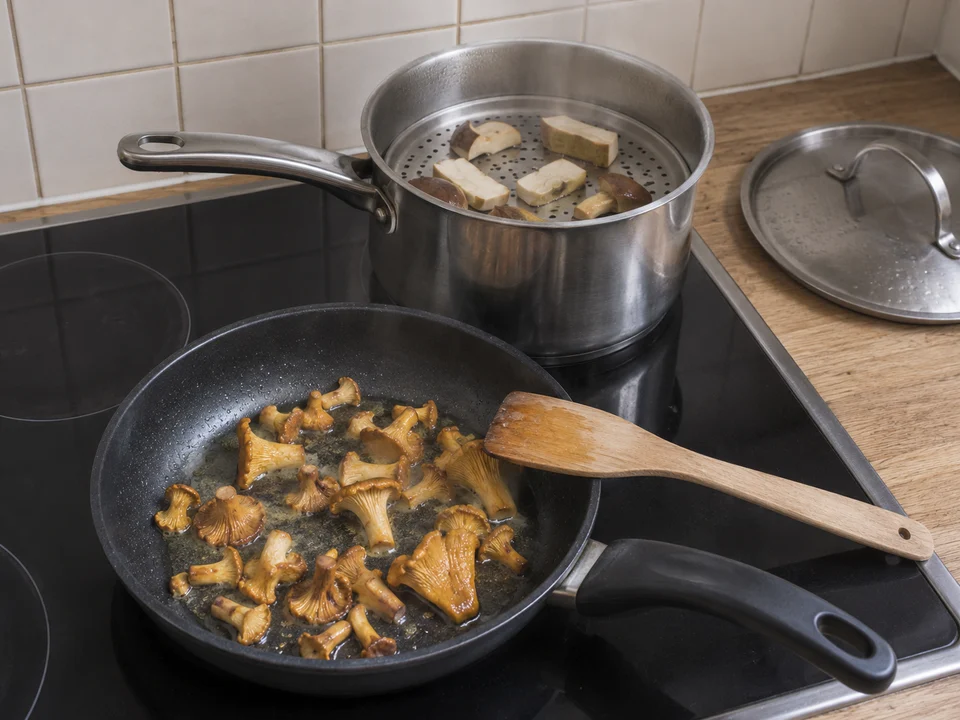
Among mushroom foragers, it is a common observation that chanterelles (Cantharellus cibarius) frozen raw can develop a distinctly bitter aftertaste once cooked. While this does not happen with every forage, home cookery recipes – such as popular culinary blog entries – have made preheating chanterelles before freezing standard practice. A brief blanch in boiling water, scalding on a sieve, or gently sweating in butter effectively protects the flavour of the dish.
A similar step of pre-frying in a small amount of fat is well worth applying to saffron milk caps (Lactarius deliciosus), which thereby retain better aroma and a firmer texture.
Preheating methods
If you choose heat treatment before freezing, you can rely on proven standards:
- Steaming (the NCHFP method): The National Center for Home Food Preservation recommends steaming mushrooms in a steamer or over a pot of boiling water. Steaming times depend on size: whole mushrooms are steamed for 5 minutes, buttons or quarters for 3.5 minutes, and slices for 3 minutes. After steaming, cool the mushrooms promptly in cold water, drain thoroughly, and dry. The NCHFP notes that steamed mushrooms maintain good quality longer than those heated in fat.
- Heating in a pan (sauté): mushrooms are placed into a frying pan with a small amount of butter or oil and heated over medium heat until almost tender. They must be completely cooled before packing into containers.
- Brief precooking: a traditional method consisting of plunging sliced mushrooms into boiling water for 2–3 minutes, followed by a quick rinse in cold water and thorough drying on a sieve.
Packaging and freezing technique
To prevent mushroom pieces from freezing into a single stubborn block, it is best to use a two-stage freezing process:
- Open freezing: arrange slices or blanched pieces in a single layer on a board or baking sheet lined with baking parchment. Place in the freezer for 1–2 hours until frozen solid.
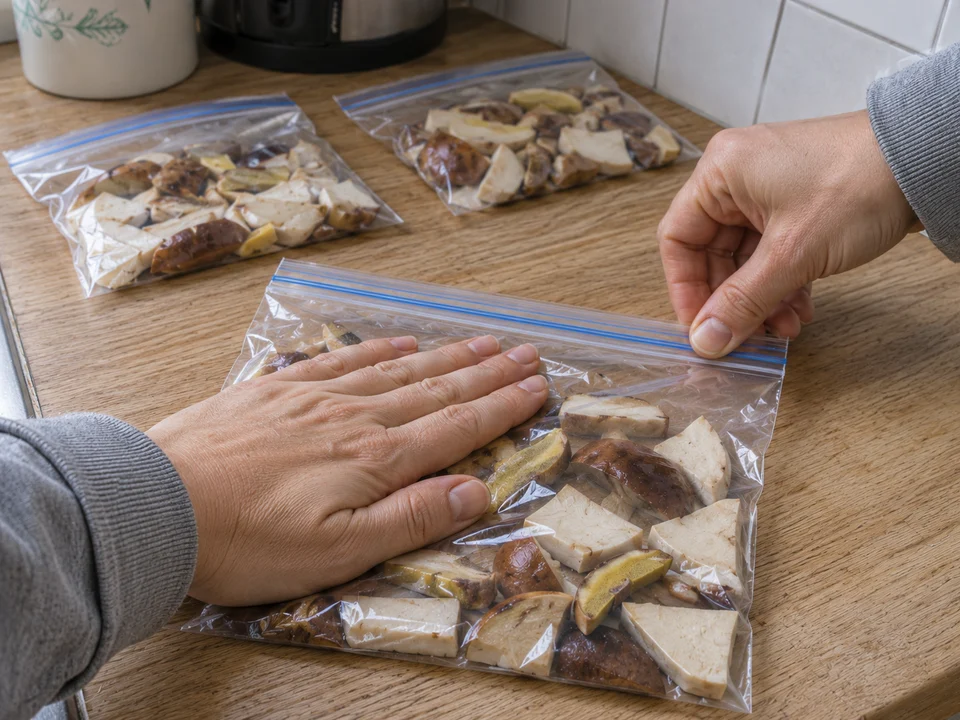
- Bagging up: transfer the frozen pieces into zip-lock freezer bags or food containers. Expelling excess air from the bag protects the mushrooms from drying out and frost build-up.
- Portioning: prepare meal-sized portions (e.g. 200–300 g), which makes subsequent cooking easier without disturbing the rest of your stores.
Storage temperature and duration: quality versus safety
A domestic freezer should maintain a temperature of -18°C or lower. It is essential, however, to keep in mind the fundamental safety condition stressed by the NCHFP: freezing does not sterilise food and does not destroy all micro-organisms or mould spores present, but merely halts their growth. For this reason, freezing will not redeem mushrooms that have already begun to spoil before entering the freezer. Upon eventual thawing, surviving micro-organisms can begin multiplying once again.
Storage time recommendations are primarily guidelines regarding sensory quality (flavour, firmness, and aroma):
- Health Canada guidelines for mushrooms subjected to prior steaming or sautéing suggest an approximate freezer storage time of 8 to 12 months.
- For mushrooms frozen raw, culinary practice generally recommends using stores within around 6 months. This is a pragmatic kitchen rule of thumb – after this time, the mushrooms remain safe to eat, but under the influence of sub-zero air they may gradually lose their original aroma or dry out.
The simplest rule for any forager is stock rotation: aim to use up each year's harvest in the kitchen before the arrival of the next autumn season.
Kitchen use and the question of refreezing
In everyday cooking, it is most convenient to add frozen mushrooms directly to a hot pan with fat or into a simmering soup. This avoids slow thawing on the kitchen worktop, during which liquid leaches out and pieces become limp, losing their springiness.
If a dish requires prior thawing (for example, to mince for a stuffing), thaw the mushrooms slowly in the refrigerator at below 4°C, rather than in room warmth.
Can thawed mushrooms be refrozen? According to NCHFP guidance, foods thawed under controlled refrigeration (in the fridge) or still containing ice crystals can safely be refrozen. One must expect, however, a noticeable drop in culinary quality – repeated freezing and thawing causes further cellular water loss, so the mushrooms may turn out soft and lacking firmness once cooked.
Sources
- National Center for Home Food Preservation (NCHFP) – Freezing Mushrooms
- National Center for Home Food Preservation (NCHFP) – General Freezing FAQs: Freezing and Food Safety, Refreezing
- Health Canada – Food safety tips for mushrooms
- Forest Information Centre of the State Forests – Mushrooms of Polish Forests (p. 46)
- Dorota Smakuje – How to freeze chanterelles
- Prager M.H., Goos R.D. — A case of mushroom poisoning from Suillus luteus (Mycopathologia 85, 1984, pp. 175–176)