Edible
Set your location to see data for your region.

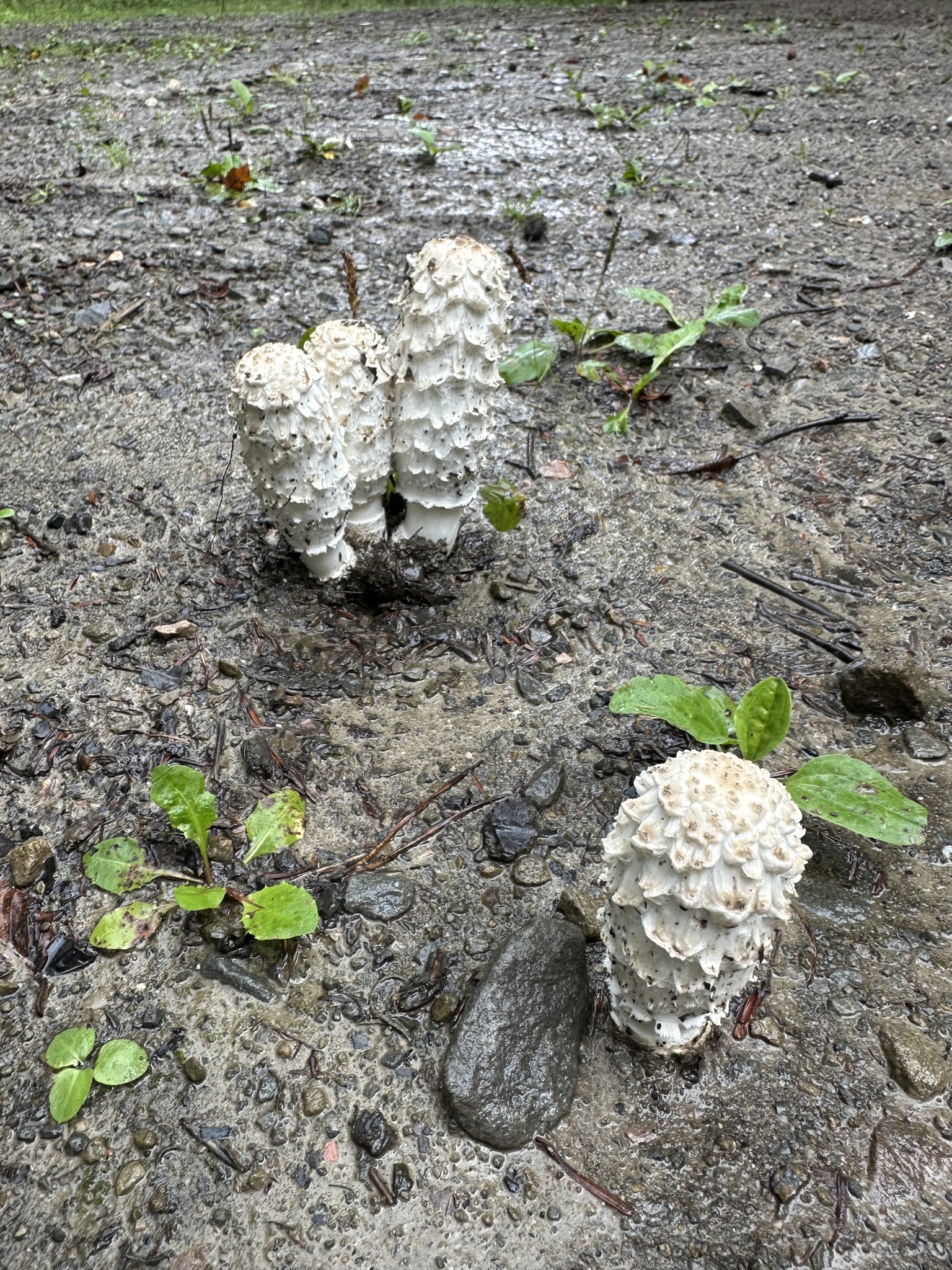
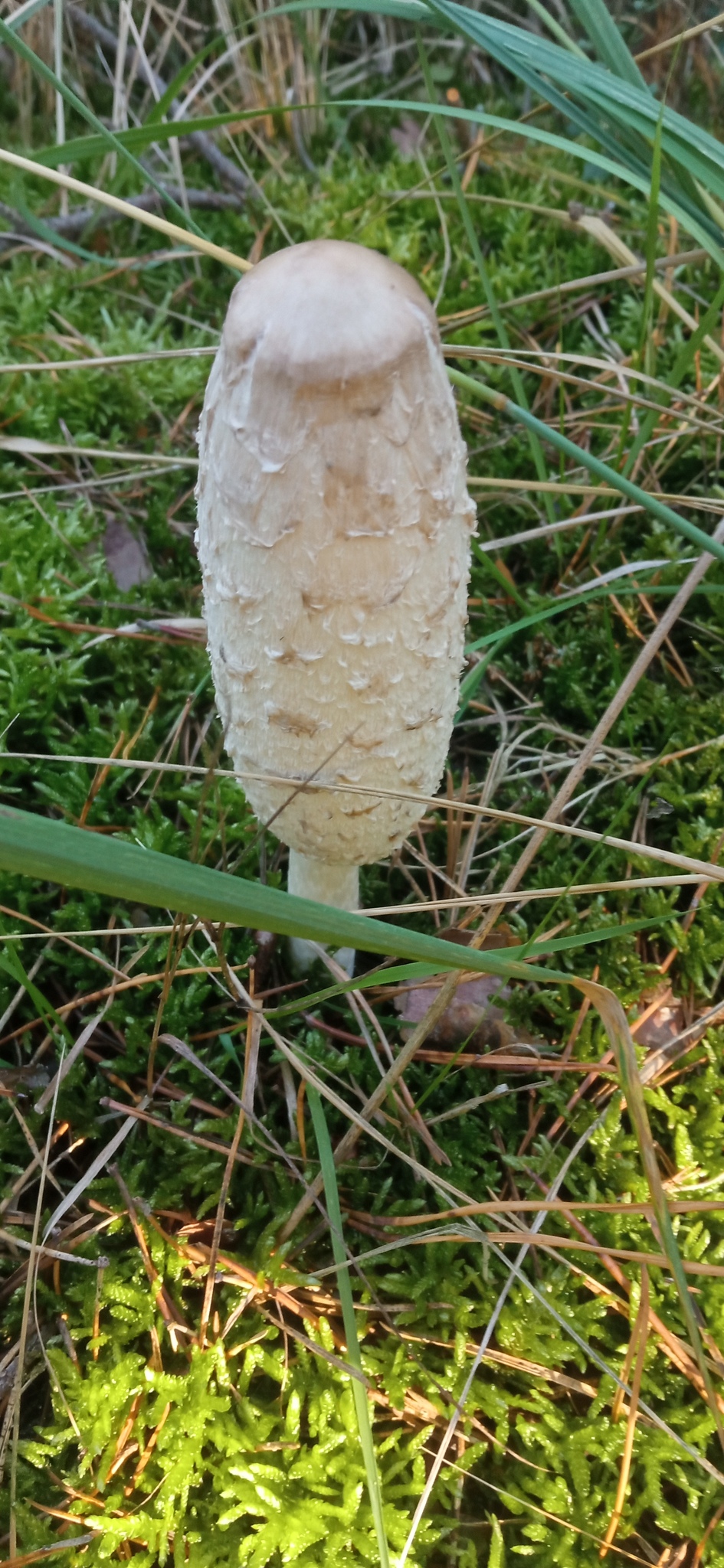
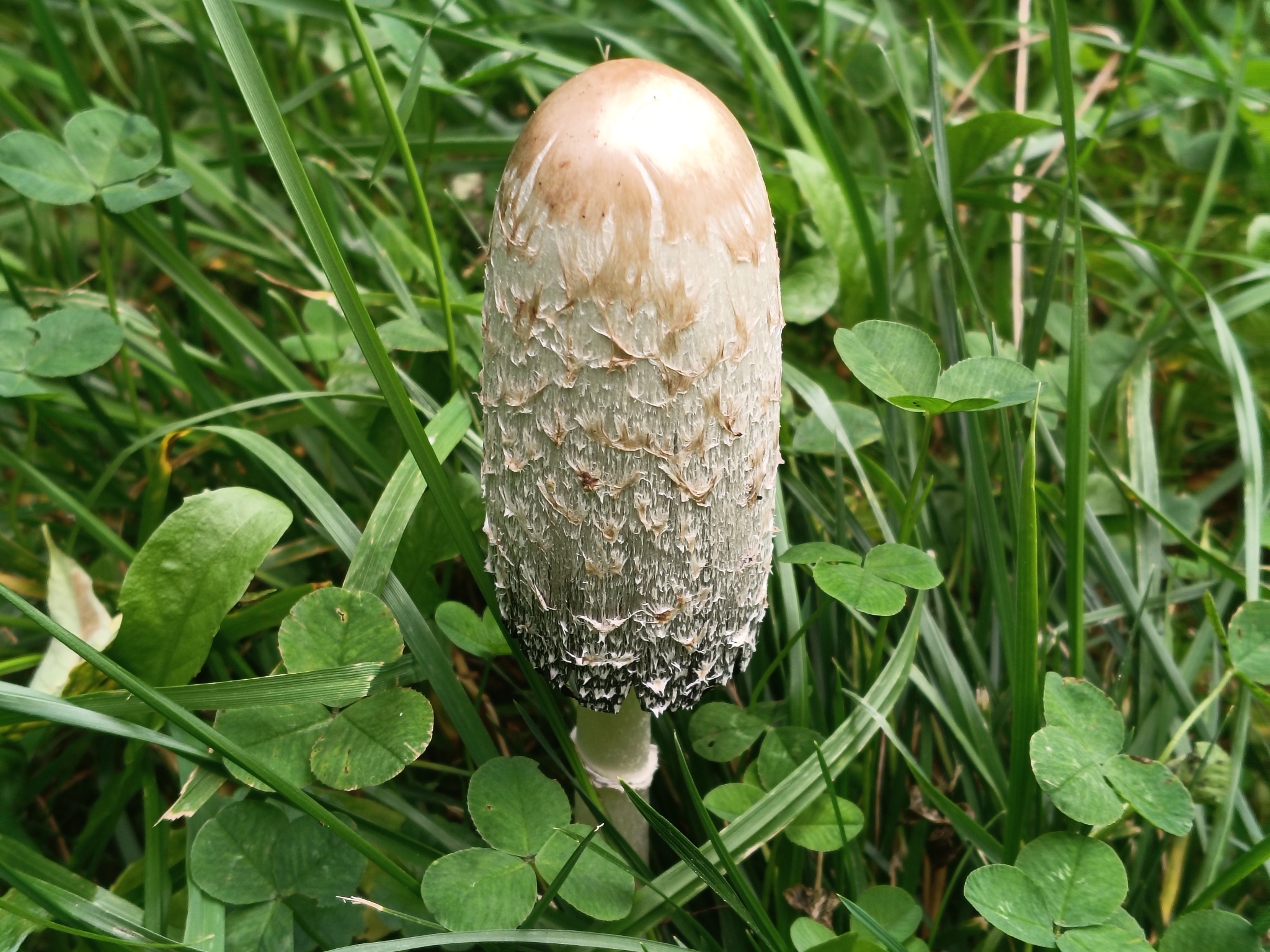
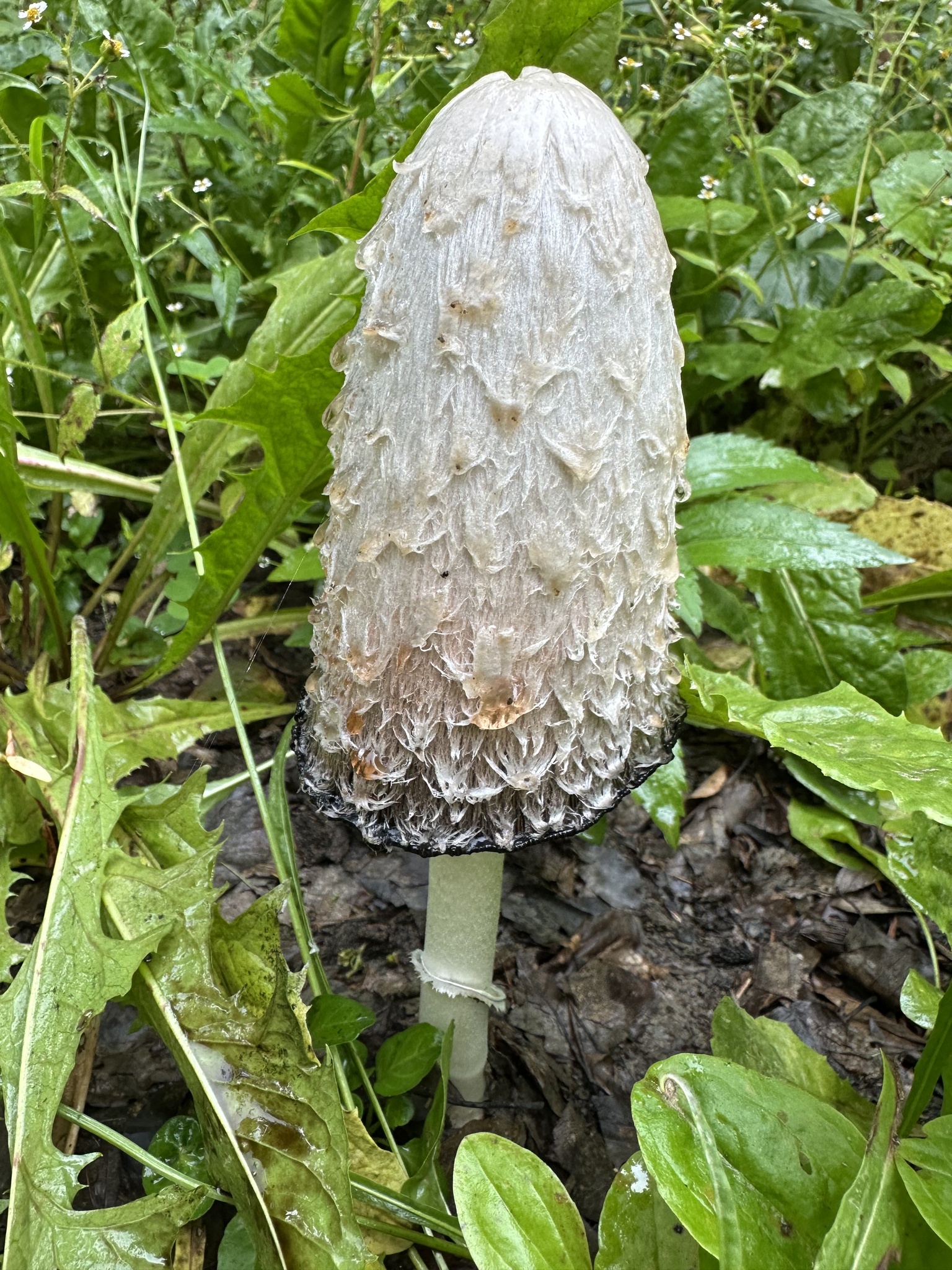


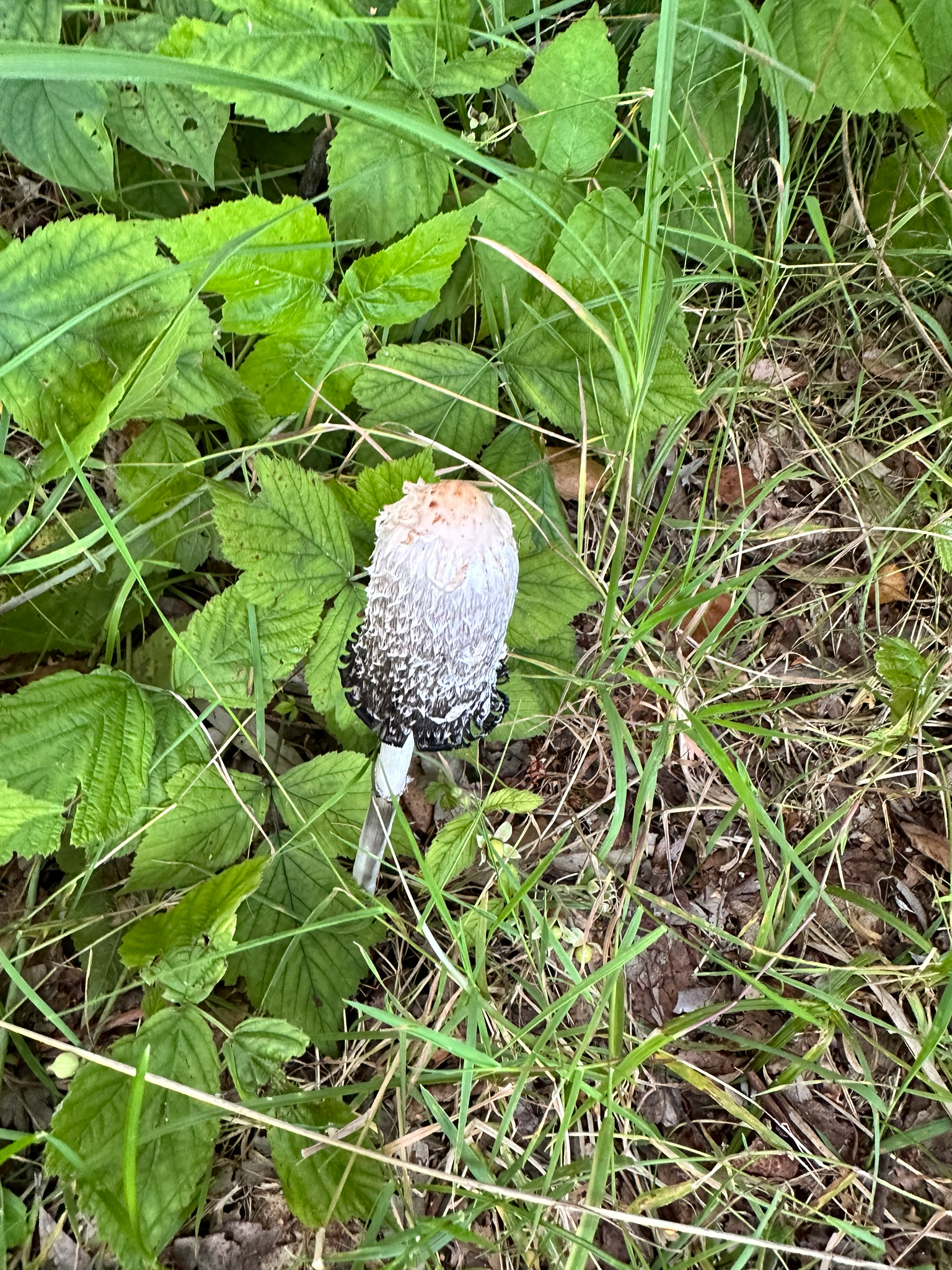
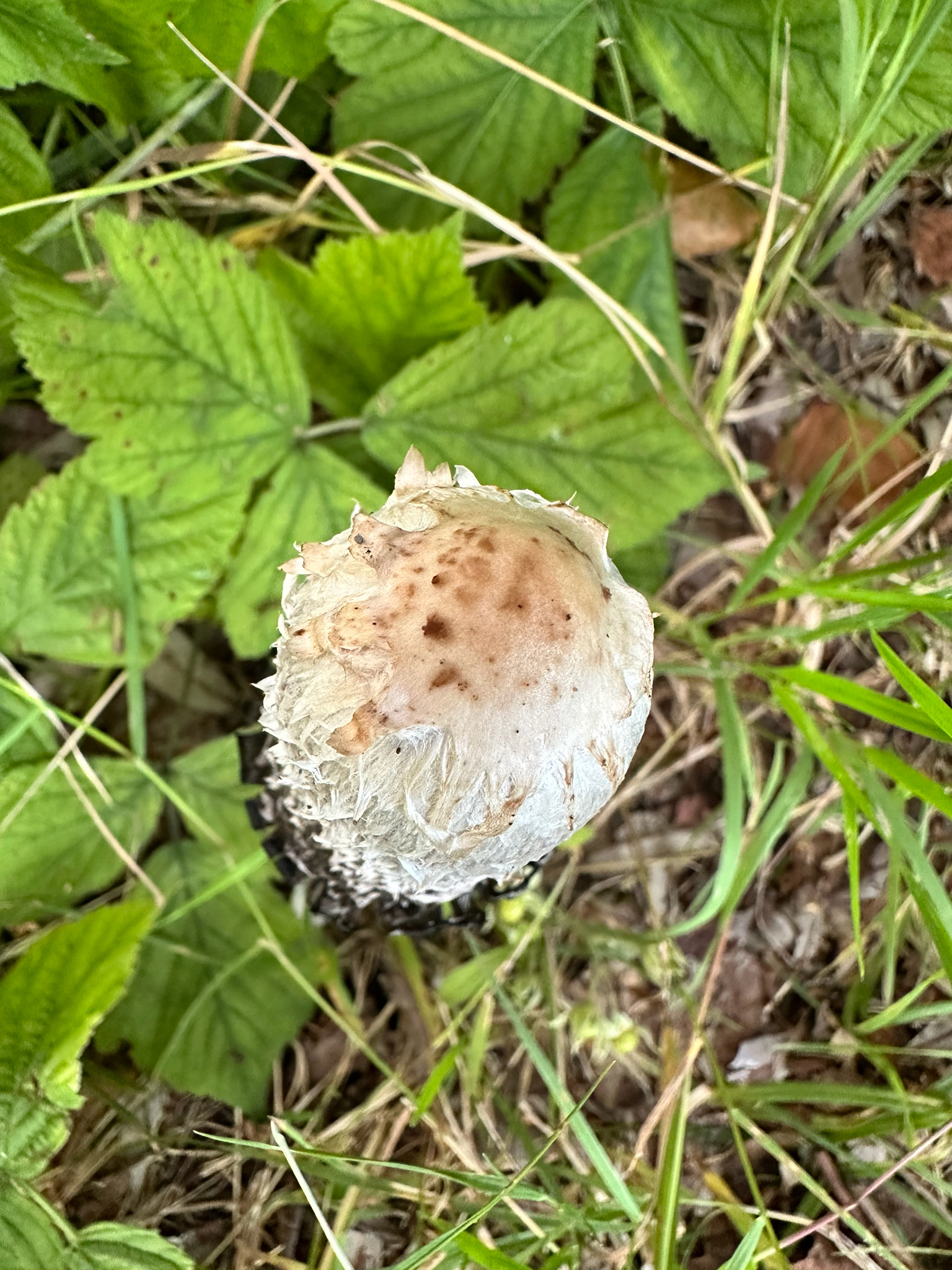
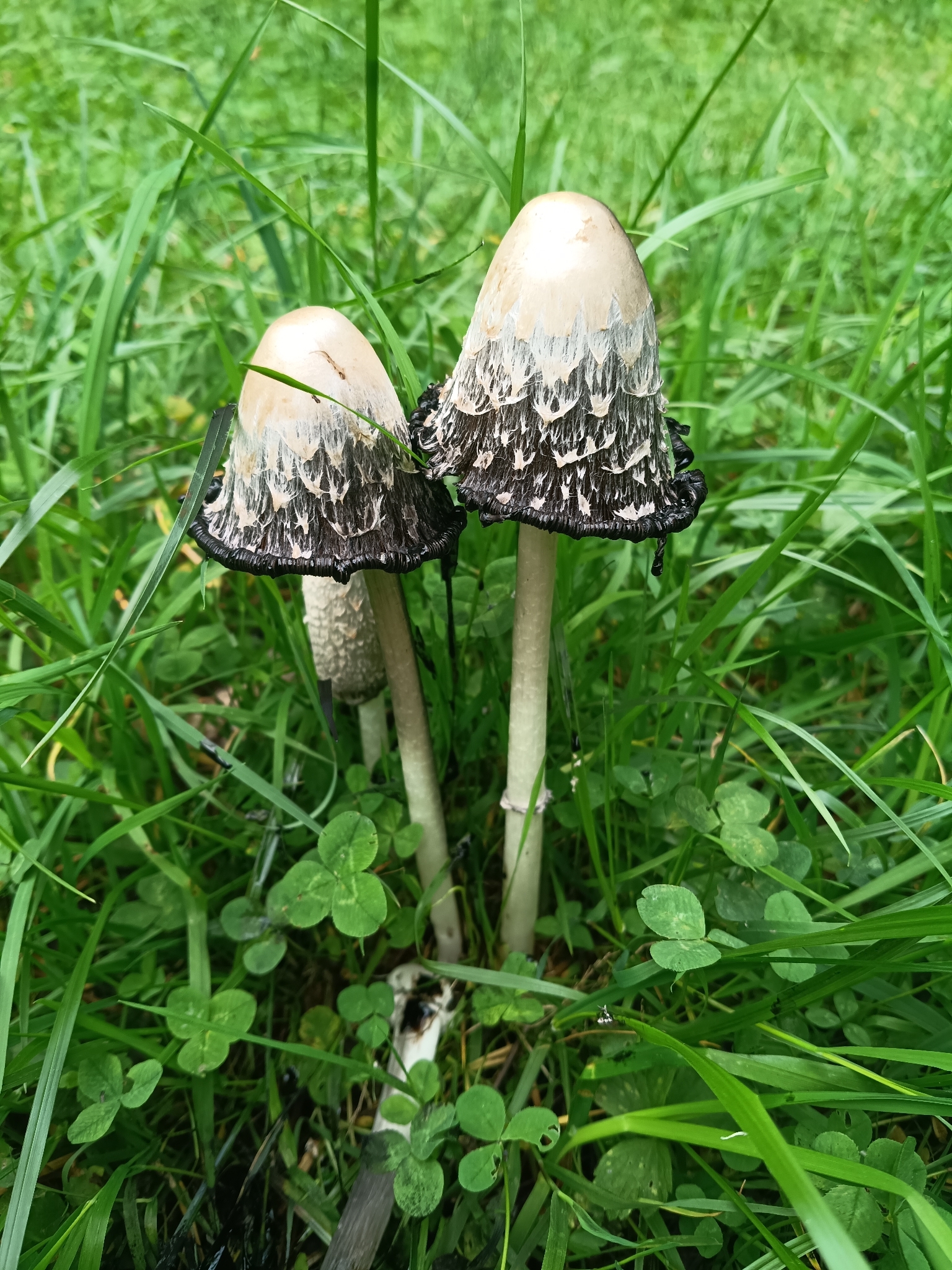
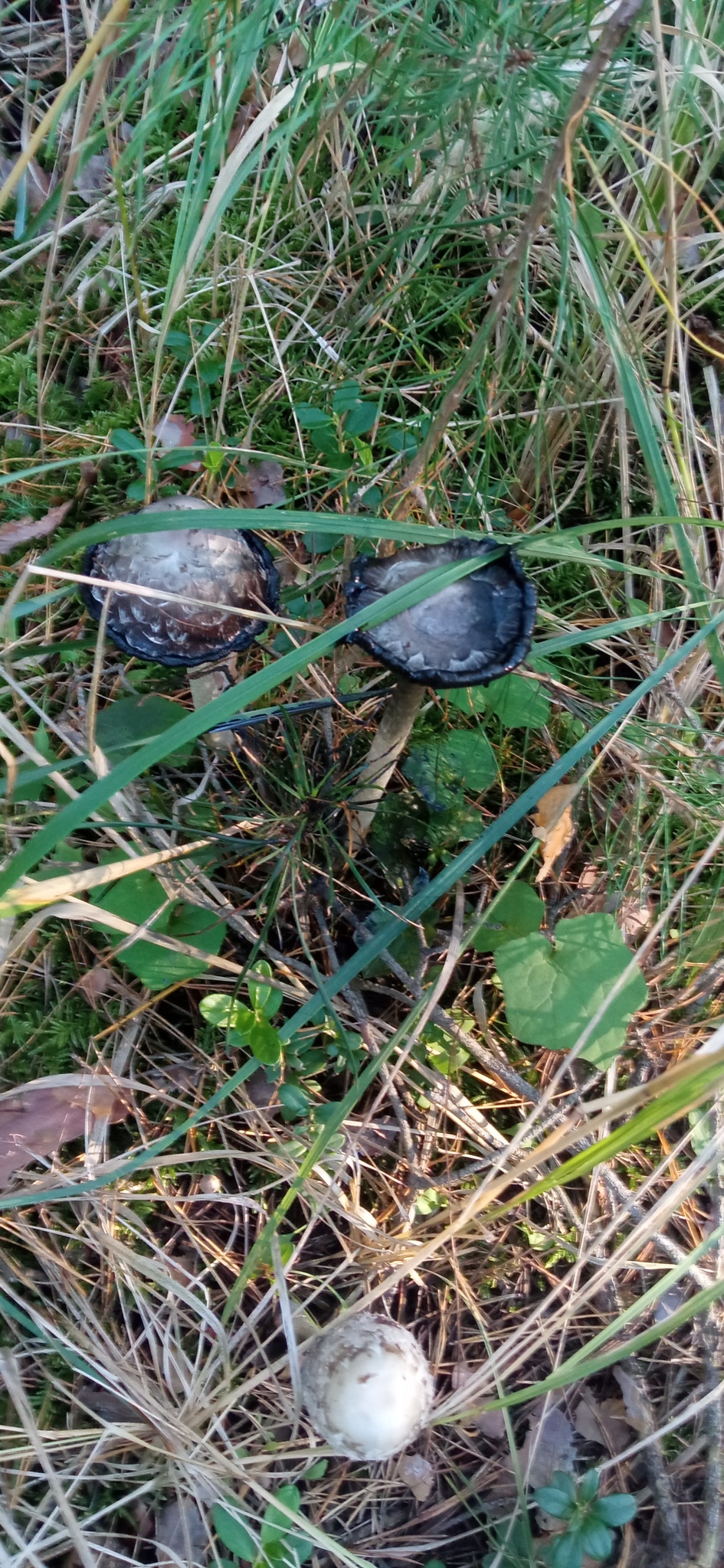
The shaggy ink cap (Coprinus comatus) is a distinctive saprotrophic mushroom with a cylindrical, white cap covered with fibrous scales. With age, it opens into a bell shape, and its gills quickly turn pink, then black. Its hallmark feature is autolysis—a process of self-digestion in which the mature fruiting body dissolves into a black, ink-like liquid that facilitates spore dispersal. Young, snow-white fruiting bodies are a prized edible mushroom with an exceptionally delicate flavor.
Identification, habitat, and key differences.
Forager
Fruitbody structure
- Fruit body form
- Fruit body form: Cap, stipe.
Cap
- Cap shape
- in young fruit bodies: Cap shape: ovoid.
Cap shape: cylindrical.
in mature fruit bodies: Cap shape: bell-shaped. - Cap covering
- Cap covering: fibrillose.
Cap covering: scaly (whitish covering).
Cap covering: glabrous (cap centre).
Cap covering: silky and fibrillose.
Cap covering: scaly (brownish covering). - Cap colour
- Cap colour: black.
Cap colour: pink.
Cap colour: light brown (cap centre).
Cap colour: white.
Cap colour: whitish.
Cap colour: ochre brown (cap centre). - Margin orientation
- in mature fruit bodies: Margin orientation: turned upwards.
- Cap diameter
- The cap measures 30–60 mm in diameter.
- Cap autolysis
- in mature fruit bodies: Cap autolysis: black (starting at the margin, progressing gradually).
- Cap height
- Cap height: 50–150 mm.
Underside of the cap
- Hymenophore type
- Hymenophore type: gills.
Gills at stipe
- Hymenophore attachment to the stipe
- Hymenophore attachment to the stipe: free from the stipe (gills).
- Hymenophore colour
- Hymenophore colour: black.
Hymenophore colour: Pink.
Hymenophore colour: white. - Gill spacing
- Gill spacing: crowded.
- Gill thickness
- Gill thickness: thin.
- Gill width class
- Gill width class: broad.
Stem and base
- Stipe shape
- Stipe shape: cylindrical.
Stipe shape: tapering upwards. - Stipe base
- Stipe base: swollen.
- Stipe colour
- Stipe colour: white.
Stipe colour: yellowish. - Stipe surface relief
- Stipe surface relief: smooth.
- Stipe surface covering
- Stipe surface covering: fibrillose.
Stipe surface covering: scaly.
in young fruit bodies: Stipe surface covering: floccose. - Stipe surface sheen
- in young fruit bodies: Stipe surface sheen: shiny.
- Stipe interior
- Stipe interior: hollow.
in young fruit bodies: Stipe interior: hollow. - Stipe consistency
- Stipe consistency: fibrous.
Stipe consistency: brittle. - Stipe length
- Stipe length: 60–250 mm.
- Stipe diameter
- Stipe diameter: 8–30 mm.
Stipe diameter: up to 30 mm (at the stem base).
Ring
- Ring presence
- Ring presence: present.
- Ring position
- Ring position: at the stem base.
- Ring persistence
- Ring persistence: evanescent.
- Ring colour
- Ring colour: white (whole ring).
- Ring mobility
- Ring mobility: movable.
- Ring softness
- Ring softness: soft.
- Separation of stem from cap
- Separation of stem from cap: readily separates.
Flesh
- Flesh colour
- in young fruit bodies: Flesh colour: white.
- Flesh firmness
- Flesh firmness: soft.
- Flesh taste
- Flesh taste: weak.
- Flesh resistance to breaking or tearing
- in young fruit bodies: Flesh resistance to breaking or tearing: brittle.
- Flesh structure
- in old fruit bodies: Flesh structure: fibrous (stipe flesh).
- Flesh odour
- Flesh odour: pleasant, weak.
Flesh odour: pleasant. - Flesh thickness class
- Flesh thickness class: thin.
Where and when it grows
- Habitat
- Habitat: garden, park, pasture, roadside, ruderal or urban habitat or deciduous woodland.
Habitat: meadow.
Habitat: garden, park, meadow, forest edge, roadside or ruderal or urban habitat.
Habitat: meadow, garden, forest edge or roadside. - Substrate
- Substrate: soil.
Substrate: dung. - Fruit body growth pattern
- Fruit body growth pattern: solitary or in groups.
Fruit body growth pattern: in small groups. - Occurrence frequency
- Occurrence frequency: very common.
- Fruiting season
- Fruit bodies appear from May to November.
Edibility and culinary use
- Edibility
- Edible
- Culinary rating
- Tasty
Law
- Protection
- It is not subject to species protection in Poland.
- Trade
- It is approved in Poland for trade and for the production of mushroom products.
What it can be confused with
FAQ
Is the shaggy ink cap edible?
Yes, it is an excellent edible mushroom, but only young, completely white fruiting bodies with white gills are suitable for consumption.
Can the shaggy ink cap be combined with alcohol?
It is not advisable. Contrary to former opinions, research has shown the presence of coprine in this species as well, which is why, for safety, one should strictly abstain from consuming alcohol.
What is the autolysis process in this mushroom?
It is the enzymatic self-digestion of mature cap tissues, as a result of which the fruiting body turns into a black liquid with spores.
How quickly should the harvested fruiting bodies be prepared?
Preferably within 2–4 hours of picking. Autolysis progresses rapidly even in the cold and ruins culinary qualities.
How can it be distinguished from the common ink cap?
The shaggy ink cap has a tall, cylindrical cap with protruding fibrous scales; the common ink cap is smooth, gray, and egg-shaped.
Where does the shaggy ink cap most commonly occur?
It grows on fertile lawns, meadows, in parks and gardens, especially on fertilized soils rich in nitrogen.
Why should it not be collected near roads?
The ink cap easily absorbs contaminants and heavy metals from the soil, including lead and cadmium, creating a risk of poisoning.
Can the shaggy ink cap be dried?
In home conditions, this is not recommended due to autolysis, but under controlled laboratory conditions, drying fresh fruiting bodies is feasible and used in research.
What medicinal properties does this species exhibit?
Studies indicate blood-sugar-lowering, antioxidant, and immune-system-supporting effects.
What was the liquid from the ink cap historically used for?
Ink was obtained from it; the microscopic spores it contained served as a protection against the forgery of contracts.
Enthusiast
Names and history
- Obowiązująca nazwa krajowa
- Czernidłak kołpakowaty
- Obowiązująca nazwa taksonomiczna
- Coprinus comatus
Home observations
Spore print
- Required materials
- fresh, mature cap, sheet of paper, glass or small bowl, water
- Time
- 2–24 h
- Procedure
- Place the cap underside down on the paper.
- Add a drop of water on top and cover.
- After 2–24 hours, lift the cap and examine the deposit.
What to look for
- Spore print colour
- Spore print colour: black.
Under the microscope
- Required materials
- light microscope, microscope slide and cover slip, needle, water, spores from print
- Procedure
- Transfer a small amount of the spore print onto the slide using a needle.
- Add a drop of water, cover with a cover slip, and examine the spores.
What to look for
- Spore shape
- Spore shape: ovoid. Spore shape: ellipsoid.
- Spore surface
- Spore surface: smooth.
- Spore dimensions
- Length 9–16 µm, width 6–9 µm.
Compare dimensions after calibrating the microscope scale.
Ecology and distribution
- Soil fertility
- Soil fertility: fertile.
- Mode of nutrition
- Mode of nutrition: saprotrophic.
Non-culinary uses
The liquid black goo formed as a result of the autolysis of fruiting bodies was formerly used to produce permanent ink. Due to the presence of spores, writing made with such ink was impossible to forge, which was utilized when signing important official documents. Today, the shaggy ink cap attracts great interest in medicine and mycotherapy; studies indicate its hypoglycemic (blood-glucose-lowering), antioxidant, and immunomodulating properties.
History and culture
In European tradition, the shaggy ink cap earned the nickname of 'lawyer's mushroom' or 'ink cap'. In the 19th century, ink from the ink cap was used to seal securities to prevent counterfeiting—the presence of microscopic spores served as an infallible watermark. In folklore, its rapid dissolution was sometimes a symbol of transience and passing. In traditional Chinese medicine, it was valued under the name Jituitui as a remedy supporting digestion and vitality.
Edibility and safety
It is an excellent edible mushroom, but only young, entirely white fruiting bodies with pale gills may be collected. Blackening specimens are inedible. It requires preparation within a few hours of picking, as autolysis occurs even in the cold. Although considered safer than the common ink cap, studies have shown trace amounts of coprine in it. For this reason, for safety, it is recommended to completely abstain from alcohol both during the meal and for some time after it.
Habitat and occurrence
It is a synanthropic and nitrophilous species, preferring soils rich in humus and nitrogen compounds. It grows from May to November in parks, backyard gardens, urban lawns, meadows, pastures, and roadsides. Fruiting bodies usually appear gregariously, forming numerous groups, and sometimes so-called fairy rings. Collecting specimens growing near busy routes and industrial areas should be avoided due to the mushroom's ability to accumulate heavy metals.
Sources
- K. Tejkal, ČMS, Coprinus comatus
- M. Snowarski, Coprinus comatus, opis zmieniony 18.06.2025
- W. Wojewoda 2003, Checklist of Polish larger Basidiomycetes, s.146/PDF148
Researcher
Edibility and culinary use
Ustalenia źródłowe: jadalność, spożycie i wykorzystanie
- Edibility
- Edible — źródło oznaczenia
M. Gryc, Grzyby Puszczy Knyszyńskiej: Coprinus comatus · Dobry gatunek jadalny; autor ogranicza konsumpcję do bardzo młodych kapeluszy bez czernienia. Brak pełnego strukturalnego warunku młodości zgłoszony do rozszerzenia.
- Culinary rating
- Tasty
M. Snowarski, Coprinus comatus, opis zmieniony 18.06.2025 · Smaczny,ocena atlasowa; nie zachowano niepotwierdzonej marketingowej klasy1.
Scientific names and taxonomy
- Current scientific name
Coprinus comatus
Czernidłak kołpakowaty nosi nazwę naukową Coprinus comatus (O.F. Müll.) Pers. Bazonim Agaricus comatus O.F. Müll. pochodzi z 1780 roku, a kombinację w rodzaju Coprinus opublikował Christiaan Hendrik Persoon w 1797 roku. Gatunek stanowi typ rodzaju Coprinus. Badania filogenetyczne z 2001 roku rozdzieliły dawny, szeroko ujmowany rodzaj Coprinus: rodzaj Coprinus w ścisłym znaczeniu, obejmujący C. comatus, należy do rodziny pieczarkowatych (Agaricaceae), podczas gdy rodzaje Coprinellus, Coprinopsis i Parasola przeniesiono do rodziny kruchaweczkowatych (Psathyrellaceae). Część źródeł atlasowych zachowuje jeszcze dawne przypisanie do Psathyrellaceae, jednak właściwą pozycją systematyczną są Agaricaceae.
[23] [21] [11] [24] [18]W synonimice gatunku znajduje się m.in. Agaricus typhoides Bull. oraz historyczna kombinacja Pselliophora comata (O.F. Müll.) P. Karst. z 1879 roku. W literaturze pojawiały się również dawne nazwy: Agaricus cylindricus Sowerby (1799), Agaricus fimetarius Bolton (1788), Agaricus ovatus Scop. (1772) i Coprinus ovatus (Schaeff.) Fr. (1838).
[23] [21] [11]- Zakres ujęcia taksonomicznego
Coprinus comatus sensu wskazanych źródeł. Cechy klucza rodzaju i zastrzeżenie sensu lato atlasu pozostają odrębne; brak oznaczenia okazu fotografii.
[25]
Ecology and distribution
- Occurrence frequency
- Poland: Occurrence frequency: very common. [30]
Laboratory diagnostics
Dane ustrukturyzowane
Hymenial cystidia
- Presence of pleurocystidia
- Presence of pleurocystidia: absent. [28]
Spores
Material and research methods
Archiwalny opis siedliska
Rozkłada martwą materię organiczną w glebie; jego występowanie w sąsiedztwie drzew nie ma charakteru ektomikoryzowego.
[11]- Results as recorded in the sources — Spore length
- Materiał badania: Źródłowy opis C.comatus, bez numeru okazu i liczebności pomiarów. 9–15 µm [27]
Materiał badania: Źródłowy opis C.comatus, bez numeru okazu i liczebności pomiarów. 12–14 µm (skrajnie 10–16 µm) [29] - Results as recorded in the sources — Spore width
- Materiał badania: Źródłowy opis C.comatus, bez numeru okazu i liczebności pomiarów. 6,5–9 µm [27]
Materiał badania: Źródłowy opis C.comatus, bez numeru okazu i liczebności pomiarów. 7–8 µm (skrajnie od 6 µm) [29]
Metody i zapisy źródłowe — Źródłowy opis nazwanego C. comatus w Redhead et al.2001, druk221.
Obecność pleurocystyd — zapis źródłowy: „C. comatus and C. sterquilinus are unique in lacking pleurocystidia.” [28]
Metody i zapisy źródłowe — Źródłowy opis C.comatus, bez numeru okazu i liczebności pomiarów.
Obecność pory rostkowej; Kształt zarodnika — zapis źródłowy: „Snowarski:(10)12–14(16)×(6)7–8µm; ČMS:9–15×6.5–9µm,por obecny. Pełne skrajne granice osi,pozostałe źródłowe określenia zachowane.” [27]
Długość zarodnika; Szerokość zarodnika — zapis źródłowy: „ČMS: 9–15 × 6,5–9 µm; zarodniki eliptyczne z porem kiełkowym. N, medium i konwencja zakresu mierzonego zarodnika niepodane.” [27]
Metody i zapisy źródłowe — Źródłowy opis C.comatus, bez numeru okazu i liczebności pomiarów.
Długość zarodnika; Szerokość zarodnika — zapis źródłowy: „Snowarski: (10)12–14(16) × (6)7–8 µm; zwykłe i skrajne granice osi zachowane osobno. N, medium i konwencja zakresu mierzonego zarodnika niepodane.” [29]
Kształt zarodnika; Powierzchnia zarodnika — zapis źródłowy: „Snowarski:(10)12–14(16)×(6)7–8µm; ČMS:9–15×6.5–9µm,por obecny. Pełne skrajne granice osi,pozostałe źródłowe określenia zachowane.” [29]
Scope of the review
Before completion, the record requires completion or settlement.
- Search for occurrence regions requires reconciliation.
- New sources require checking the information encountered during review.
Legal basis and scope of assessment
Regulations for location: Poland
Basis of trade information
Czernidłak kołpakowaty figuruje w załączniku 1 pod lp. 9 wykazu grzybów dopuszczonych do obrotu (Dz.U. 2026 poz. 258). Rodzaje przetworów i ich wymagania określa osobno załącznik 2. Zamknięte listy w A.4, A.5, B.4 pkt 1 lit. a oraz B.10 pkt 1 nie obejmują lp. 9.
[15] [14] [17] [16] [10]Key substances and their effects
W badaniach fitochemicznych wyciągów etanolowych z owocników analizowano obecność frakcji polifenolowych, alkaloidowych oraz witamin.
[22]W analizach jakościowych wykazano obecność flawonoidów (16,96 mg/L w ekstrakcie) oraz alkaloidów i saponin.
[22]Metodą HPLC w wyciągach stwierdzono obecność rutyny (495,6 ppm), kwasu askorbinowego oraz alfa-tokoferolu.
[22]W testach na szczurach z cukrzycą indukowaną streptozotocyną oceniano wpływ ekstraktów na gospodarkę węglowodanową.
[22]Doświadczenia przedkliniczne obejmowały podawanie dawek 250, 500 oraz 750 mg/kg masy ciała przez 14 dni.
[22]U zwierząt otrzymujących ekstrakt w najwyższej dawce odnotowano obniżenie poziomu glukozy we krwi ze 150,4 do 110,3 mg/dL.
[22]W grupach badanych obserwowano korzystne zmiany poziomu hemoglobiny glikowanej (HbA1c) oraz glutationu (GSH).
[22]Zwierzęta w grupach przyjmujących wyciągi wykazywały stabilizację masy ciała.
[22]W analizach biochemicznych obserwowano modulację poziomu insuliny, peptydu GLP-1 oraz enzymu DPP-4, a w obrazie histologicznym trzustki mniejszy stopień martwicy wysp.
[22]Badania te mają charakter przedkliniczny i nie stanowią dowodu skuteczności leczenia cukrzycy u ludzi przez spożywanie świeżych grzybów.
[22]W badaniach frakcji z kapeluszy i trzonów porównywano właściwości wyciągów etanolowych i wodnych.
[19]Wydajność ekstrakcji gorącą wodą wynosiła 46,5–49,2% suchej masy, przewyższając wydajność ekstrakcji etanolowej (11,7–14,5%).
[19]Wyciągi wykazywały aktywność przeciwutleniającą w testach hamowania utleniania lipidów oraz neutralizacji rodnika DPPH i rodników hydroksylowych.
[19]Testy laboratoryjne potwierdzają potencjał antyoksydacyjny ekstraktów w warunkach in vitro.
[19]Właściwości przeciwutleniające ekstraktów z kapeluszy i trzonów różnią się trwałością i profilem kinetycznym.
[19]Grzybnia C. comatus wykazuje zdolność do unieszkodliwiania nicieni glebowych (Panagrellus redivivus, Meloidogyne incognita).
[20]Unieruchomienie nicieni obserwowano po 15–30 minutach kontaktu z regenerującą grzybnią oraz po 5–10 minutach kontaktu z oczyszczonymi strukturami strzępkowymi.
[20]W testach laboratoryjnych odsetek unieruchomionych nicieni sięgał ponad 90% po 10–30 minutach ekspozycji.
[20]Skaningowa mikroskopia elektronowa (SEM) wykazała mechaniczne uszkodzenia powłok ciała nicieni przez kolczaste struktury wytwarzane przez strzępki grzyba.
[20]Z kultur grzybniowych wyizolowano frakcje metabolitów wtórnych o aktywności nicieniobójczej.
[20]Wśród wyizolowanych związków zidentyfikowano pochodne furanu i izobenzofuranu.
[20]Wyizolowane metabolity wykazywały aktywność letalną wobec nicieni przy stężeniach LD₅₀ i LD₉₀ od 100 do 800 µg/mL.
[20]Habitat and occurrence
Potwierdzony zasięg występowania
Wszystkie obszary potwierdzone w zapisanych danych źródłowych.
| Kraj | Regiony i stanowiska | Owocnikowanie | Sources |
|---|---|---|---|
| Poland | Nie ustalono regionów w zapisanych danych | V–XI |
|
Sources
- Weryfikacja urzędowych wykazów dla czernidłaka kołpakowatego, Polska, 29.10.2026. (także [15])
- Karel Tejkal, Česká mykologická společnost: Coprinus comatus (także [27])
- Rozporządzenie Ministra Środowiska 9.10.2014; Dz.U. 2014 poz. 1408
- ELI — metadane obowiązywania Dz.U. 2014 poz. 1408.
- ELI — akt bazowy Dz.U. 2011 poz. 672, akty zmieniające i teksty jednolite.
- Nowelizacja rozporządzenia o obrocie grzybami, Dz.U. 2024 poz. 1686.
- Nowelizacja rozporządzenia o obrocie grzybami, Dz.U. 2025 poz. 1797.
- Mirosław Gryc, Grzyby Puszczy Knyszyńskiej: Coprinus comatus
- Li B., Lu F., Suo X., Nan H., Li B. 2010. Antioxidant Properties of Cap and Stipe from Coprinus comatus. Molecules 15(3): 1473–1486. DOI 10.3390/molecules15031473
- Luo H., Liu Y., Fang L., Li X., Tang N., Zhang K. 2007. Coprinus comatus Damages Nematode Cuticles Mechanically with Spiny Balls and Produces Potent Toxins To Immobilize Nematodes. Applied and Environmental Microbiology 73(12): 3916–3923. DOI 10.1128/AEM.02770-06
- NCBI Taxonomy, Coprinus comatus, taxid 56187
- Ratnaningtyas N.I., Hernayanti H., Ekowati N., Husen F. 2022. Ethanol extract of the mushroom Coprinus comatus exhibits antidiabetic and antioxidant activities in streptozotocin-induced diabetic rats. Pharmaceutical Biology 60(1): 1126–1136. DOI 10.1080/13880209.2022.2074054
- Redhead S.A., Vilgalys R., Moncalvo J.-M., Johnson J., Hopple J.H. Jr. 2001. Coprinus Pers. and the disposition of Coprinus species sensu lato. Taxon 50(1): 203–241 (także [28])
- Marek Snowarski, atlas: Coprinus comatus (także [29])
- GBIF Backbone Taxonomy, strict exact-match Coprinus comatus
- W. Wojewoda 2003, Checklist of Polish larger Basidiomycetes, s.146/PDF148