
Driving to the Woods: A Forager’s Guide to Reaching UK Woodlands and Parking Lawfully
Contents
- The morning drive: why considerate parking is where every good foray begins
- Track appearance versus legal status: why gravel does not mean vehicle access
- England and Wales: public rights of way, access land and Forestry England car parks
- Country lanes, verges and forestry barriers: parking considerately
- Planning your arrival: digital tools, cashless parking and mobile reception
- Scotland and Northern Ireland: statutory outdoor access and Forest Service rules
- Essential etiquette checklist for the motoring mushroom hunter
The morning drive: why considerate parking is where every good foray begins
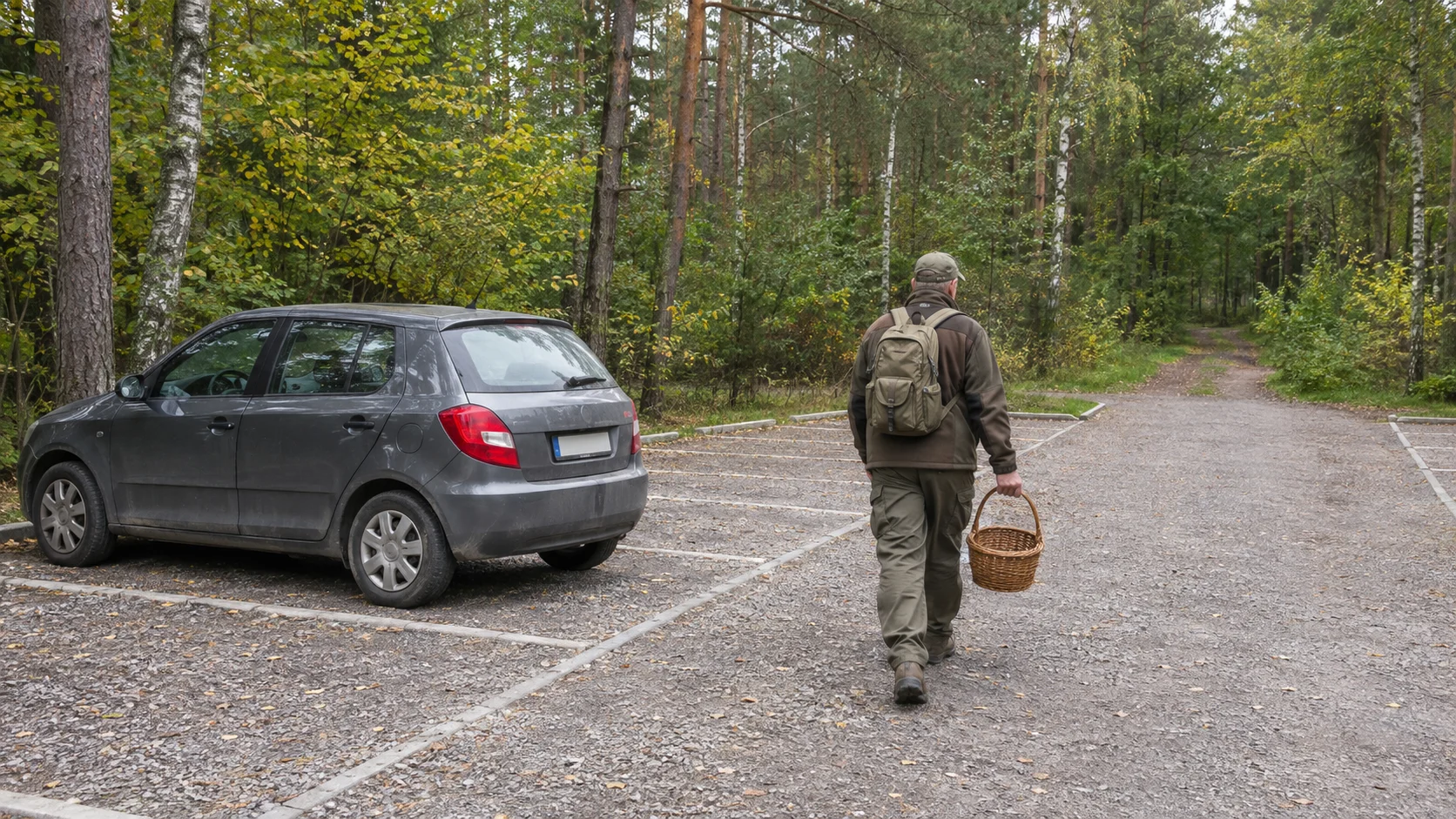
There is nothing quite like setting out at dawn with an empty basket on the passenger seat, an autumn mist hanging over the hedgerows, and the prospect of ceps, chanterelles or hedgehog mushrooms waiting under oak and beech. For many foragers, travelling by car is the only practical way to reach productive mixed woodlands and upland plantations situated well beyond rural bus routes and rail lines.
Yet arrival is often where difficulties arise. Turning off a rural road onto a gravel forestry track, it can be tempting to drive as close as possible to a promising stand or pull onto an inviting grass verge. Returning with a heavy basket only to find your vehicle blocking an active timber operation, or facing a parking penalty notice, quickly spoils a successful foray. Navigating rural parking requires understanding the distinction between public highways, operational forestry tracks and authorised visitor car parks across the UK's differing jurisdictions.
Track appearance versus legal status: why gravel does not mean vehicle access
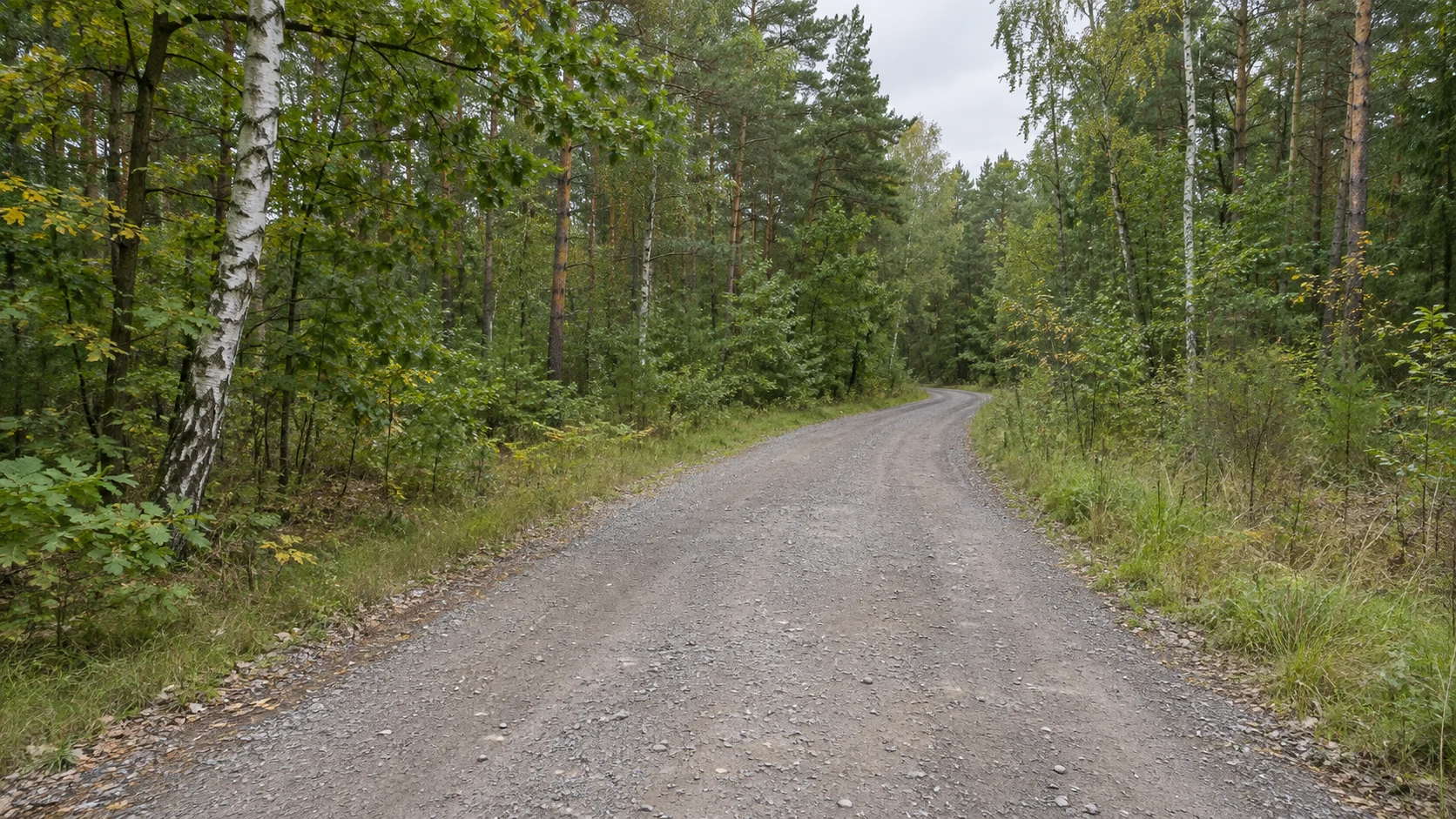
A common misunderstanding among drivers is that a track's physical surface reflects its legal status. A wide, well-compacted gravel road winding through conifers may look more robust than an adjoining country lane, but surface quality does not determine whether public motor vehicles are permitted.
In the UK, public vehicular access depends on the legal status of the route rather than how it looks. In England and Wales, public rights of way are recorded on local authority definitive maps, where only Byways Open to All Traffic (BOATs) carry public rights for motor vehicles, alongside classified and unclassified public roads. Scotland operates under a distinct outdoor access framework and core paths network, while Northern Ireland maintains its own public path legislation. Operational forestry roads across both public estates and private land are generally private access ways maintained for timber harvesting, estate management and fire prevention.
The absence of a physical gate or prohibitory sign does not grant a right to drive onto a woodland track. Unless a route is an established public highway or an explicitly designated vehicular approach to an approved car park, driving onto it without the landowner’s or managing agency's permission is unauthorised and can amount to civil trespass or a road traffic violation. If you are unsure of a route's status, consult local definitive rights-of-way maps or highway records before setting out.
England and Wales: public rights of way, access land and Forestry England car parks
Access legislation in England and Wales requires careful distinction between recreational access on foot and vehicular access on wheels.
Open-access land and rights of way
The Countryside and Rights of Way Act 2000 (CRoW) established a statutory right of public access on foot across mapped open country and registered common land, a right extended by Forestry England across its dedicated commercial estate. In Wales, Natural Resources Wales manages similar open-access provisions. Crucially, this statutory open-access right is strictly on foot; it does not permit cycling, horse riding or driving motor vehicles. Public rights of way in England and Wales fall into specific legal categories:
- Public footpaths: Pedestrian access only.
- Public bridleways: Open to walkers, horse riders and pedal cyclists, but not motor vehicles.
- Restricted byways: Permit non-motorised traffic, including walkers, cyclists and horse-drawn carriages, but exclude mechanically propelled vehicles.
- Byways Open to All Traffic (BOATs): Carry public vehicular rights, though they may be subject to local traffic regulation orders (TROs), seasonal weather restrictions and vehicle suitability requirements.
Forestry England car parks
On Forestry England's managed estate, vehicular access is centred on formal car parks and marked bays. Forestry England does not operate a single flat-rate national tariff; charges, opening times and facilities are determined on a site-specific basis. Large visitor hubs frequently utilise automated number plate recognition (ANPR) cameras or pay-and-display machines, whereas smaller rural car parks may be free or rely on voluntary donation points.
In ecologically sensitive landscapes, parking responsibilities depend on the land manager. In the New Forest, as highlighted by the New Forest National Park Authority, parking is provided by several distinct bodies, including Forestry England, district and county councils, and the National Trust. On Forestry England-managed Crown lands and Open Forest, visitors must park exclusively within designated Forestry England car parks; leaving vehicles on road verges, roadside tracks or open forest ground is prohibited to protect fragile habitats, safeguard grazing livestock and keep operational routes clear.
Country lanes, verges and forestry barriers: parking considerately
When foraging in smaller community woods, parish nature reserves or private woodlands bordering rural lanes, purpose-built off-road car parks are not always available. Drivers must then carefully evaluate whether stopping on the highway network is lawful and safe.
The Highway Code and Countryside Code on rural roads
Parking along country lanes is governed by statutory road traffic requirements alongside the behavioural guidance of The Countryside Code:
- Keep gates, passing places and farm tracks clear: The Countryside Code advises visitors never to block gateways, driveways or access routes needed by agricultural vehicles, forestry workers or emergency services. On single-track roads, passing places must be kept completely clear to allow oncoming traffic to pass.
- Observe road markings and statutory restrictions: Under Rule 240 of The Highway Code, motorists must not stop or park on roads marked with double white lines in the centre, even where one line is broken, except in narrow circumstances such as picking up or setting down passengers. Furthermore, Rule 242 prohibits leaving a vehicle in a position that causes unnecessary obstruction or danger to other road users.
- Protect soft verges: Parking on unpaved verges, particularly during wet autumn conditions, can tear up roadside drainage, damage ground flora and fungal mycelium, and leave your vehicle stuck. Local councils and highway authorities may also impose specific roadside waiting restrictions where verge parking compromises road safety or road structure.
Respecting forestry barriers and gates
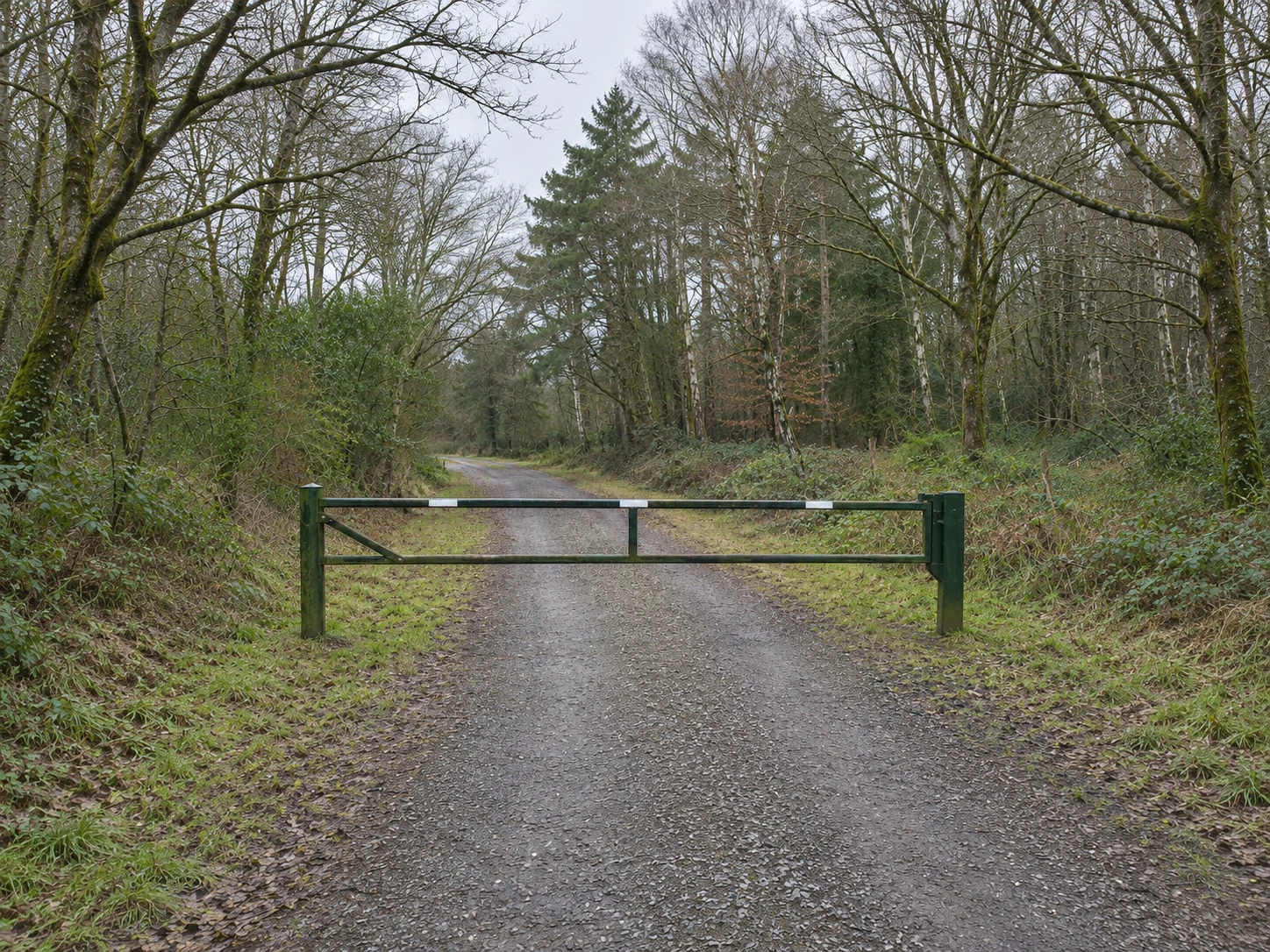
Forestry barriers, whether metal gates or heavy timber beams, secure operational working areas. You should never park immediately in front of or alongside a barrier, even if it is padlocked. Forestry teams, contractors and emergency services require 24-hour access. An obstructed barrier can prevent fire appliances from reaching a woodland fire or trap timber lorries carrying heavy loads, making vehicles that cause an obstruction liable to enforcement action or lawful removal under applicable traffic orders or landowner authority.
Planning your arrival: digital tools, cashless parking and mobile reception
Careful advance planning helps avoid parking penalty notices, wasted driving and navigation problems in unfamiliar rural districts.
Consulting official forest maps in advance
Before travelling, consult official destination finders provided by public forest managers. Forestry England and Forestry and Land Scotland maintain searchable online maps showing car parks, barrier opening hours, charging arrangements and current trail closures. Checking your chosen destination in advance confirms what facilities exist before you set out.
Understanding payment apps and post-visit terms
Many forest car parks now rely on cashless parking systems such as RingGo. Because mobile network signals can be variable beneath dense tree cover and in steep valleys, paying on arrival via a smartphone app is not always possible on the spot. Fortunately, several major operators provide defined windows for post-visit payment, provided you note the location code displayed on on-site signage:
- Forestry England (New Forest): Visitors using the RingGo app or website have until midnight on the day following their visit to pay, while payments by phone line must be completed by midnight on the day of parking.
- Forestry and Land Scotland (FLS): Where RingGo is in operation across Scottish forest car parks, visitors are permitted to pay via the app or website up to 72 hours after leaving.
Because payment methods and deadlines depend strictly on the individual site operator and chosen payment channel, always check the on-site information board upon arrival.
Supplementary navigation and offline maps
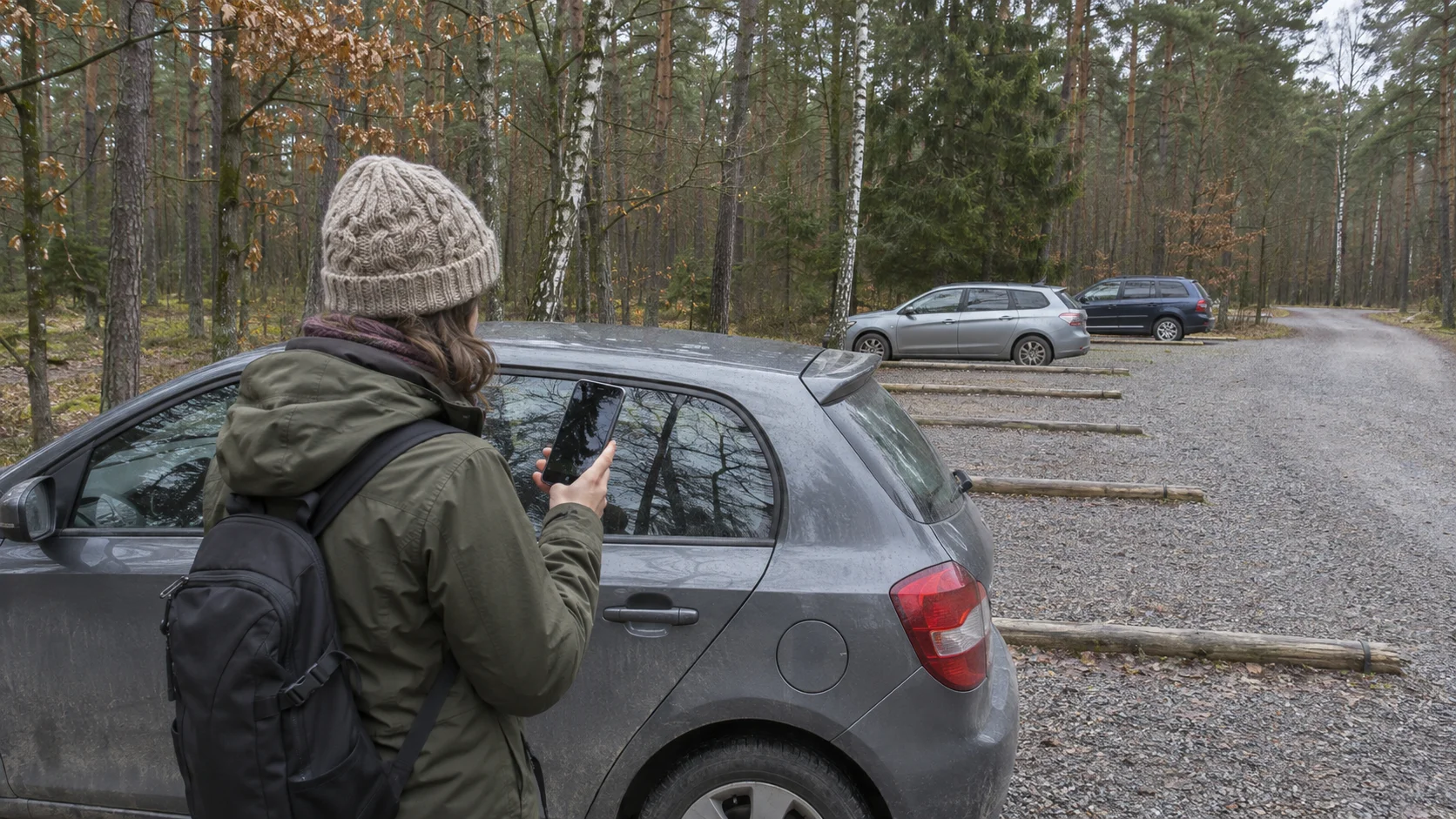
Before leaving your vehicle, it is practical to download offline mapping data for the area. Dropping a GPS pin on your smartphone can serve as a helpful supplementary reference when returning from a foray, though you should remember that heavy tree canopy can reduce GPS accuracy. Keep track of prominent physical landmarks, forest rides and waymarked paths to ensure you can navigate back reliably without relying solely on mobile data.
Scotland and Northern Ireland: statutory outdoor access and Forest Service rules
When foraging outside England and Wales, distinct statutory frameworks govern access to rural land.
Scotland's outdoor access framework
Under the Land Reform (Scotland) Act 2003 and the Scottish Outdoor Access Code, the public enjoys comprehensive statutory access rights to most land and inland water when exercised responsibly. However, this statutory right of access is explicitly non-motorised: it applies to walking, cycling, horse riding and canoeing, but grants no right to drive motor vehicles onto forest roads, private tracks or open land.
Forestry and Land Scotland (FLS) manages the Scottish national forest estate and directs visitors to designated car parks. FLS levies parking charges at various popular recreational sites to support trail maintenance and visitor facilities. Motorists must adhere to local parking notices, keep access roads and timber yards clear, and note that overnight vehicle parking is restricted except at locations participating in authorised vehicle stay schemes.
Northern Ireland Forest Service regulations
In Northern Ireland, public forests are managed by the Forest Service, an agency of the Department of Agriculture, Environment and Rural Affairs (DAERA). Visitor access is governed by Forest Service recreational rules:
- Vehicle circulation: Motor vehicles and bicycles must keep to designated roads and formal car parks, obey speed limits and posted directional signs, and stay out of operational forestry zones.
- Permits and site access: Forest Service operates an annual vehicle parking permit scheme, including a shared pass covering a specified group of forests: Glenariff, Portglenone, Tollymore and Drum Manor. At visitor destinations such as Glenariff Forest Park, vehicle entry charges apply, public car-park gates are locked overnight, and a separate locked PIN barrier controls access to the pre-booked touring-vehicle site.
Local restrictions in protected areas
Across all four nations, woodlands situated within National Parks, National Nature Reserves (NNRs) and Sites of Special Scientific Interest (SSSIs) often carry localised protective bylaws or traffic regulation orders. Rather than assuming that broad verges or informal lay-bys permit roadside parking, always heed local highway signage, conservation notices and dedicated car-park designations established by the responsible managing authority.
Essential etiquette checklist for the motoring mushroom hunter
- Target official car parks: Identify an approved forest car park using official agency maps before travelling rather than driving down unverified forestry tracks.
- Never obstruct access: Keep forestry barriers, field gates, bridge approaches and rural passing places completely clear for agricultural, timber and emergency vehicles.
- Respect regional access boundaries: Remember that statutory access rights across England, Wales and Scotland apply to non-motorised recreation (on foot under CRoW in England and Wales; non-motorised in Scotland) and never convey a right to drive a motor vehicle on private land.
- Observe Highway Code parking rules: Do not stop on roads marked with double white lines in the centre, avoid creating a hazard or obstruction, and keep tyres off delicate roadside verges.
- Check site payment conditions: Look for on-site payment codes and verify whether your chosen location permits post-visit online or app payment if mobile reception is unavailable on arrival.
- Equip yourself with offline landmarks: Save an offline map and note key physical landscape features alongside a digital pin to navigate back to your car safely.
Sources
- GOV.UK - Rights of way and accessing land
- GOV.UK - Use public rights of way
- GOV.UK - Open access land: management, rights and responsibilities
- Forestry England - Parking Code of Practice 2026
- Forestry England - Car parks and parking information
- Forestry England - Parking in the New Forest
- Forestry England - New Forest parking information
- New Forest National Park Authority - Car parking in the New Forest
- New Forest National Park Authority - Protecting road verges
- Natural Resources Wales - Open access land
- GOV.UK - The Countryside Code: advice for countryside visitors
- GOV.UK - The Highway Code: waiting and parking (rules 238 to 252)
- Scottish Government - Public access to land
- Forestry and Land Scotland - Car parking
- nidirect - Stay safe and be responsible in public forests
- nidirect - Permits for vehicles and activities in forests
- nidirect - Glenariff Forest Park