Edible
Set your location to see data for your region.


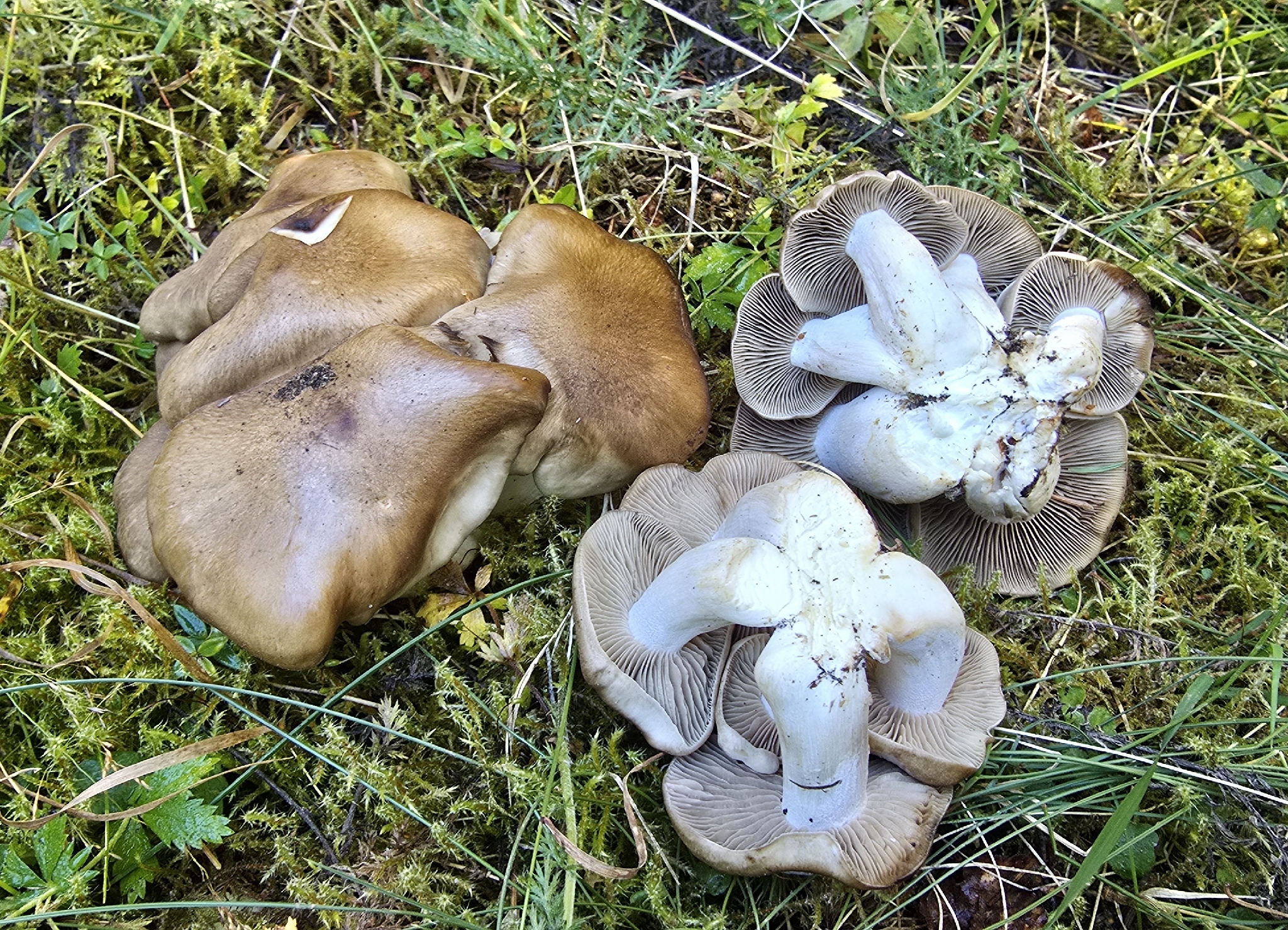
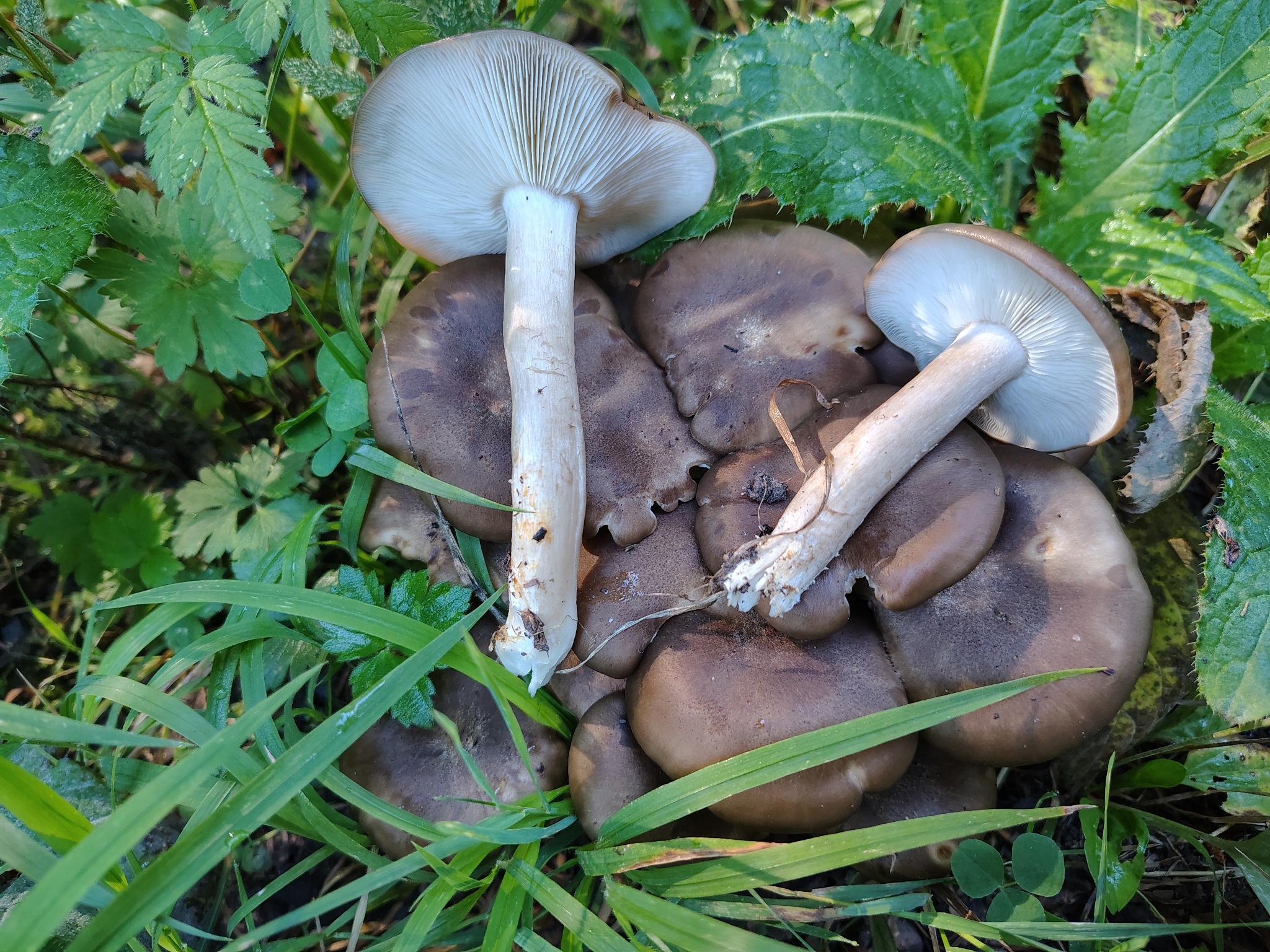
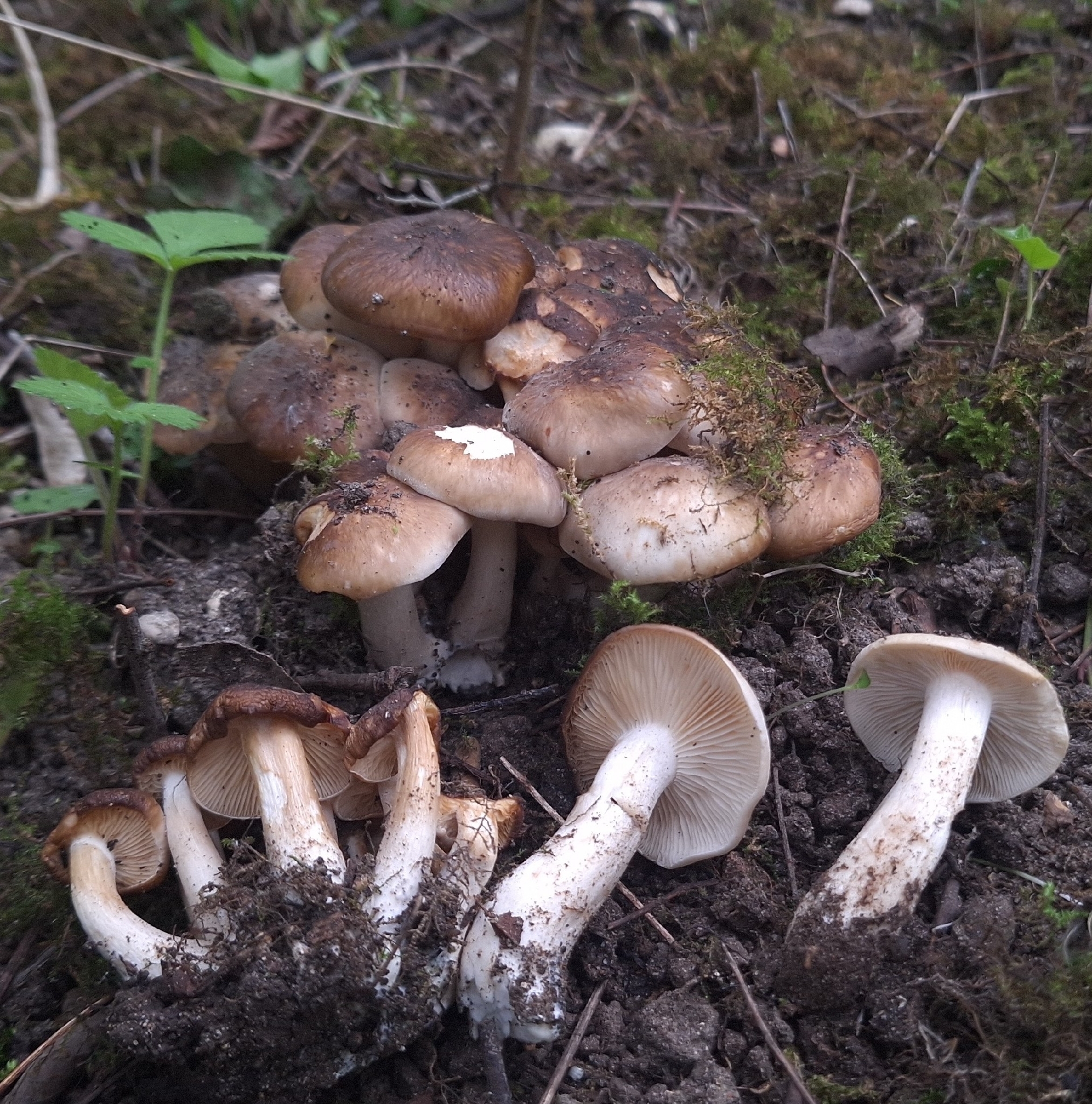
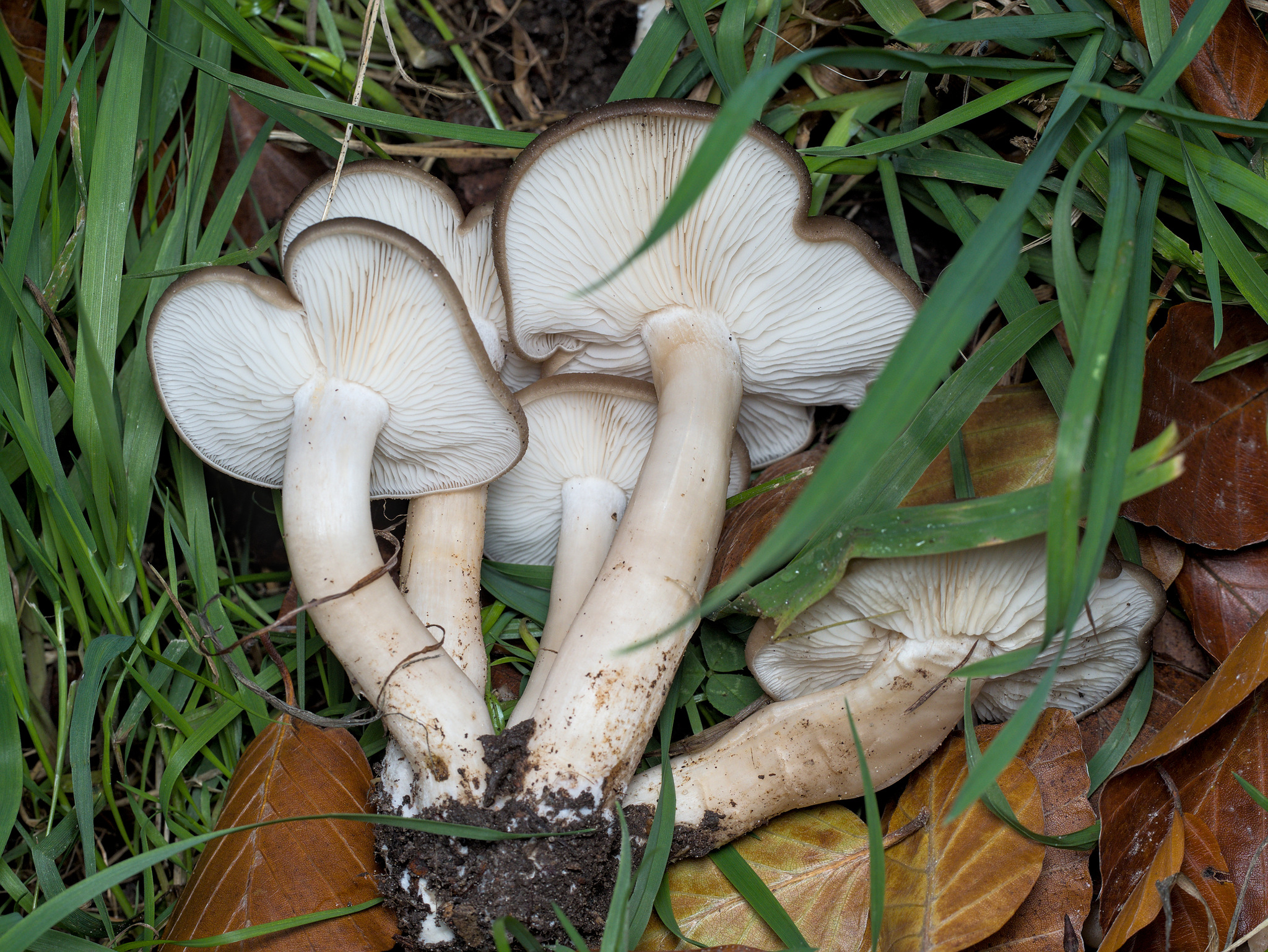
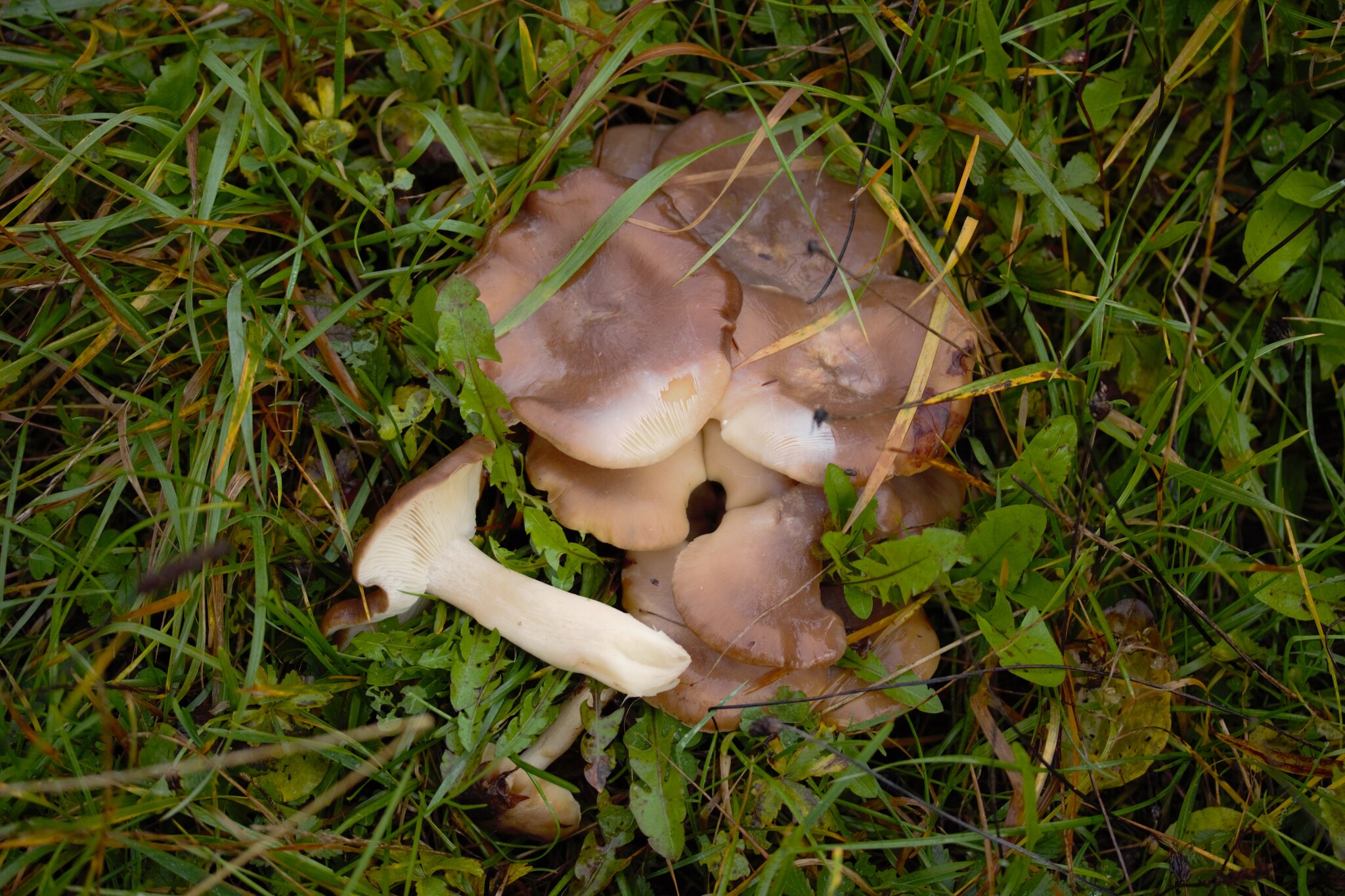
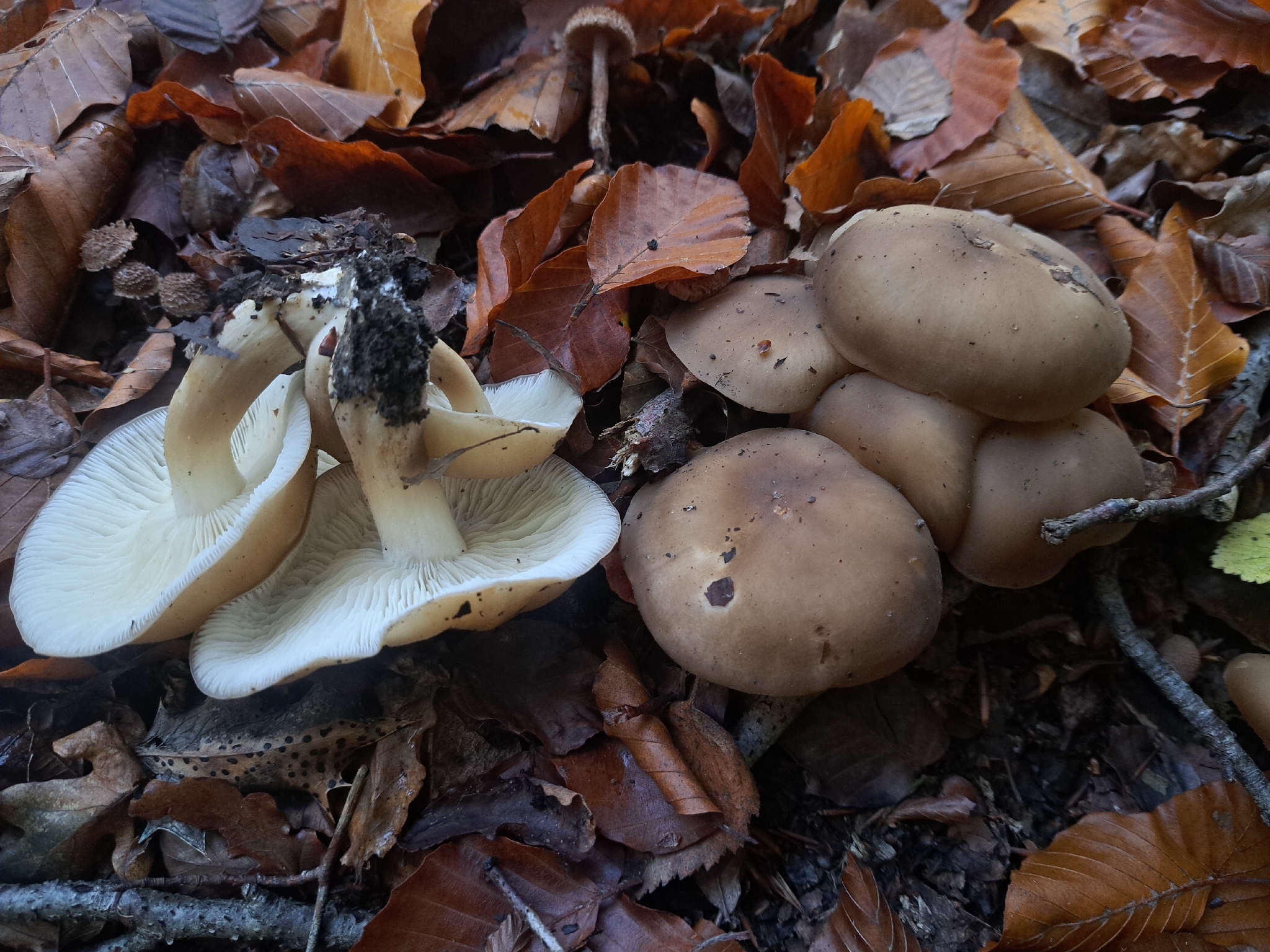
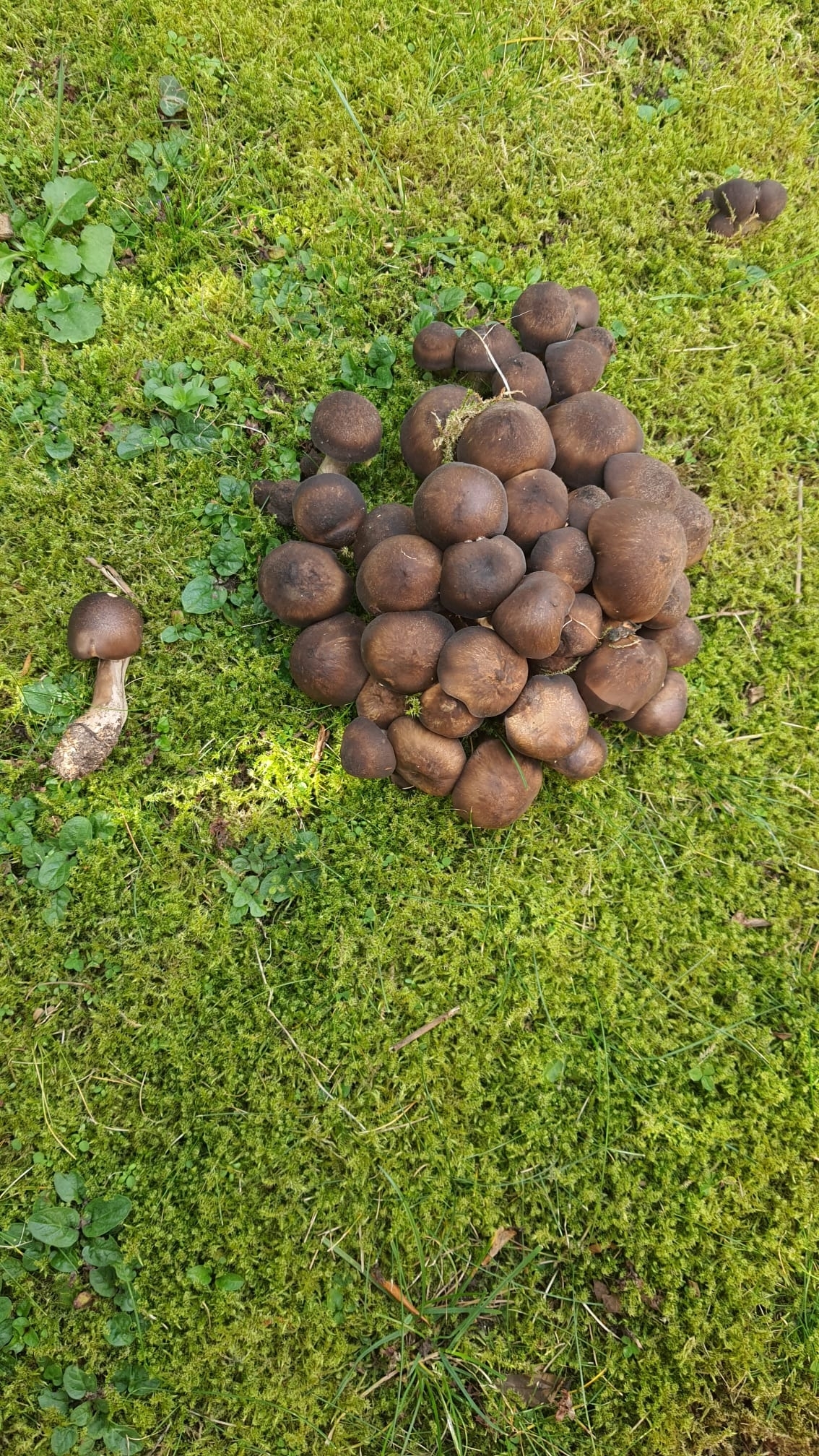
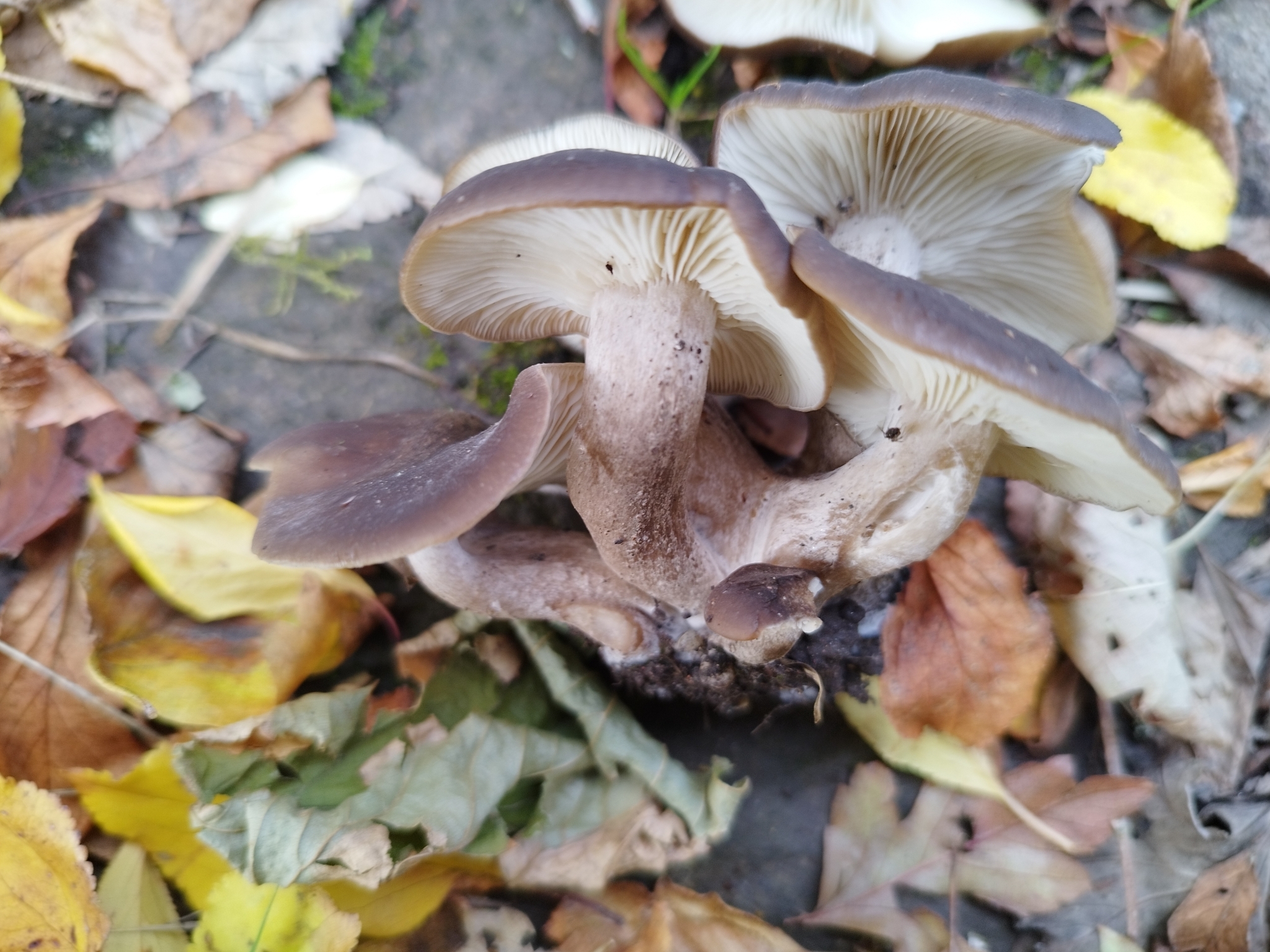
Lyophyllum decastes, commonly known as the fried chicken mushroom, is an edible basidiomycete that grows in dense, fused clusters. It features convex to flattened, brownish-grey or hazel caps, crowded whitish gills, and firm, cartilaginous stems that fuse together at the base. Saprotrophic and widely distributed across the Northern Hemisphere, it appears in late summer and autumn on disturbed soil, roadsides, woodchip mulch, open meadows, and woodland edges.
Identification, habitat, and key differences.
Forager
Fruitbody structure
- Fruit body form
- Fruit body form: Cap, stipe.
Cap
- Cap shape
- Cap shape: hemispherical.
Cap shape: convex.
Cap shape: flat.
Cap shape: flat or depressed.
in young fruit bodies: Cap shape: flattened. - Cap surface
- Cap surface: shiny.
Cap surface: dry. - Cap surface relief
- Cap surface relief: smooth.
in old fruit bodies: Cap surface relief: folded. - Cap covering
- Cap covering: powdery.
- Cap colour
- Cap colour: light brown.
Cap colour: brown.
Cap colour: gray.
Cap colour: grey-brown.
Cap colour: ochre brown. - Margin orientation
- in young fruit bodies: Margin orientation: inrolled.
- Cap margin profile
- Cap margin profile: acute.
in old fruit bodies: Cap margin profile: acute. - Cap diameter
- The cap measures 30–150 mm in diameter.
- Cap centre
- Cap centre: with a distinct umbo.
- Peelability of the cap cuticle
- when wet: Peelability of the cap cuticle: partially peelable.
Cap underside
- Hymenophore type
- Hymenophore type: gills.
Gills at stipe
- Hymenophore attachment to the stipe
- Hymenophore attachment to the stipe: attached to the stipe (gills).
- Attachment width of the hymenophore
- Attachment width of the hymenophore: broadly attached (gills).
- Decurrence of the hymenophore on the stem
- Decurrence of the hymenophore on the stem: decurrent with a tooth (gills).
- Hymenophore colour
- Hymenophore colour: white.
Hymenophore colour: brownish.
Hymenophore colour: cream.
Hymenophore colour: grey.
Hymenophore colour: grey-brown.
Hymenophore colour: whitish. - Color of gills after injury
- Color of gills after injury: no colour change (gills).
- Macroscopic structure of the free gill edge
- Macroscopic structure of the free gill edge: crenate.
- Variation in gill length
- Variation in gill length: unequal.
- Gill spacing
- Gill spacing: crowded.
- Gill depth
- Gill depth: up to 10 mm.
- Presence of short gills
- Presence of short gills: present.
Stem and base
- Stipe position
- Stipe position: central.
- Stipe shape
- Stipe shape: cylindrical.
in young fruit bodies: Stipe shape: club-shaped. - Stipe base
- Stipe base: cylindrical.
Stipe base: swollen.
in young fruit bodies: Stipe base: club-shaped. - Stipe colour
- in young fruit bodies: Stipe colour: whitish.
in mature fruit bodies: Stipe colour: grayish.
Stipe colour: whitish or brownish.
Stipe colour: grayish. - Stipe surface relief
- Stipe surface relief: smooth.
- Stipe surface covering
- Stipe surface covering: fibrillose.
in young fruit bodies: Stipe surface covering: powdery.
in mature fruit bodies: Stipe surface covering: glabrous or fibrillose. - Stipe interior
- Stipe interior: solid.
- Stipe consistency
- Stipe consistency: fibrous.
- Stipe length
- Stipe length: 45–200 mm.
- Stipe diameter
- Stipe diameter: 8–20 mm.
- Stipe curvature
- Stipe curvature: curved.
Flesh
- Flesh colour
- Flesh colour: white.
Flesh colour: whitish. - Flesh firmness
- Flesh firmness: firm.
- Flesh taste
- Flesh taste: weak.
- Flesh elasticity
- Flesh elasticity: elastic.
Flesh elasticity: elastic (cap flesh). - Flesh consistency type
- Flesh consistency type: Rubbery (cap flesh).
- Flesh odour
- Flesh odour: mealy.
Flesh odour: pleasant.
Flesh odour: unpleasant.
Flesh odour: not distinctive.
Flesh odour: weak.
Flesh odour: absent. - Flesh thickness class
- Flesh thickness class: thin.
Where and when it grows
- Habitat
- Habitat: deciduous woodland, coniferous woodland, roadside, park or garden.
Habitat: deciduous woodland, roadside or garden.
Habitat: deciduous woodland.
Habitat: deciduous woodland, mixed woodland, roadside, park or meadow. - Substrate
- Substrate: soil.
Substrate: buried wood or litter.
Substrate: buried wood. - Fruit body growth pattern
- Fruit body growth pattern: fused fruit bodies.
Fruit body growth pattern: in clusters, in rows, in rings or solitary.
Fruit body growth pattern: in groups.
Fruit body growth pattern: solitary. - Fruiting season
- Fruit bodies appear from September to November.
- Distribution area
- Distribution area: confirmed.
Edibility and culinary use
- Edibility
- Edible
Law
- Protection
- It is not subject to species protection in Poland.
- Trade
- It is approved in Poland for neither trade nor the production of mushroom products.
Possible confusions
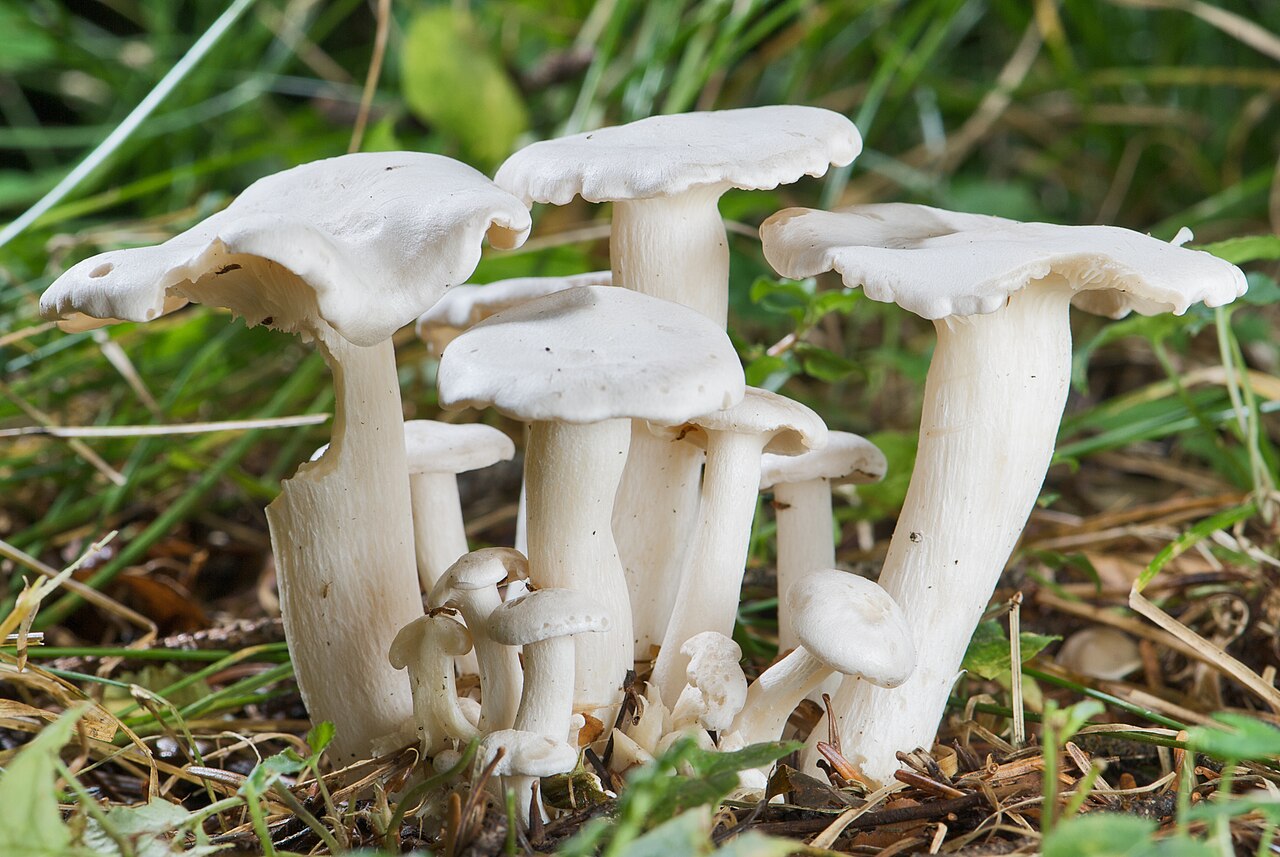
Bernie · Public domain
Wersja 1280 px przygotowana przez Wikimedia Commons; bez dodatkowych lokalnych zmian. Domena publiczna zadeklarowana na stronie pliku Commons; metadane nie podają osobnego adresu licencji.
Photo source · Public domainLyophyllum connatum
Key differences
Lyophyllum connatum (kępkowiec białawy) differs from L. decastes in the pure white or chalky white coloration of the entire fruit body and ellipsoidal spores measuring 6–7 × 3,5–4 µm.
Clitocybe nebularis
Key differences
Clitocybe nebularis (clouded agaric) is sometimes cited as a species with a superficially similar appearance, but differs in having soft, brittle flesh, a different arrangement and color of the gills, a distinct odor, a grayish cap tint, and usually solitary or scattered growth.
FAQ
Can Lyophyllum decastes be consumed raw?
No, it must be thoroughly cooked, as raw specimens cause gastrointestinal upset.
Why is it called the fried chicken mushroom?
The name stems from its firm, cartilaginous texture, reminiscent of cooked chicken meat.
What growth habit is characteristic of this species?
It grows in dense, fused clusters (caespitose) sharing a single connected base.
Where does this mushroom typically grow?
It grows on disturbed soils, trail edges, woodchip mulch, roadsides, and meadows.
What is its traditional Japanese name?
In Japan, it is traditionally known as hatake-shimeji (field shimeji).
Is it a mycorrhizal or saprotrophic species?
It is predominantly saprotrophic, decomposing organic matter and buried wood debris.
What season does Lyophyllum decastes fruit in?
It fruits primarily from late summer through late autumn, from August to November.
Does the flesh become soggy after long cooking?
No, its cartilaginous flesh retains a distinctively firm, elastic texture.
Can it be used for dyeing natural textiles?
Yes, when combined with mordants, it produces tan, buff, and earthy brown shades on wool.
Why should roadside specimens be avoided?
Roadside specimens may absorb vehicular pollution, heavy metals, and street runoff.
Enthusiast
Names and history
- Obowiązująca nazwa krajowa
- Kępkowiec jasnobrązowy
- Obowiązująca nazwa taksonomiczna
- Lyophyllum decastes
Home observations
Spore print
- Required materials
- fresh, mature cap, sheet of paper, glass or small bowl, water
- Time
- 2–24 h
- Procedure
- Place the cap underside down on the paper.
- Add a drop of water on top and cover.
- After 2–24 hours, lift the cap and inspect the deposit.
What to look for
- Spore print colour
- Spore print colour: white.
Under the microscope
- Required materials
- light microscope, microscope slide and cover slip, needle, water, spores from print
- Procedure
- Transfer a small amount of the spore print onto the slide using a needle.
- Add a drop of water, cover with a cover slip, and examine the spores.
What to look for
- Spore shape
- Spore shape: globose (nearly). Spore shape: globose (nearly).
- Spore surface
- Spore surface: smooth. Spore surface: smooth.
- Spore dimensions
- Length 5.5–7.1 µm, width 4.4–6.5 µm.
- Spore dimensions
- Length 6.5 µm, width 5.1 µm.
Compare dimensions after calibrating the microscope scale.
Ecology and distribution
- Broadleaf trees in the vicinity
- Broadleaf trees in the vicinity: beech, oak or birch.
Broadleaf trees in the vicinity: beech.
Broadleaf trees in the vicinity: Acer negundo. - Coniferous trees in the vicinity
- Coniferous trees in the vicinity: pine or fir.
Coniferous trees in the vicinity: pine. - Shrubs in the vicinity
- Shrubs in the vicinity: Sambucus nigra.
Non-culinary uses
Outside culinary practices, Lyophyllum decastes has established non-culinary applications in practical craft dyeing, soil enrichment crafts, and traditional agricultural practices. In natural dye studios, the caps and stems are brewed into dye baths for treating natural animal fibers like sheep wool and mohair. When paired with standard metal mordants such as alum, copper, or iron, the extracted liquors produce soft, earthy hues ranging from warm putty, wheat-tan, and buff to subdued greyish-brown and muted bronze, providing steady earth tones for traditional textile weaving.
In Japanese rural horticulture and natural gardening traditions, the fibrous residual clusters and post-harvest fungal mycelium have historically been incorporated into spent compost piles and organic mulch blends to enhance soil tilth and promote beneficial soil aggregation in disturbed garden plots. In educational mycology demonstrations, the fused caespitose growth form serves as a classic tactile specimen for teaching fungal cluster morphology and structural adaptations. In historic countryside craft traditions, tough dried stems were sometimes bound together as rustic brush bristles for gentle surface cleaning in rural workshops.
History and culture
Lyophyllum decastes holds a storied cultural history in East Asian folklore and European rural foraging traditions. In Japan, the mushroom is known traditionally as 'hatake-shimeji' (meaning field shimeji) and has been celebrated for centuries in local folk literature and seasonal haiku. Japanese culture long regarded mushrooms of the shimeji group as benchmarks of umami and structural perfection, giving rise to the well-known classical proverb 'matsutake for aroma, shimeji for taste'—a saying in which Lyophyllum species historically featured prominently as symbols of humble countryside wealth.
In North American and British rural lore, the species earned the whimsical common name 'fried chicken mushroom' due to the remarkable culinary perception that its firm, fibrous, and elastic flesh mimics the chew of poultry. In various European pastoral communities, large clustered rings or clumps of the fungus appearing along field tracks and village commons were occasionally linked to seasonal weather superstitions, with sudden mass appearances viewed as a sign of an imminent severe frost. Unlike solitary woodland agarics, its clustered growth habit made it a traditional symbol of communal solidarity and domestic abundance in rural folklore.
Edibility and safety
Lyophyllum decastes is a favored edible mushroom celebrated for its remarkably firm, elastic texture and mild, pleasant, savory flavor. Raw consumption is unsafe and must be strictly avoided; uncooked tissues contain substances that can cause substantial digestive irritation, nausea, and abdominal distress. Thorough cooking with adequate heat is mandatory to soften its unusually tough, cartilaginous fungal fibers and ensure safe, uncomplicated digestion.
Proper consumption requires careful cleaning of the fused basal clump, which often traps sand, gravel, and garden soil. In Japan, where it is known as 'hatake-shimeji', it is held in high gastronomic regard and widely commercialized as an elite wild vegetable. Across Central and Eastern Europe, it is actively collected and valued for keeping its crisp, firm bite throughout long simmering processes. When thoroughly cooked, it is safe and free of toxic compounds; any reported gastric sensitivities typically stem from undercooking, excessive consumption, or gathering from areas exposed to roadside chemical contaminants.
Habitat and occurrence
Lyophyllum decastes is a widespread mushroom occurring across temperate regions of Europe, North America, and Asia. It behaves primarily as a saprotrophic species, breaking down buried organic matter, wood fragments, and rich soil humus. Typical habitats include disturbed grounds, forest margins, trail borders, grassy woodland clearings, parks, gardens, compost heaps, and landscaped beds containing decomposed wood chips. While it frequently fruits near broadleaf trees such as oak, ash, and beech, it does not depend exclusively on specific mycorrhizal partners.
The fruiting season extends from late summer through late autumn, typically spanning from August to November across Central and Western Europe and northern North America. In mild Mediterranean and maritime climates, clusters may continue appearing well into December or January. Fruiting usually occurs in massive caespitose clumps containing dozens of joined specimens arising from a single compacted base. Regional fluctuations depend heavily on soil moisture, with dense flushes often appearing one to two weeks following heavy autumn rainfall on compacted gravel roadsides and edge habitats.
Sources
- Bocian 2017 — nowe stanowisko Lyophyllum decastes
- ČMS — Lyophyllum decastes
- Ellen Larsson, Henrik Sundberg 2011. Lyophyllum shimeji, a species associated with lichen pine forest in northern Fennoscandia. Mycoscience 52:289–295. DOI 10.1007/s10267-010-0104-1
- Marek Snowarski, Atlas grzybów Polski, Lyophyllum decastes; karta zmieniona 17.01.2023, strona wygenerowana 01.09.2026
Researcher
Edibility and culinary use
Ustalenia źródłowe: jadalność, spożycie i wykorzystanie
- Edibility
- Edible — źródło oznaczenia
ČMS — Lyophyllum decastes · Culinary use: Edible — source author assessment; not a legal trade permission.
Scientific names and taxonomy
- Current scientific name
Lyophyllum decastes
Scientific names and taxonomy
The scientific name of the species is Lyophyllum decastes (Fr.) Singer, belonging to the family Lyophyllaceae. The NCBI database records the basionym Agaricus decastes Fr. 1818 and the date of Singer's combination from 1949, whereas ČMS sources cite the year 1951. The official Polish atlas name is kępkowiec jasnobrązowy, and the vernacular term podblaszek gromadny functioned in older literature.
Scientific names and taxonomy
Numerous historical names and combinations have been recorded in mycological literature: Agaricus aggregatus Schaeff. 1774, Agaricus decastes Fr. 1818, Agaricus decastes var. decastes Fr. 1818, Clitocybe aggregata (Schaeff.) Gillet 1874, Clitocybe decastes (Fr.) P. Kumm. 1871, Lyophyllum aggregatum (Schaeff.) Kühner 1938, and Tricholoma aggregatum (Schaeff.) Ricken 1915. These compilations include both concepts based on the epithet decastes and names with the epithet aggregatum. In the MycoBank and GBIF databases, taxonomic relationships with respect to Lyophyllum fumosum are treated differently.
Taxon scope and identification limitations
The name Lyophyllum decastes is sometimes applied both to the narrowly defined species and to a broader complex of related Lyophyllum species. ITS and LSU sequence analyses conducted by Larsson and Sundberg in 2011 delineated four clades: L. decastes, L. fumosum, L. shimeji, and an unnamed Lyophyllum sp. Some collections from lichen pine forests of northern Fennoscandia, previously identified as L. decastes, turned out to belong to L. shimeji, while the examined commercial strain clustered in a distinct Lyophyllum sp. clade. Identification based on macroscopic features and commercial names differs in scope from genetic identification.
Taxon scope and identification limitations
Phylogenetic studies of section Difformia of the genus Lyophyllum conducted in 2011 included sequencing of the complete ITS region and approximately 900 bp of the 5′ LSU region for 47 taxa (including Lepista nebularis as an outgroup). In a matrix of 1758 positions (1573 after excluding ambiguous positions), 162 parsimony-informative characters were identified. The analysis yielded 24 725 trees of length 463 steps (CI = 0,7387, RI = 0,8762; deposited in TreeBASE under accession no. 10823). Bootstrap support values were 100% for the L. decastes clade, 95% for L. shimeji, 59% for L. fumosum, and 100% for Lyophyllum sp. Within the L. decastes clade, two subclades (European and Japanese) were distinguished with 89% support.
- Zakres ujęcia taksonomicznego
Katalogowy wpis Lyophyllum decastes (Fr.) Singer zgodny z dokładnym zaakceptowanym dopasowaniem GBIF i polskim atlasem. Zachowano granice materiału publikacji i kolekcji. Szersza grupa opisana przez Kuo i historyczny kompleks L.decastes/L.fumosum/L.loricatum nie stanowią niezależnego dowodu cechy ściśle wydzielonej linii; historyczne nazwy i materiały pozostają przy źródłach.
[9] [34]
Source documentation
Source findings: The atlas gives the combination Lyophyllum decastes (Fr.) Singer 1951, the family Lyophyllaceae, and the synonyms Agaricus decastes Fr. 1818 and Lyophyllum aggregatum (Schaeff.) Kühner 1938. In the confusion section, it states that according to cited information, L. fumosum has fused stipe bases, somewhat smaller fruitbodies, and a musty odor; at the same time, it notes that both names may designate a single species. The source thus remains undecided and does not establish synonymy.
Source documentation
Source findings: The Polish atlas gives the name Lyophyllum decastes (Fr.) Singer, kępkowiec jasnobrązowy, podblaszek gromadny, and the family Lyophyllaceae. In a note, it lists L. aggregatum as an associated name and reports a discrepancy between registries: checklists and MycoBank allegedly separate L. fumosum, while GBIF treats them as a synonym of L. decastes; the registries were not re-verified. For L. loricatum, the author indicates a compact cap cuticle crunching upon breaking.
Source documentation
Source findings: Kuo explicitly notes that he does not know how many species are hidden under the name Lyophyllum decastes, and deliberately treats the description as a group of potential species. He writes that field characteristics, such as cap color, do not necessarily indicate genetic boundaries, after which he provides a key to four taxa in the group. The content of this card is therefore not evidence for the narrow European L. decastes sensu stricto, nor is it a resolution of the taxon's boundaries.
Source documentation
Source findings: Reinhard Agerer's bibliography includes the 1998 paper by Agerer and Beenken "Lyophyllum decastes (Fr.) Sing. + Quercus robur L.", Descriptions of Ectomycorrhizae 3:43–47. This is evidence of the existence and title of the publication. The preserved entry does not contain its anatomical description, root measurements, or identification protocol; no such results were attributed to it.
Source documentation
Source findings: The note from the full page readout records the German names Brauner Rasling, Büschelrasling, Geselliger Rasling, and Ockerbrauner Büschelrasling. Arnold reports ellipsoidal spores 6–7 × 3–4 µm, which differs from the subglobose dimensions in the Polish atlas, the ČMS atlas, and Kuo. The preserved record does not provide measurement counts or methodology. The discrepancy should be left explicitly as conflicting source descriptions; it does not in itself indicate which measurement is erroneous.
Source documentation
Source findings: The ČMS note records Lyophyllum decastes (Fr.) Singer 1951 and the Czech name líha nahloučená along with the atlas's list of synonyms. It notes a discrepancy in the year of the combination: 1951 in the atlas versus 1949 in NCBI. The card states that L. fumosum causes problematic confusion and that available information may indicate a single species under both names, but it does not resolve this issue. This is preserved source uncertainty, not a new nomenclatural decision.
Source documentation
Source findings: Larsson and Sundberg (2011) resolved the Lyophyllum complex based on ITS and approximately 900 base pairs of 5′ LSU. The clade labeled L. decastes had bootstrap support of 100%, and subclades of deciduous material from Sweden and Norway and coniferous material from Japan had 89% each. One commercial strain sold as L. decastes was placed in a separate Lyophyllum sp. The ecology of L. shimeji was not assigned to L. decastes; the authors did not resolve all name boundaries, including L. loricatum.
Source documentation
Source findings: The educational card of Claude Bernard University Lyon 1 applies the French names Tricholome agrégé and Tricholome en touffes to Lyophyllum decastes. These are common names provided by this source, without any new decision on scientific synonymy or the identity of distinct lineages of the complex.
Source documentation
Source findings: The preserved NCBI reading reports Lyophyllum decastes (Fr.) Singer 1949, the basionym Agaricus decastes Fr. 1818, the family Lyophyllaceae, and the English common name fried chicken mushroom. NCBI caveats that it is not a nomenclatural authority. The note does not include an independent reading of Index Fungorum, MycoBank, or the protologue of the combination, so the discrepancy between 1949 and 1951 in the ČMS atlas remains unresolved.
Laboratory diagnostics
Dane ustrukturyzowane
Basidia
Spores
Material and research methods
Microscopic data — source and limitations
Material: Spores of collection GRej 362388, collected on 5 October 2022 in the vicinity of Krzynki; source declares an exsiccatum.
Reading scope: Full text.
Limitations: The preserved document is a Chrome reading of the full card, not the original HTML. The source does not report the number of measurements or the medium. The mean 1,3 is stated directly in the source; it was not calculated from the range limits and is not a range of collection means.
- Results as recorded in the sources — Spore length
- 5,8–7,1 µm [10]
5,5–7 µm [10]
Materiał badania: Okaz zgłoszenia GRej 362388, 5.10.2022, okolice Krzynek, zachodniopomorskie; eksykat zadeklarowany. Średnia długość zarodnika w badanym materiale wynosi 6,5 mikrometra. [10] - Results as recorded in the sources — Spore width
- Materiał badania: Okaz zgłoszenia GRej 362388, 5.10.2022, okolice Krzynek, zachodniopomorskie; eksykat zadeklarowany. Średnia szerokość zarodnika w badanym materiale wynosi 5,1 mikrometra. [10]
5–6,5 µm [10]
4,4–5,7 µm [10]
Metody i zapisy źródłowe — Owocniki zebrane 23.12.2015 przy Mirosławcu i Gniewoszu; eksykaty w prywatnym zielniku autora.
Metoda źródłowa. Technika: mikroskopia świetlna (LM). Opis metody w źródle: Mikroskop OLYMPUS BX53; ponowne uwodnienie wcześniej zasuszonych okazów. Środek rehydratacji nie został podany.
Liczba sterygm jednej podstawki — zapis źródłowy: „Podstawki z 4sterygmami.” [4]
Długość podstawki; Szerokość podstawki — zapis źródłowy: „Własne wyniki autora s.33: podstawki 35–45 × 8–10 µm,4sterygmy.” [4]
Kształt podstawki — zapis źródłowy: „Podstawki opisane jako maczugowate.” [4]
Średnica zarodnika — zapis źródłowy: „Zarodniki prawie kuliste; źródłowa średnica 5–7 µm.” [4]
Kształt zarodnika — zapis źródłowy: „Zarodniki opisane jako prawie kuliste.” [4]
Powierzchnia zarodnika — zapis źródłowy: „Powierzchnia zarodników opisana jako gładka.” [4]
Metody i zapisy źródłowe — Okaz zgłoszenia GRej 362388, 5.10.2022, okolice Krzynek, zachodniopomorskie; eksykat zadeklarowany.
Długość zarodnika — zapis źródłowy: „GRej 362388: pierwsza oś 5,8–7,1 µm; druga 4,4–5,7 µm.” [10]
Długość zarodnika — zapis źródłowy: „GRej 362388: podana średnia długości zarodnika: 6,5 µm.” [10]
Iloraz długości i szerokości zarodnika — zapis źródłowy: „GRej 362388: Q 1,1–1,5; źródłowa średnia 1,3.” [10]
Szerokość zarodnika — zapis źródłowy: „GRej 362388: druga oś 4,4–5,7 µm; pierwsza 5,8–7,1 µm.” [10]
Szerokość zarodnika — zapis źródłowy: „GRej 362388: podana średnia szerokości zarodnika: 5,1 µm.” [10]
Metody i zapisy źródłowe — Ogólny opis mikroskopowy w Atlasie grzybów Polski; nie wskazano konkretnej kolekcji ani wykonawcy pomiarów.
Długość zarodnika — zapis źródłowy: „Ogólny atlas Polski: 5,5–7 × 5–6,5 µm; pierwsza oś.” [10]
Kształt zarodnika — zapis źródłowy: „Ogólny atlas Polski: zarodniki kulistawe.” [10]
Powierzchnia zarodnika — zapis źródłowy: „Ogólny atlas Polski: zarodniki gładkie.” [10]
Szerokość zarodnika — zapis źródłowy: „Ogólny atlas Polski: 5,5–7 × 5–6,5 µm; druga oś.” [10]
Individual GRej collections
Scope of review: All 14 GRej pages associated with the atlas were opened. Data for 13 collections described in the source as Lyophyllum decastes were recorded separately with date, locality, and exsiccatum, if provided. Source identification statuses were retained; reading the registry is not a new independent identification.
Assignment limits: Entries with uncertain identification remain in the preserved source record without assigning them as collections of the species. Dates of individual finds were not converted into a season, nor was tree proximity converted into a mycorrhizal partnership.
Own collection and material features from the publication of 2017
Material and method: Bocian described a collection gathered on 23 December 2015 in the vicinity of Mirosławiec and Gniewosz, in ATPOL grid square Bb 93. Identification was based on fresh macroscopic features as well as spores and basidia. Dried fruitbodies were rehydrated and examined with an OLYMPUS BX53 light microscope. The material went to the author's private herbarium; no exsiccatum number was provided.
Features of the described collection: In the description of this collection, the width of the gills accounted for 85% of the cap thickness. The stipes widened towards the base and grew together. The flesh was described as homogeneous, whitish, and slightly grey just beneath the cap cuticle. The proportion of 85% was not converted to millimetres, nor was it equated with the gill width of the entire species.
Source documentation
Source findings: Bocian's comparative table juxtaposes L. decastes and L. fumosum as well as characters cited from several studies. The results of his own collection were distinguished from the data of Gumińska, Breitenbach, and Fungi Nordica, marked with separate footnotes. For example, his own basidia are 35–45 × 8–10 µm; the broader comparative set also covers 32–47 µm. These ranges were not merged into a single measurement of the same sample.
Source documentation
Source findings: As a rarer similar species, the source lists L. loricatum with a darker, cartilaginous cap, an unpleasant odor, a bitterish taste, and larger spores. The card provides headings of three Czech finds: 0071-2022-0208 from 30.09.2022 in Karlovarský kraj, 0071-2020-0260 from 28.09.2020 in Jihočeský kraj, and 0066-2017-0153 from 07.10.2017 in Středočeský kraj. The texts are attributed to Tejkal and Bartůšek, the images to Tejkal.
Source documentation
Source findings: The readout covers 14 GRej entries. Reports marked as L. decastes include, among others, Lubuskie, Łódzkie, Podkarpackie, and Zachodniopomorskie; entry 319170 from Lublin is only Lyophyllum sp. (L. decastes?) and does not confirm the species. Single dates of 6 May 2014 and 17 June 2022 do not define the regular season. Separate specimen: jsb.161102-02112016-8JS, leg. Jacek Soboń, det. Błażej Gierczyk, vicinity of Radomiłowice in the Kaczawskie Foothills.
Source documentation
Source findings: For the group, Kuo reports spores 4–6 µm, globose or subglobose, smooth and inamyloid, absence of cystidia on the gill faces and edges, and siderophilous granules in the basidia with acetocarmine; clamp connections are present. The listed Herb. Kuo collections are 09110406, 01130516, 09110514, 05140601, and 11110701 (WW), without states or measurement counts. The key distinguishes, among others, L. loricatum and L. fumosum.
Source documentation
Source findings: Kuo's key separates four members of the Lyophyllum decastes group and compares, among others, L. loricatum and L. fumosum. The author cautions that the number of actual species in the group remains unknown and that cap color may not correspond to genetic boundaries. Group comparisons were not transferred to the diagnosis of European L. decastes sensu stricto.
Source documentation
Source findings: The note from the full page readout records the German names Brauner Rasling, Büschelrasling, Geselliger Rasling, and Ockerbrauner Büschelrasling. Arnold reports ellipsoidal spores 6–7 × 3–4 µm, which differs from the subglobose dimensions in the Polish atlas, the ČMS atlas, and Kuo. The preserved record does not provide measurement counts or methodology. The discrepancy should be left explicitly as conflicting source descriptions; it does not in itself indicate which measurement is erroneous.
Source documentation
Source findings: The ČMS note records Lyophyllum decastes (Fr.) Singer 1951 and the Czech name líha nahloučená along with the atlas's list of synonyms. It notes a discrepancy in the year of the combination: 1951 in the atlas versus 1949 in NCBI. The card states that L. fumosum causes problematic confusion and that available information may indicate a single species under both names, but it does not resolve this issue. This is preserved source uncertainty, not a new nomenclatural decision.
Source documentation
Source findings: Ghaleb et al. (2025) obtained a crude LDP preparation from commercial fruit bodies from Yunnan Mei Food Co. Ltd.; they did not provide a voucher or DNA identification of the material. Water extraction 1:40 at 70°C lasted 3 hours and was repeated; TCA deproteinization, ethanol precipitation, and lyophilization were applied. 32 male BALB/c mice were studied in four groups of eight: control, DSS, and two LDP groups of 200 or 400 mg/kg. DSS 3% was administered for seven days, and LDP intragastrically for 14 days. The material and experimental model are not evidence of the efficacy of mushroom consumption in humans.
Source documentation
Source findings: Kuo explicitly states that the description covers the Lyophyllum decastes species group, because several species may be hidden under this name; he notes that field characteristics do not resolve this issue. His historical key distinguishes four members of the group. The description should not be narrowed to the European L. decastes sensu stricto nor presented as a molecular revision. The full readout note records white, firm flesh that does not change color on exposure to air, absence of both veils, globose or subglobose spores 4–6 µm, smooth and inamyloid, absence of cystidia, siderophilous granules in the basidia with acetocarmine, and presence of clamp connections. Five Herb. Kuo codes are listed, but without US states and measurement sample size (N). The scope of information remains at the group level.
Source documentation
Source findings: The material of Larsson and Sundberg's target clade includes seven entries: Brunsson 19920924/HM572544, Andersson 19901016/HM572546, Bengtsson 19910929/HM572545 and LAS06-152/HM572547 from Sweden; Aase 19821031/HM572543 from Norway; Sundberg 20091007 a/HM572548 and b/HM572549 from Japan. Remaining separate are comparative Aase 19811014/HM572550 and commercial strain/HM572551 from the Lyophyllum sp. clade. The analysis included 47 taxa and 1573 positions; the PCR protocol was referenced to another paper.
Source documentation
Source findings: Liang et al. (2025) describe in the excerpted methods section a culture from Shandong Academy of Agricultural Sciences, initially on PDA at 25°C for seven days. The dry substrate comprises sawdust 32%, corncobs 21%, wheat bran 17%, corn flour 15%, soybean hulls 7%, cottonseed hulls 5%, and soybean meal 3%. After colonization and scratching treatment, fruiting was carried out at 18°C. The abstract reports amino acid and polysaccharide maxima at the mature stage; full assay methods, sample sizes, and weight basis were not read.
Supplemented assay methods
Source findings: A new reading of Liang's 2025 publisher text reports the PR stage on day 11, YO on day 16, and MA on day 25 after the scratching treatment. Free amino acids were determined after extraction of 100 mg of lyophilized sample in water, using HPLC with MS detection. Polysaccharides were extracted from 1 g of dry powder in 42 mL of water for 2,5 hours at 65°C; after purification, they were determined by the phenol-sulfuric acid method with a glucose curve at 490 nm. Statistics report at least three independent measurements and mean±SE, but the error bar description specifies SD. This discrepancy was not converted into an arbitrarily chosen uncertainty type.
Source documentation
Source findings: The Lyon card uses the names Tricholome agrégé and Tricholome en touffes. It describes fresh flesh as rubbery-elastic and difficult to tear, and after drying as more brittle; gills are thin and crowded, and do not change color upon rubbing. It lists buried wood as a possible substrate. The preserved note does not report a specimen, measurement location, or N; the stipe dimension 4–8 à 0,8–2 cm was retained literally.
Source documentation
Source findings: The Polish atlas calls the taxon kępkowiec jasnobrązowy and podblaszka gromadny, lists the family Lyophyllaceae, and gives autumn as the season without exact months. It describes occurrence as usually in fused clusters; it lists deciduous and coniferous forests, grassy areas, roadsides, parks, gardens, humus, nettles and other nitrophilic plants, excavations, and earthen cellars. The author notes the difficulty of distinguishing brown Lyophyllum species; MycoBank was not independently verified. Record 256144 describes L. decastes var. decastes from Krosno, collected by Anna Hreczka on 06.05.2014 and microscopically confirmed by W. Czerniawski; the note states that the specimen is with Czerniawski. Entry 291766 gives voucher BGF0006585. Entries 362388 and 372968 declare a voucher without an identifier. No numbers or depository locations not provided by the source were added.
Source documentation
Source findings: The Polish atlas notes difficulties in distinguishing brown Lyophyllum species. The record includes the source determinations L. decastes, whereas the GRej entry 319170 reads Lyophyllum sp. (L. decastes?) and remains uncertain. It was not included in the confirmed localities of the species, nor were the original identifications of all collections considered independently revised.
Source documentation
Source findings: Xu et al. (2023) investigated the industrial culture LRG-d 1 and monokaryons LRG-d 1-1, LRG-d 1-2, and LRG-d 1-5. The LRG-d 1-1 genome assembled from Nanopore and Illumina reads was 47,7 Mb across 15 contigs, N90 2,08 Mb, and 14 499 predicted gene models. A total of 541 genes encoding 577 CAZymes were identified. In the proteomics of four substrates, 1071 proteins were detected, including 182 CAZymes and 258 secreted enzymes. PDB was compared with PDB supplemented with bran, cottonseed hull, or sawdust; the increased production of two laccases and a quinone reductase applies to these cultures, not to the composition of wild fruit bodies.
Source documentation
Source findings: The Polish atlas describes the cap as sometimes nearly white, and the stem as solid and elastic. The specification of elasticity in this sentence applies to the stem; the source describes the flesh separately. No age was indicated for the nearly white color of the cap.
Source documentation
Source findings: The ČMS atlas describes the gills as broadly adnate, sometimes decurrent with a short tooth. For odor, it sometimes mentions a slight mousy note. It describes the taste as mild, mealy, sometimes slightly radish-like. Each of these descriptions retains its assigned part of the fruit body or trait and the source conditioning.
Source documentation
Source findings: The AWL page describes the stem as dirty white, darkening from the base. The reading does not indicate the final color of the change or the exact age of the fruit body. This information was attached to a new page fragment because the preserved older note covered only other features.
Occurrence verification — scope and limitations
Material: Potwierdzone stanowiska kępkowca jasnobrązowego w Polsce według atlasu i rejestru GRej. Wpis GRej 319170, oznaczony Lyophyllum sp. (L. decastes?), nie potwierdza występowania tego gatunku.
Reading scope: Full text.
Review date: 28.10.2026.
Occurrence verification — scope and limitations
Material: Stanowiska we wskazanym województwie: GRej ID 168165; 11.09.2008; 1 km na SW od Rogoziniec, pow. Świebodzin, woj. lubuskie.
Reading scope: Full text.
Review date: 28.10.2026.
Occurrence verification — scope and limitations
Material: Stanowiska we wskazanym województwie: GRej ID 168993; 11.09.2009; okolice Jasienia, woj. łódzkie; GRej ID 211147; 25.10.2012; okolice Kotlew, woj. łódzkie; GRej ID 272798; 11.11.2015; Pawlikowice, woj. łódzkie; GRej ID 291766; 04.10.2016; Pawlikowice, woj. łódzkie; BGF0006585; GRej ID 318089; 29.09.2018; Czyżów, woj. łódzkie; GRej ID 358586; 17.06.2022; Tomaszów, woj. łódzkie.
Reading scope: Full text.
Review date: 28.10.2026.
Occurrence verification — scope and limitations
Material: Stanowiska we wskazanym województwie: GRej ID 256144; 06.05.2014; Krosno, woj. podkarpackie; oznaczenie mikroskopowo potwierdzone według wpisu; GRej ID 327292; 08.09.2019; okolice Woli Niżnej, woj. podkarpackie.
Reading scope: Full text.
Review date: 28.10.2026.
Occurrence verification — scope and limitations
Material: Stanowiska we wskazanym województwie: GRej ID 297140; 29.08.2016; Puszcza Bukowa, woj. zachodniopomorskie; GRej ID 318086; 29.09.2018; Puszcza Bukowa, woj. zachodniopomorskie; GRej ID 362388; 05.10.2022; okolice Krzynek, woj. zachodniopomorskie; GRej ID 372968; 03.10.2023; Wzgórza Bukowe, woj. zachodniopomorskie.
Reading scope: Full text.
Review date: 28.10.2026.
Occurrence verification — scope and limitations
Material: Stanowiska we wskazanym województwie: Wybrane okazy; jsb.161102-02112016-8JS; leg. Jacek Soboń; det. Błażej Gierczyk; okolice Radomiłowic, Pogórze Kaczawskie, woj. dolnośląskie. Data zbioru niepodana.
Reading scope: Full text.
Review date: 28.10.2026.
Occurrence verification — scope and limitations
Material: Stanowisko koło Mirosławca i Gniewosza oraz zestawienie wcześniejszych stanowisk w Polsce (Bocian 2017, s. 32–38).
Reading scope: Full text.
Review date: 28.10.2026.
Scope of elaboration
Before completion, the record requires completion or settlement.
- New sources require accounting for information encountered during the review.
Legal basis and scope of assessment
Regulations for location: Poland
Basis of conservation information
The checked names do not appear in fungal species protection lists. The conclusion is limited to these lists and the checked spelling forms.
Basis of trade information
The checked names do not appear on the list of mushrooms permitted for trade or production of processed products. The conclusion is limited to these lists and the checked spelling forms.
Source documentation
Source findings: Neither the species nor the checked combinations: Lyophyllum decastes, Lyophyllum aggregatum, Agaricus decastes, Clitocybe decastes, Agaricus aggregatus, Clitocybe aggregata, Tricholoma aggregatum, kępkowiec jasnobrązowy, podblaszek gromadny, were found in the complete lists of macrofungi under strict and partial protection. This does not establish a general right to forage. The red list and species protection are distinct. Local conditions of specific sites or the laws of other countries were not examined. The preserved readout note refers to the same act whose original PDF remains in the database; it is not an independent legal basis.
Source documentation
Source findings: Neither the species nor the checked combinations were found in the complete 72 items of Annex No. 1. Edibility or the listing of another species does not constitute a positive basis for marketing this taxon. This is the substantive scope and general requirements of the act, without proof of certification for a given batch, seller authorizations, or fulfillment of all conditions. The preserved readout note refers to the same act whose original PDF remains in the database; it is not an independent legal basis.
Key substances and their effects
Key substances and their effects
In 2023, Xu and colleagues published the genome sequencing results of the industrial dikaryotic strain LRG-d1 and three monokaryons (LRG-d1-1, LRG-d1-2, LRG-d1-5) using Nanopore PromethION and Illumina NovaSeq 6000 PE150 platforms:
| Parameter | LRG-d1-1 | LRG-d1-5 | LRG-d1-2 |
|---|---|---|---|
| Assembly size | 47,72 Mb | 42,98 Mb | 40,04 Mb |
| Number of contigs | 15 | 18 | 2400 |
| Longest contig | 6,62 Mb | 5,16 Mb | 16,686 kb |
| N50 | 3,92 Mb | 3,53 Mb | 90,6 kb |
| N90 | 2,08 Mb | 1,28 Mb | 9774 bp |
| GC content | 50,25% | 50,38% | 50,35% |
| Sequencing platform | Nanopore + Illumina | Nanopore + Illumina | Illumina |
Long-read-based assemblies achieved near-chromosomal sequence contiguity for monokaryons 1 and 5.
Key substances and their effects
Genome annotation of monokaryon LRG-d1-1 revealed 14 499 protein-coding genes with a total length of 23,95 Mb (50,2% of the genome). The average gene length was 1652,21 bp, exon 264,52 bp (average of 6,25 exons per gene), and intron 74 bp. The BUSCO test showed completeness at 95,7% (725 of 758 orthologs). Repetitive sequences accounted for 25,67% of the genome (12,25 Mb), dominated by Gypsy/DIRS1 retrotransposons (10,67%). Phylogenomic analysis of 346 single-copy orthologs estimated the divergence time between the Lyophyllaceae and Agaricaceae lineages at approximately 52,34 million years ago, and separation from Hypsizygus marmoreus, Termitomyces, and L. atratum at 45,53, 40,51, and 37,32 million years ago, respectively. The fastANI nucleotide identity index exceeded 92% between strains of L. decastes.
Key substances and their effects
In the genome of LRG-d1-1, 541 genes were identified with 577 carbohydrate-active enzyme (CAZyme) annotations, including 253 glycoside hydrolases (GH, mainly families GH5, GH18, GH3, GH43), 77 glycosyltransferases (GT), 24 polysaccharide lyases (PL), 40 carbohydrate esterases (CE), 154 auxiliary activities (AA), and 29 carbohydrate-binding modules (CBM). 25 laccases and 7 class II peroxidases were annotated. In secretome studies on lignocellulosic substrates (supplemented with wheat bran, cottonseed hulls, and sawdust), 1071 secreted proteins were identified, including 182 CAZymes. 17 laccases and 3 peroxidases were detected; enzymes MDBLdec1_07135 and MDBLdec1_09727 were among the most strongly induced laccases, peroxidases MDBLdec1_05507 and MDBLdec1_11977 appeared exclusively in the presence of lignocellulose, and quinone reductase AA6 MDBLdec1_12289 showed a 12,4- to 27,7-fold increase in abundance.
Key substances and their effects
A crude polysaccharide extract LDP was isolated from cultivated fruitbodies with a yield of 18% w/w, containing 1,4% protein and 59 mg/mL carbohydrates expressed as D-glucose. Gel permeation chromatography (GPC) showed a heterogeneous molecular weight Mw of 5,59 × 10⁶ Da and Mn of 2,47 × 10⁶ Da. Monosaccharide composition analysis by HPLC-UV following PMP derivatization revealed the following components:
| Sugar | Content (mg/kg extract) | Proportion (%) | Retention time (min) |
|---|---|---|---|
| Glucose | 154 961,5 | 67,03 | 34,17 |
| Galactose | 36 376,92 | 15,73 | 35,97 |
| Mannose | 23 434,62 | 10,14 | 23,73 |
| Fucose | 9153,85 | 3,96 | 39,66 |
| Ribose | 5984,62 | 2,59 | 27,52 |
| Galacturonic acid | 1276,92 | 0,55 | 29,94 |
Key substances and their effects
The activity of the polysaccharide fraction LDP was investigated in a mouse model of ulcerative colitis induced by 3% dextran sulfate sodium (DSS) in male BALB/c mice (groups of 8 individuals). Administration of the extract at doses of 200 and 400 mg/kg bw for 14 days significantly alleviated clinical symptoms (disease activity index DAI), reduced body weight loss, and inhibited colon shortening. Histopathological examinations and MUC2, PAS, and Alcian Blue stainings demonstrated preservation of epithelial structure, protection of goblet cells and the mucus layer, as well as increased expression of tight junction proteins (occludin and ZO-1).
Key substances and their effects
In mouse intestinal tissue studies, LDP administration reduced myeloperoxidase (MPO) levels and the concentrations of pro-inflammatory cytokines measured by ELISA (TNF-α, IL-1β, IL-6), and elevated the levels of anti-inflammatory cytokines IL-4 and TGF-β, showing divergent significance between both doses for TNF-α (significant decrease only at the high dose), IL-1β, and IL-4. In the qPCR assay, LDP administration inhibited TNF-α mRNA expression and increased IL-10 mRNA expression, with the increase in IL-10 mRNA expression being statistically significant at the high dose (400 mg/kg bw) and not significant at the low dose. This effect was dose-dependent, with a stronger protective effect at a dose of 400 mg/kg bw.
Key substances and their effects
Sequencing analysis of the 16S rRNA gene (V3–V4 region) of mouse fecal microbiota demonstrated that the LDP fraction counteracted DSS-induced dysbiosis. The extract increased alpha diversity indices (Shannon, Chao1, ACE) and decreased the Simpson index. In taxonomic analyses, recovery of the phyla Bacillota, Bacteroidota, and Actinomycetota abundance was observed alongside a reduction in the proportion of Pseudomonadota, and at the family and genus levels, an increase in the relative abundance of Lachnospiraceae, Muribaculaceae, and Lactobacillus (including Lactobacillus johnsonii), with a simultaneous decrease in potentially pathogenic Enterobacteriaceae and Escherichia-Shigella.
Key substances and their effects
Metabolomic and transcriptomic analyses of cultivated fruitbodies revealed dynamic biochemical changes during development. At the mature stage, a maximum free amino acid concentration of 45 107,39 µg/g and a polysaccharide level of 13,66 mg/g were recorded.
Key substances and their effects
Polysaccharide structures containing beta-(1→3)/(1→6)-glucan branching, alpha-(1→4)-glucose and beta-(1→6)-galactose moieties, as well as a specific alpha-galactose-binding lectin, were previously described from the fruit bodies of Lyophyllum decastes. Also isolated from aqueous extracts was 6-hydroxy-L-tryptophan, which exhibits tyrosinase inhibitory activity against the button mushroom (Agaricus bisporus).
Key substances and their effects
Sequence data for strains LRG-d1 were deposited in NCBI GenBank (CP107701–CP107715 for LRG-d1-1; JAOWSY000000000 for LRG-d1-5), Genome Warehouse (GWHBOVF00000000, GWHBOVC00000000, GWHBOVD00000000), and the proteomic database OMIX002140. Genetic analysis revealed a tetrapolar, heterothallic mating system: locus A with homeodomain genes was mapped to chromosome 01, and locus B with pheromone receptor genes to chromosome 10, assigning the allelic profile A1B1 to monokaryon LRG-d1-1, and the configuration A2B2 to monokaryons LRG-d1-2 and LRG-d1-5.
Analytical results
Separate source analytical results
- protein
- The determination result is 1,4 %. Mass basis was not stated in the source. Method according to source: Source-reported protein determination in crude LDP; basis not stated.[27] [1]
- total carbohydrates as D-glucose equivalent
- The determination result is 59 mg/mL. Mass basis was not stated in the source. Method according to source: Source-reported carbohydrate determination; solution concentration, not mass of fruitbody.[27] [1]
- LDP weight-average molecular mass Mw
- The determination result is 5590000 Da. Mass basis was not stated in the source. Method according to source: Agilent/RI,PL aquagel-OH Mixed-H300×7.5mm8µm;woda1mL/min30°C;dextran standards.[27] [1]
- LDP number-average molecular mass Mn
- The determination result is 2470000 Da. Mass basis was not stated in the source. Method according to source: Agilent/RI,PL aquagel-OH Mixed-H300×7.5mm8µm;woda1mL/min30°C;dextran standards.[27] [1]
- Glucose
- The determination result is 154961,5 milligrams per kilogram. Mass basis was not stated in the source. Method according to source: 50mg/2MTFA120°C6h;methanol/NaOH/PMP70°C1h;3xchloroform;0.22µm;Agilent1260InfinityII/XDB-C18 4.6×250mm5µm;UV254nm;0.1M phosphate buffer pH6.7:ACN82:18,1mL/min30°C,20µL.[27] [1]
- Glucose
- The determination result is 67,02823 %. Mass basis was not stated in the source. Method according to source: 50mg/2MTFA120°C6h;methanol/NaOH/PMP70°C1h;3xchloroform;0.22µm;Agilent1260InfinityII/XDB-C18 4.6×250mm5µm;UV254nm;0.1M phosphate buffer pH6.7:ACN82:18,1mL/min30°C,20µL.[27] [1]
- Galactose
- The determination result is 36376,92 milligrams per kilogram. Mass basis was not stated in the source. Method according to source: 50mg/2MTFA120°C6h;methanol/NaOH/PMP70°C1h;3xchloroform;0.22µm;Agilent1260InfinityII/XDB-C18 4.6×250mm5µm;UV254nm;0.1M phosphate buffer pH6.7:ACN82:18,1mL/min30°C,20µL.[27] [1]
- Galactose
- The determination result is 15,73475 %. Mass basis was not stated in the source. Method according to source: 50mg/2MTFA120°C6h;methanol/NaOH/PMP70°C1h;3xchloroform;0.22µm;Agilent1260InfinityII/XDB-C18 4.6×250mm5µm;UV254nm;0.1M phosphate buffer pH6.7:ACN82:18,1mL/min30°C,20µL.[27] [1]
- Mannose
- The determination result is 23434,62 milligrams per kilogram. Mass basis was not stated in the source. Method according to source: 50mg/2MTFA120°C6h;methanol/NaOH/PMP70°C1h;3xchloroform;0.22µm;Agilent1260InfinityII/XDB-C18 4.6×250mm5µm;UV254nm;0.1M phosphate buffer pH6.7:ACN82:18,1mL/min30°C,20µL.[27] [1]
- Mannose
- The determination result is 10,13659 %. Mass basis was not stated in the source. Method according to source: 50mg/2MTFA120°C6h;methanol/NaOH/PMP70°C1h;3xchloroform;0.22µm;Agilent1260InfinityII/XDB-C18 4.6×250mm5µm;UV254nm;0.1M phosphate buffer pH6.7:ACN82:18,1mL/min30°C,20µL.[27] [1]
- Fucose
- The determination result is 9153,85 milligrams per kilogram. Mass basis was not stated in the source. Method according to source: 50mg/2MTFA120°C6h;methanol/NaOH/PMP70°C1h;3xchloroform;0.22µm;Agilent1260InfinityII/XDB-C18 4.6×250mm5µm;UV254nm;0.1M phosphate buffer pH6.7:ACN82:18,1mL/min30°C,20µL.[27] [1]
- Fucose
- The determination result is 3,959475 %. Mass basis was not stated in the source. Method according to source: 50mg/2MTFA120°C6h;methanol/NaOH/PMP70°C1h;3xchloroform;0.22µm;Agilent1260InfinityII/XDB-C18 4.6×250mm5µm;UV254nm;0.1M phosphate buffer pH6.7:ACN82:18,1mL/min30°C,20µL.[27] [1]
- Ribose
- The determination result is 5984,62 milligrams per kilogram. Mass basis was not stated in the source. Method according to source: 50mg/2MTFA120°C6h;methanol/NaOH/PMP70°C1h;3xchloroform;0.22µm;Agilent1260InfinityII/XDB-C18 4.6×250mm5µm;UV254nm;0.1M phosphate buffer pH6.7:ACN82:18,1mL/min30°C,20µL.[27] [1]
- Ribose
- The determination result is 2,588633 %. Mass basis was not stated in the source. Method according to source: 50mg/2MTFA120°C6h;methanol/NaOH/PMP70°C1h;3xchloroform;0.22µm;Agilent1260InfinityII/XDB-C18 4.6×250mm5µm;UV254nm;0.1M phosphate buffer pH6.7:ACN82:18,1mL/min30°C,20µL.[27] [1]
- Galacturonic acid
- The determination result is 1276,92 milligrams per kilogram. Mass basis was not stated in the source. Method according to source: 50mg/2MTFA120°C6h;methanol/NaOH/PMP70°C1h;3xchloroform;0.22µm;Agilent1260InfinityII/XDB-C18 4.6×250mm5µm;UV254nm;0.1M phosphate buffer pH6.7:ACN82:18,1mL/min30°C,20µL.[27] [1]
- Galacturonic acid
- The determination result is 0,552329 %. Mass basis was not stated in the source. Method according to source: 50mg/2MTFA120°C6h;methanol/NaOH/PMP70°C1h;3xchloroform;0.22µm;Agilent1260InfinityII/XDB-C18 4.6×250mm5µm;UV254nm;0.1M phosphate buffer pH6.7:ACN82:18,1mL/min30°C,20µL.[27] [1]
Separate source analytical results
- total amino acids
- The determination result is 45107,39 micrograms per gram. Mass basis was not stated in the source. Statistic: mean. Method according to source: Free amino acids:100mg freeze-dried sample in10mL water, ultrasound30min, dichloromethane,0.22µm filtration, HPLC UltiMate3000/C18-HypersilGold with MS.[30] [2]
- polysaccharides
- The determination result is 13,66 mg/g. Mass basis was not stated in the source. Statistic: mean. Method according to source: Dried powder1g with42mL water,65°C2.5h; ethanol precipitation,Sevag deproteinization,3500Da dialysis,lyophilization; phenol-sulfuric acid/glucose calibration at490nm.[30] [2]
Preclinical model and scope of results
Source findings: Ghaleb's results were separated by assay and dose. For IL-10 mRNA, the low dose relative to DSS was not significant, and the high dose had p < 0,001. For TNF-α in ELISA, the low dose was not significant, and the high dose had p < 0,01; this is not the same assay as TNF-α mRNA. For IL-4 in ELISA, no significance and p < 0,01 were reported, respectively. MPO was determined immunologically, not by separate enzyme kinetics. OTU counts were NC 2831, DSS 1863, LDPL 2420, and LDPH 3081. The source contains discrepancies in chronology, 16S platform, isolation kit, and asterisk thresholds; these were preserved without standardization.
Mature stage results
Source findings: Liang 2025 reports 45 107,39 µg/g of amino acids and 13,66 mg/g of polysaccharides for the mature MA stage. Both maxima are recorded in the older reading of the abstract and in the new reading of the publisher text. The MA stage indicates harvest on day 25 after the scratching treatment. This is not a result from a wild population, and the record of methods and uncertainties preserves the publication's distinct limitations.
Ecological studies
Bibliographic description of mycorrhiza with oak
Agerer and Beenken 1998: Reinhard Agerer's bibliography lists the description of Lyophyllum decastes with Quercus robur in Descriptions of Ectomycorrhizae 3, pp. 43–47. The consulted material is an author's bibliographic entry and does not include these five pages. Therefore, it does not determine the details of the collection or the method used.
Substrate of one site from 2015
Local conditions: The site had a ruderal character; rubble and other inorganic waste had previously been deposited there. The soil was clayey, with a thin layer of deciduous litter. Fruitbodies grew on the ground. This is a description of this site, without attributing to the species a general preference for clay or recognizing the litter layer as the direct substrate for fruiting.
Source documentation
Source findings: Bocian (2017) reports the literature fruiting period from September to late autumn, and found his own collection on 23 December 2015 in the vicinity of Mirosławiec and Gniewosz. The December date is the date of a specific collection, not an added month of the regular season. “Late autumn” was not replaced with an exact day, nor was a single find used to extend the atlas scope.
Source documentation
Source findings: The ČMS card reports fruiting from August to November and scattered occurrence, usually in clusters, sometimes abundant. It lists stumps, tree roots, litter, and buried wood debris in the soil, as well as forests, gardens, and roadsides. These are general data from the Czech atlas card; they do not describe Polish localities nor do they prove a mycorrhizal relationship with the listed trees.
Source documentation
Source findings: The atlas describes the species as not very common; fruit bodies usually grow in fused clusters, sometimes numbering several dozen, in fairy rings or rows, rarely singly. The season is recorded as autumn without specific months. The listed habitats include deciduous and coniferous forests, grassy places, roadsides, parks and gardens, humus-rich places, nettles and other nitrophilous plants, as well as excavations and earthen cellars.
Source documentation
Source findings: The Polish atlas lists humus-rich places as well as nettles and other nitrophilous plants in the vicinity of kępkowiec. It describes deciduous and coniferous forests, grassy places, roadsides, parks, gardens, excavations, and earthen cellars. Companion plants are not thereby considered mycorrhizal hosts. This is the scope of the atlas and the reported records, without measurement of nitrogen content or automatic assignment of the same substrate to every locality.
Source documentation
Source findings: Within the group, Kuo describes the mushroom as saprotrophic, usually growing in dense clusters on disturbed soil along roads, paths, and landscaped areas, sometimes in woods. He reports summer and fall, and on the west coast of North America fall–spring; he defines the range as widespread in North America. These are group data, not Polish localities or proof of a host.
Source documentation
Source findings: The title of the paper by Agerer and Beenken (1998) lists the pair Lyophyllum decastes and Quercus robur. The full original description was not obtained. The relationship was retained as the subject of a bibliographically indicated study, without promoting the title to an independently read mycorrhizal result and without adding micrometry, DNA, or specific locality data.
Source documentation
Source findings: The ČMS atlas reports the season August–November and scattered occurrence in the Czech Republic. It lists forests, gardens, roadsides, stumps, roots, litter, and wood debris hidden in the soil; fruit bodies usually occur in clusters, sometimes abundant. This is a general card description, without a voucher, number of localities, or detailed location data, so it should not be treated as a list of Czech finds.
Source documentation
Source findings: In Larsson and Sundberg's table, the target L. decastes collections from Sweden were described as lawn, beech forest, grass near broadleaved trees, and compost heap; the Norwegian collection as pasture, and both Japanese ones as lawn under Pinus. These are contexts of specific sequenced collections, not a list of mycorrhizal hosts. The commercial strain belonging to Lyophyllum sp. was not used as a wild locality for L. decastes.
Source documentation
Source findings: The preserved 14 GRej records include, among others, Rogoziniec in Lubusz Voivodeship (168165, 11.09.2008), Pawlikowice in Łódź Voivodeship (272798, 11.11.2015), Krosno in Subcarpathian Voivodeship (256144, 06.05.2014), and Krzynki in West Pomeranian Voivodeship (362388, 05.10.2022). Entry 319170 from Lublin is labeled Lyophyllum sp. (L. decastes?) and does not constitute confirmation of the species. Seasonal dates of individual reports do not replace the autumn atlas description.
Habitat and occurrence
Habitat, region, and season
In the Czech Republic, the species fruits from August to November (VIII–XI). It occurs scattered, forming abundant clusters of fruit bodies in fertile forest habitats, in gardens, parks, and along roadsides, growing on humus-rich soil, litter, around old stumps and roots, and on buried wood.
Habitat, region, and season
In North America, this fungus grows saprotrophically on disturbed soil along roads, paths, and landscaped areas as well as in forests; it appears in summer and autumn, and on the Pacific coast from autumn to spring. In France, it is recorded from late summer to autumn under deciduous trees, often on buried wood. In Central Europe, it fruits mainly in spring and autumn in open deciduous and mixed forests, scrub, and parks.
Habitat, region, and season
In phylogenetic studies by Larsson and Sundberg (2011), seven sequenced collections from Europe and Japan were assigned to the strict Lyophyllum decastes clade:
| Collection | Country | Herbarium | Habitat | GenBank |
|---|---|---|---|---|
| Brunsson 19920924 | Sweden | L | Lawn | HM572544 |
| Andersson 19901016 | Sweden | L | Beech forest, deep cultivated soil | HM572546 |
| Bengtsson 19910929 | Sweden | L | Grass in deciduous forest | HM572545 |
| LAS 06-152 | Sweden | GB | In the vicinity of a compost heap (previously as L. loricatum) | HM572547 |
| Aase 19821031 | Norway | O | Pasture | HM572543 |
| Sundberg 20091007a | Japan | GB | Lawn under pine (Pinus) | HM572548 |
| Sundberg 20091007b | Japan | GB | Lawn under pine (Pinus) | HM572549 |
These collections confirm the occurrence of the species in both forest and anthropogenic habitats.
Habitat, region, and season
The nutritional biology of the fried chicken mushroom combines features of saprotrophy and mycorrhizal interaction capabilities. Morphologically and ecologically, it is most often described as a saprotroph decomposing organic matter and buried wood, which is supported by the enzymatic profile of strain LRG-d1 capable of degrading lignocellulose. At the same time, Pera and Alvarez demonstrated in vitro ectomycorrhiza formation with Pinus pinaster, and Agerer and Beenken (1998) described mycorrhizal synthesis with pedunculate oak (Quercus robur). Occurrence near oaks, beeches, or pines indicates ecological plasticity, without strict dependence on a single mycorrhizal partner.
Potwierdzony zasięg występowania
Wszystkie obszary potwierdzone w zapisanych danych źródłowych.
| Kraj | Regiony i stanowiska | Fruiting | Sources |
|---|---|---|---|
| Czech Republic | Nie ustalono regionów w zapisanych danych | VIII–XI |
|
| Poland | Lubuskie / Lubusz — area specified in GBIF metadata; Łódź Voivodeship; Subcarpathian Voivodeship; West Pomeranian Voivodeship; Lower Silesia — scope named by the source | IX–XI |
|
Materials
Herbarium collections
- 1016* (own herbarium)
Poland; 1 km SW of Rogoziniec; 2008-09-11; Tomasz Ślusarczyk
[21]- Collection
Poland; 2,5 km SE,Jasień,gm.Kobiele Wielkie; 2009-09-11; Jacek Nowicki
[21]- Collection
Poland; 250 m SE of the village of Kotlewy (part of the village of Żaby ), gm.Dobryszyce; 2012-10-25; Jacek Nowicki
[21]- Collection
Poland; Krosno; 2014-05-06; Anna Hreczka
[21]- Collection
Poland; Pawlikowice, 3 km northwest of the village; 2015-11-11; Beata Łyszkowska
[21]- BGF0006585
Poland; 2 km NW of the village of Pawlikowice; 2016-10-04; Beata Łyszkowska
[21]- Collection
Poland; Puszcza Bukowa, approx. 1,8 km W of Kołbacz; 2016-08-29; Grazyna Domian
[21]- Collection
Poland; Puszcza Bukowa, 1,9 km N of Glinna; 2018-09-29; Grazyna Domian
[21]- Collection
Poland; 1,5 km SE of the village of Czyżów, gm.Kleszczów; 2018-09-29; Jacek Nowicki
[21]- Collection
Poland; vicinity of Wola Niżna; 2019-09-08; Anna Hreczka
[21]- Collection
Poland; 0,5 km N of the village of Tomaszów; gm. Ładzice; 2022-06-17; Jacek Nowicki
[21]- Collection
Poland; Równina Pyrzycka (Barlinecki PK, prop. rez. Buczyny Barlineckie), 1,9 km W of the town of Krzynki; 2022-10-05; Grazyna Domian
[21]- Collection
Poland; Wzgórza Bukowe (rez. Buczynowe Wąwozy), 2,5 km NW of Dobropole Gryfińskie; 2023-10-03; Grazyna Domian
[21]- Dried specimens of L. decastes were deposited in the private herbarium of the author of the publication; no number was provided.
Poland; Immediate vicinity of the localities of Mirosławiec and Gniewosz; ATPOL grid square Bb 93; 2015-12-23
[5]
Sources
- lyophyllum_decastes.close58.24.exact-results
- lyophyllum_decastes.close58.27.exact-results
- W. Arnold, Brauner Rasling – Büschelrasling, awl.ch, aktualizacja 13.02.2026 (także [23])
- Bocian 2017 — nowe stanowisko Lyophyllum decastes
- nr47.bocian 2017.collection-record-extract
- ČMS — Lyophyllum decastes (także [24])
- nr47.eli.protection.20261028
- nr47.eli.trade.20261028
- Lyophyllum decastes — exact accepted taxon
- Marek Snowarski — Atlas grzybów Polski: Lyophyllum decastes
- Kuo — Lyophyllum decastes species group (także [28])
- nr47.legal.verification.20261028
- Dokładne dane kolekcji odczytanych w 14 stronach GRej — identyfikacja według źródła. (także [34])
- Reinhard Agerer, Ludwig Beenken 1998. Lyophyllum decastes (Fr.) Sing. + Quercus robur L. Descriptions of Ectomycorrhizae 3:43–47; bibliografia autora
- Rozporządzenie Ministra Środowiska 9.10.2014; Dz.U. 2014 poz. 1408
- Tekst jednolity rozporządzenia Ministra Zdrowia; Dz.U. 2026 poz. 258
- Eslam Ghaleb, Yamina Alioui, Jamalat Yazeed, Natheer Wahan, Ahmed Bashah, Ali AL-waqeerah, Aamna Atta, Yuxin Sun, Yi Xin, Liang Wang, Bin Feng, Weifeng Mao 2025. Lyophyllum decastes-derived polysaccharides alleviate DSS-induced colitis in mice by suppressing inflammation, enhancing intestinal barrier integrity, and restoring gut microbiota homeostasis. Frontiers in Pharmacology 16:1644325, 11.07.2025. DOI 10.3389/fphar.2025.1644325
- Ellen Larsson, Henrik Sundberg 2011. Lyophyllum shimeji, a species associated with lichen pine forest in northern Fennoscandia. Mycoscience 52:289–295. DOI 10.1007/s10267-010-0104-1
- Lidan Liang, Peijin Zhang, Jiayan Lu, Wenjin Han, Pengfei Ren, Yufei Lan, Qingji Wang, Zhuang Li, Li Meng 2025. Exploring the Mechanisms of Amino Acid and Bioactive Constituent Formation During Fruiting Body Development in Lyophyllum decastes by Metabolomic and Transcriptomic Analyses. Journal of Fungi 11(8): 586, 08.08.2025. DOI 10.3390/jof11080586; PMID 40863538
- Université Claude Bernard Lyon 1, Lyophyllum decastes, baza dydaktyczna grzybów
- NCBI Taxonomy, taxid 64660, Lyophyllum decastes
- Joan Pera, Isabel F. Alvarez 1995. Ectomycorrhizal fungi of Pinus pinaster. Mycorrhiza 5:193–200. DOI 10.1007/BF00203337
- Lili Xu, Wujie Yang, Tianmei Qiu, Xia Gao, Hongyong Zhang, Shuliang Zhang, Hui Cui, Lizhong Guo, Hailong Yu, Hao Yu 2023. Complete genome sequences and comparative secretomic analysis for the industrially cultivated edible mushroom Lyophyllum decastes reveals insights on evolution and lignocellulose degradation potential. Frontiers in Microbiology 14:1137162, 23.03.2023. DOI 10.3389/fmicb.2023.1137162