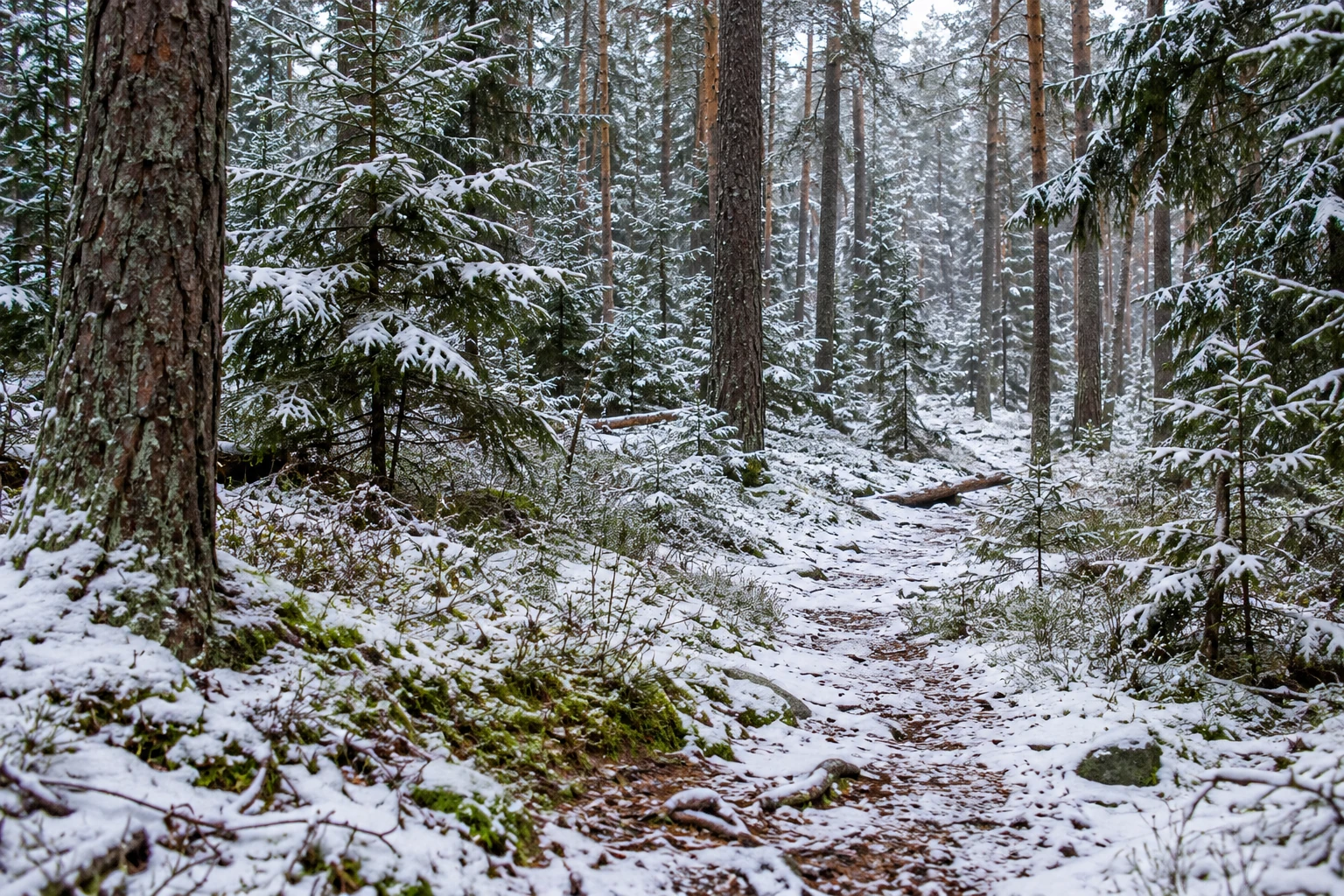
December brings true winter conditions to the United Kingdom, with short days, low solar radiation, and frequent frosty mornings reducing fungal activity across most terrestrial habitats. Ground mycorrhizal fruiting largely ceases, but specialised cold-tolerant wood-decay fungi and hardy grassland species can still be observed during mild, damp spells between freezing snaps. Historical records from the past decade do not denote uniform abundance, but rather underline the conditional nature of winter mycological activity whenever Atlantic depressions temporarily elevate temperatures.
Conifer Woodland
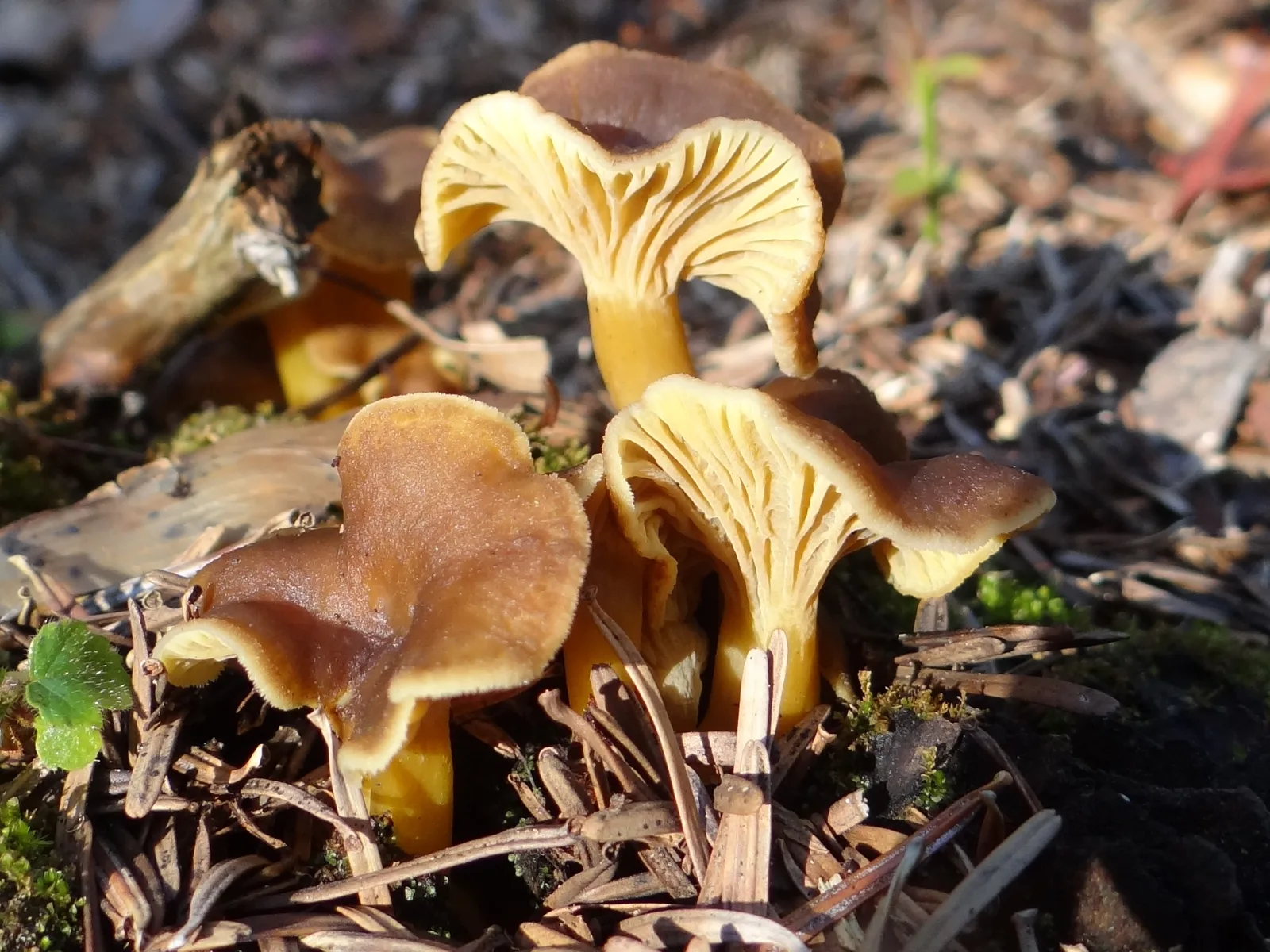
- Trumpet chanterelle (Craterellus tubaeformis) — Persists in damp conifer moss during mild December spells, though frost halts new development and leaves older specimens waterlogged.
- Wood hedgehog (Hydnum repandum) — Can sometimes be observed in sheltered pine woods when winter temperatures stay mild, though hard ground frost quickly spoils lingering fruitbodies.
- Terracotta hedgehog (Hydnum rufescens) — Survives conditionally on needle litter during unusually mild winter periods, rapidly deteriorating if sub-zero freezes penetrate the forest floor.
- Herald of winter (Hygrophorus hypothejus) — Well adapted to cold pine woodlands, occasionally producing fresh slimy caps after mild winter rains follow early frosts.
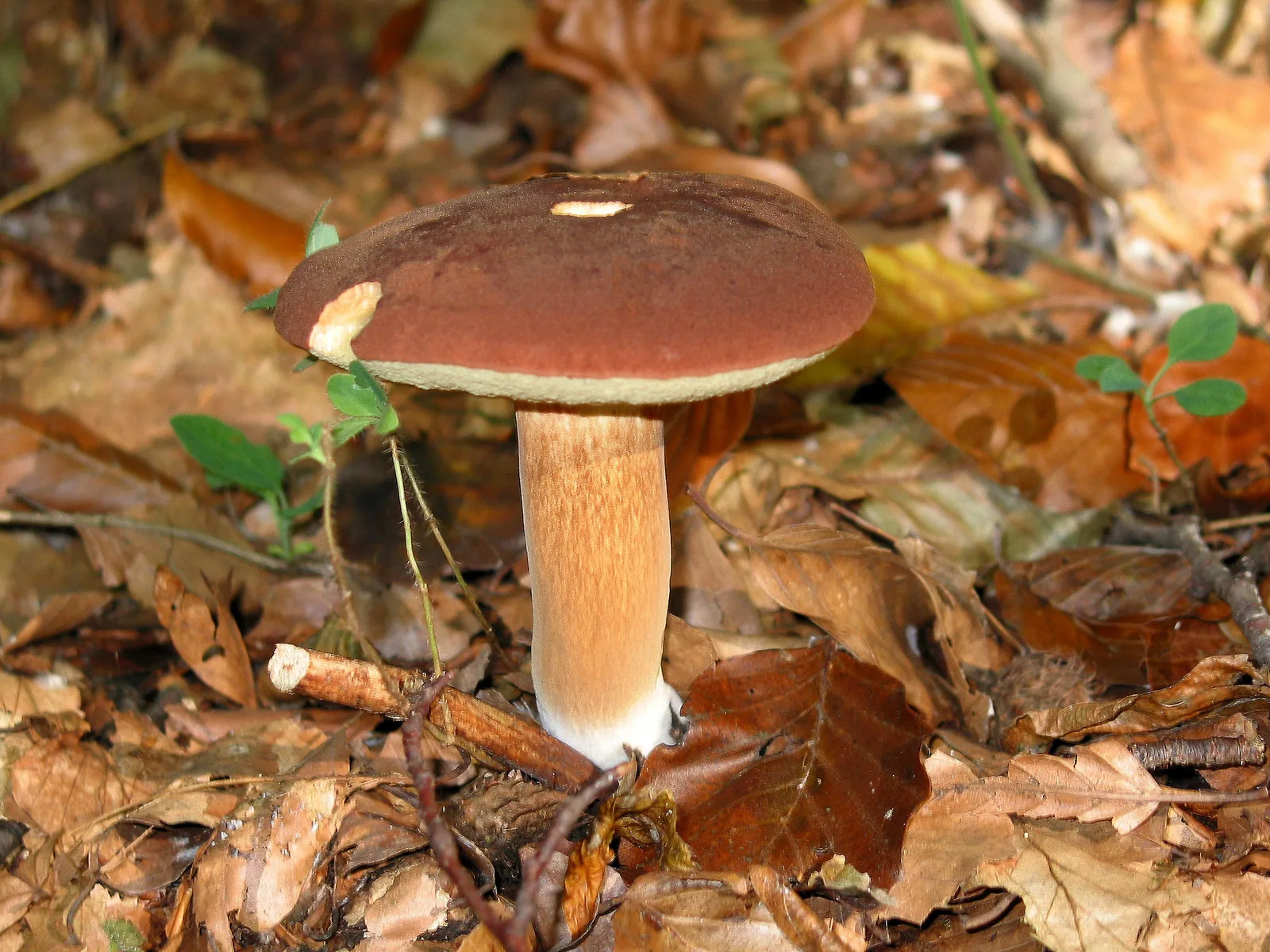
- Bay bolete (Imleria badia) — Rarely lingers in acidic conifer stands into December, requiring unseasonably warm weather to prevent complete collapse from winter cold.
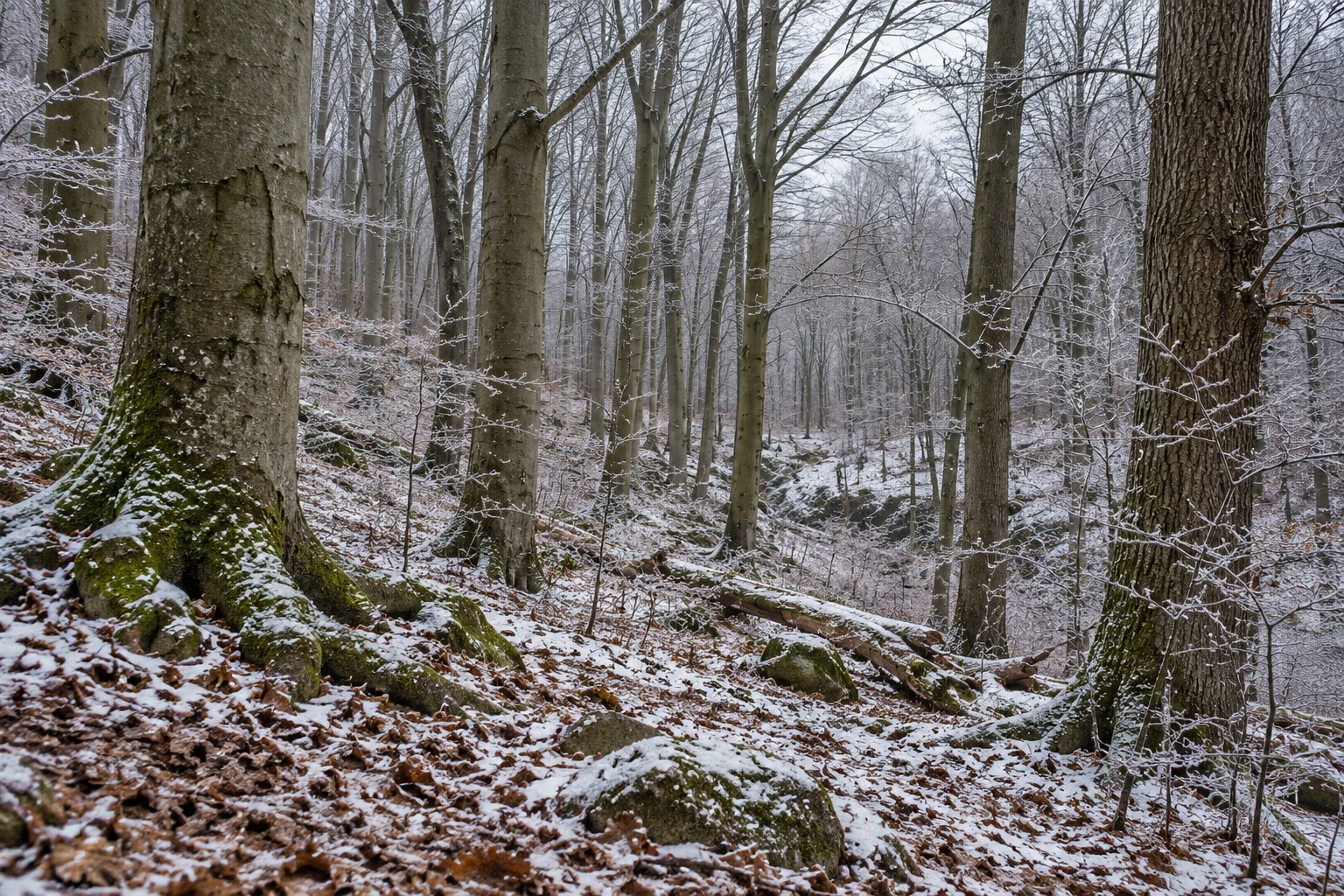
Broadleaf and Mixed Woodland
- Blusher (Amanita rubescens) — Uncommon in December, with isolated observations reflecting prolonged autumn mildness rather than regular winter emergence before frosts.
- Chanterelle (Cantharellus cibarius) — Occasionally recorded in deep leaf litter during mild winter weather, though sustained cold and frost halt all fresh cap production.
- Trooping funnel (Infundibulicybe geotropa) — Robust funnels may linger along sheltered woodland margins in mild Decembers, but freezing temperatures quickly turn the caps soft.
- Common funnel (Infundibulicybe gibba) — Exceptional in December, surviving only in sheltered deciduous valleys when severe winter frosts and persistent snowfall fail to arrive.
- Amethyst deceiver (Laccaria amethystina) — Sometimes seen in damp beech litter during unseasonably mild winter spells, shrivelling immediately once severe cold arrives.
- Deceiver (Laccaria laccata) — Small specimens may persist on sheltered woodland tracks during mild December weather, vanishing rapidly after ground freezes set in.
- Wood blewit (Lepista nuda) — A classic cold-tolerant agaric that continues fruiting in rich woodland litter during mild winter periods between seasonal frosts.
- Common stinkhorn (Phallus impudicus) — Late eggs occasionally open during mild winter interludes in deep woodland humus, though freezing temperatures immediately suppress all activity.
- The goblet (Pseudoclitocybe cyathiformis) — Appears in moist broadleaf litter throughout winter, producing cold-tolerant funnels whenever temperatures remain consistently above freezing.
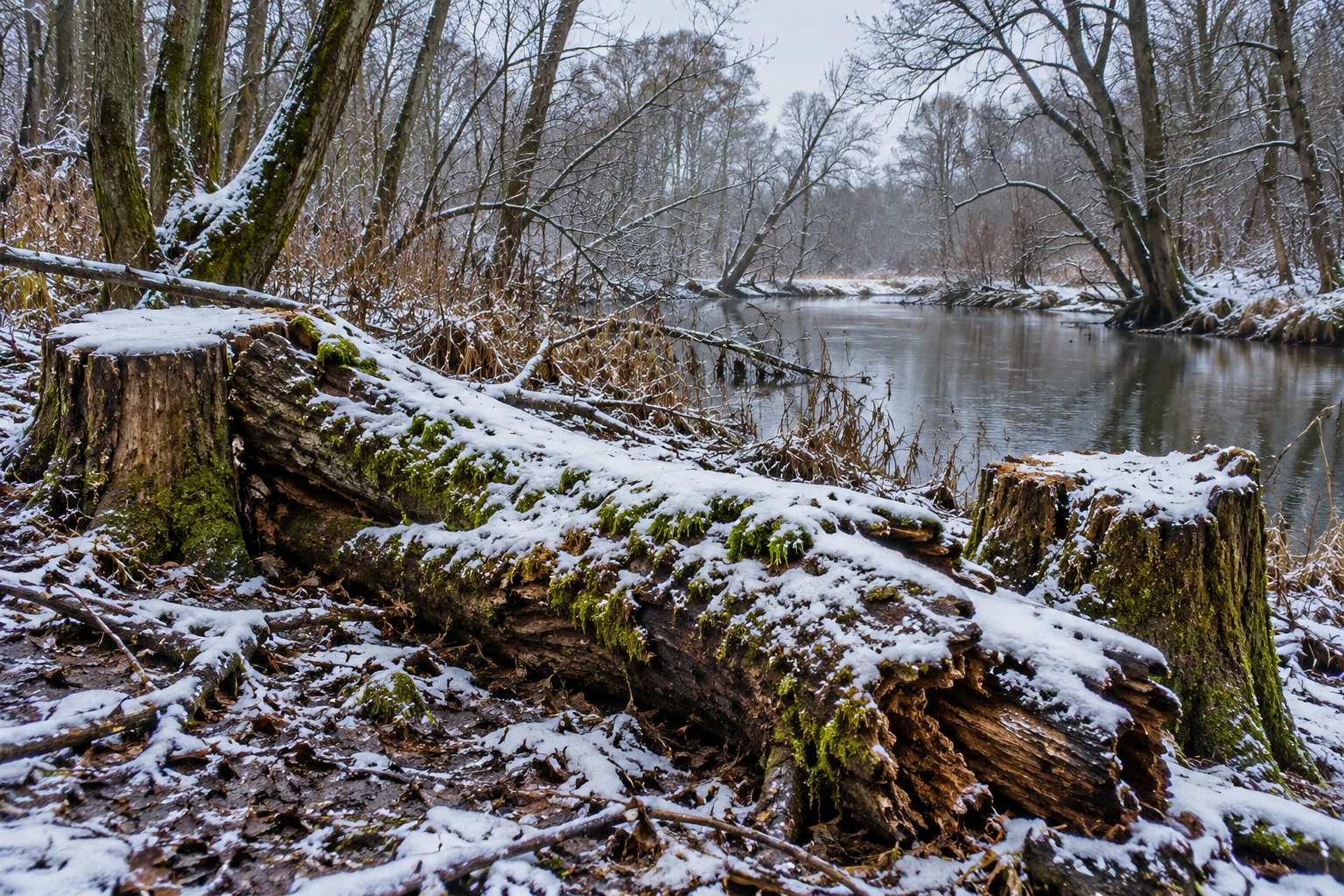
Dead Wood
- Honey fungus (Armillaria mellea) — Lingering blackened clusters on hardwood stumps reflect autumn growth, with fresh December fruiting strictly dependent on unusually mild intervals.
- Jelly ear (Auricularia auricula-judae) — Inhabits dead elder wood, swelling flexibly during wet winter spells and withstanding freezing temperatures when local moisture permits.
- Velvet shank (Flammulina velutipes) — A true winter specialist fruiting on dead deciduous wood, continuing growth during cold weather and withstanding heavy frosts.
- Conifer tuft (Hypholoma capnoides) — Clusters on rotting conifer wood may endure into December during mild winters, but hard frosts halt any further fruitbody development.
- Sheathed woodtuft (Kuehneromyces mutabilis) — Occasional tufts survive on sheltered logs when winter remains mild, though cold snaps halt mycelial activity and damage open caps.
- Giant polypore (Meripilus giganteus) — Only decaying, blackened remains of this bracket fungus persist around tree bases into December, gradually breaking down in winter damp.
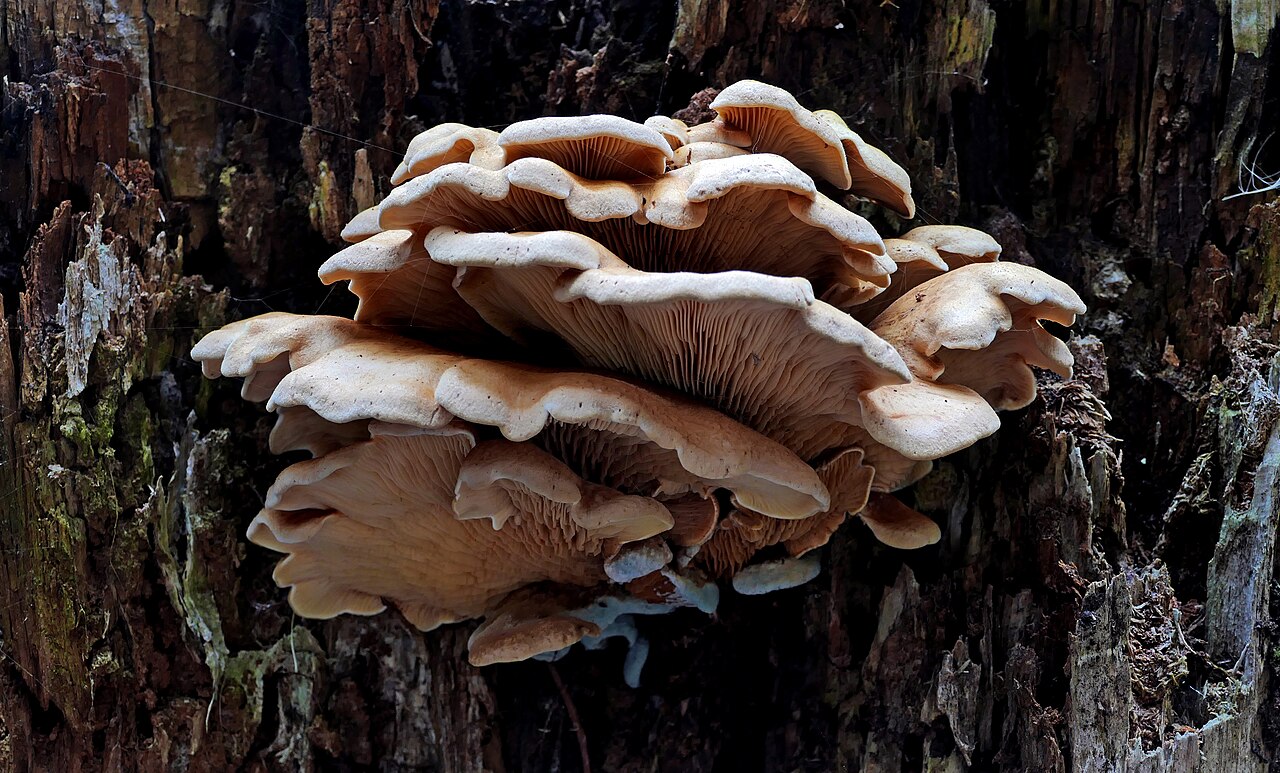
- Oyster mushroom (Pleurotus ostreatus) — Fruits reliably on dead hardwood during winter months, reviving and growing whenever temperature rises above freezing between frosty spells.
- Deer shield (Pluteus cervinus) — Solitary caps occasionally appear on decomposing logs during mild winter stretches, quickly collapsing if ground temperatures drop below freezing.
- Sprucecone cap (Strobilurus esculentus) — May emerge from buried spruce cones in mild, damp December weather, though ground frost prevents tiny caps from forming.
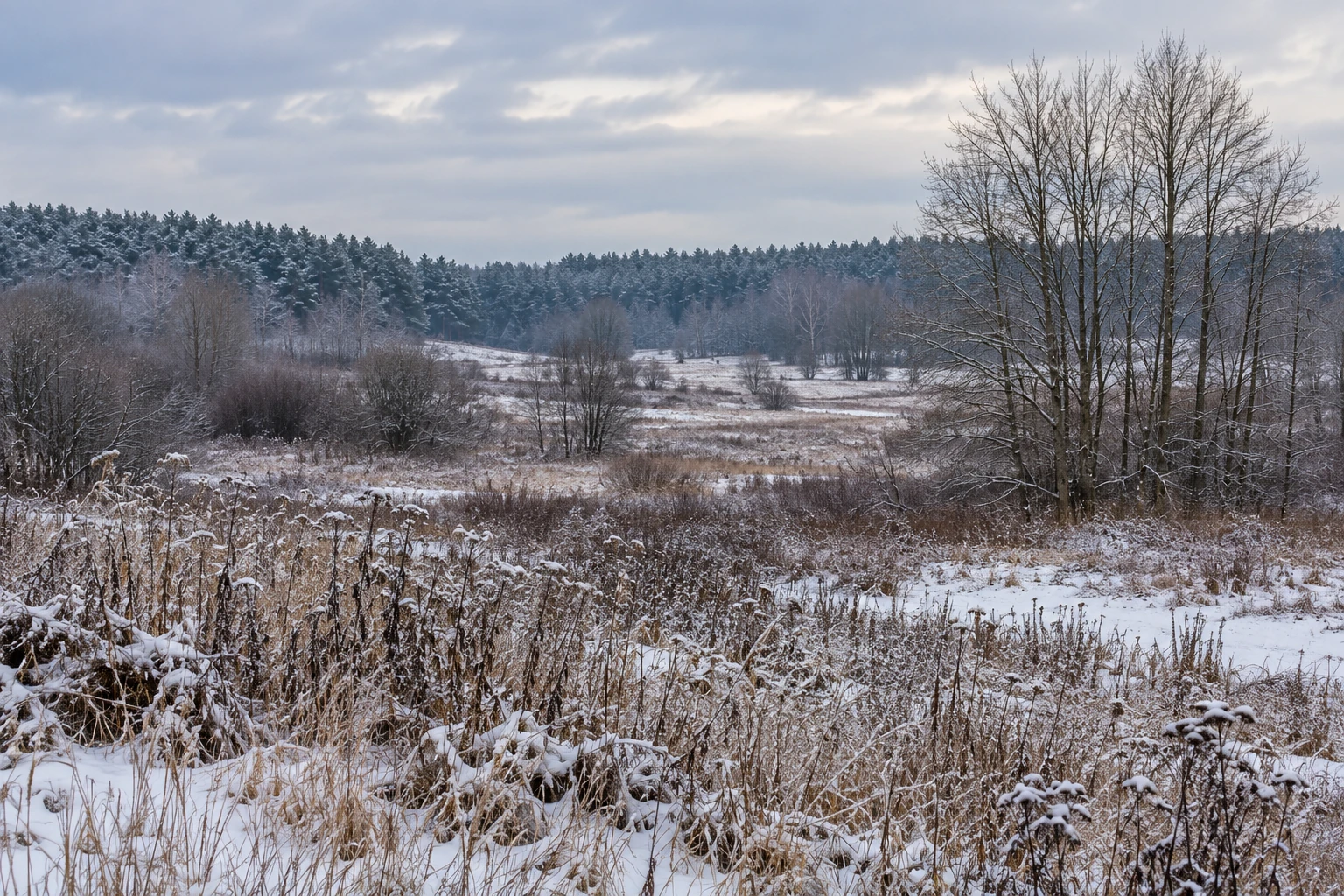
Grassland and Edges
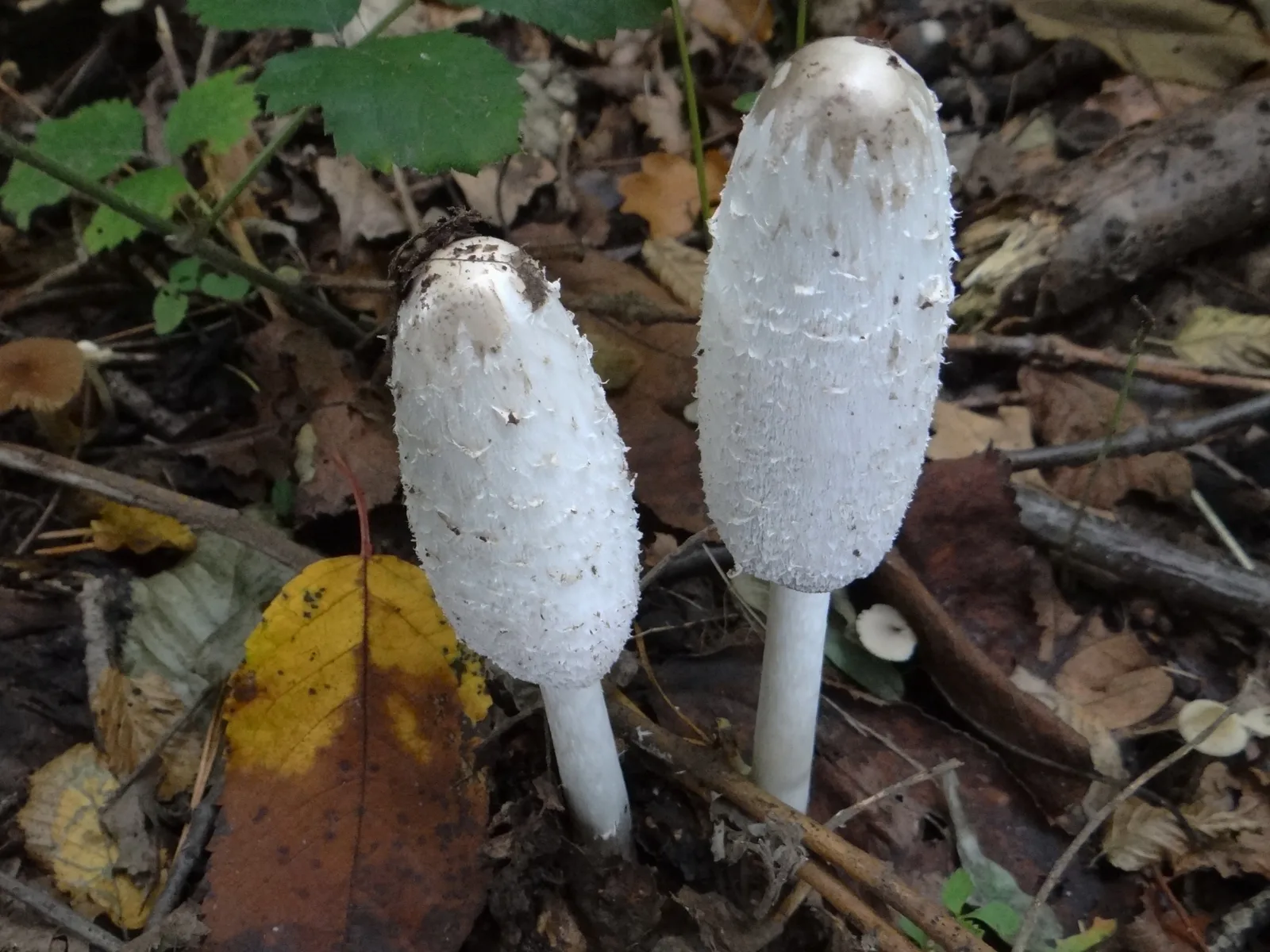
- Shaggy inkcap (Coprinus comatus) — Occasional late specimens appear on verges during mild December spells, though frost halts emergence and dissolves caps into ink.
- Giant puffball (Langermannia gigantea) — Only weather-beaten, papery shells of giant puffballs remain in winter fields, slowly dispersing leftover spores in cold breezes.
- Field blewit (Lepista personata) — A hardy winter pasture fungus that produces firm rings in grassland throughout mild spells, tolerating moderate frosts.
- Sordid blewit (Lepista sordida) — Found intermittently on fertile grassland edges, persisting into December when mild weather prevents early freezing of open turf.
- Common puffball (Lycoperdon perlatum) — Aged, persistent puffball cases stand in open ground through winter, releasing residual spores when tapped by raindrops.
- Clustered domecap (Lyophyllum decastes) — Dense clumps on grassy verges can survive into December under mild conditions, though frost causes caps to soften and rot.
- Parasol (Macrolepiota procera) — Exceptionally rare in December, surviving only as battered remnants in open meadows when early winter weather remains unusually mild.
- Fairy ring champignon (Marasmius oreades) — Dormant during freezing weather, with dried caps occasionally reviving in short turf after mild, wet December periods.
- Stubble rosegill (Volvopluteus gloiocephalus) — Occasionally recorded on arable stubble or compost heaps during mild winter spells, disappearing quickly once ground frost sets in.
December demonstrates that even during the depths of British winter, mycological life continues, with cold-adapted specialists decomposing dead timber and awaiting early spring renewal.
Back